Lv Liting, Liang Xiao, Wu Dan, Wang Feng, Zhang Yan, Cang Hui, Deng Xiongwei, Li Mei
Department of oncology, Affiliated hospital of Nantong University, Nantong, 226001, Jiangsu Province, China.
Department of oncology, Jiangyin People's Hospital, Wuxi, 214400, Jiangsu Province, China.
J Cancer. 2021 Mar 1;12(8):2385-2394. doi: 10.7150/jca.51433. eCollection 2021.
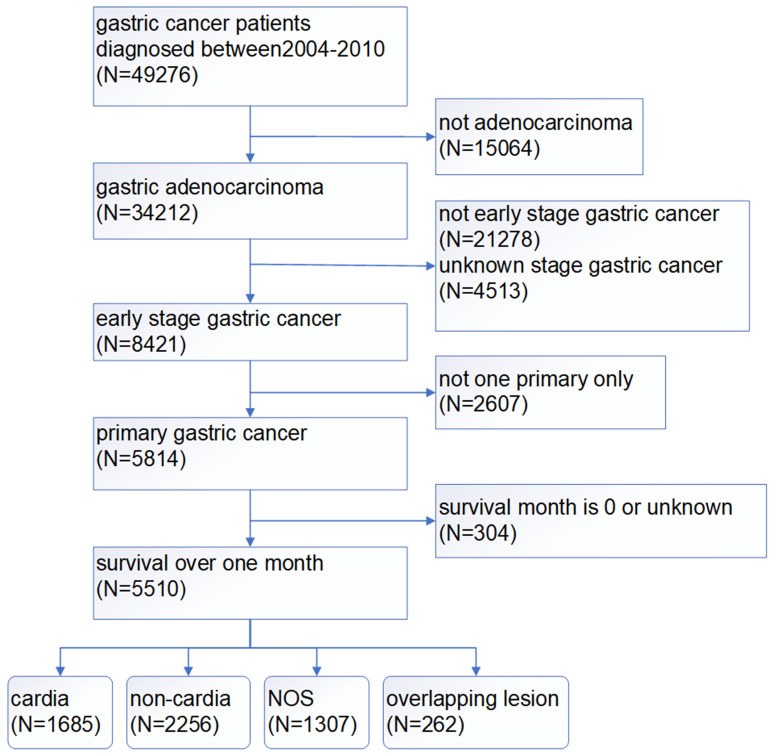
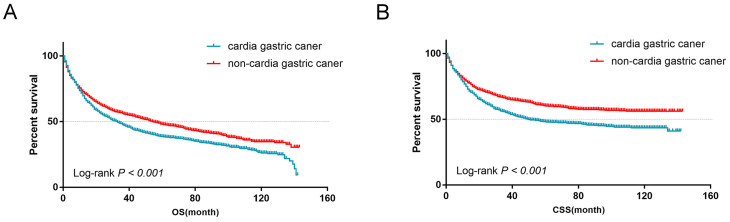
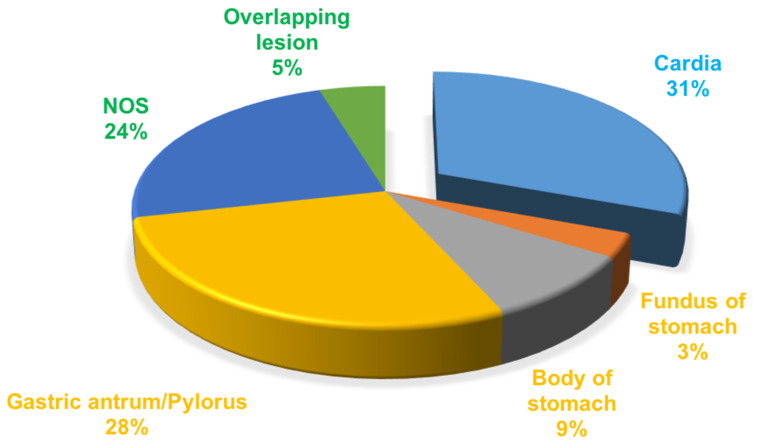
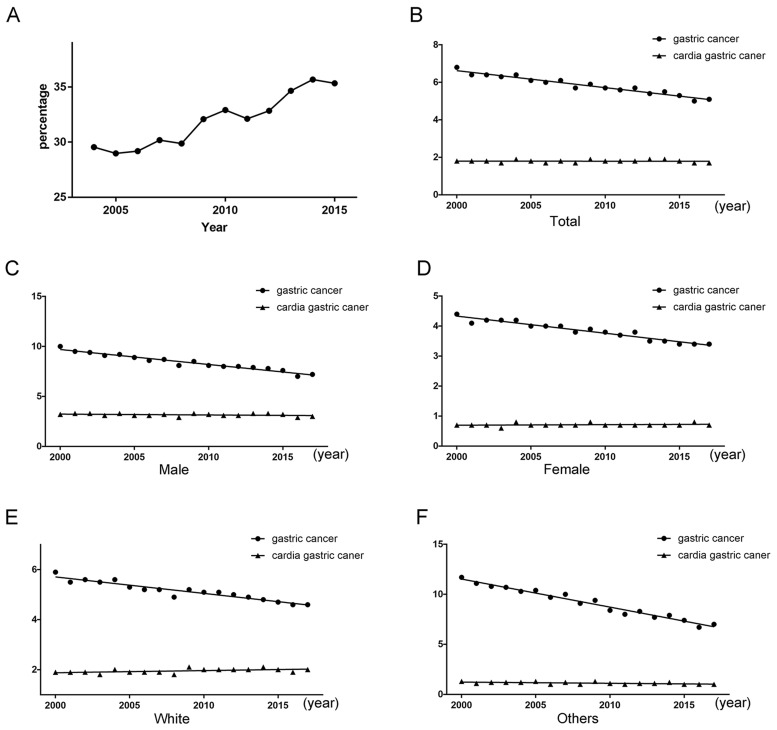
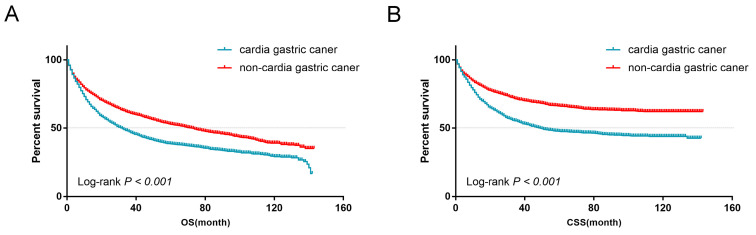
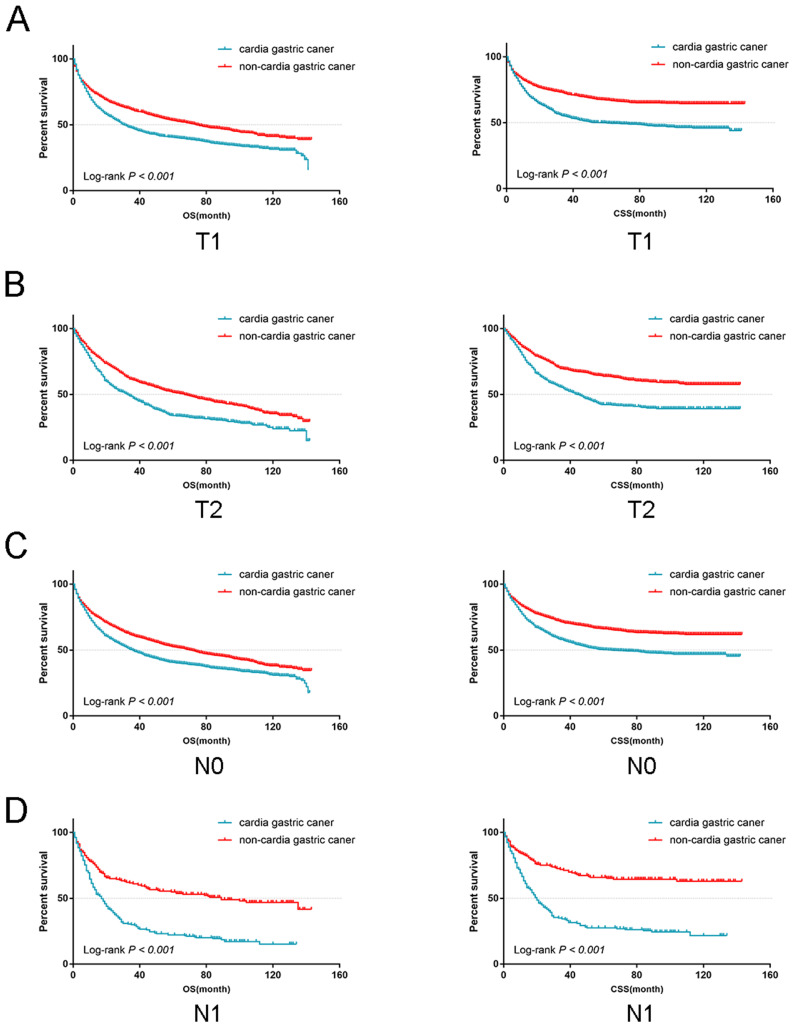
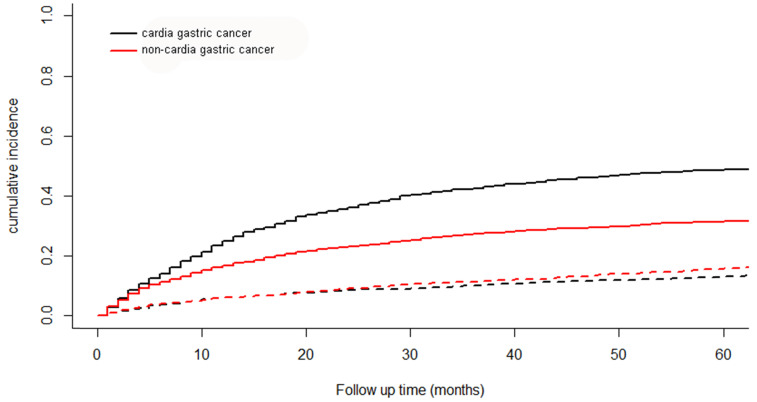
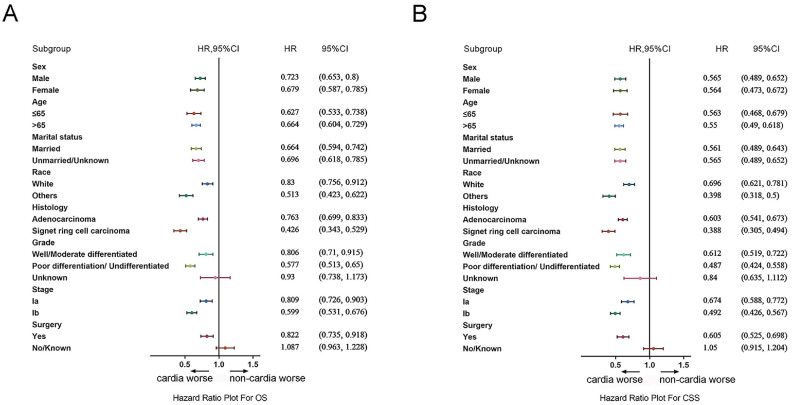
The prognosis of early cardia cancer and non-cardia cancer is still controversial. It is difficult to collect a large number of cases with complete information in clinical practice. Our study was aimed to identify the differences in clinicopathological characteristics and outcomes of early cardia gastric cancer and non-cardia gastric cancer. All cases analyzed were from Surveillance, Epidemiology, and End Results database. The data of the patients with early gastric cancer from 2004 to 2010 was retrospectively analyzed. Patients were distributed to cardia cancer group and non-cardia cancer group. Univariate and multivariate analyses were performed to examine differences between groups. The competitive risk model was made to compare the association with cardia cancer and non-cardia cancer about the causes of death. Propensity score matching (PSM) was performed to reduce the bias. We found that cardia cancer was more common in male patients and the White than that in non-cardia cancer at early stage, signet ring cell carcinoma was more common in non-cardia cancer, and the differentiation of non-cardia cancer was worse. Univariate analysis showed that age, marital status, race, tumor location, histology, grade, stage, and operation or not can determine the prognosis. And the prognosis of patients with cardia cancer was worse than that of non-cardia cancer, according to lymph node metastasis and the depth of tumor invasion. Multivariate analysis showed cardia cancer was an independent prognostic factor for poor prognosis. After PSM, cardia cancer still exhibited poor prognosis. At early stage, cardia cancer had a poor prognosis compared with non-cardia cancer. The prevention and treatment of early cardia cancer need to be seriously treated.
早期贲门癌和非贲门癌的预后仍存在争议。在临床实践中,很难收集到大量信息完整的病例。我们的研究旨在确定早期贲门胃癌和非贲门胃癌在临床病理特征及预后方面的差异。所有分析的病例均来自监测、流行病学和最终结果数据库。对2004年至2010年的早期胃癌患者数据进行回顾性分析。患者被分为贲门癌组和非贲门癌组。进行单因素和多因素分析以检验组间差异。构建竞争风险模型以比较贲门癌和非贲门癌在死亡原因方面的关联。进行倾向评分匹配(PSM)以减少偏差。我们发现,早期贲门癌在男性患者和白种人中比非贲门癌更常见,印戒细胞癌在非贲门癌中更常见,且非贲门癌的分化更差。单因素分析表明,年龄、婚姻状况、种族、肿瘤位置、组织学、分级、分期以及是否接受手术可决定预后。根据淋巴结转移和肿瘤浸润深度,贲门癌患者的预后比非贲门癌患者差。多因素分析表明,贲门癌是预后不良的独立预后因素。PSM后,贲门癌仍显示预后不良。在早期,贲门癌与非贲门癌相比预后较差。早期贲门癌的防治需要得到重视。