Anhui Province Key Laboratory of Farmland Ecological Conservation and Pollution Prevention, School of Resources and Environment, Anhui Agricultural University, 130 Changjiang West Road, Hefei, 230036, Anhui, P.R. China.
Key Laboratory of Environment Remediation and Ecological Health (Zhejiang University), Ministry of Education, Hangzhou, 310058, China.
BMC Plant Biol. 2021 Mar 24;21(1):150. doi: 10.1186/s12870-021-02929-3.
Rice is particularly effective, compared to other cereals, at accumulating arsenic (As), a nonthreshold, class 1 human carcinogen in shoot and grain. Nano-zinc oxide is gradually used in agricultural production due to its adsorption capacity and as a nutrient element. An experiment was performed to explore the effects of zinc oxide nanoparticles (nZnO) on arsenic (As) toxicity and bioaccumulation in rice. Rice seedlings were treated with different levels of nZnO (0, 10, 20, 50, 100 mg/L) and As (0, and 2 mg/L) for 7 days.
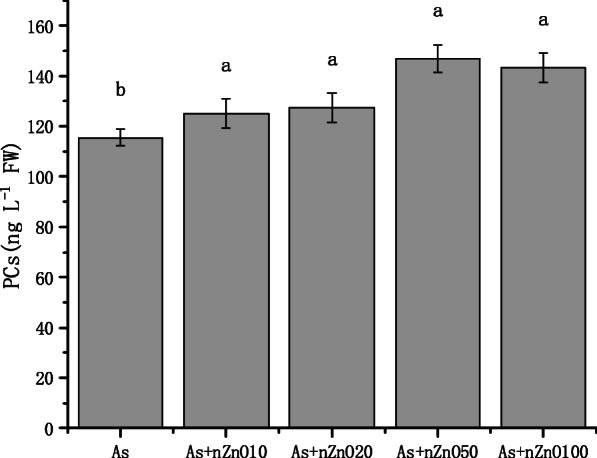
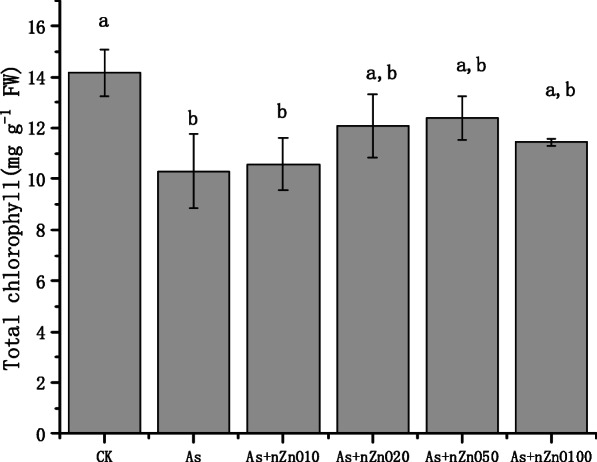
The research showed that 2 mg/L of As treatment represented a stress condition, which was evidenced by phenotypic images, seedling dry weight, chlorophyll, and antioxidant enzyme activity of rice shoot. The addition of nZnO (10-100 mg/L) enhanced the growth and photosynthesis of rice seedlings. As concentrations in the shoots and roots were decreased by a maximum of 40.7 and 31.6% compared to the control, respectively. Arsenite [As (III)] was the main species in both roots (98.5-99.5%) and shoots (95.0-99.6%) when exposed to different treatments. Phytochelatins (PCs) content up-regulated in the roots induced more As (III)-PC to be complexed and reduced As (III) mobility for transport to shoots by nZnO addition.
The results confirmed that nZnO could improve rice growth and decrease As accumulation in shoots, and it performs best at a concentration of 100 mg/L.
与其他谷物相比,大米在茎叶和谷物中积累砷(As)的效果特别显著,砷是一种非阈值、1 类人类致癌物质。由于纳米氧化锌具有吸附能力和作为营养元素,因此逐渐在农业生产中得到应用。进行了一项实验,以探索氧化锌纳米粒子(nZnO)对水稻砷(As)毒性和生物积累的影响。将水稻幼苗用不同水平的 nZnO(0、10、20、50、100mg/L)和 As(0 和 2mg/L)处理 7 天。
研究表明,2mg/L 的 As 处理代表了一种应激状态,这可以从水稻幼苗的表型图像、苗干重、叶绿素和抗氧化酶活性中得到证明。添加 nZnO(10-100mg/L)可增强水稻幼苗的生长和光合作用。与对照相比,As 在茎叶中的浓度分别最大降低了 40.7%和 31.6%。当暴露于不同处理时,根(98.5-99.5%)和茎叶(95.0-99.6%)中的主要砷物种为亚砷酸盐[As(III)]。根中诱导的植物螯合肽(PCs)含量增加,将更多的 As(III)-PC 络合,减少 nZnO 添加物向茎叶转运的 As(III)的迁移性。
结果证实,nZnO 可以改善水稻生长并减少茎叶中 As 的积累,在浓度为 100mg/L 时效果最佳。