Department of Medical Oncology, Erasmus MC Cancer Institute, Erasmus MC, Room Be400, Dr. Molewaterplein 40, 3015 GD, Rotterdam, The Netherlands.
Department of Clinical and Experimental Medicine - Center for Experimental Oncology and Hematology, University of Catania, Catania, Italy.
BMC Cancer. 2021 Mar 24;21(1):315. doi: 10.1186/s12885-021-08007-z.
Extracellular vesicles (EVs) are actively secreted by cells into body fluids and contain nucleic acids of the cells they originate from. The goal of this study was to detect circulating tumor-derived EVs (ctEVs) by mutant mRNA transcripts (EV-RNA) in plasma of patients with solid cancers and compare the occurrence of ctEVs with circulating tumor DNA (ctDNA) in cell-free DNA (cfDNA).
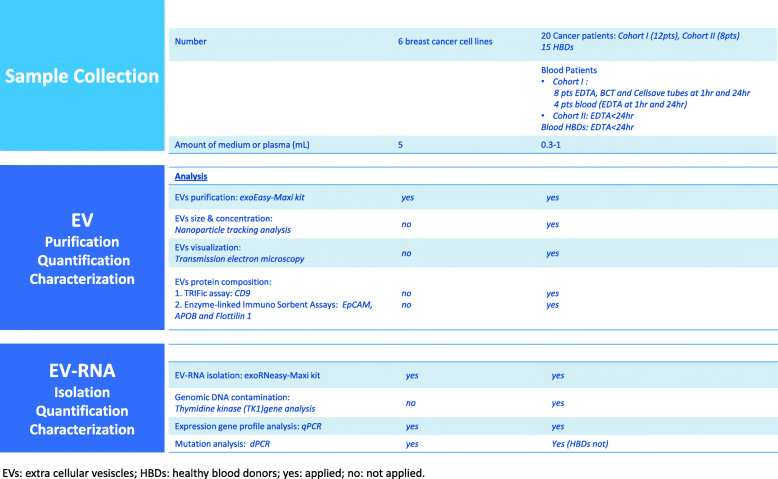
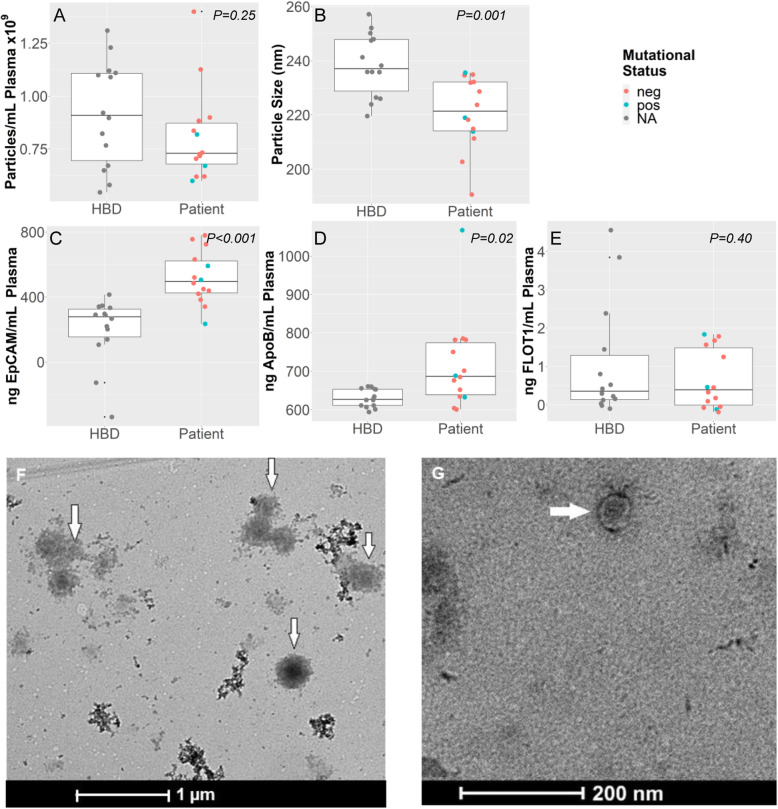
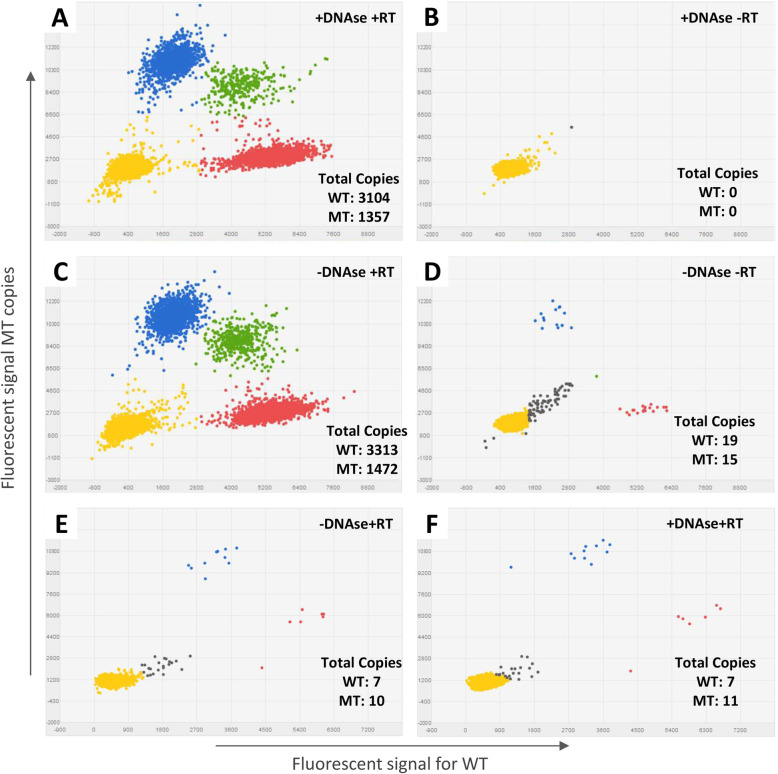
For this purpose, blood from 20 patients and 15 healthy blood donors (HBDs) was collected in different preservation tubes (EDTA, BCT, CellSave) and processed into plasma within 24 h from venipuncture. EVs were isolated with the ExoEasy protocol from this plasma and from conditioned medium of 6 cancer cell lines and characterized according to MISEV2018-guidelines. RNA from EVs was isolated with the ExoRNeasy protocol and evaluated for transcript expression levels of 96 genes by RT-qPCR and genotyped by digital PCR.
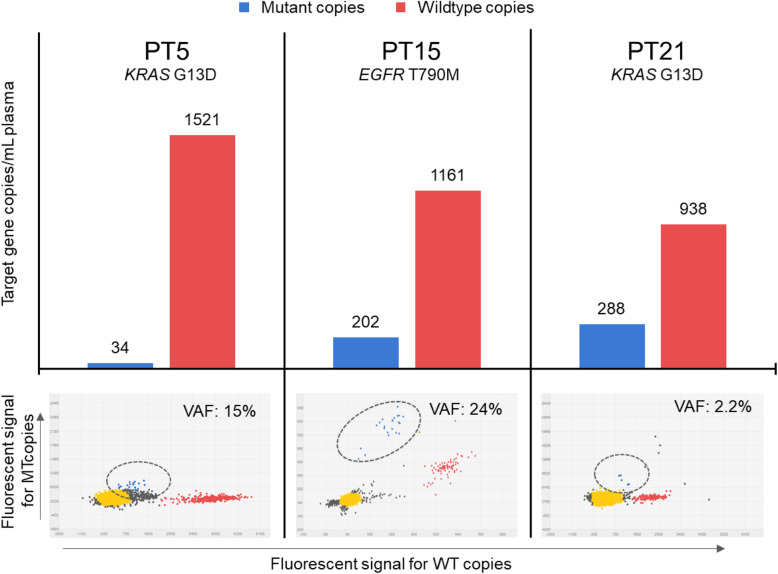
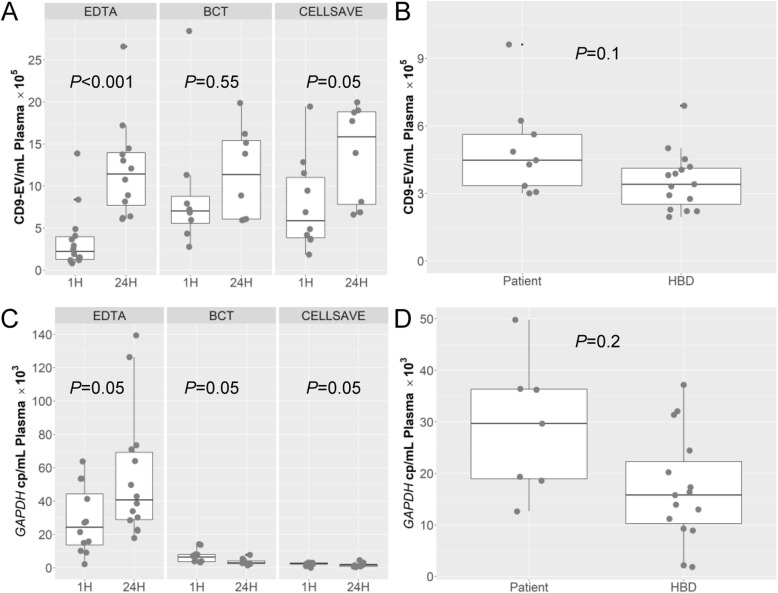
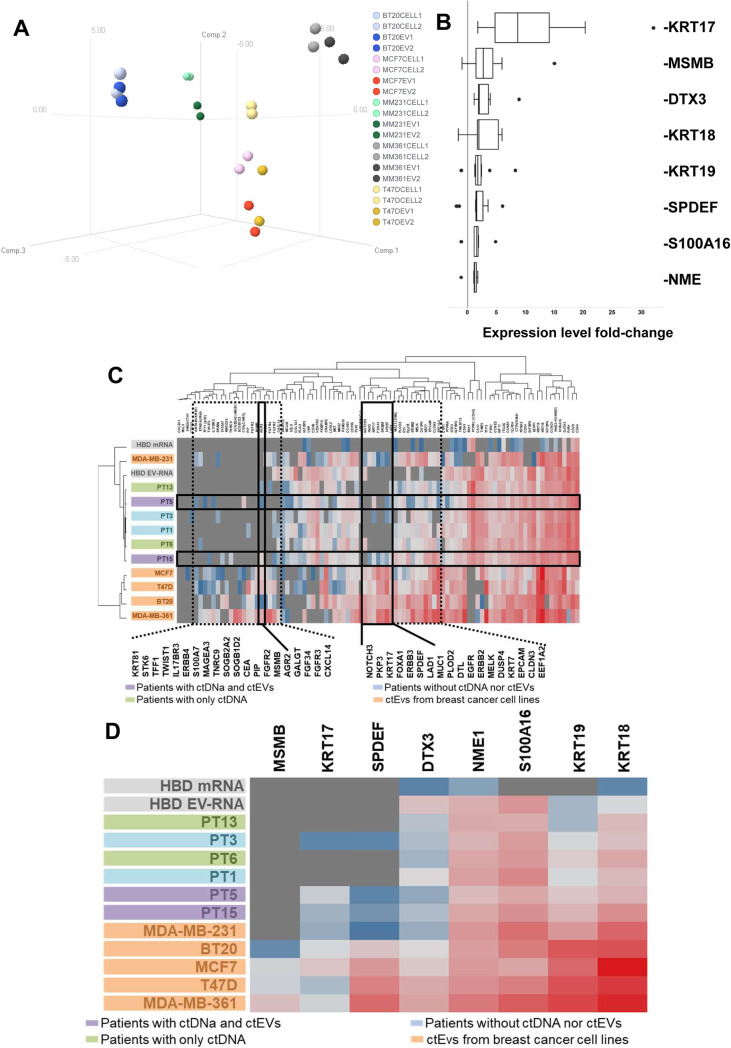
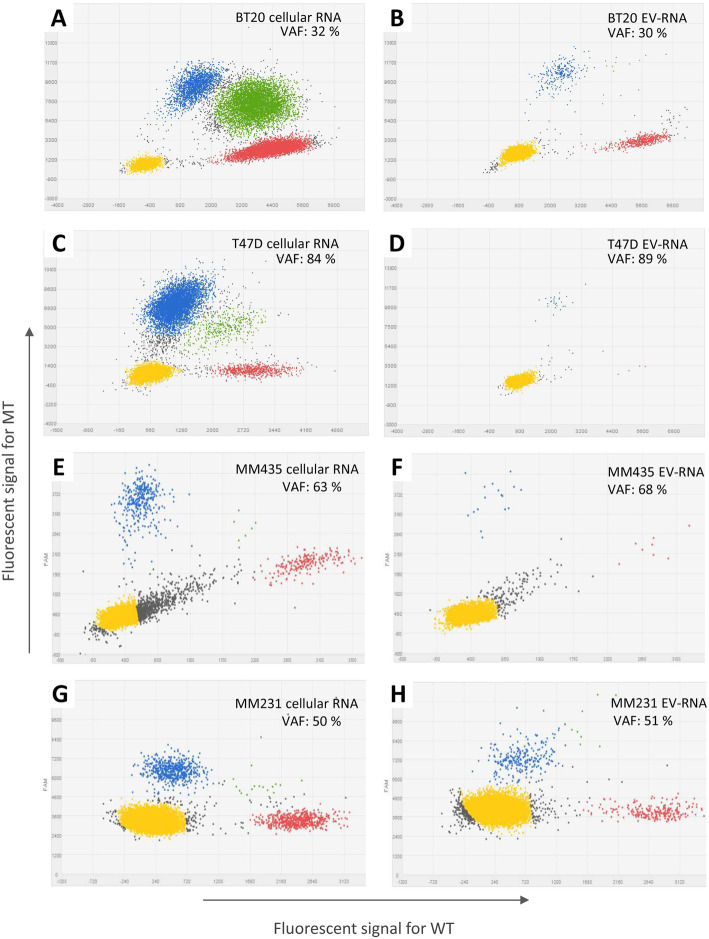
Our workflow applied on cell lines revealed a high concordance between cellular mRNA and EV-RNA in expression levels as well as variant allele frequencies for PIK3CA, KRAS and BRAF. Plasma CD9-positive EV and GAPDH EV-RNA levels were significantly different between the preservation tubes. The workflow detected only ctEVs with mutant transcripts in plasma of patients with high amounts (> 20%) of circulating tumor DNA (ctDNA). Expression profiling showed that the EVs from patients resemble healthy donors more than tumor cell lines supporting that most EVs are derived from healthy tissue.
We provide a workflow for ctEV detection by spin column-based generic isolation of EVs and PCR-based measurement of gene expression and mutant transcripts in EV-RNA derived from cancer patients' blood plasma. This workflow, however, detected tumor-specific mutations in blood less often in EV-RNA than in cfDNA.
细胞外囊泡(EVs)是细胞主动分泌到体液中的囊泡,其中包含它们来源细胞的核酸。本研究的目的是通过来自实体瘤患者血浆中的突变信使 RNA 转录本(EV-RNA)检测循环肿瘤衍生的 EVs(ctEVs),并比较游离 DNA(cfDNA)中无细胞 DNA(ctDNA)中循环肿瘤 DNA(ctDNA)的发生情况。
为此,在不同的保存管(EDTA、BCT、CellSave)中采集了 20 名患者和 15 名健康献血者(HBDs)的血液,并在静脉穿刺后 24 小时内将其处理为血浆。使用 ExoEasy 方案从这些血浆和 6 种癌细胞系的条件培养基中分离 EVs,并根据 MISEV2018 指南进行特征描述。使用 ExoRNeasy 方案从 EVs 中分离 RNA,并通过 RT-qPCR 评估 96 个基因的转录表达水平,并通过数字 PCR 进行基因分型。
我们应用于细胞系的工作流程显示,细胞 mRNA 和 EV-RNA 的表达水平以及 PIK3CA、KRAS 和 BRAF 的变异等位基因频率之间具有高度一致性。在保存管之间,CD9 阳性 EV 和 GAPDH EV-RNA 水平存在显著差异。该工作流程仅在具有高含量(>20%)循环肿瘤 DNA(ctDNA)的患者血浆中检测到具有突变转录本的 ctEVs。表达谱分析表明,来自患者的 EVs 比肿瘤细胞系更类似于健康供体,这支持大多数 EVs 来源于健康组织。
我们提供了一种通过基于自旋柱的通用 EV 分离和基于 PCR 的来自癌症患者血浆中 EV-RNA 的基因表达和突变转录本测量来检测 ctEV 的工作流程。然而,与 cfDNA 相比,该工作流程在 EV-RNA 中检测到肿瘤特异性突变的频率较低。