Discipline of Surgery, Adelaide Medical School, The Queen Elizabeth Hospital, University of Adelaide, Adelaide, Australia.
Robinson Research Institute, University of Adelaide, Adelaide, Australia.
Breast Cancer Res. 2021 Mar 24;23(1):39. doi: 10.1186/s13058-021-01417-8.
Transforming growth factor beta1 (TGFB1) is a multi-functional cytokine that regulates mammary gland development and cancer progression through endocrine, paracrine and autocrine mechanisms. TGFB1 also plays roles in tumour development and progression, and its increased expression is associated with an increased breast cancer risk. Macrophages are key target cells for TGFB1 action, also playing crucial roles in tumourigenesis. However, the precise role of TGFB-regulated macrophages in the mammary gland is unclear. This study investigated the effect of attenuated TGFB signalling in macrophages on mammary gland development and mammary cancer susceptibility in mice.
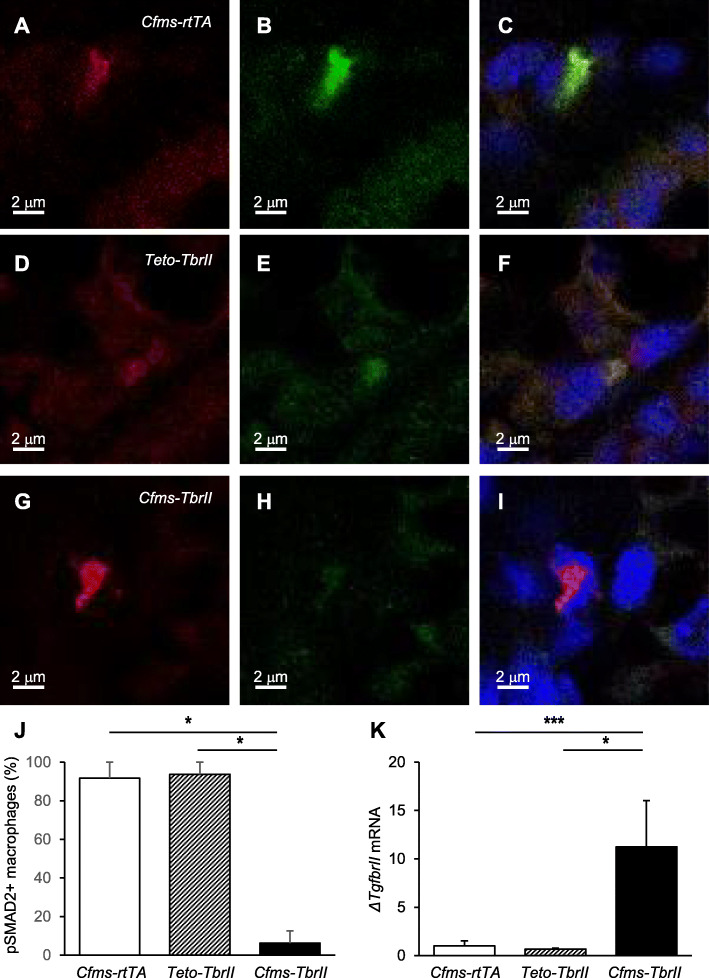
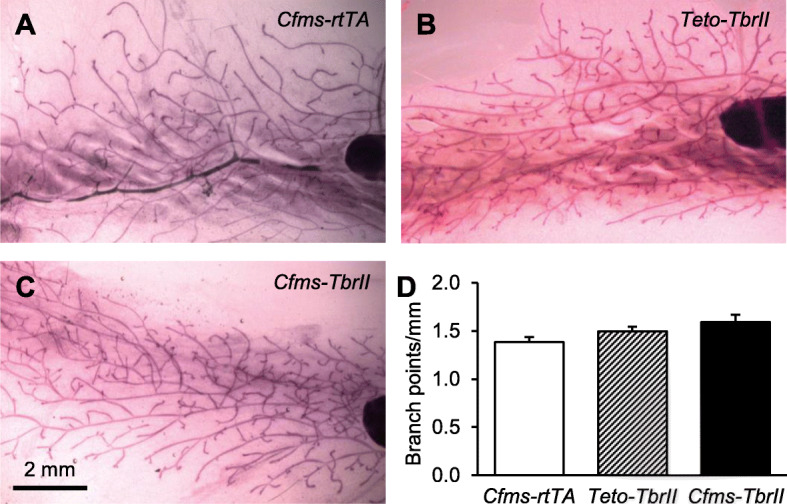
A transgenic mouse model was generated, wherein a dominant negative TGFB receptor is activated in macrophages, in turn attenuating the TGFB signalling pathway specifically in the macrophage population. The mammary glands were assessed for morphological changes through wholemount and H&E analysis, and the abundance and phenotype of macrophages were analysed through immunohistochemistry. Another cohort of mice received carcinogen 7,12-dimethylbenz(a)anthracene (DMBA), and tumour development was monitored weekly. Human non-neoplastic breast tissue was also immunohistochemically assessed for latent TGFB1 and macrophage marker CD68.
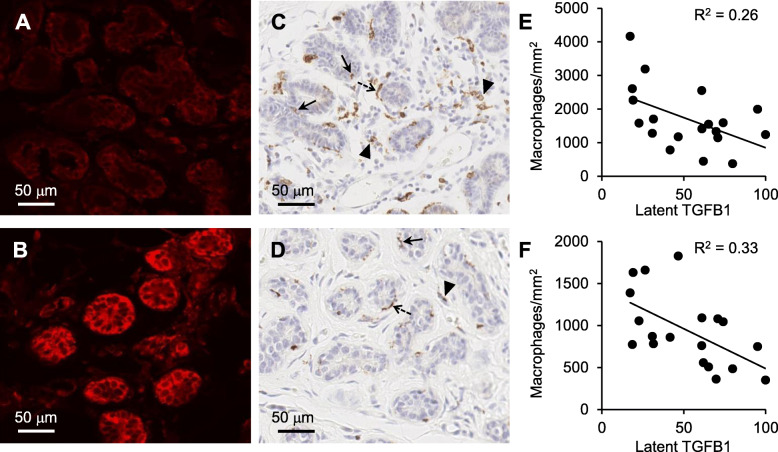
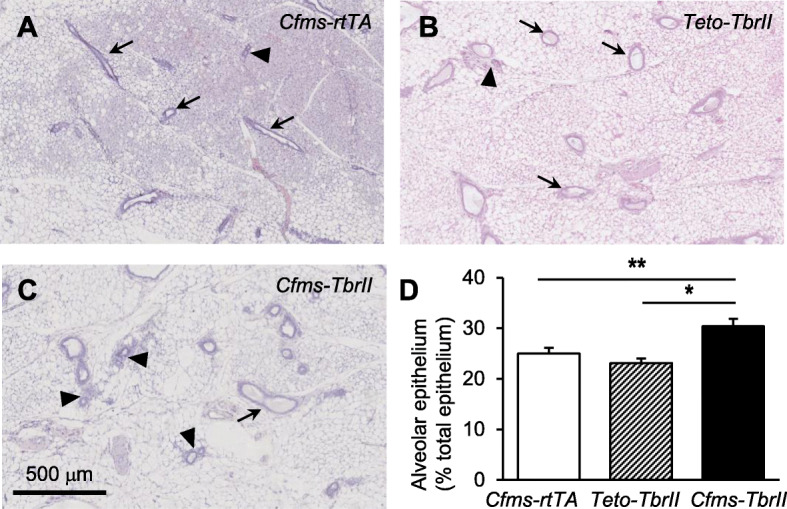
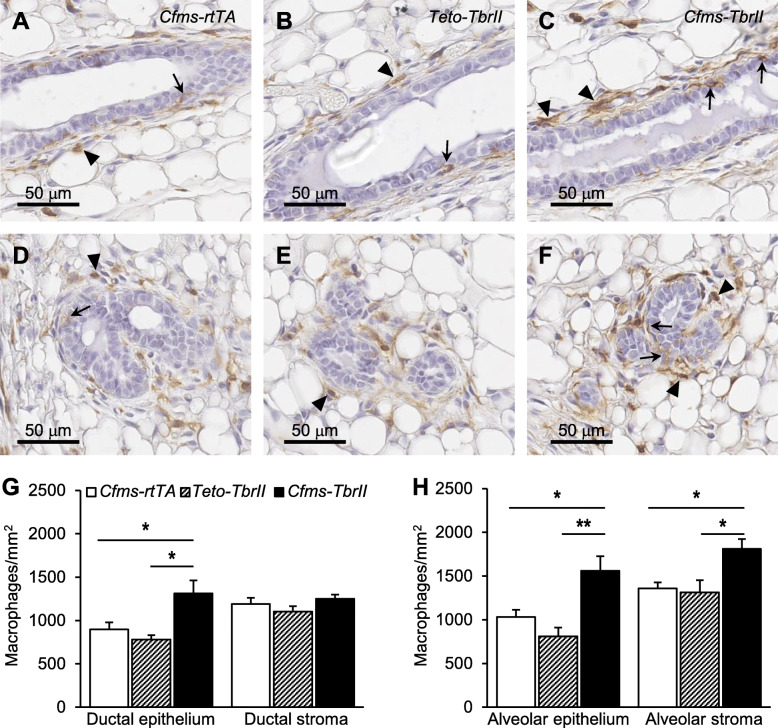
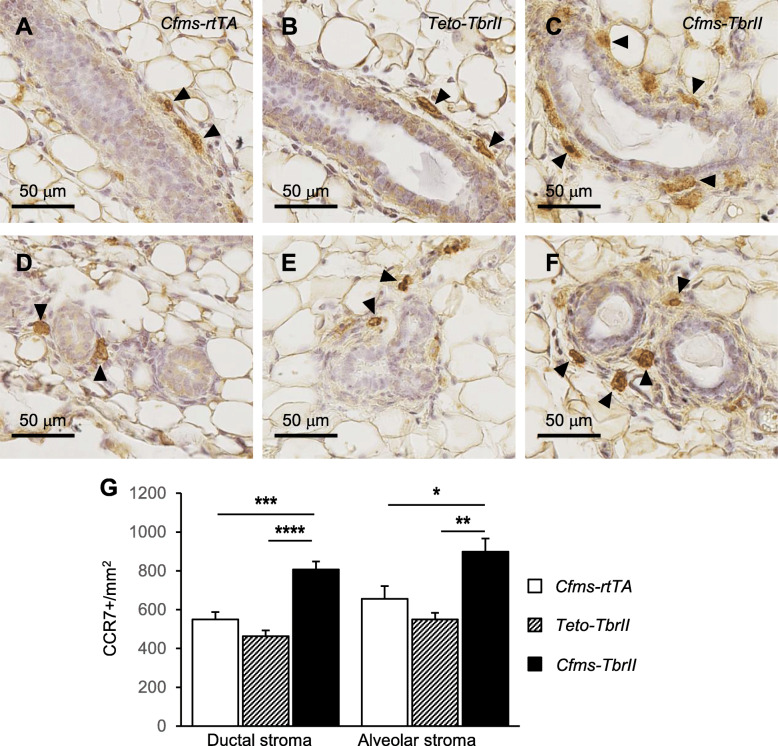
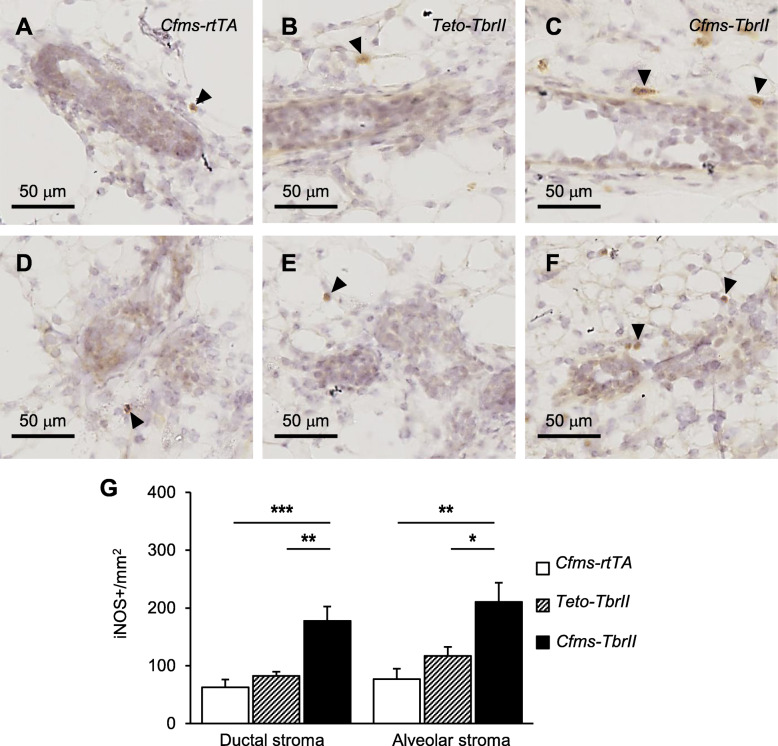
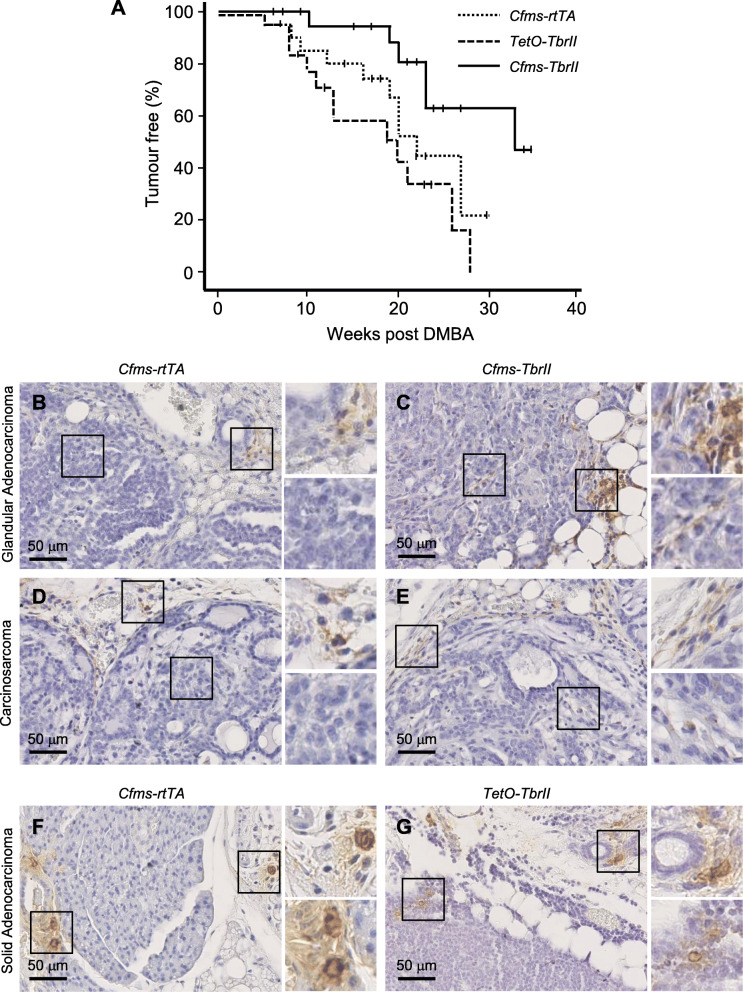
Attenuation of TGFB signalling resulted in an increase in the percentage of alveolar epithelium in the mammary gland at dioestrus and an increase in macrophage abundance. The phenotype of macrophages was also altered, with inflammatory macrophage markers iNOS and CCR7 increased by 110% and 40%, respectively. A significant decrease in DMBA-induced mammary tumour incidence and prolonged tumour-free survival in mice with attenuated TGFB signalling were observed. In human non-neoplastic breast tissue, there was a significant inverse relationship between latent TGFB1 protein and CD68-positive macrophages.
TGFB acts on macrophage populations in the mammary gland to reduce their abundance and dampen the inflammatory phenotype. TGFB signalling in macrophages increases mammary cancer susceptibility potentially through suppression of immune surveillance activities of macrophages.
转化生长因子-β1(TGFB1)是一种多功能细胞因子,通过内分泌、旁分泌和自分泌机制调节乳腺发育和癌症进展。TGFB1 还在肿瘤发生和发展中发挥作用,其表达增加与乳腺癌风险增加有关。巨噬细胞是 TGFB1 作用的关键靶细胞,在肿瘤发生中也起着至关重要的作用。然而,TGFB 调节的巨噬细胞在乳腺中的精确作用尚不清楚。本研究旨在研究减弱巨噬细胞中 TGFB 信号对小鼠乳腺发育和乳腺癌易感性的影响。
生成了一种转基因小鼠模型,其中在巨噬细胞中激活显性负 TGFB 受体,从而特异性地减弱巨噬细胞群体中的 TGFB 信号通路。通过全培养和 H&E 分析评估乳腺的形态变化,通过免疫组织化学分析巨噬细胞的丰度和表型。另一组小鼠接受致癌剂 7,12-二甲基苯并(a)蒽(DMBA),并每周监测肿瘤发展情况。还对人非肿瘤性乳腺组织进行免疫组织化学评估,以评估潜伏 TGFB1 和巨噬细胞标志物 CD68。
减弱 TGFB 信号导致发情期乳腺腺泡上皮百分比增加,巨噬细胞丰度增加。巨噬细胞的表型也发生了改变,炎症性巨噬细胞标志物 iNOS 和 CCR7 分别增加了 110%和 40%。在 TGFB 信号减弱的小鼠中,观察到 DMBA 诱导的乳腺肿瘤发生率显著降低和无肿瘤存活时间延长。在人非肿瘤性乳腺组织中,潜伏 TGFB1 蛋白与 CD68 阳性巨噬细胞之间存在显著的负相关关系。
TGFB 作用于乳腺中的巨噬细胞群体,减少其丰度并抑制其炎症表型。巨噬细胞中的 TGFB 信号通过抑制巨噬细胞的免疫监视活动增加乳腺癌的易感性。