State Key Laboratory of Oral Diseases & National Clinical Research Center for Oral Diseases & West China Hospital of Stomatology, Sichuan University, Chengdu, China.
Department of Prosthodontics, West China Hospital of Stomatology, Sichuan University, Chengdu, China.
Int J Oral Sci. 2021 Mar 24;13(1):11. doi: 10.1038/s41368-021-00116-6.
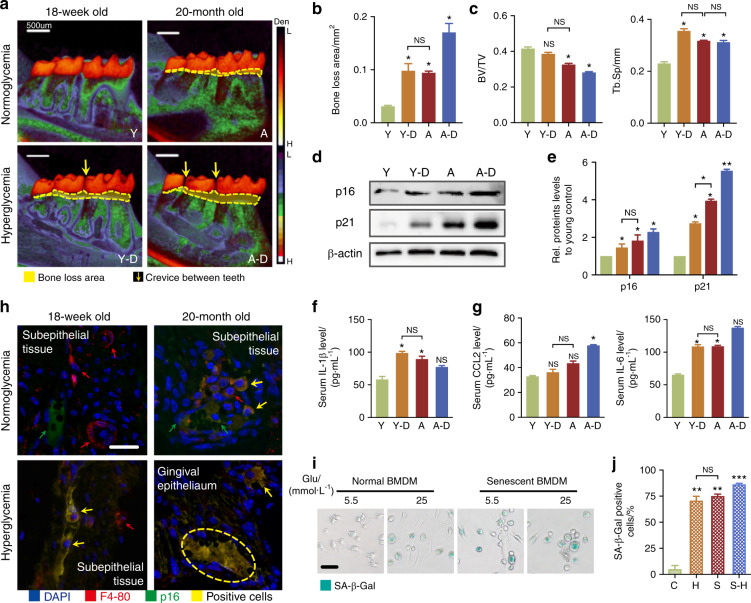
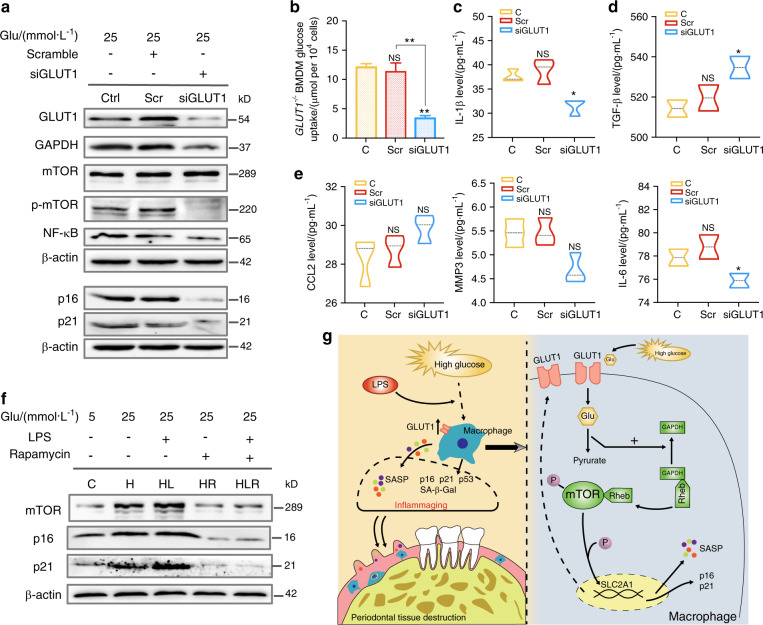
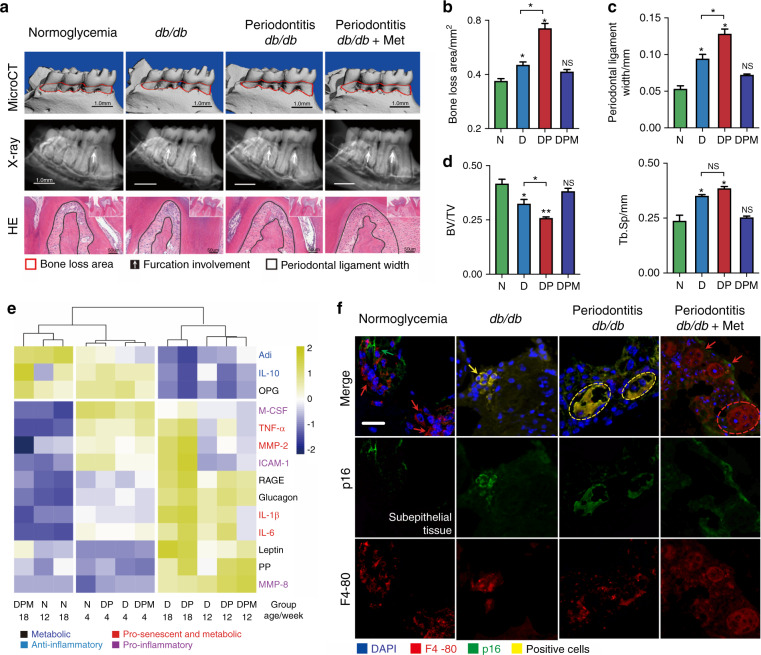
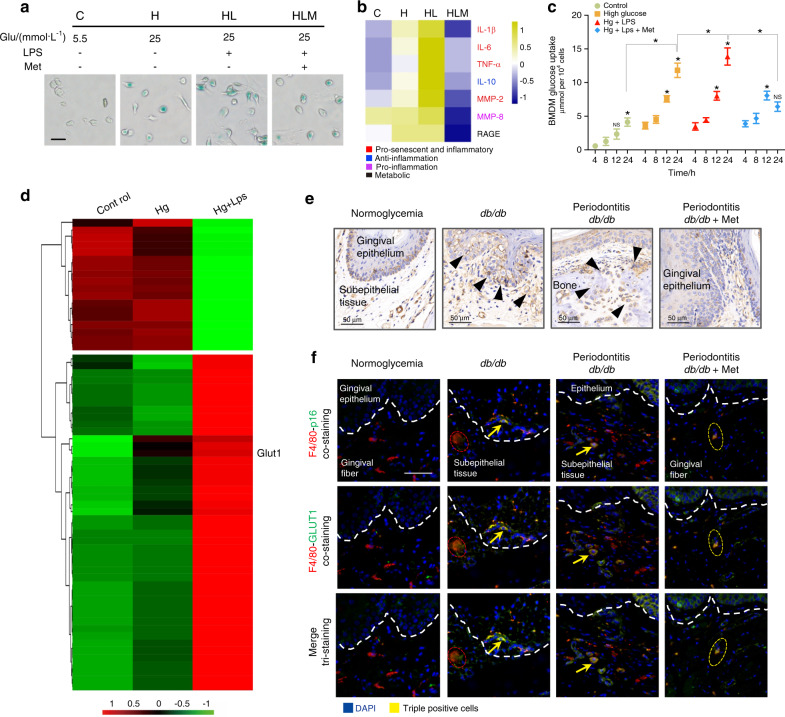
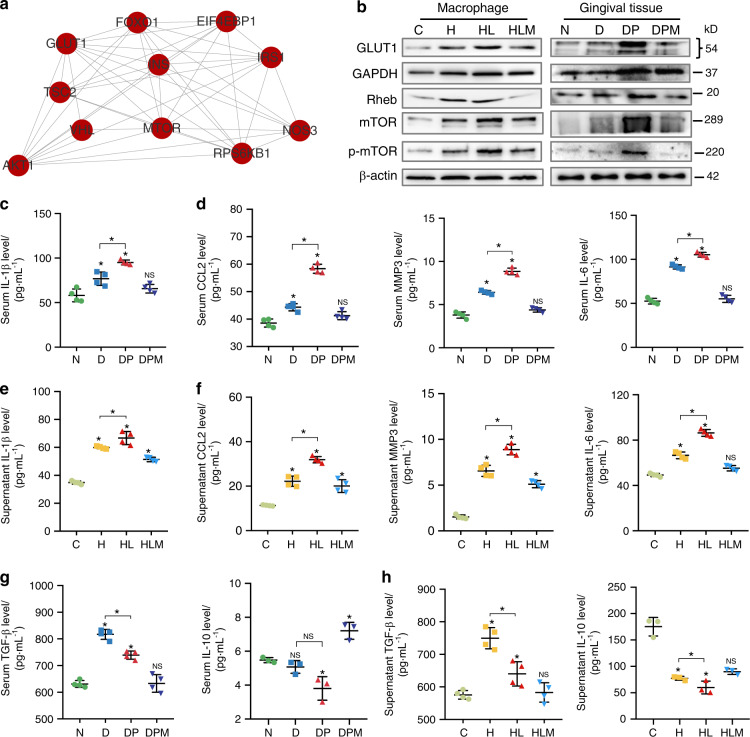
Hyperglycemia induces chronic low-grade inflammation (inflammaging), which is a newly identified contributor to diabetes-related tissue lesions, including the inflammatory bone loss in periodontitis. It is also a secondary senescent pattern mediated by an increased burden of senescent cells and senescence-associated secretory phenotype (SASP). Macrophage is a key SASP-spreading cell and may contribute to the maintenance of SASP response in the periodontal microenvironment. Using a transgenic diabetic model (BLKS/J-Lepr/lepr mice) we identified striking senescence of the periodontium in young (18-wk)-diabetic mice accompanied by amassed p16-macrophages and enhanced early SASP response. Exposed to high glucose in vitro, bone marrow-derived macrophage (BMDM) revealed a strong GLUT1 mRNA response driving the elevated-glucose uptake. GLUT1 is a representative and facilitative glucose transporter in macrophages with potential roles in hyperglycemia-induced inflammation. In this study, both GLUT1 and the downstream GTPase Rheb expression upregulated in the gingiva of diabetic mice with impaired condition. Furthermore, SASP release and p16/p21 signaling were proven to be triggered by mTOR phosphorylation in BMDM and antagonized by restricting glucose uptake in GLUT1 BMDM. Taken together, our findings suggest that elevated-GLUT1 sensor responded to high glucose is important for macrophage senescence and SASP response, generated as a result of hyperglycemia, and it is a potential molecular mechanism for the exacerbation of periodontitis in diabetes.
高血糖会引起慢性低度炎症(炎症衰老),这是一种新发现的与糖尿病相关组织损伤的致病因素,包括牙周炎中的炎症性骨丢失。它也是一种由衰老细胞负担增加和衰老相关分泌表型(SASP)介导的继发性衰老模式。巨噬细胞是 SASP 传播细胞的关键,可能有助于维持牙周微环境中的 SASP 反应。我们使用一种转基因糖尿病模型(BLKS/J-Lepr/lepr 小鼠)发现,年轻(18 周龄)糖尿病小鼠的牙周组织出现明显衰老,伴有大量 p16 巨噬细胞和增强的早期 SASP 反应。在体外暴露于高葡萄糖下,骨髓来源的巨噬细胞(BMDM)显示出强烈的 GLUT1 mRNA 反应,驱动了葡萄糖摄取的增加。GLUT1 是巨噬细胞中代表性和促进性葡萄糖转运体,在高血糖诱导的炎症中具有潜在作用。在这项研究中,糖尿病小鼠的牙龈中 GLUT1 和下游 GTPase Rheb 的表达均上调,表明其处于受损状态。此外,BMDM 中的 mTOR 磷酸化被证明可以触发 SASP 释放和 p16/p21 信号,而在 GLUT1 BMDM 中限制葡萄糖摄取则可以拮抗该作用。总之,我们的研究结果表明,高葡萄糖感应的上调 GLUT1 对巨噬细胞衰老和 SASP 反应很重要,这是高血糖引起的炎症的结果,也是糖尿病中牙周炎恶化的潜在分子机制。