Research School of Biology, Australian National University, Canberra, ACT, 2601, Australia.
Sci Rep. 2021 Mar 24;11(1):6787. doi: 10.1038/s41598-021-86204-3.
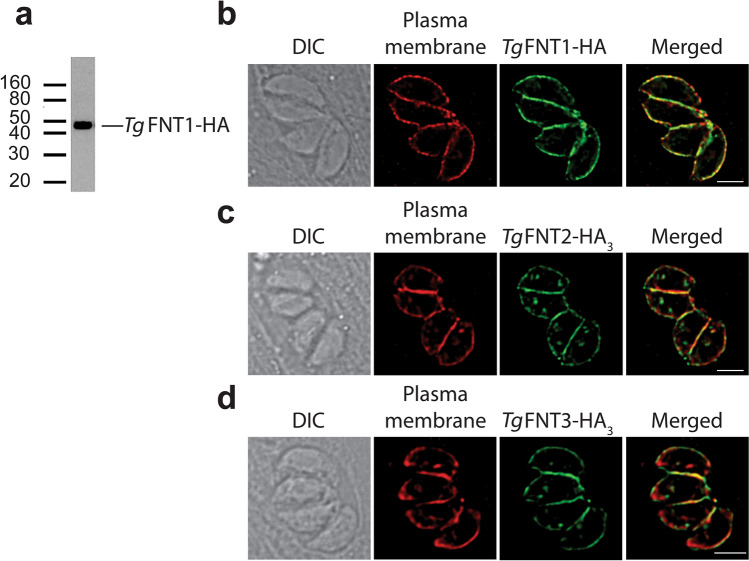
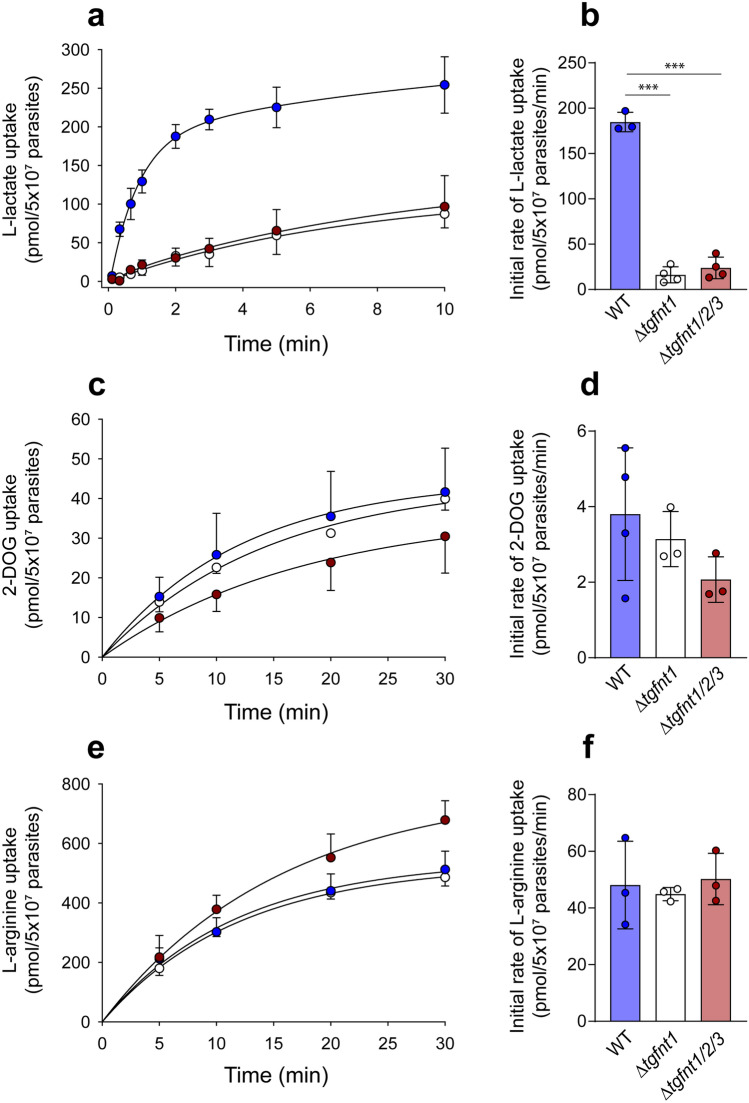
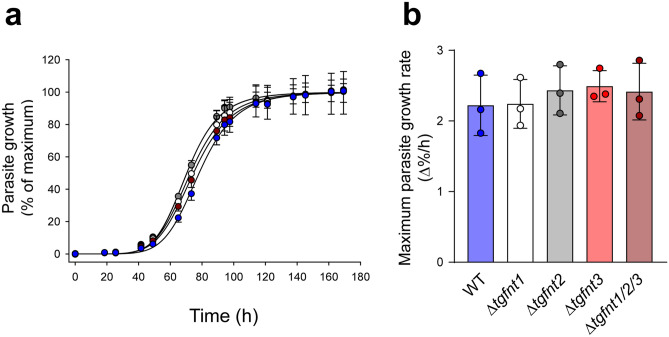
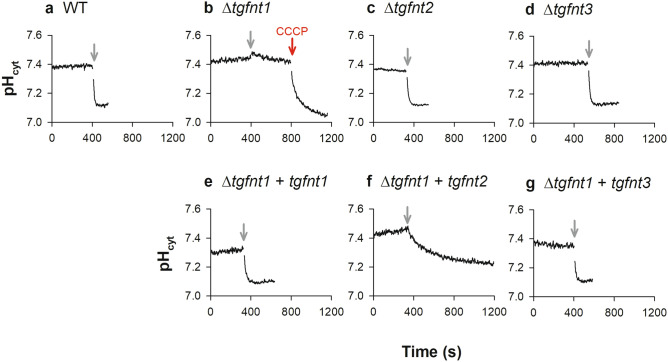
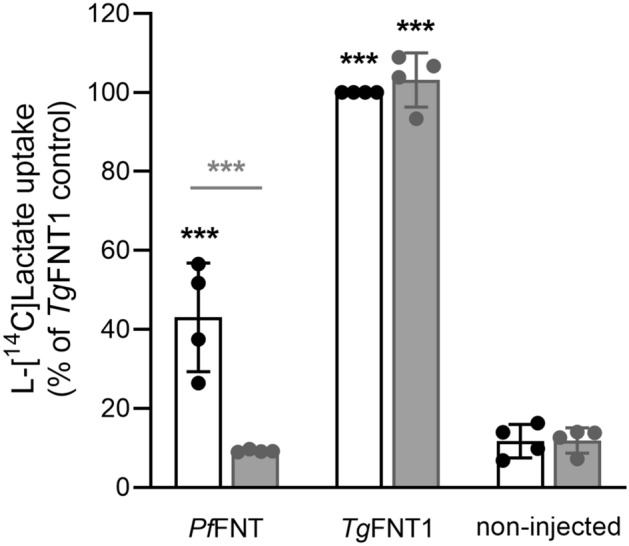
Toxoplasma gondii and Plasmodium falciparum parasites both extrude L-lactate, a byproduct of glycolysis. The P. falciparum Formate Nitrite Transporter, PfFNT, mediates L-lactate transport across the plasma membrane of P. falciparum parasites and has been validated as a drug target. The T. gondii genome encodes three FNTs that have been shown to transport L-lactate, and which are proposed to be the targets of several inhibitors of T. gondii proliferation. Here, we show that each of the TgFNTs localize to the T. gondii plasma membrane and are capable of transporting L-lactate across it, with TgFNT1 making the primary contribution to L-lactate transport during the disease-causing lytic cycle of the parasite. We use the Xenopus oocyte expression system to provide direct measurements of L-lactate transport via TgFNT1. We undertake a genetic analysis of the importance of the tgfnt genes for parasite proliferation, and demonstrate that all three tgfnt genes can be disrupted individually and together without affecting the lytic cycle under in vitro culture conditions. Together, our experiments identify the major lactate transporter in the disease causing stage of T. gondii, and reveal that this transporter is not required for parasite proliferation, indicating that TgFNTs are unlikely to be targets for anti-Toxoplasma drugs.
刚地弓形虫和恶性疟原虫寄生虫都排出 L-乳酸,这是糖酵解的一种副产品。恶性疟原虫甲酸盐亚硝酸盐转运蛋白 PfFNT 介导 L-乳酸穿过恶性疟原虫寄生虫的质膜,已被验证为药物靶点。刚地弓形虫基因组编码三种 FNTs,它们被证明能转运 L-乳酸,据推测是几种刚地弓形虫增殖抑制剂的作用靶点。在这里,我们表明,TgFNTs 中的每一种都定位于刚地弓形虫质膜上,并且能够将 L-乳酸穿过它转运,其中 TgFNT1 在寄生虫致病的裂解周期中对 L-乳酸转运做出主要贡献。我们使用非洲爪蟾卵母细胞表达系统提供了通过 TgFNT1 进行 L-乳酸转运的直接测量。我们对 tgfnt 基因对寄生虫增殖的重要性进行了遗传分析,并证明在体外培养条件下,三个 tgfnt 基因都可以单独和一起被破坏而不影响裂解周期。总的来说,我们的实验确定了刚地弓形虫致病阶段的主要乳酸转运蛋白,并表明该转运蛋白对于寄生虫增殖不是必需的,这表明 TgFNTs 不太可能成为抗弓形虫药物的靶点。