Sun Jian, Sheng Weiwei, Ma Yuteng, Dong Ming
Department of Gastrointestinal Surgery, The First Hospital, China Medical University, Shenyang, 110001, People's Republic of China.
Onco Targets Ther. 2021 Mar 17;14:1969-1980. doi: 10.2147/OTT.S298438. eCollection 2021.
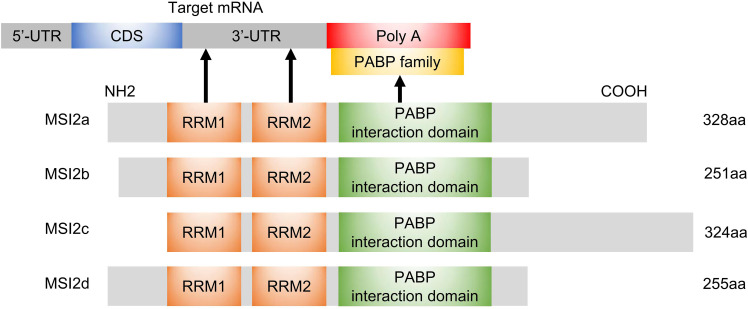
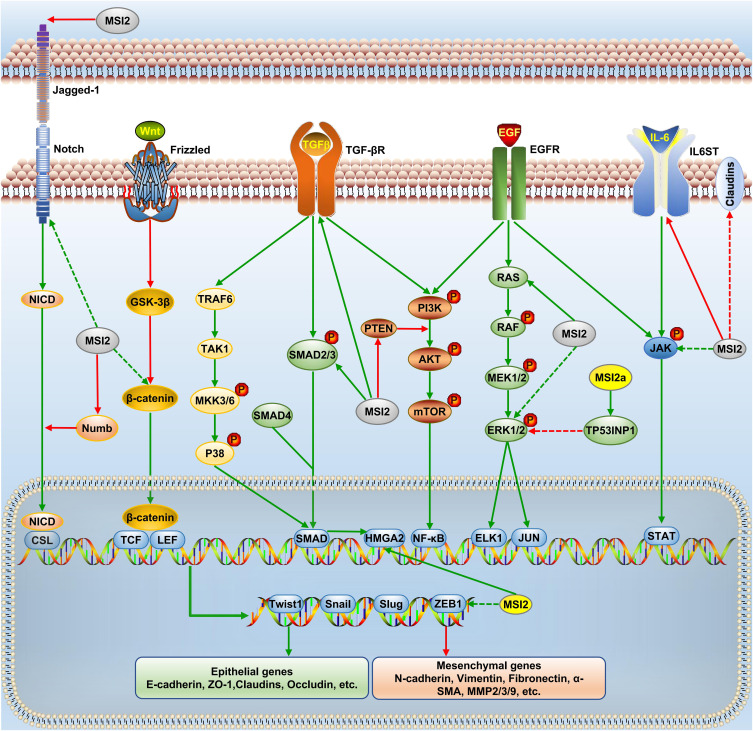
Local invasion and distant metastasis are the key hallmarks in the aggressive progression of malignant tumors, including the ability of cancer cells to detach from the extracellular matrix overcome apoptosis, and disseminate into distant sites. It is generally believed that this malignant behavior is stimulated by epithelial-mesenchymal transition (EMT). Musashi (MSI) RNA-binding proteins, belonging to the evolutionarily conserved RNA-binding proteins (RBP) family, were originally discovered to regulate asymmetric cell division during embryonic development. Recently, Musashi-2 (MSI2), as a key member of MSI family, has been prevalently reported to be tightly associated with the advanced clinical stage of several cancers. Multiple oncogenic signaling pathways mediated by MSI2 play vital roles in EMT. Here, we systematically reviewed the detailed role and signal networks of MSI2 in regulating cancer development, especially in EMT signal transduction, involving EGF, TGF-β, Notch, and Wnt pathways.
局部侵袭和远处转移是恶性肿瘤侵袭性进展的关键标志,包括癌细胞从细胞外基质脱离、克服凋亡并扩散到远处部位的能力。一般认为,这种恶性行为是由上皮-间质转化(EMT)所激发的。武藏(MSI)RNA结合蛋白属于进化上保守的RNA结合蛋白(RBP)家族,最初被发现可在胚胎发育过程中调节不对称细胞分裂。最近,作为MSI家族的关键成员,武藏-2(MSI2)已被普遍报道与多种癌症的晚期临床阶段密切相关。由MSI2介导的多种致癌信号通路在EMT中发挥着至关重要的作用。在此,我们系统地综述了MSI2在调节癌症发展,特别是在EMT信号转导(涉及表皮生长因子、转化生长因子-β、Notch和Wnt信号通路)中的详细作用和信号网络。