Crespo-Facorro Benedicto, Ruiz-Veguilla Miguel, Vázquez-Bourgon Javier, Sánchez-Hidalgo Ana C, Garrido-Torres Nathalia, Cisneros Jose M, Prieto Carlos, Sainz Jesus
Department of Psychiatry, School of Medicine, University Hospital Virgen del Rocio-IBIS, Sevilla, Spain.
Spanish Network for Research in Mental Health (CIBERSAM), Sevilla, Spain.
Front Pharmacol. 2021 Mar 2;12:646701. doi: 10.3389/fphar.2021.646701. eCollection 2021.
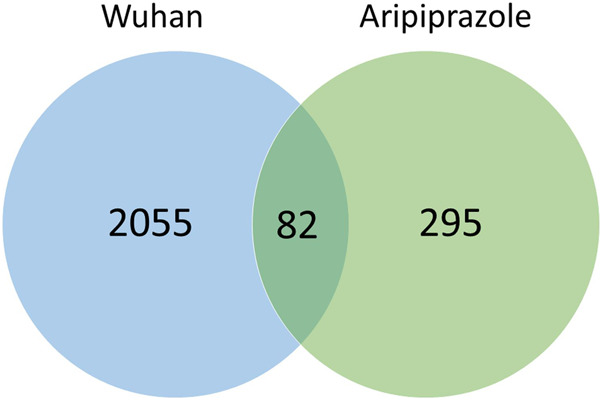
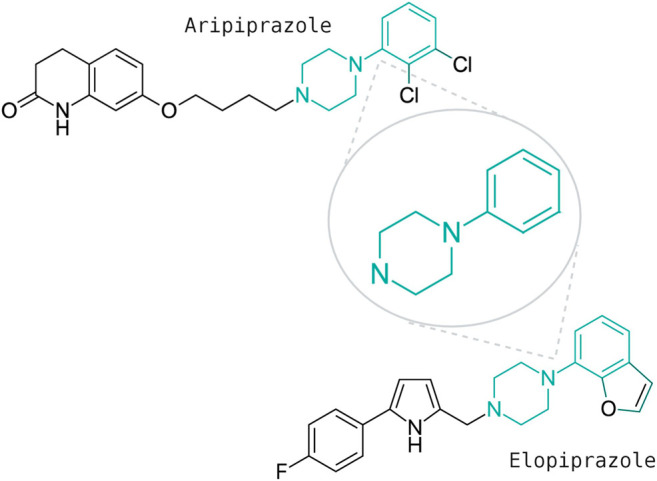
Antipsychotics modulate expression of inflammatory cytokines and inducible inflammatory enzymes. Elopiprazole (a phenylpiperazine antipsychotic drug in phase 1) has been characterized as a therapeutic drug to treat SARS-CoV-2 infection in a repurposing study. We aim to investigate the potential effects of aripiprazole (an FDA approved phenylpiperazine) on COVID-19-related immunological parameters. Differential gene expression profiles of non-COVID-19 vs. COVID-19 RNA-Seq samples (CRA002390 project in GSA database) and drug-naïve patients with non-affective psychosis at baseline and after three months of aripiprazole treatment were identified. An integrative transcriptomic analyses of aripiprazole effects on differentially expressed genes in COVID-19 patients was performed. 82 out the 377 genes (21.7%) with expression significantly altered by aripiprazole have also their expression altered in COVID-19 patients and in 93.9% of these genes their expression is reverted by aripiprazole. The number of common genes with expression altered in both analyses is significantly higher than expected (Fisher's Exact Test, two tail; value = 3.2e-11). 11 KEGG pathways were significantly enriched with genes with altered expression both in COVID-19 patients and aripiprazole medicated non-affective psychosis patients ( adj<0.05). The most significant pathways were associated to immune responses and mechanisms of hyperinflammation-driven pathology (i.e.,"inflammatory bowel disease (IBD)" (the most significant pathway with a adj of 0.00021), "Th1 and Th2 cell differentiation" and "B cell receptor signaling pathway") that have been also associated with COVID19 clinical outcome. This exploratory investigation may provide further support to the notion that a protective effect is exerted by aripiprazole (phenylpiperazine) by modulating the expression of genes that have shown to be altered in COVID-19 patients. Along with many ongoing studies and clinical trials, repurposing available medications could be of use in countering SARS-CoV-2 infection, but require further studies and trials.
抗精神病药物可调节炎性细胞因子和诱导性炎性酶的表达。在一项药物重新利用研究中,埃洛哌唑(一种处于1期试验阶段的苯基哌嗪类抗精神病药物)已被确定为一种治疗SARS-CoV-2感染的治疗药物。我们旨在研究阿立哌唑(一种经美国食品药品监督管理局批准的苯基哌嗪)对与COVID-19相关的免疫参数的潜在影响。确定了非COVID-19与COVID-19 RNA测序样本(GSA数据库中的CRA002390项目)以及未服用过药物的非情感性精神病患者在基线和接受阿立哌唑治疗三个月后的差异基因表达谱。对阿立哌唑对COVID-19患者差异表达基因的影响进行了综合转录组分析。在377个因阿立哌唑而导致表达显著改变的基因中,有82个(21.7%)在COVID-19患者中表达也发生了改变,并且在这些基因中有93.9%的基因表达被阿立哌唑逆转。在两项分析中表达均发生改变的共同基因数量显著高于预期(Fisher精确检验,双侧;P值 = 3.2×10⁻¹¹)。11条京都基因与基因组百科全书(KEGG)通路在COVID-19患者以及服用阿立哌唑的非情感性精神病患者中均有显著富集,这些通路中基因表达发生了改变(校正P值<0.05)。最显著的通路与免疫反应以及由过度炎症驱动的病理机制相关(即“炎症性肠病(IBD)”(校正P值为0.00021的最显著通路)、“Th1和Th2细胞分化”以及“B细胞受体信号通路”),这些通路也与COVID-19的临床结局相关。这项探索性研究可能会为以下观点提供进一步支持,即阿立哌唑(苯基哌嗪)通过调节在COVID-19患者中已显示发生改变的基因表达发挥保护作用。与许多正在进行的研究和临床试验一起,重新利用现有药物可能有助于对抗SARS-CoV-2感染,但需要进一步的研究和试验。