Nutrition Section, United Nations Children's Fund (UNICEF), Kathmandu, Nepal.
Department of Health Services, Nepal Ministry of Health and Population, Kathmandu, Nepal.
Matern Child Nutr. 2022 Jan;18 Suppl 1(Suppl 1):e13173. doi: 10.1111/mcn.13173. Epub 2021 Mar 24.
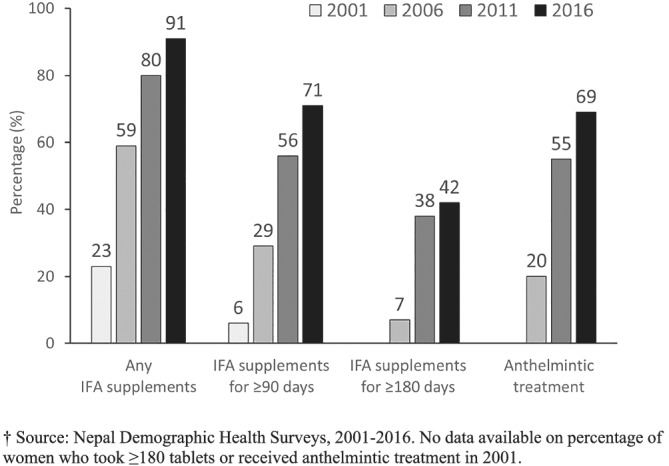
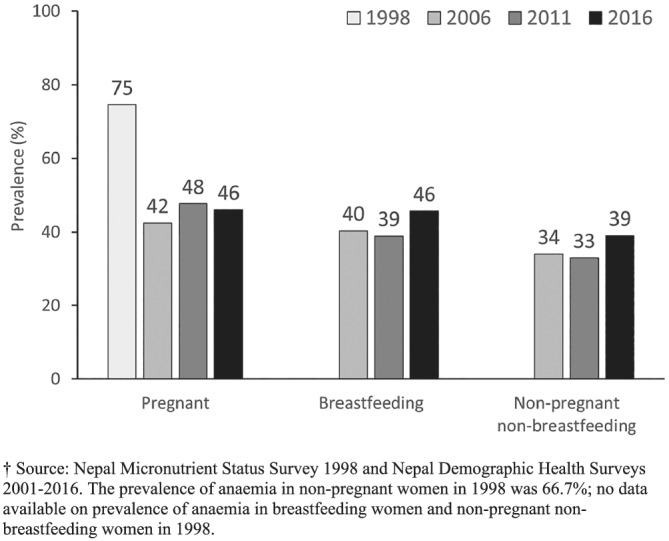
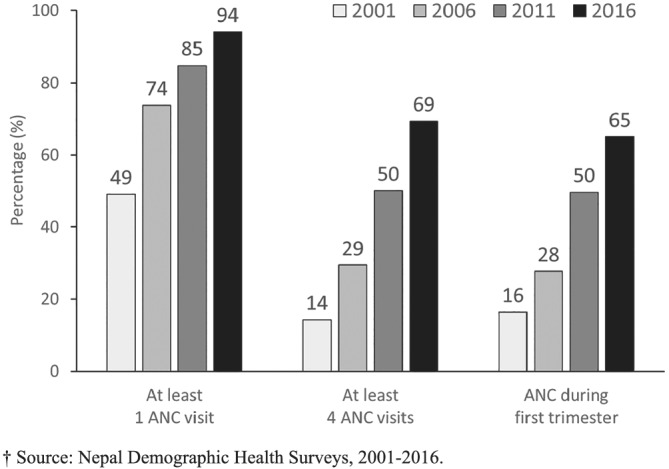
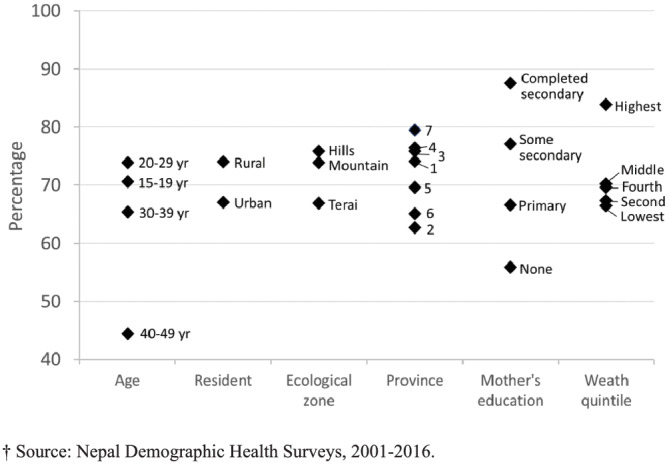
In the late 1990s, an estimated 75% of pregnant women in Nepal were anaemic. Although iron and folic acid (IFA) supplements were available free of charge, coverage among pregnant women was very low. In response, the Government of Nepal launched the Iron Intensification Programme (IIP) in 2003 to improve the coverage of IFA supplementation and anthelminthic treatment during pregnancy, as well as promote the utilization of antenatal care. This review examined how the IIP programme contributed to Nepal's success in increasing the consumption of IFA supplements during pregnancy. Nepal's cadre of Female Community Health Volunteers were engaged in the IIP to support the community-based distribution of IFA supplements to pregnant women and complement IFA distribution through health facilities and outreach services. As a result, the country achieved a fourfold increase in the proportion of women who took IFA supplements during pregnancy between 2001 and 2016 (from 23% to 91%) and a 12-fold increase in the proportion who took IFA supplements for at least 90 days during pregnancy (from 6% to 71%). The increase in coverage of IFA supplements accompanied an increase in the coverage of antenatal care during the same period. By 2016, the prevalence of anaemia in pregnant women decreased to 46%, highlighting the need to tackle other causes of anaemia and improve haemoglobin concentration before pregnancy, while maintaining the successful efforts to reach pregnant women with IFA supplements at the community level.
20 世纪 90 年代末,尼泊尔约有 75%的孕妇贫血。尽管免费提供了铁和叶酸(IFA)补充剂,但孕妇的覆盖率非常低。为了解决这个问题,尼泊尔政府于 2003 年启动了铁强化计划(IIP),以提高 IFA 补充剂和驱虫治疗在怀孕期间的覆盖率,并促进产前保健的利用。本综述考察了 IIP 计划如何为尼泊尔在增加怀孕期间 IFA 补充剂的消费方面取得成功做出了贡献。尼泊尔的女性社区卫生志愿者在 IIP 中参与支持向孕妇提供基于社区的 IFA 补充剂,并通过卫生设施和外展服务补充 IFA 分发。结果,该国在 2001 年至 2016 年期间,怀孕期间服用 IFA 补充剂的妇女比例增加了四倍(从 23%增加到 91%),怀孕期间至少服用 90 天 IFA 补充剂的妇女比例增加了 12 倍(从 6%增加到 71%)。在此期间,产前保健覆盖率的增加伴随着 IFA 补充剂覆盖率的增加。到 2016 年,孕妇贫血的患病率下降到 46%,这突出表明需要解决其他贫血原因,并在怀孕前提高血红蛋白浓度,同时保持在社区层面为孕妇提供 IFA 补充剂的成功努力。