Edward Via College of Osteopathic Medicine, Blacksburg, Virginia, United States of America.
Gibbs Cancer Center & Research Institute, Spartanburg, South Carolina, United States of America.
PLoS One. 2021 Mar 25;16(3):e0249148. doi: 10.1371/journal.pone.0249148. eCollection 2021.
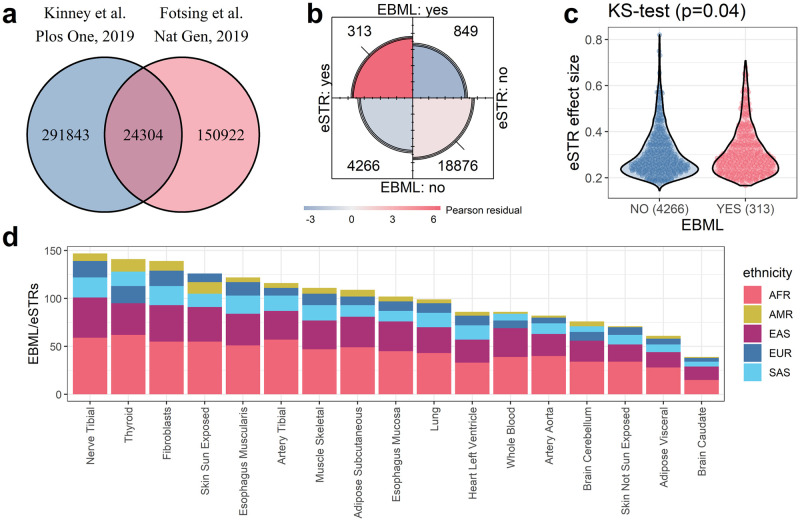
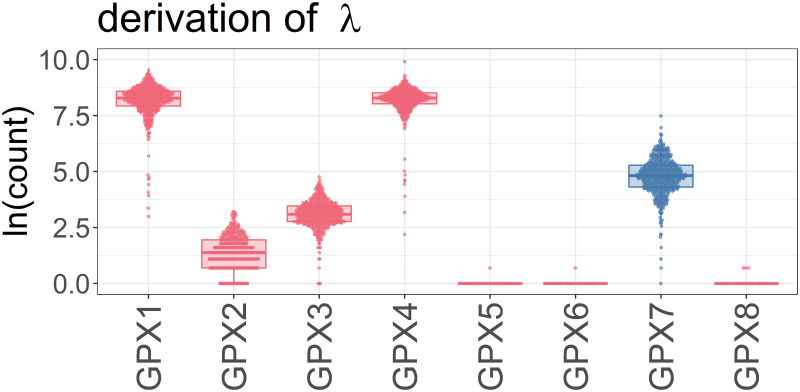
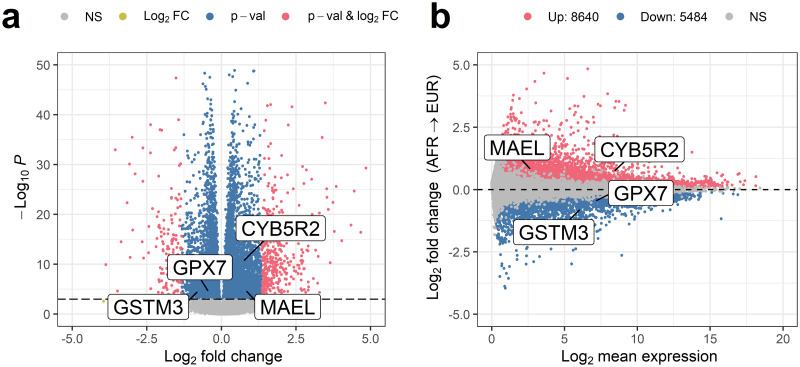
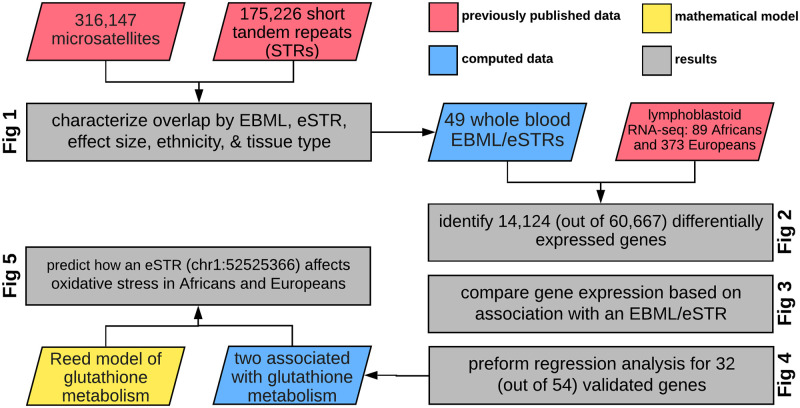
Approximately three percent of the human genome is occupied by microsatellites: a type of short tandem repeat (STR). Microsatellites have well established effects on (a) the genetic structure of diverse human populations and (b) expression of nearby genes. These lines of inquiry have uncovered 3,984 ethnically biased microsatellite loci (EBML) and 28,375 expression STRs (eSTRs), respectively. We hypothesize that a combination of EBML, eSTRs, and gene expression data (RNA-seq) can be used to show that microsatellites contribute to differential gene expression and phenotype in human populations. In fact, our previous study demonstrated a degree of mutual overlap between EBML and eSTRs but fell short of quantifying effects on gene expression. The present work aims to narrow the gap. First, we identify 313 overlapping EBML/eSTRs and recapitulate their mutual overlap. The 313 EBML/eSTRs are then characterized across ethnicity and tissue type. We use RNA-seq data to pursue validation of 49 regions that affect whole blood gene expression; 32 out of 54 affected genes are differentially expressed in Africans and Europeans. We quantify the relative contribution of these 32 genes to differential expression; fold change tends to be less than other differentially expressed genes. Repeat length correlates with expression for 15 of the 32 genes; two are conspicuously involved in glutathione metabolism. Finally, we repurpose a mathematical model of glutathione metabolism to investigate how a single polymorphic microsatellite affects phenotype. We conclude with a testable prediction that microsatellite polymorphisms affect GPX7 expression and oxidative stress in Africans and Europeans.
人类基因组约有 3%被微卫星占据:一种短串联重复(STR)。微卫星对(a)不同人类群体的遗传结构和(b)附近基因的表达有明确的影响。这些研究分别发现了 3984 个具有种族偏见的微卫星基因座(EBML)和 28375 个表达 STR(eSTR)。我们假设,EBML、eSTR 和基因表达数据(RNA-seq)的组合可用于证明微卫星对人类群体中的基因表达和表型差异有贡献。事实上,我们之前的研究表明 EBML 和 eSTR 之间存在一定程度的相互重叠,但未能量化对基因表达的影响。本研究旨在缩小这一差距。首先,我们确定了 313 个重叠的 EBML/eSTR,并重新分析了它们的相互重叠。然后,我们对 313 个 EBML/eSTR 进行了种族和组织类型的特征分析。我们使用 RNA-seq 数据来验证 49 个影响全血基因表达的区域;在非洲人和欧洲人中,有 32 个受影响的基因存在差异表达。我们量化了这些 32 个基因对差异表达的相对贡献;折叠变化往往小于其他差异表达的基因。32 个基因中的 15 个重复长度与表达相关;其中两个明显参与谷胱甘肽代谢。最后,我们重新利用谷胱甘肽代谢的数学模型来研究单个多态性微卫星如何影响表型。我们得出了一个可测试的预测,即微卫星多态性影响非洲人和欧洲人 GPX7 的表达和氧化应激。