Neiers Fabrice, Jarriault David, Menetrier Franck, Faure Philippe, Briand Loïc, Heydel Jean-Marie
Centre des Sciences du Goût et de l'Alimentation, AgroSup Dijon, CNRS, INRAE, Université Bourgogne Franche-Comté, Dijon, France.
PLoS One. 2021 Mar 25;16(3):e0249029. doi: 10.1371/journal.pone.0249029. eCollection 2021.
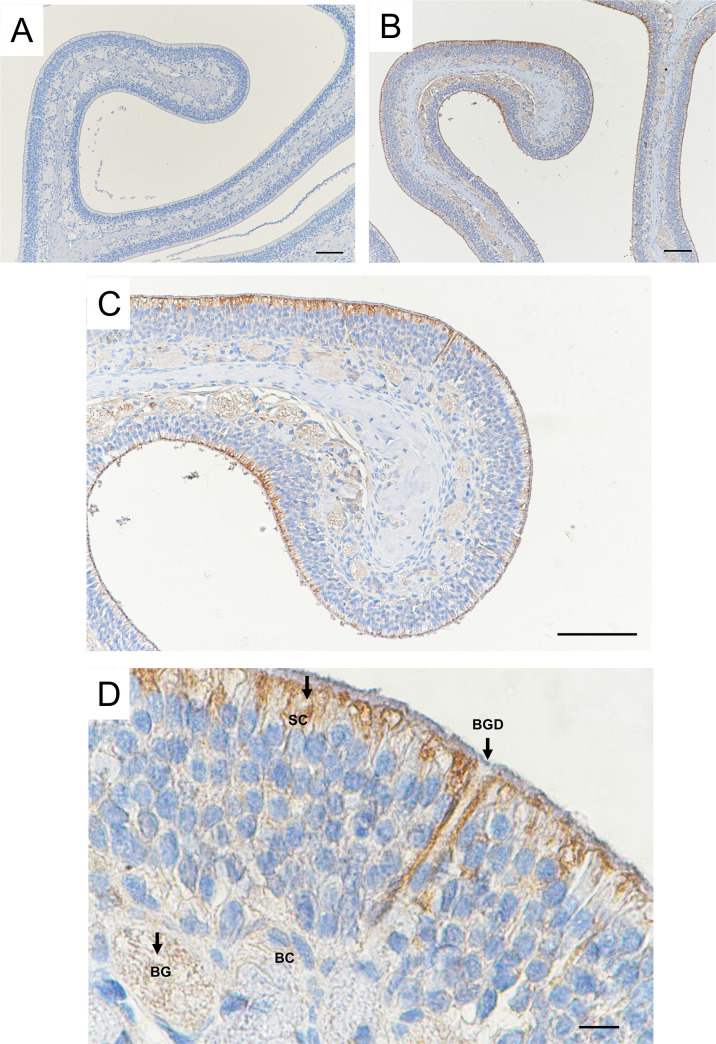
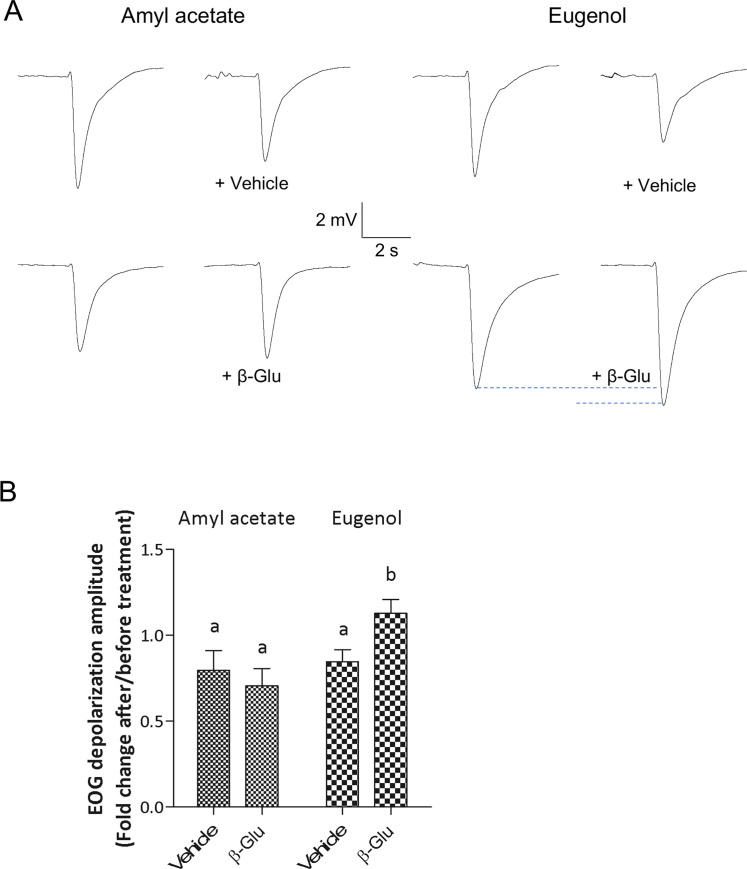
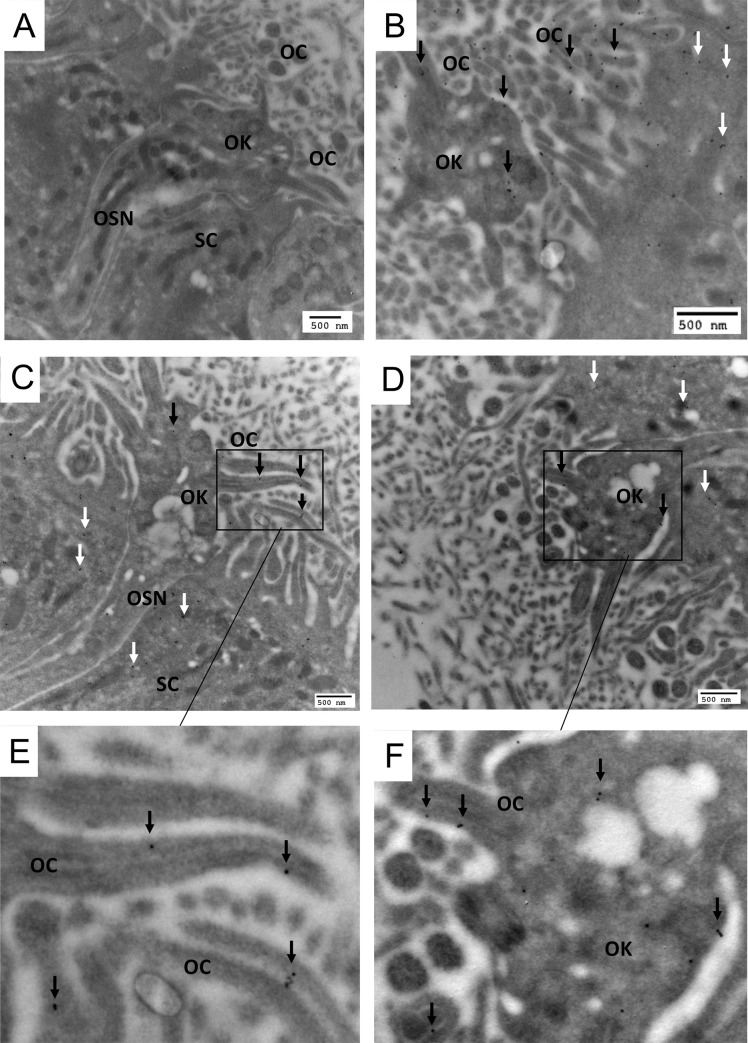
Odorant metabolizing enzymes (OMEs) are expressed in the olfactory epithelium (OE) where they play a significant role in the peripheral olfactory process by catalyzing the fast biotransformation of odorants leading either to their elimination or to the synthesis of new odorant stimuli. The large family of OMEs gathers different classes which interact with a myriad of odorants alike and complementary to olfactory receptors. Thus, it is necessary to increase our knowledge on OMEs to better understand their function in the physiological process of olfaction. This study focused on a major olfactory UDP-glucuronosyltransferase (UGT): UGT2A1. Immunohistochemistry and immunogold electronic microscopy allowed to localize its expression in the apical part of the sustentacular cells and originally at the plasma membrane of the olfactory cilia of the olfactory sensory neurons, both locations in close vicinity with olfactory receptors. Moreover, using electroolfactogram, we showed that a treatment of the OE with beta-glucuronidase, an enzyme which counterbalance the UGTs activity, increased the response to eugenol which is a strong odorant UGT substrate. Altogether, the results supported the function of the olfactory UGTs in the vertebrate olfactory perireceptor process.
气味代谢酶(OME)在嗅觉上皮(OE)中表达,它们通过催化气味剂的快速生物转化,在周围嗅觉过程中发挥重要作用,这种转化要么导致气味剂的消除,要么导致新的气味刺激物的合成。OME的大家族包含不同的类别,它们与无数气味剂相互作用,与嗅觉受体相似且互补。因此,有必要增加我们对OME的了解,以便更好地理解它们在嗅觉生理过程中的功能。本研究聚焦于一种主要的嗅觉UDP-葡萄糖醛酸转移酶(UGT):UGT2A1。免疫组织化学和免疫金电子显微镜技术能够将其表达定位在支持细胞的顶端部分,最初是在嗅觉感觉神经元嗅觉纤毛的质膜上,这两个位置都与嗅觉受体非常接近。此外,使用嗅觉电图,我们发现用β-葡萄糖醛酸酶(一种与UGT活性相互平衡的酶)处理OE后,对丁香酚(一种强效气味剂UGT底物)的反应增强。总之,这些结果支持了嗅觉UGT在脊椎动物嗅觉感受器周围过程中的功能。