Department of Microbiology, Ekiti State University, Ado-Ekiti, Nigeria.
Laboratories for Biomembrane Research and Biotechnology, Department of Biochemistry, College of Medicine, University of Ibadan, Ibadan, Nigeria.
Sci Rep. 2021 Mar 25;11(1):6941. doi: 10.1038/s41598-021-85790-6.
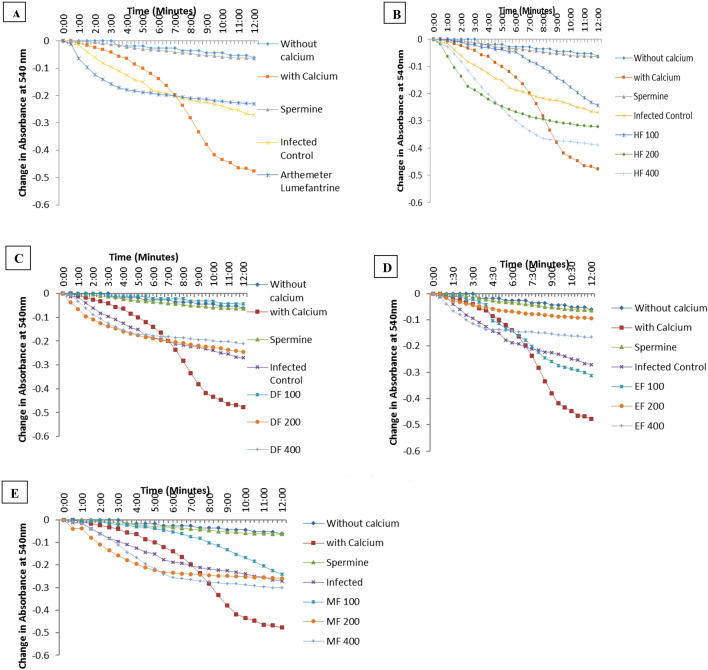
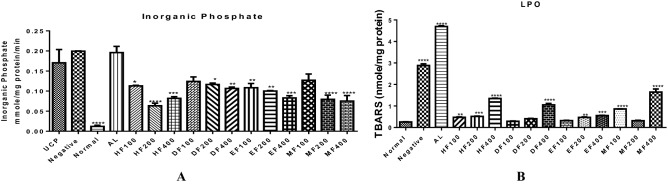
The use of medicinal plants in the treatment of malaria is gaining global attention due to their efficacy and cost effectiveness. This study evaluated the bioactivity-guided antiplasmodial efficacy and immunomodulatory effects of solvent fractions of Diospyros mespiliformis in mice infected with a susceptible strain of Plasmodium berghei (NK 65). The crude methanol extract of the stem of D. mespiliformis (DM) was partitioned between n-hexane, dichloromethane, ethyl acetate and methanol. Male Swiss mice (20 ± 2 g) infected with P. berghei were grouped and treated with vehicle (10 mL/kg, control), Artemether lumefantrine (10 mg/kg), 100, 200 and 400 mg/kg of n-hexane, dichloromethane, ethyl acetate and methanol fractions of D. mespiliformis for seven days. Blood was obtained for heme and hemozoin contents while serum was obtained for inflammatory cytokines and immunoglobulins G and M assessments. Liver mitochondria were isolated for mitochondrial permeability transition (mPT), mitochondrial FF ATPase (mATPase) and lipid peroxidation (mLPO) assays. The GC-MS was used to identify the compounds present in the most potent fraction. The dichloromethane fraction had the highest parasite clearance and improved hematological indices relative to the drug control. The heme values increased, while the hemozoin content significantly (P < 0.05) decreased compared with the drug control. The highest dose of HF and MF opened the mPT pore while the reversal effects of DF on mPT, mATPase and mLPO were dose-dependent. The levels of IgG, IgM and TNFα in the DF group were significantly higher than the drug control, while the IL-1β and IL-6 values did not vary linearly with the dose. Lupeol and Stigmastan-3,5-diene were the most abundant phytochemicals in the DF. The outcome of this study showed that the DF has immunomodulatory effects in infected mice, reduced proliferation of the malaria parasite and thus protect liver cells.
药用植物在疟疾治疗中的应用因其疗效和成本效益而受到全球关注。本研究评估了溶剂提取物对受感染的易感株 Plasmodium berghei(NK 65)的生物活性导向抗疟功效和免疫调节作用。Diospyros mespiliformis 茎的粗甲醇提取物(DM)在正己烷、二氯甲烷、乙酸乙酯和甲醇之间进行分配。感染 Plasmodium berghei 的雄性瑞士小鼠(20±2g)分组并给予载体(10mL/kg,对照)、青蒿琥酯甲氟喹(10mg/kg)、100、200 和 400mg/kg 的正己烷、二氯甲烷、乙酸乙酯和甲醇馏分的 Diospyros mespiliformis 治疗 7 天。获得血液用于血红素和血晶素含量,获得血清用于评估炎症细胞因子和免疫球蛋白 G 和 M。分离肝线粒体进行线粒体通透性转换(mPT)、线粒体 FF ATPase(mATPase)和脂质过氧化(mLPO)测定。GC-MS 用于鉴定最有效馏分中存在的化合物。二氯甲烷馏分的寄生虫清除率最高,与药物对照相比,血液学指数也有所改善。血红素值增加,而与药物对照相比,血晶素含量显著(P<0.05)降低。HF 和 MF 的最高剂量打开 mPT 孔,而 DF 对 mPT、mATPase 和 mLPO 的逆转作用呈剂量依赖性。DF 组的 IgG、IgM 和 TNFα 水平明显高于药物对照,而 IL-1β 和 IL-6 值与剂量没有线性关系。羽扇豆醇和豆甾烷-3,5-二烯是 DF 中最丰富的植物化学物质。本研究结果表明,DF 对感染小鼠具有免疫调节作用,可减少疟原虫的增殖,从而保护肝细胞。