• 文献检索
  • 文档翻译
  • 深度研究
  • 学术资讯
  • Suppr Zotero 插件Zotero 插件
  • 邀请有礼
  • 套餐&价格
  • 历史记录
应用&插件
Suppr Zotero 插件Zotero 插件浏览器插件Mac 客户端Windows 客户端微信小程序
定价
高级版会员购买积分包购买API积分包
服务
文献检索文档翻译深度研究API 文档MCP 服务
关于我们
关于 Suppr公司介绍联系我们用户协议隐私条款
关注我们

Suppr 超能文献

核心技术专利:CN118964589B侵权必究
粤ICP备2023148730 号-1Suppr @ 2026

文献检索

告别复杂PubMed语法,用中文像聊天一样搜索,搜遍4000万医学文献。AI智能推荐,让科研检索更轻松。

立即免费搜索

文件翻译

保留排版,准确专业,支持PDF/Word/PPT等文件格式,支持 12+语言互译。

免费翻译文档

深度研究

AI帮你快速写综述,25分钟生成高质量综述,智能提取关键信息,辅助科研写作。

立即免费体验

巴西新冠疫情期间一线医护人员的嗅觉功能障碍

Olfactory Dysfunction in Frontline Health Care Professionals During COVID-19 Pandemic in Brazil.

作者信息

Sbrana Mariana Ferreira, Fornazieri Marco Aurélio, Bruni-Cardoso Alexandre, Avelino-Silva Vivian I, Schechtman Deborah, Voegels Richard Louis, Malnic Bettina, Glezer Isaias, de Rezende Pinna Fabio

机构信息

Department of Otorhinolaryngology, Faculdade de Medicina da Universidade de São Paulo, São Paulo, Brazil.

Department of Clinical Surgery, Universidade Estadual de Londrina and Pontifical Catholic University of Paraná, Londrina, Brazil.

出版信息

Front Physiol. 2021 Mar 9;12:622987. doi: 10.3389/fphys.2021.622987. eCollection 2021.

DOI:10.3389/fphys.2021.622987
PMID:33767631
原文链接:https://pmc.ncbi.nlm.nih.gov/articles/PMC7985267/
Abstract

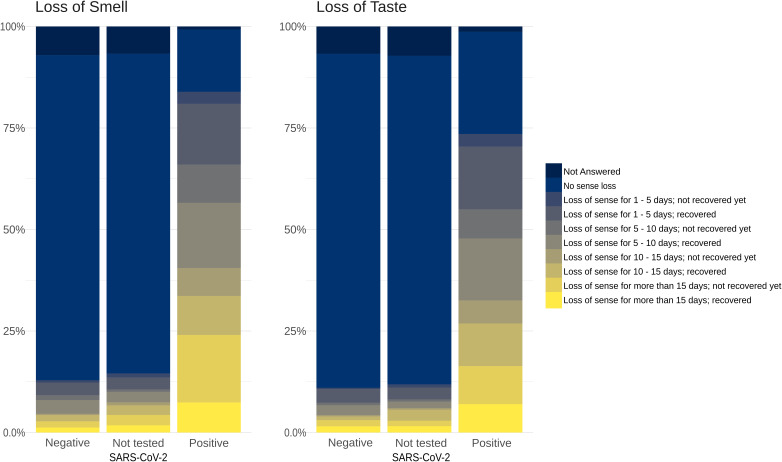
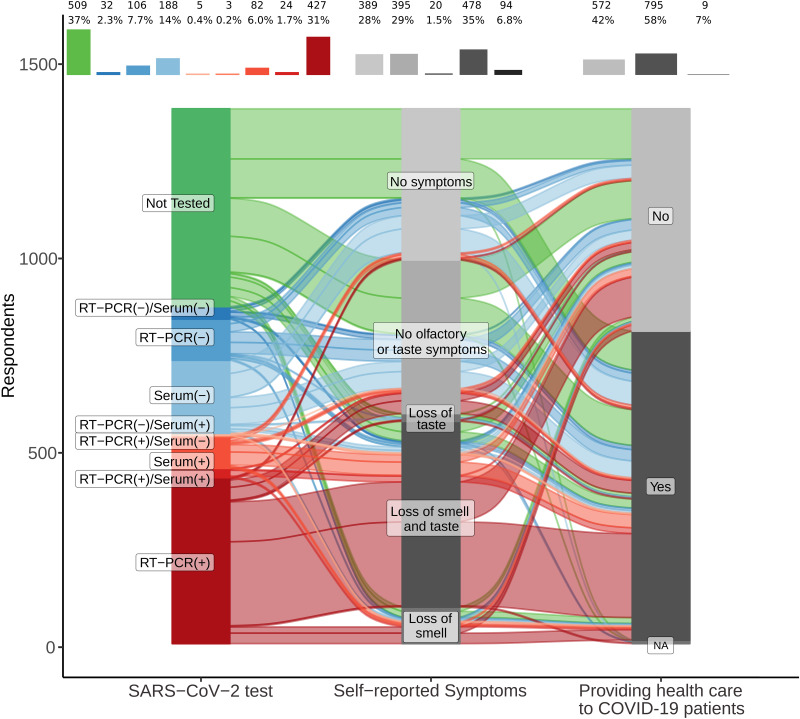
Upper respiratory viral infections can decrease the sense of smell either by inflammatory restriction of nasal airflow that carries the odorant molecules or through interference in olfactory sensory neuron function. During the coronavirus disease 2019 (COVID-19) pandemic, triggered by severe acute respiratory syndrome coronavirus 2 (SARS-CoV-2), worldwide reports of severe smell loss (anosmia/hyposmia) revealed a different type of olfactory dysfunction associated with respiratory virus infection. Since self-reported perception of smell is subjective and SARS-CoV-2 exposure is variable in the general population, we aimed to study a population that would be more homogeneously exposed to the virus. Here, we investigated the prevalence of olfactory loss in frontline health professionals diagnosed with COVID-19 in Brazil, one of the major epicenters of the disease. We also analyzed the rate of olfactory function recovery and the particular characteristics of olfactory deficit in this population. A widely disclosed cross-sectional online survey directed to health care workers was developed by a group of researchers to collect data concerning demographic information, general symptoms, otolaryngological symptoms, comorbidities, and COVID-19 test results. Of the 1,376 health professionals who completed the questionnaire, 795 (57.8%) were working directly with COVID-19 patients, either in intensive care units, emergency rooms, wards, outpatient clinics, or other areas. Five-hundred forty-one (39.3%) participants tested positive for SARS-CoV-2, and 509 (37%) were not tested. Prevalence of olfactory dysfunction in COVID-19-positive subjects was 83.9% (454 of 541) compared to 12.9% (42 of 326) of those who tested negative and to 14.9% (76 of 509) of those not tested. Olfactory dysfunction incidence was higher in those working in wards, emergency rooms, and intensive care units compared to professionals in outpatient clinics. In general, remission from olfactory symptoms was frequent by the time of responses. Taste disturbances were present in 74.1% of infected participants and were significantly associated with hyposmia. In conclusion, olfactory dysfunction is highly correlated with exposure to SARS-CoV-2 in health care professionals, and remission rates up to 2 weeks are high.

摘要

上呼吸道病毒感染可通过限制携带气味分子的鼻气流或干扰嗅觉感觉神经元功能来降低嗅觉。在由严重急性呼吸综合征冠状病毒2(SARS-CoV-2)引发的2019年冠状病毒病(COVID-19)大流行期间,全球范围内关于严重嗅觉丧失(嗅觉缺失/嗅觉减退)的报告揭示了一种与呼吸道病毒感染相关的不同类型的嗅觉功能障碍。由于自我报告的嗅觉感知是主观的,且普通人群中SARS-CoV-2暴露情况各不相同,我们旨在研究一个病毒暴露情况更为均匀的人群。在此,我们调查了巴西(该疾病的主要疫区之一)确诊感染COVID-19的一线医护人员中嗅觉丧失的患病率。我们还分析了该人群中嗅觉功能恢复的比率以及嗅觉缺陷的具体特征。一组研究人员开展了一项广泛公开的针对医护人员的横断面在线调查,以收集有关人口统计学信息、一般症状、耳鼻喉科症状、合并症以及COVID-19检测结果的数据。在完成问卷的1376名医护人员中,795名(57.8%)直接与COVID-19患者接触,他们工作于重症监护病房、急诊室、病房、门诊诊所或其他区域。541名(39.3%)参与者SARS-CoV-2检测呈阳性,509名(37%)未接受检测。COVID-19阳性受试者中嗅觉功能障碍的患病率为83.9%(541例中的454例),而阴性受试者中为12.9%(326例中的42例),未检测者中为14.9%(509例中的76例)。与门诊诊所的专业人员相比,在病房、急诊室和重症监护病房工作的人员嗅觉功能障碍发生率更高。总体而言,到回复时嗅觉症状缓解较为常见。74.1% 的感染参与者存在味觉障碍,且味觉障碍与嗅觉减退显著相关。总之,医护人员的嗅觉功能障碍与接触SARS-CoV-2高度相关,且两周内的缓解率较高。
https://cdn.ncbi.nlm.nih.gov/pmc/blobs/e431/7985267/d92cf07e9f3b/fphys-12-622987-g004.jpg
https://cdn.ncbi.nlm.nih.gov/pmc/blobs/e431/7985267/9eeb7ef14a5c/fphys-12-622987-g001.jpg
https://cdn.ncbi.nlm.nih.gov/pmc/blobs/e431/7985267/70de29b681e3/fphys-12-622987-g002.jpg
https://cdn.ncbi.nlm.nih.gov/pmc/blobs/e431/7985267/9bc8a0440160/fphys-12-622987-g003.jpg
https://cdn.ncbi.nlm.nih.gov/pmc/blobs/e431/7985267/d92cf07e9f3b/fphys-12-622987-g004.jpg
https://cdn.ncbi.nlm.nih.gov/pmc/blobs/e431/7985267/9eeb7ef14a5c/fphys-12-622987-g001.jpg
https://cdn.ncbi.nlm.nih.gov/pmc/blobs/e431/7985267/70de29b681e3/fphys-12-622987-g002.jpg
https://cdn.ncbi.nlm.nih.gov/pmc/blobs/e431/7985267/9bc8a0440160/fphys-12-622987-g003.jpg
https://cdn.ncbi.nlm.nih.gov/pmc/blobs/e431/7985267/d92cf07e9f3b/fphys-12-622987-g004.jpg

相似文献

1
Olfactory Dysfunction in Frontline Health Care Professionals During COVID-19 Pandemic in Brazil.巴西新冠疫情期间一线医护人员的嗅觉功能障碍
Front Physiol. 2021 Mar 9;12:622987. doi: 10.3389/fphys.2021.622987. eCollection 2021.
2
Olfactory and gustatory dysfunctions as a clinical presentation of mild-to-moderate forms of the coronavirus disease (COVID-19): a multicenter European study.嗅觉和味觉障碍作为冠状病毒病(COVID-19)轻至中度形式的临床特征:一项多中心欧洲研究。
Eur Arch Otorhinolaryngol. 2020 Aug;277(8):2251-2261. doi: 10.1007/s00405-020-05965-1. Epub 2020 Apr 6.
3
Objective Sensory Testing Methods Reveal a Higher Prevalence of Olfactory Loss in COVID-19-Positive Patients Compared to Subjective Methods: A Systematic Review and Meta-Analysis.目的:与主观方法相比,客观感觉测试方法显示 COVID-19 阳性患者的嗅觉丧失发生率更高:系统评价和荟萃分析。
Chem Senses. 2020 Dec 5;45(9):865-874. doi: 10.1093/chemse/bjaa064.
4
Olfactory Dysfunction and Sinonasal Symptomatology in COVID-19: Prevalence, Severity, Timing, and Associated Characteristics.新冠病毒感染患者的嗅觉功能障碍和鼻-鼻窦症状:流行率、严重程度、出现时间和相关特征。
Otolaryngol Head Neck Surg. 2020 Jul;163(1):114-120. doi: 10.1177/0194599820929185. Epub 2020 May 19.
5
Subjective Smell Disturbances in Children with Sars-Cov-2 or Other Viral Infections do not Correspond with Olfactory Test Results.儿童感染 SARS-CoV-2 或其他病毒后的主观嗅觉障碍与嗅觉测试结果不相符。
Klin Padiatr. 2024 Feb;236(2):129-138. doi: 10.1055/a-2208-6245. Epub 2024 Jan 23.
6
A primer on viral-associated olfactory loss in the era of COVID-19.新冠疫情时代有关病毒相关嗅觉丧失的概述。
Int Forum Allergy Rhinol. 2020 Jul;10(7):814-820. doi: 10.1002/alr.22578. Epub 2020 Jun 1.
7
Coincidence of COVID-19 epidemic and olfactory dysfunction outbreak in Iran.伊朗新冠疫情与嗅觉功能障碍爆发的巧合。
Med J Islam Repub Iran. 2020 Jun 15;34:62. doi: 10.34171/mjiri.34.62. eCollection 2020.
8
Subjective and psychophysical olfactory and gustatory dysfunction among COVID-19 outpatients; short- and long-term results.COVID-19 门诊患者的主观和心理物理学嗅觉及味觉障碍;短期和长期结果。
PLoS One. 2022 Oct 3;17(10):e0275518. doi: 10.1371/journal.pone.0275518. eCollection 2022.
9
Olfactory Dysfunction in COVID-19 Patients: Prevalence and Prognosis for Recovering Sense of Smell.新型冠状病毒肺炎患者嗅觉障碍:嗅觉恢复的患病率和预后。
Otolaryngol Head Neck Surg. 2021 Jan;164(1):82-86. doi: 10.1177/0194599820943530. Epub 2020 Jul 14.
10
The Importance of Considering Olfactory Dysfunction During the COVID-19 Pandemic and in Clinical Practice.重视 COVID-19 大流行期间及临床实践中的嗅觉功能障碍
J Allergy Clin Immunol Pract. 2021 Jan;9(1):7-12. doi: 10.1016/j.jaip.2020.10.036. Epub 2020 Oct 28.

引用本文的文献

1
Effect of drug therapies on self-reported chemosensory outcomes after COVID-19.药物治疗对新冠病毒病后自我报告的化学感觉结果的影响。
World J Otorhinolaryngol Head Neck Surg. 2024 May 13;10(2):88-96. doi: 10.1002/wjo2.183. eCollection 2024 Jun.
2
Prevalence and Factors Associated with Olfactory Dysfunction in Individuals with COVID-19 in Brazil: A Study of 20,669 Cases from 2020 to 2021.巴西新冠肺炎患者嗅觉功能障碍的患病率及相关因素:一项对2020年至2021年20669例病例的研究。
Med Princ Pract. 2024;33(2):164-172. doi: 10.1159/000536191. Epub 2024 Jan 10.
3
Taste loss as a distinct symptom of COVID-19: a systematic review and meta-analysis.

本文引用的文献

1
SARS-CoV-2 Receptors and Entry Genes Are Expressed in the Human Olfactory Neuroepithelium and Brain.严重急性呼吸综合征冠状病毒2型(SARS-CoV-2)受体和进入基因在人嗅神经上皮和大脑中表达。
iScience. 2020 Dec 18;23(12):101839. doi: 10.1016/j.isci.2020.101839. Epub 2020 Nov 25.
2
Coincidence of COVID-19 epidemic and olfactory dysfunction outbreak in Iran.伊朗新冠疫情与嗅觉功能障碍爆发的巧合。
Med J Islam Repub Iran. 2020 Jun 15;34:62. doi: 10.34171/mjiri.34.62. eCollection 2020.
3
Viral infection and smell loss: The case of COVID-19.病毒感染与嗅觉丧失:以 COVID-19 为例。
味觉丧失是 COVID-19 的一个独特症状:系统评价和荟萃分析。
Chem Senses. 2023 Jan 1;48. doi: 10.1093/chemse/bjad043.
4
Association between chemosensory impairment with neuropsychiatric morbidity in post-acute COVID-19 syndrome: results from a multidisciplinary cohort study.新冠病毒感染后综合征患者的化学感觉障碍与神经精神发病之间的关联:一项多学科队列研究的结果。
Eur Arch Psychiatry Clin Neurosci. 2023 Mar;273(2):325-333. doi: 10.1007/s00406-022-01427-3. Epub 2022 May 28.
5
Intranasal delivery of SARS-CoV-2 spike protein is sufficient to cause olfactory damage, inflammation and olfactory dysfunction in zebrafish.经鼻递送 SARS-CoV-2 刺突蛋白足以导致斑马鱼嗅觉损伤、炎症和嗅觉功能障碍。
Brain Behav Immun. 2022 May;102:341-359. doi: 10.1016/j.bbi.2022.03.006. Epub 2022 Mar 17.
6
Exploring the Clinical Utility of Gustatory Dysfunction (GD) as a Triage Symptom Prior to Reverse Transcription Polymerase Chain Reaction (RT-PCR) in the Diagnosis of COVID-19: A Meta-Analysis and Systematic Review.探索味觉功能障碍(GD)作为新冠病毒疾病(COVID-19)诊断中逆转录聚合酶链反应(RT-PCR)之前的分诊症状的临床效用:一项荟萃分析和系统评价。
Life (Basel). 2021 Nov 29;11(12):1315. doi: 10.3390/life11121315.
7
COVID-19 and Anosmia: Remaining Gaps to Knowledge.新型冠状病毒肺炎与嗅觉丧失:知识空白
Int Arch Otorhinolaryngol. 2021 Oct 29;25(4):e479-e480. doi: 10.1055/s-0041-1736563. eCollection 2021 Oct.
8
Taste loss as a distinct symptom of COVID-19: A systematic review and meta-analysis.味觉丧失作为新冠病毒病的一种独特症状:一项系统综述和荟萃分析。
medRxiv. 2021 Oct 9:2021.10.09.21264771. doi: 10.1101/2021.10.09.21264771.
J Neurochem. 2021 May;157(4):930-943. doi: 10.1111/jnc.15197. Epub 2020 Oct 12.
4
Non-neuronal expression of SARS-CoV-2 entry genes in the olfactory system suggests mechanisms underlying COVID-19-associated anosmia.SARS-CoV-2 进入基因在嗅觉系统中的非神经元表达提示了 COVID-19 相关嗅觉丧失的潜在机制。
Sci Adv. 2020 Jul 31;6(31). doi: 10.1126/sciadv.abc5801. Epub 2020 Jul 24.
5
A comparison of COVID-19, SARS and MERS.新型冠状病毒肺炎、严重急性呼吸综合征和中东呼吸综合征的比较。
PeerJ. 2020 Aug 19;8:e9725. doi: 10.7717/peerj.9725. eCollection 2020.
6
Chemosensory Dysfunction in COVID-19: Prevalences, Recovery Rates, and Clinical Associations on a Large Brazilian Sample.新冠病毒感染相关的嗅觉味觉障碍:一项基于巴西大样本的流行率、恢复率及临床相关性研究
Otolaryngol Head Neck Surg. 2021 Mar;164(3):512-518. doi: 10.1177/0194599820954825. Epub 2020 Sep 1.
7
Is loss of sense of smell a diagnostic marker in COVID-19: A systematic review and meta-analysis.嗅觉丧失是否为 COVID-19 的诊断标志物:系统评价和荟萃分析。
Clin Otolaryngol. 2020 Nov;45(6):914-922. doi: 10.1111/coa.13620. Epub 2020 Sep 16.
8
Severe Acute Respiratory Syndrome Coronavirus 2 Infects and Damages the Mature and Immature Olfactory Sensory Neurons of Hamsters.严重急性呼吸综合征冠状病毒 2 感染并损伤仓鼠成熟和未成熟的嗅觉感觉神经元。
Clin Infect Dis. 2021 Jul 15;73(2):e503-e512. doi: 10.1093/cid/ciaa995.
9
Inflammatory olfactory neuropathy in two patients with COVID-19.两名新冠肺炎患者的炎性嗅觉神经病变
Lancet. 2020 Jul 18;396(10245):166. doi: 10.1016/S0140-6736(20)31525-7. Epub 2020 Jul 10.
10
New Insights of Emerging SARS-CoV-2: Epidemiology, Etiology, Clinical Features, Clinical Treatment, and Prevention.新型严重急性呼吸综合征冠状病毒2(SARS-CoV-2)的新见解:流行病学、病因学、临床特征、临床治疗及预防
Front Cell Dev Biol. 2020 May 22;8:410. doi: 10.3389/fcell.2020.00410. eCollection 2020.