Boddul Sanjaykumar V, Sharma Ravi Kumar, Dubnovitsky Anatoly, Raposo Bruno, Gerstner Christina, Shen Yunbing, Iyer Vaishnavi Srinivasan, Kasza Zsolt, Kwok William W, Winkler Aaron R, Klareskog Lars, Malmström Vivianne, Bettini Maria, Wermeling Fredrik
Division of Rheumatology, Department of Medicine Solna, Center for Molecular Medicine, Karolinska University Hospital and Karolinska Institutet, Stockholm, Sweden.
Science for Life Laboratory, Department of Medicine Solna, Karolinska Institutet, Stockholm, Sweden.
J Transl Autoimmun. 2021 Mar 3;4:100087. doi: 10.1016/j.jtauto.2021.100087. eCollection 2021.
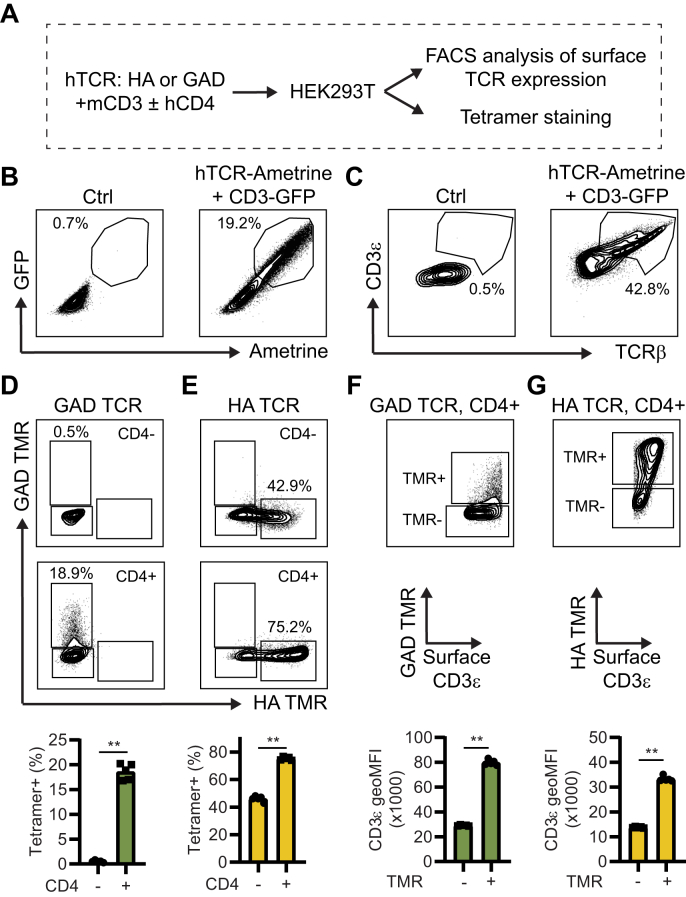
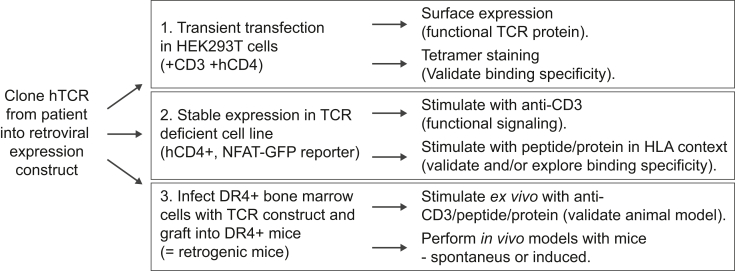
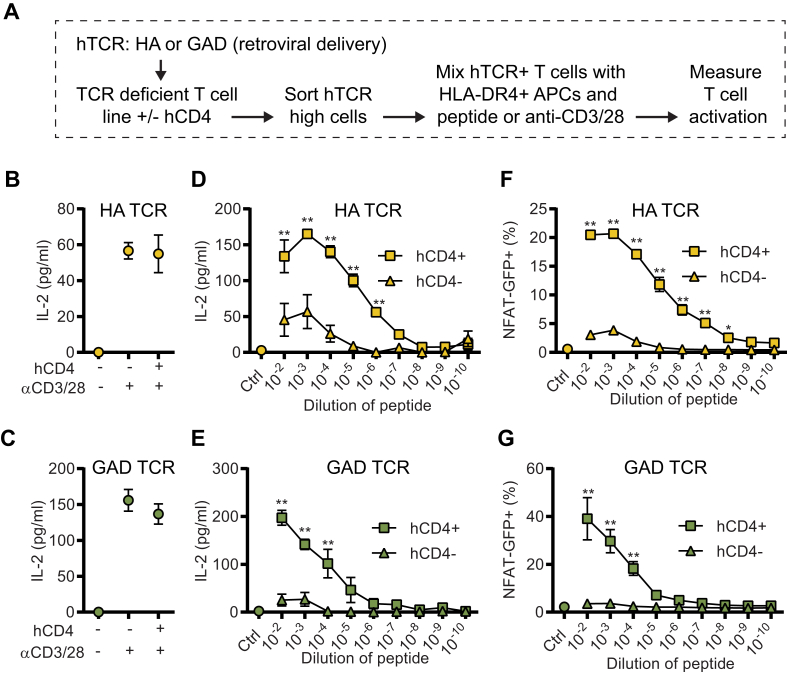
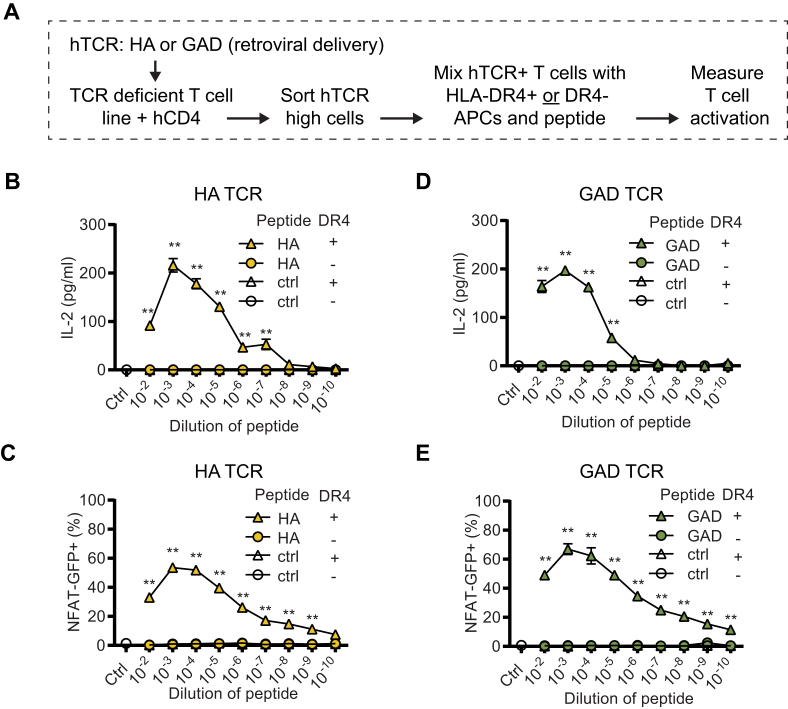
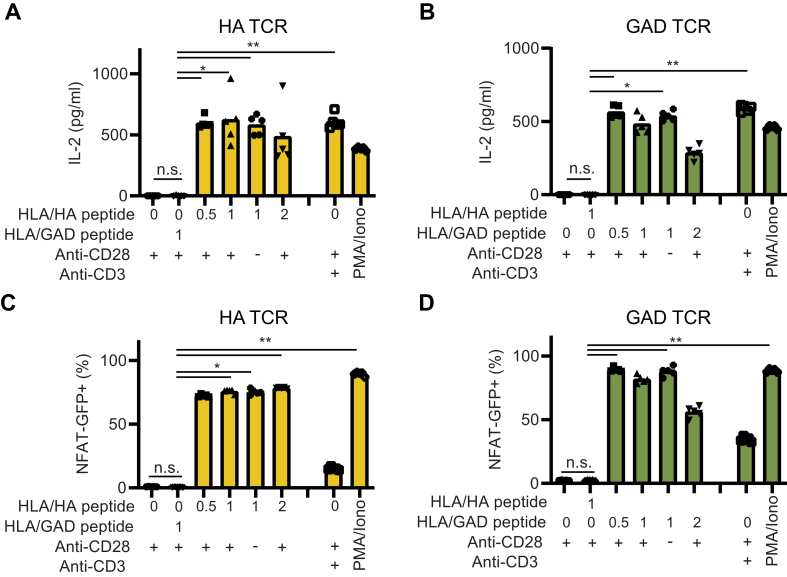
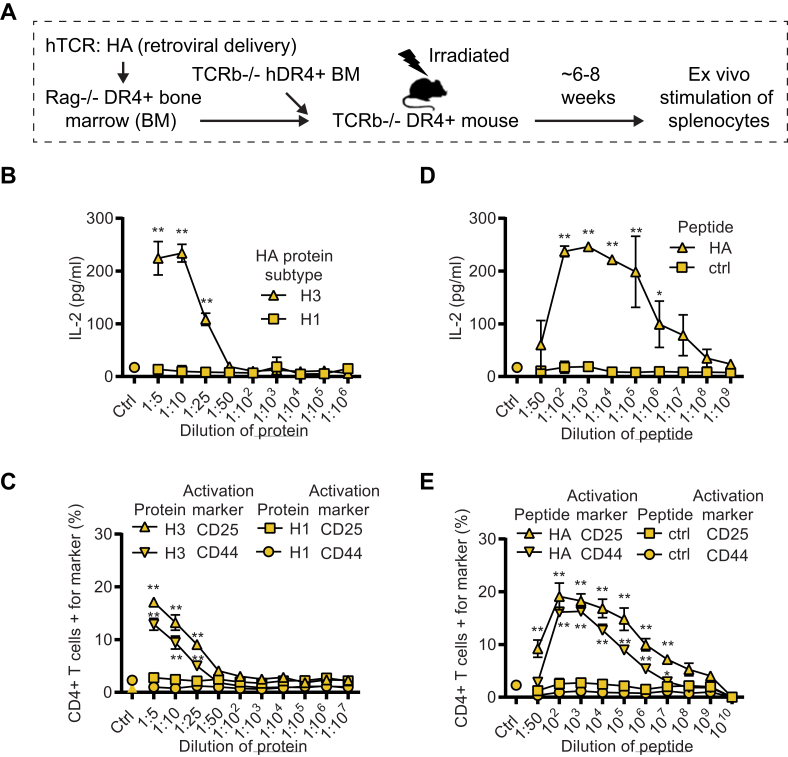
Recent advances in single-cell sequencing technologies enable the generation of large-scale data sets of paired TCR sequences from patients with autoimmune disease. Methods to validate and characterize patient-derived TCR data are needed, as well as relevant model systems that can support the development of antigen-specific tolerance inducing drugs. We have generated a pipeline to allow streamlined generation of 'artificial' T cells in a robust and reasonably high throughput manner for and studies of antigen-specific and patient-derived immune responses. Hereby chimeric (mouse-human) TCR alpha and beta constructs are re-expressed in three different formats for further studies: () transiently in HEK cells for peptide-HLA tetramer validation experiments, () stably in the TCR-negative 58 T cell line for functional readouts such as IL-2 production and NFAT-signaling, and lastly () in human HLA-transgenic mice for studies of autoimmune disease and therapeutic interventions. As a proof of concept, we have used human HLA-DRB1∗04:01 restricted TCR sequences specific for a type I diabetes-associated GAD peptide, and an influenza-derived HA peptide. We show that the same chimeric TCR constructs can be used in each of the described assays facilitating sequential validation and prioritization steps leading to humanized animal models.
单细胞测序技术的最新进展使得能够从自身免疫性疾病患者中生成大规模配对TCR序列数据集。需要有方法来验证和表征患者来源的TCR数据,以及能够支持抗原特异性耐受性诱导药物开发的相关模型系统。我们已经构建了一个流程,以便以稳健且相当高通量的方式简化“人工”T细胞的生成,用于抗原特异性和患者来源免疫反应的研究。在此,嵌合(小鼠-人)TCRα和β构建体以三种不同形式重新表达以供进一步研究:(1)在HEK细胞中瞬时表达用于肽-HLA四聚体验证实验;(2)在TCR阴性的58 T细胞系中稳定表达用于功能性检测,如IL-2产生和NFAT信号传导;最后(3)在人HLA转基因小鼠中用于自身免疫性疾病和治疗干预的研究。作为概念验证,我们使用了针对I型糖尿病相关GAD肽和流感来源HA肽的人HLA-DRB1∗04:01限制性TCR序列。我们表明,相同的嵌合TCR构建体可用于上述每种检测,便于进行顺序验证和优先级排序步骤,从而建立人源化动物模型。