Davis Allan Peter, Wiegers Thomas C, Wiegers Jolene, Grondin Cynthia J, Johnson Robin J, Sciaky Daniela, Mattingly Carolyn J
Department of Biological Sciences, North Carolina State University, Raleigh, NC 27695.
Center for Human Health and the Environment, North Carolina State University, Raleigh, NC 27695.
Curr Res Toxicol. 2021;2:128-139. doi: 10.1016/j.crtox.2021.03.001. Epub 2021 Mar 5.
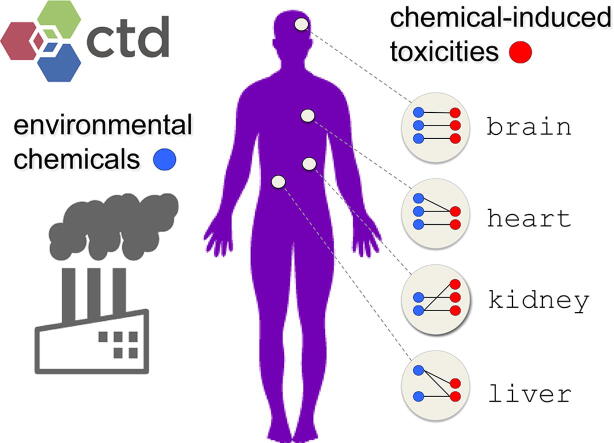
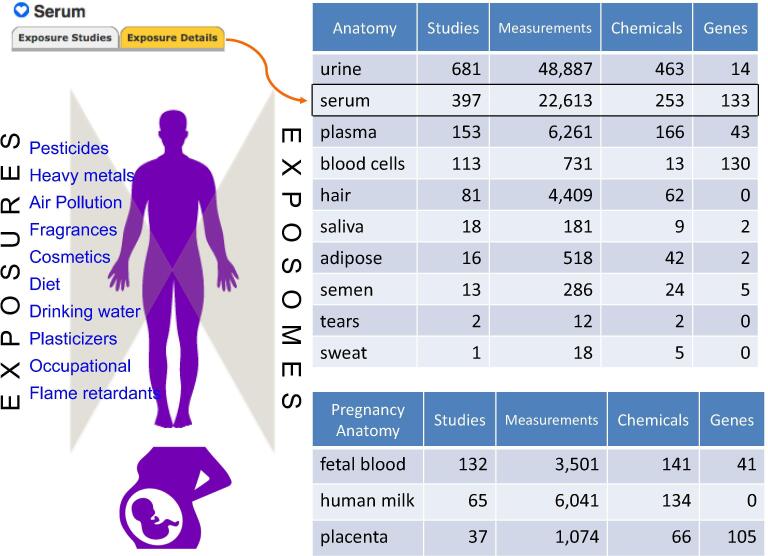
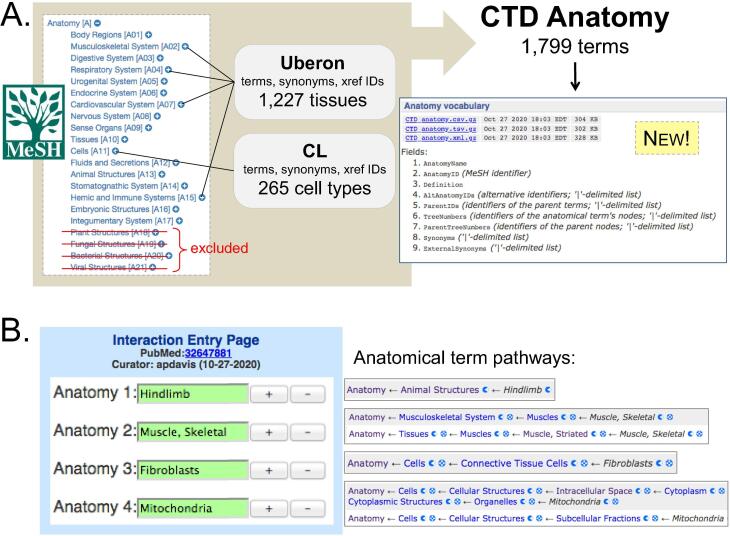
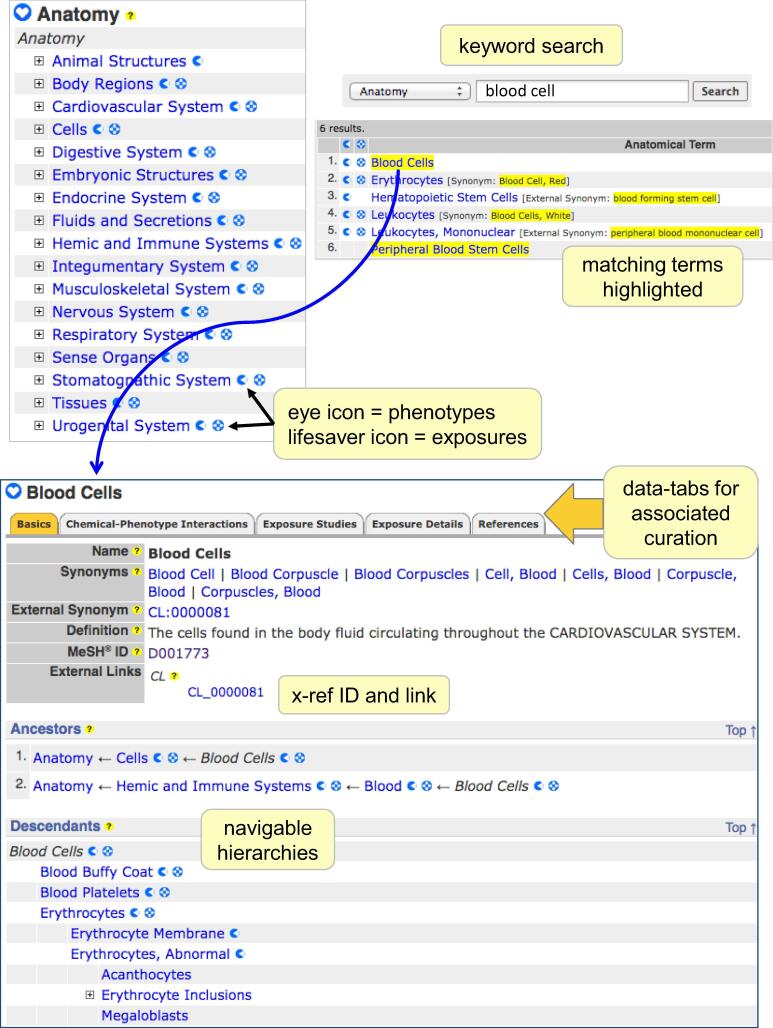
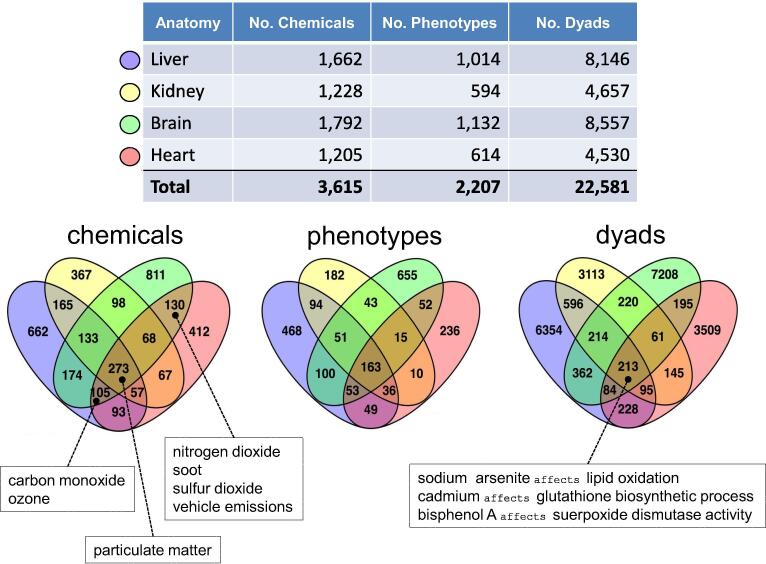
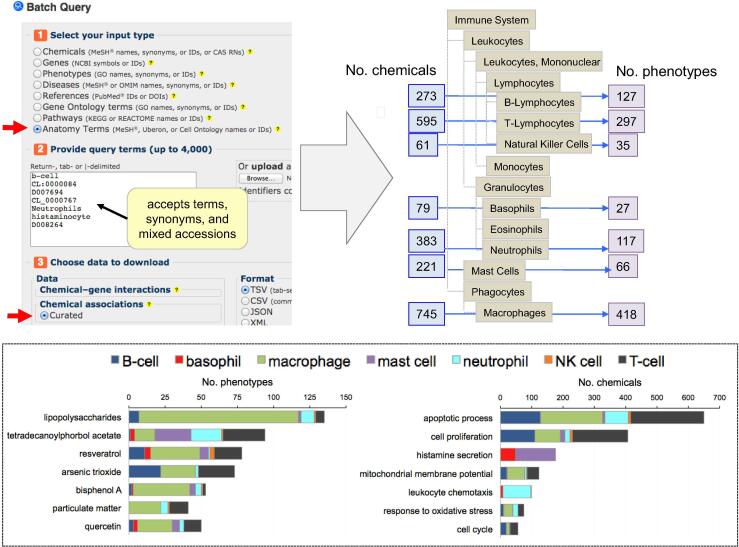
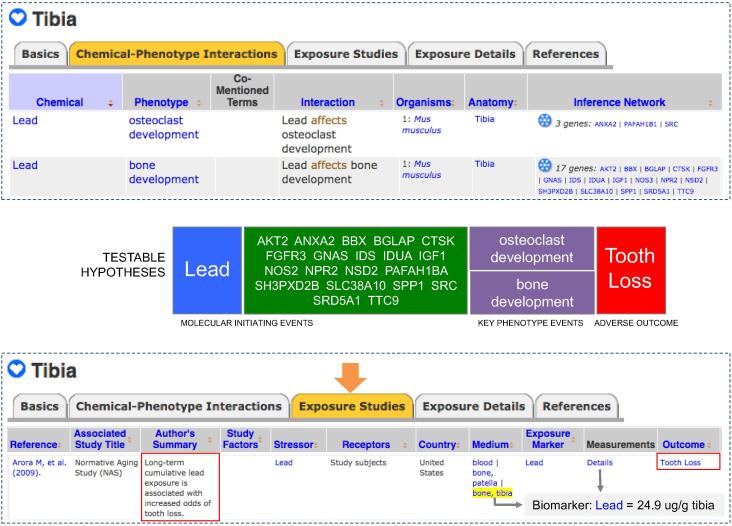
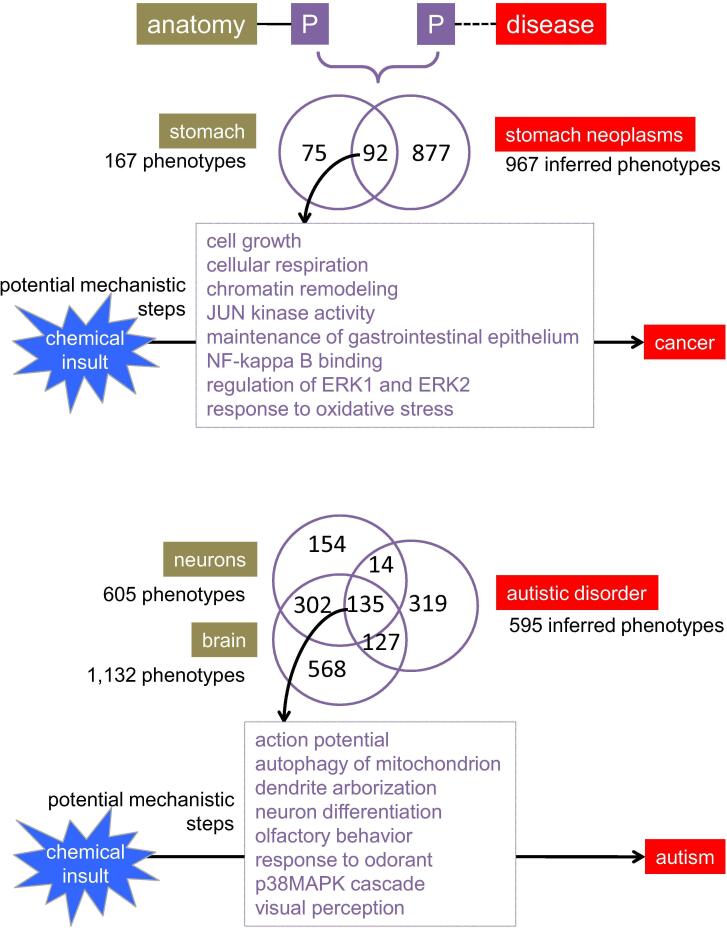
The Comparative Toxicogenomics Database (CTD) is a freely available public resource that curates and interrelates chemical, gene/protein, phenotype, disease, organism, and exposure data. CTD can be used to address toxicological mechanisms for environmental chemicals and facilitate the generation of testable hypotheses about how exposures affect human health. At CTD, manually curated interactions for chemical-induced phenotypes are enhanced with anatomy terms (tissues, fluids, and cell types) to describe the physiological system of the reported event. These same anatomy terms are used to annotate the human media (e.g., urine, hair, nail, blood, etc.) in which an environmental chemical was assayed for exposure. Currently, CTD uses more than 880 unique anatomy terms to contextualize over 255,000 chemical-phenotype interactions and 167,000 exposure statements. These annotations allow chemical-phenotype interactions and exposure data to be explored from a novel, anatomical perspective. Here, we describe CTD's anatomy curation process (including the construction of a controlled, interoperable vocabulary) and new anatomy webpages (that coalesce and organize the curated chemical-phenotype and exposure data sets). We also provide examples that demonstrate how this feature can be used to identify system- and cell-specific chemical-induced toxicities, help inform exposure data, prioritize phenotypes for environmental diseases, survey tissue and pregnancy exposomes, and facilitate data connections with external resources. Anatomy annotations advance understanding of environmental health by providing new ways to explore and survey chemical-induced events and exposure studies in the CTD framework.
比较毒理基因组学数据库(CTD)是一个免费的公共资源,它整理并关联化学物质、基因/蛋白质、表型、疾病、生物体和暴露数据。CTD可用于研究环境化学物质的毒理机制,并有助于生成关于暴露如何影响人类健康的可测试假设。在CTD中,化学诱导表型的人工整理的相互作用通过解剖学术语(组织、体液和细胞类型)得到增强,以描述所报告事件的生理系统。这些相同的解剖学术语用于注释检测环境化学物质暴露的人体介质(如尿液、头发、指甲、血液等)。目前,CTD使用超过880个独特的解剖学术语来关联超过255,000个化学-表型相互作用和167,000个暴露陈述。这些注释允许从一个新颖的解剖学角度探索化学-表型相互作用和暴露数据。在这里,我们描述了CTD的解剖学整理过程(包括构建一个受控的、可互操作的词汇表)和新的解剖学网页(将整理后的化学-表型和暴露数据集合并并组织起来)。我们还提供了一些示例,展示了如何使用此功能来识别系统和细胞特异性的化学诱导毒性、帮助提供暴露数据信息、确定环境疾病表型的优先级、调查组织和孕期暴露组,并促进与外部资源的数据连接。解剖学注释通过提供新的方法来探索和调查CTD框架中的化学诱导事件和暴露研究,推进了对环境健康的理解。