Hu Zhehao, van der Kouwe Andre, Han Fei, Xiao Jiayu, Chen Junzhou, Han Hui, Bi Xiaoming, Li Debiao, Fan Zhaoyang
Biomedical Imaging Research Institute, Cedars-Sinai Medical Center, Los Angeles, California, USA.
Department of Bioengineering, University of California, Los Angeles, California, USA.
Magn Reson Med. 2021 Aug;86(2):637-647. doi: 10.1002/mrm.28777. Epub 2021 Mar 25.
(1) To investigate the effect of internal localized movement on 3DMR intracranial vessel wall imaging and (2) to develop a novel motion-compensation approach combining volumetric navigator (vNav) and self-gating (SG) to simultaneously compensate for bulk and localized movements.
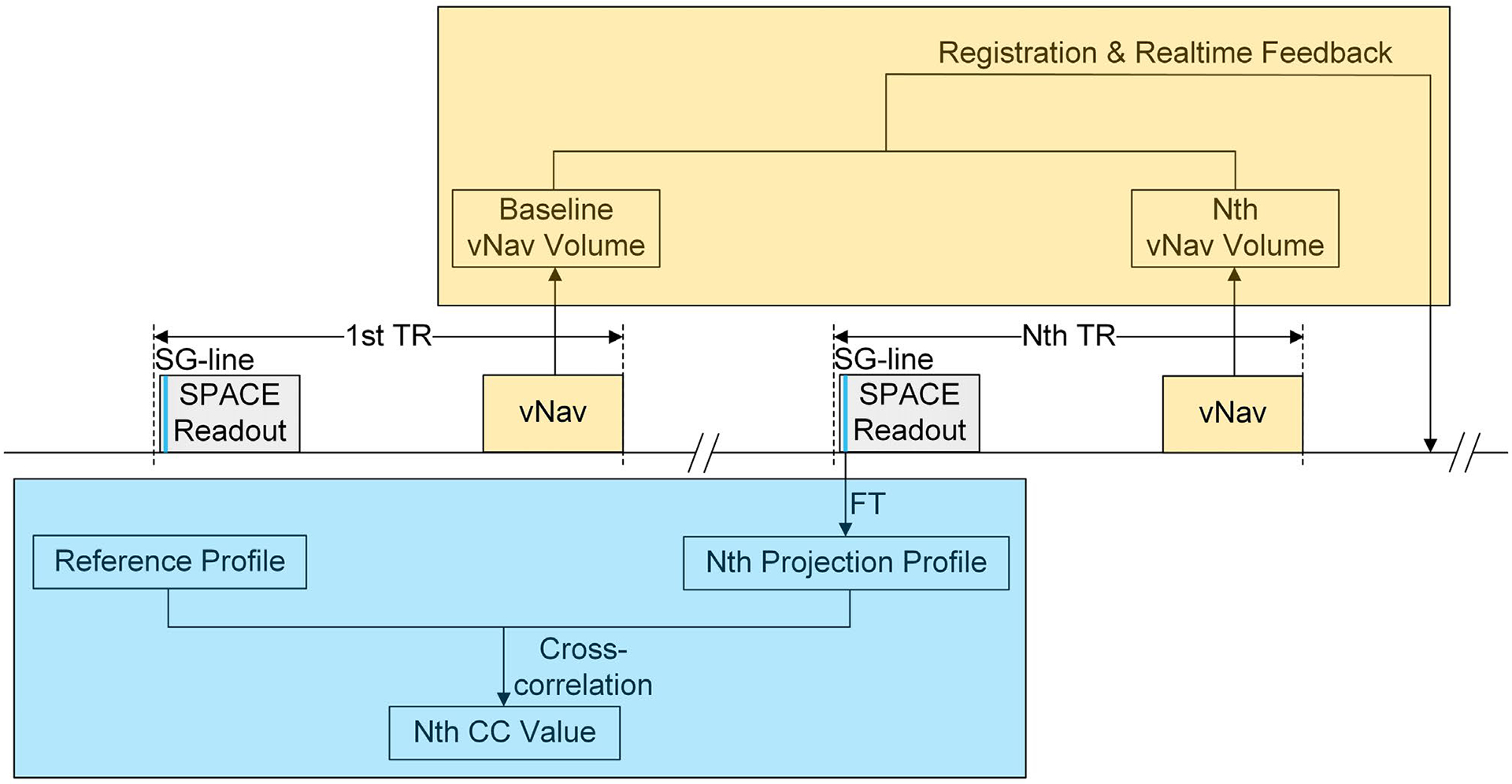
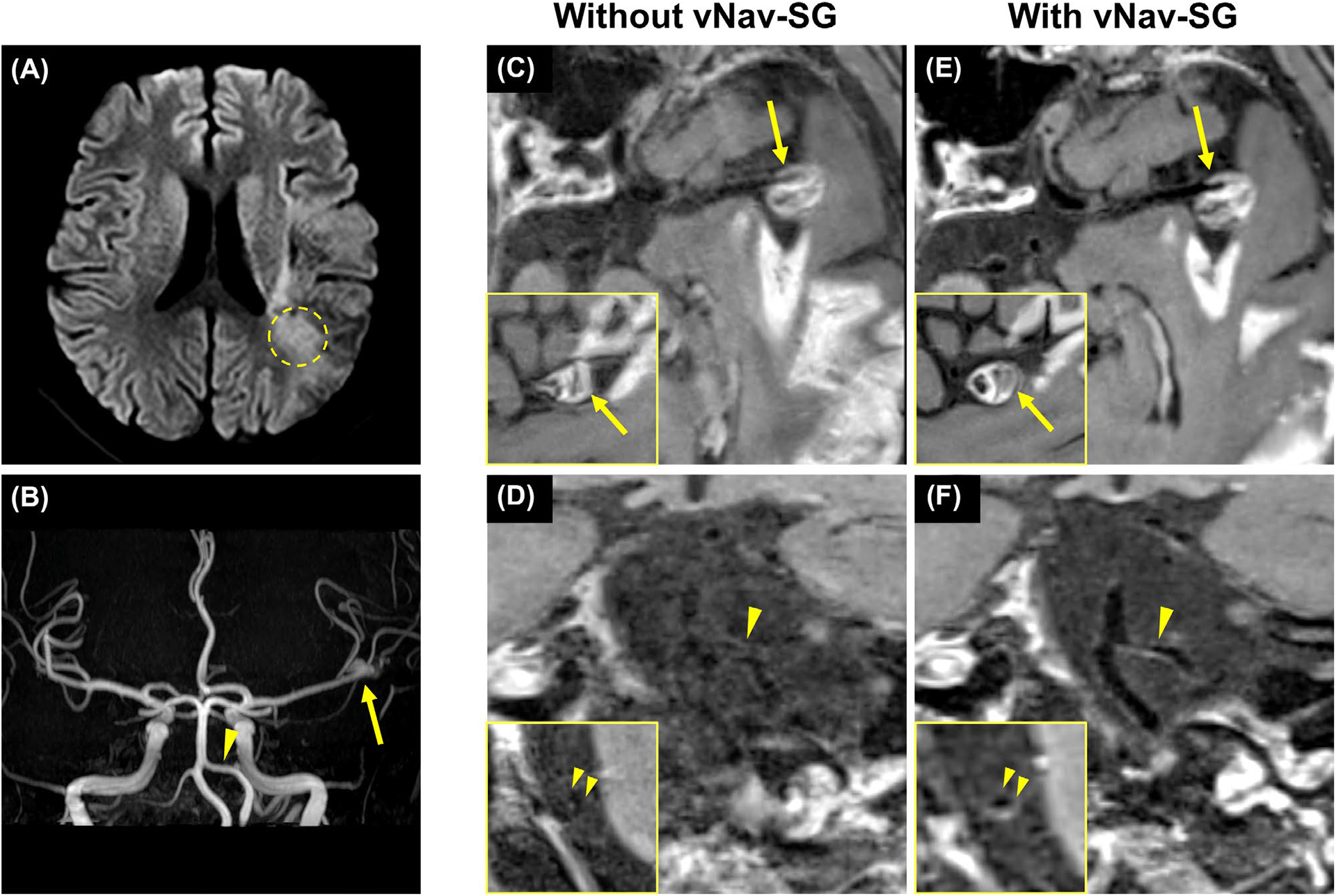
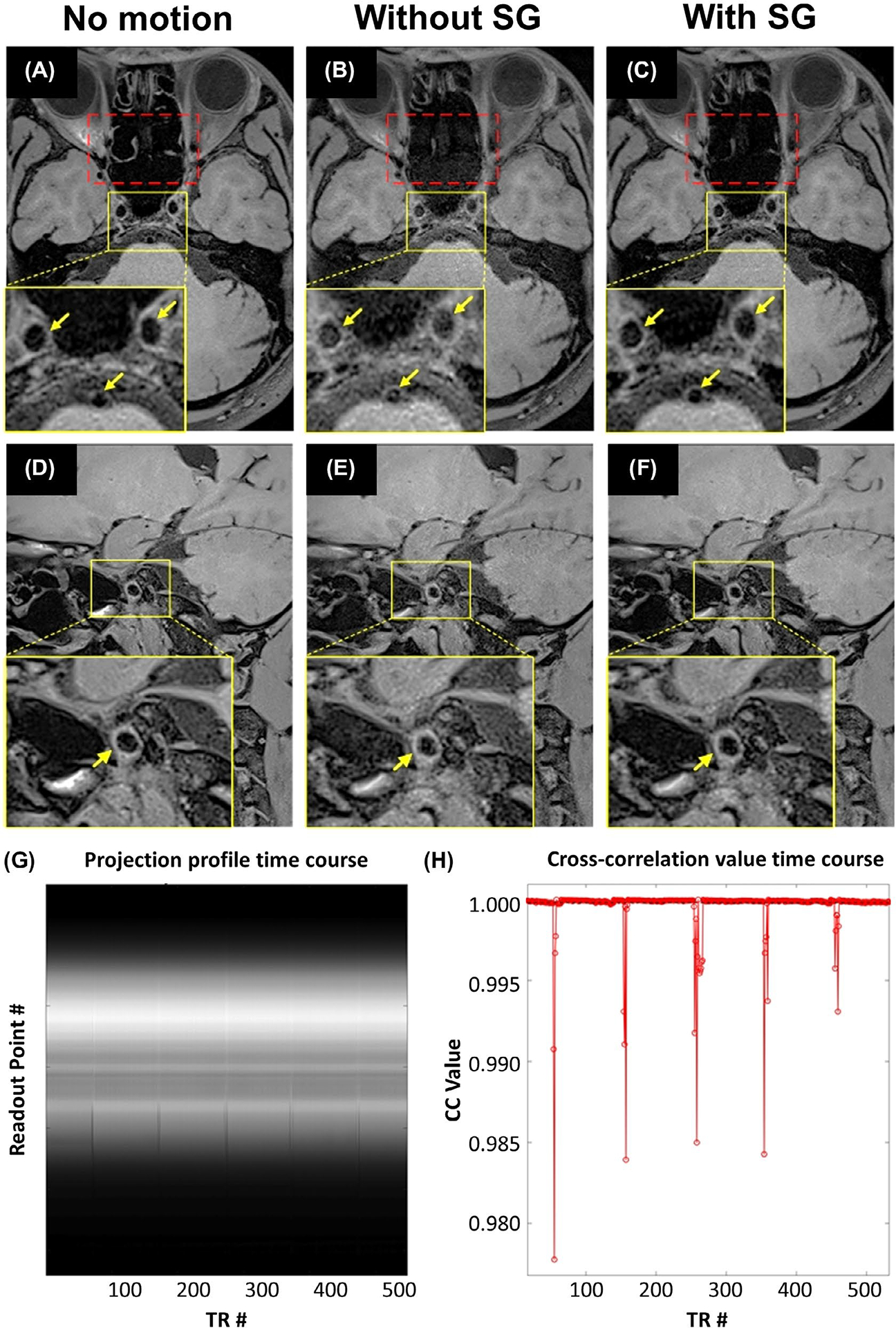
A 3D variable-flip-angle turbo spin-echo (ie, SPACE) sequence was modified to incorporate vNav and SG modules. The SG signals from the center k-space line are acquired at the beginning of each TR to detect localized motion-affected TRs. The vNavs from low-resolution 3D EPI are acquired to identify bulk head motion. Fifteen healthy subjects and 3 stroke patients were recruited in this study. Overall image quality (0-poor to 4-excellent) and vessel wall sharpness were compared among the scenarios with and without bulk and/or localized motion and/or the proposed compensation strategies.
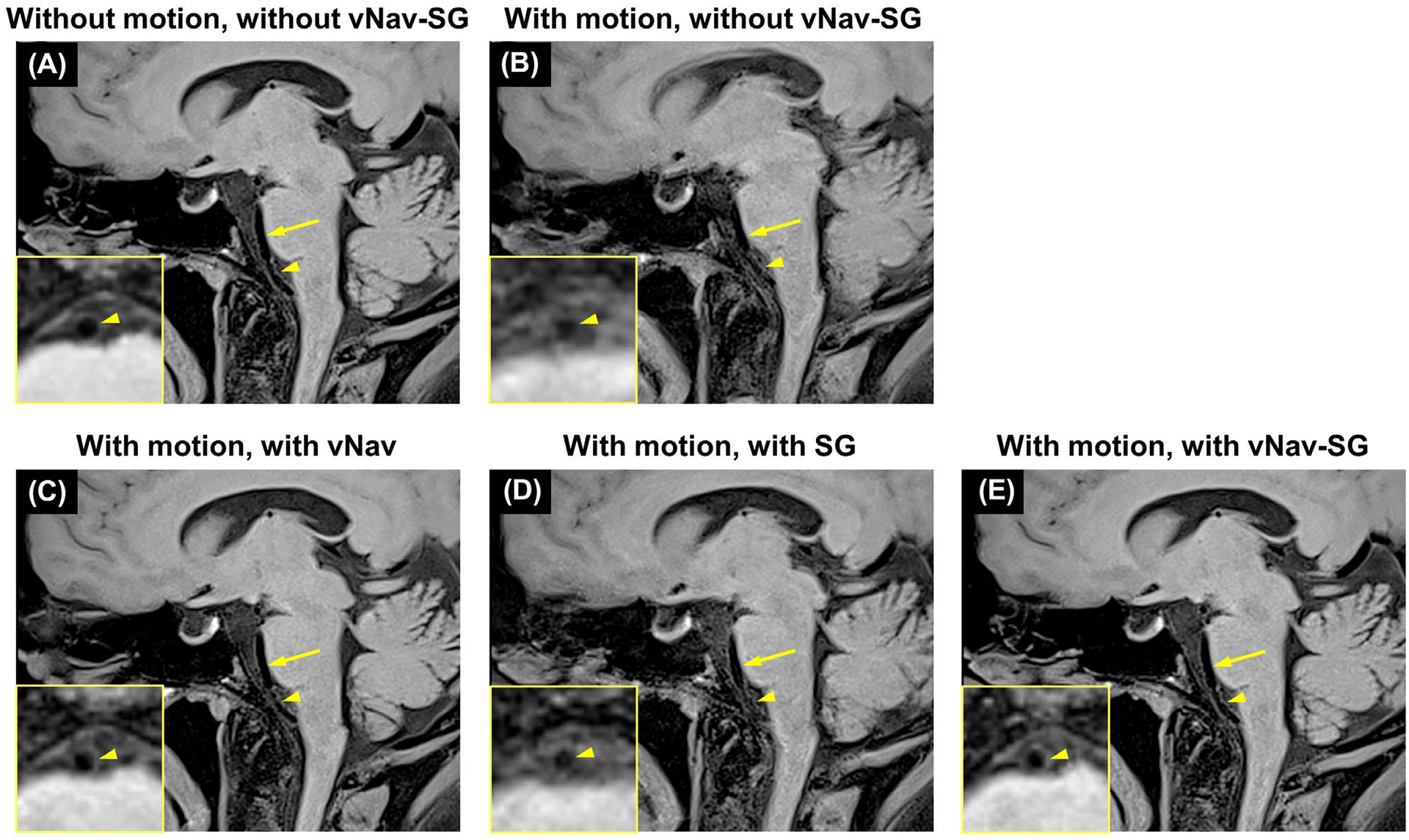
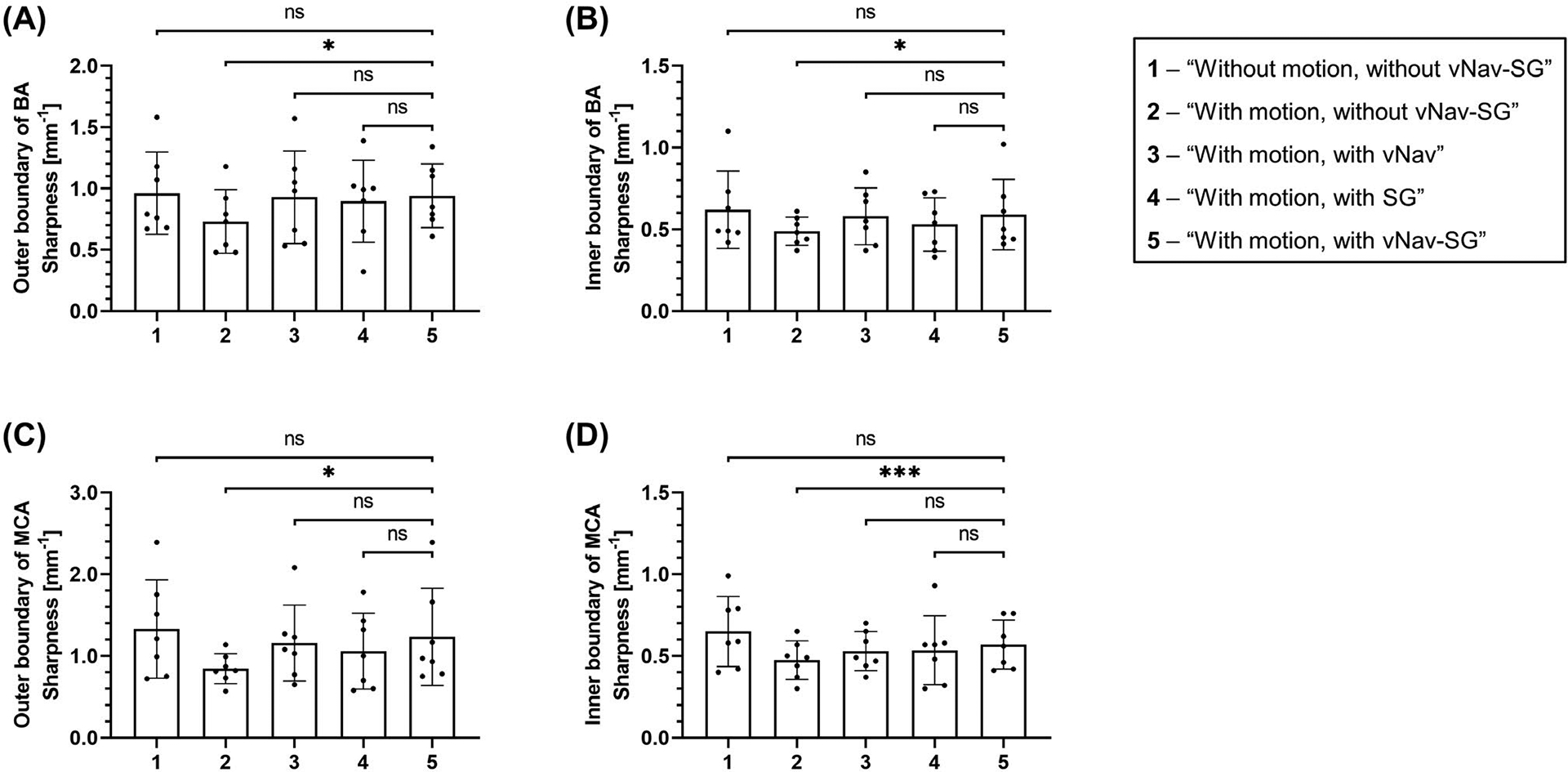
Localized motion reduced wall sharpness, which was significantly mitigated by SG (ie, outer boundary of basilar artery: 0.68 ± 0.27 vs 0.86 ± 0.17; P = .037). When motion occurred, the overall image quality and vessel wall sharpness obtained with vNav-SG SPACE were significantly higher than those obtained with conventional SPACE (ie, basilarartery outer boundary sharpness: 0.73 ± 0.24 vs 0.94 ± 0.24; P = .033), yet comparable to those obtained in motion-free scans (ie, basilarartery outer boundary sharpness: 0.94 ± 0.24 vs 0.96 ± 0.31; P = .815).
Localized movements can induce considerable artifacts in intracranial vessel wall imaging. The vNav-SG approach is capable of compensating for both bulk and localized motions.
(1)研究内部局部运动对3D磁共振颅内血管壁成像的影响;(2)开发一种结合容积导航(vNav)和自门控(SG)的新型运动补偿方法,以同时补偿整体和局部运动。
对三维可变翻转角快速自旋回波序列(即SPACE序列)进行修改,加入vNav和SG模块。在每个重复时间(TR)开始时采集来自中心k空间线的SG信号,以检测受局部运动影响的TR。采集来自低分辨率三维回波平面成像(EPI)的vNav,以识别头部的整体运动。本研究招募了15名健康受试者和3名中风患者。比较有无整体和/或局部运动及/或所提出的补偿策略的情况下的整体图像质量(0-差至4-优)和血管壁清晰度。
局部运动降低了血管壁清晰度,而SG可显著减轻这种影响(即基底动脉外边界:0.68±0.27对0.86±0.17;P = 0.037)。当发生运动时,vNav-SG SPACE获得的整体图像质量和血管壁清晰度显著高于传统SPACE获得的结果(即基底动脉外边界清晰度:0.73±0.24对0.94±0.24;P = 0.033),但与无运动扫描获得的结果相当(即基底动脉外边界清晰度:0.94±0.24对0.96±0.31;P = 0.815)。
局部运动可在颅内血管壁成像中引起相当大的伪影。vNav-SG方法能够补偿整体和局部运动。