Heritage College of Osteopathic Medicine, Ohio University, Athens, Ohio, USA; Edison Biotechnology Institute, Ohio University, Athens, Ohio, USA.
Department of Chemistry and Biochemistry, Ohio University, Athens, Ohio, USA.
J Biol Chem. 2021 Jan-Jun;296:100588. doi: 10.1016/j.jbc.2021.100588. Epub 2021 Mar 24.
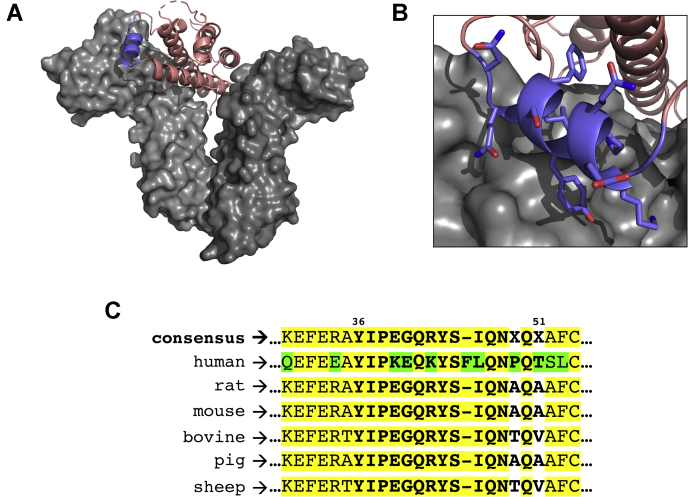
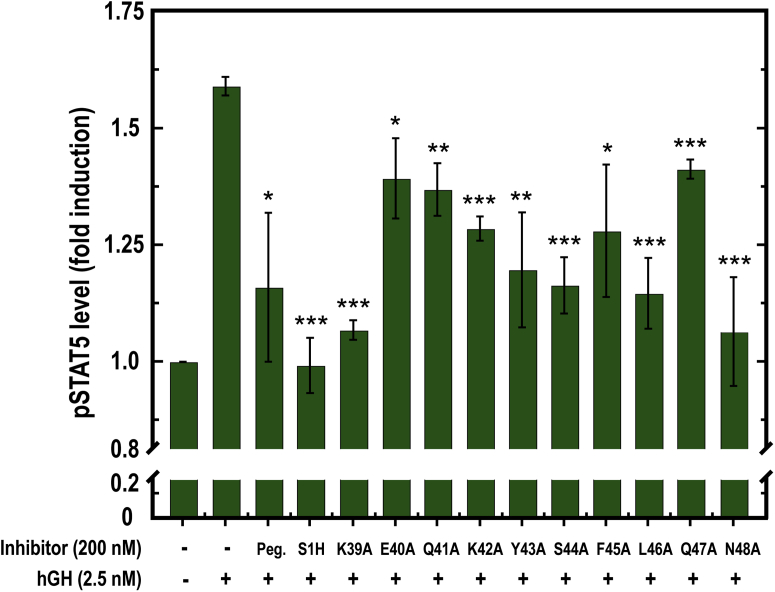
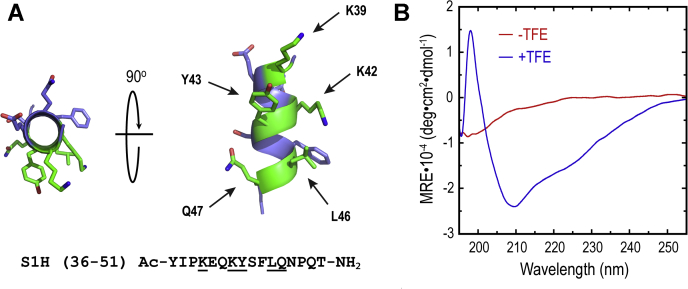
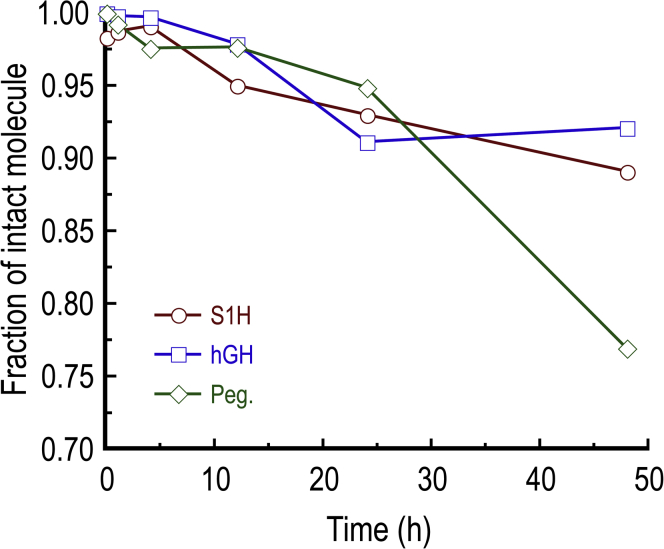
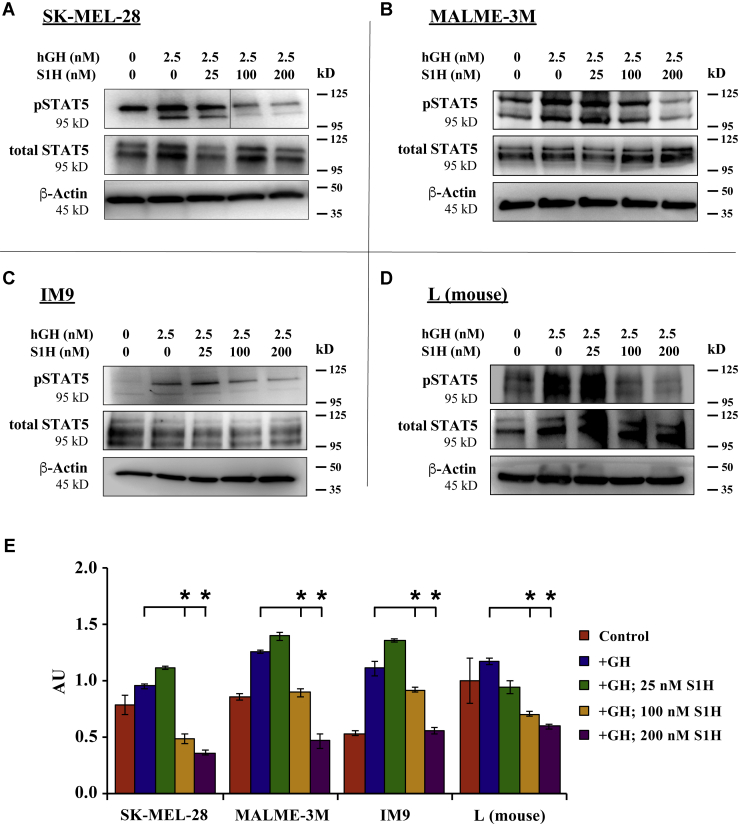
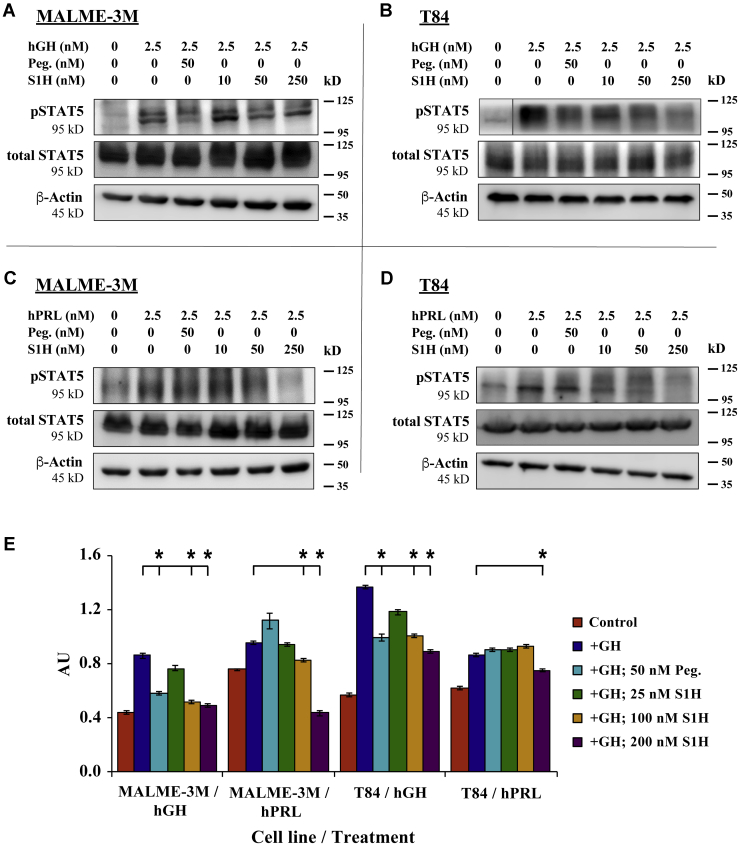
Excess circulating human growth hormone (hGH) in vivo is linked to metabolic and growth disorders such as cancer, diabetes, and acromegaly. Consequently, there is considerable interest in developing antagonists of hGH action. Here, we present the design, synthesis, and characterization of a 16-residue peptide (site 1-binding helix [S1H]) that inhibits hGH-mediated STAT5 phosphorylation in cultured cells. S1H was designed as a direct sequence mimetic of the site 1 mini-helix (residues 36-51) of wild-type hGH and acts by inhibiting the interaction of hGH with the human growth hormone receptor (hGHR). In vitro studies indicated that S1H is stable in human serum and can adopt an α-helix in solution. Our results also show that S1H mitigates phosphorylation of STAT5 in cells co-treated with hGH, reducing intracellular STAT5 phosphorylation levels to those observed in untreated controls. Furthermore, S1H was found to attenuate the activity of the hGHR and the human prolactin receptor, suggesting that this peptide acts as an antagonist of both lactogenic and somatotrophic hGH actions. Finally, we used alanine scanning to determine how discrete amino acids within the S1H sequence contribute to its structural organization and biological activity. We observed a strong correlation between helical propensity and inhibitory effect, indicating that S1H-mediated antagonism of the hGHR is largely dependent on the ability for S1H to adopt an α-helix. Taken together, these results show that S1H not only acts as a novel peptide-based antagonist of the hGHR but can also be applied as a chemical tool to study the molecular nature of hGH-hGHR interactions.
体内过量的循环人生长激素(hGH)与代谢和生长紊乱有关,如癌症、糖尿病和肢端肥大症。因此,人们对开发 hGH 作用的拮抗剂产生了浓厚的兴趣。在这里,我们设计、合成并表征了一种 16 个残基的肽(位点 1 结合螺旋[S1H]),它可以抑制培养细胞中的 hGH 介导的 STAT5 磷酸化。S1H 被设计为野生型 hGH 第 1 位点(36-51 位)的小螺旋的直接序列模拟物,通过抑制 hGH 与人类生长激素受体(hGHR)的相互作用发挥作用。体外研究表明,S1H 在人血清中稳定,并且可以在溶液中采用α-螺旋。我们的结果还表明,S1H 在与 hGH 共同处理的细胞中减轻了 STAT5 的磷酸化,使细胞内 STAT5 磷酸化水平降低至未处理对照的水平。此外,S1H 被发现可以减弱 hGHR 和人催乳素受体的活性,表明该肽作为催乳素和 somatotrophic hGH 作用的拮抗剂。最后,我们使用丙氨酸扫描来确定 S1H 序列中的离散氨基酸如何对其结构组织和生物活性做出贡献。我们观察到螺旋倾向与抑制作用之间存在很强的相关性,表明 S1H 介导的 hGHR 拮抗作用在很大程度上取决于 S1H 采用α-螺旋的能力。综上所述,这些结果表明,S1H 不仅可以作为 hGHR 的新型肽类拮抗剂,还可以作为一种化学工具,用于研究 hGH-hGHR 相互作用的分子性质。