Mphahlele Morutse, Tsotetsi-Khambule Ana M, Moerane Rebone, Komape Dennis M, Thekisoe Oriel M M
Unit for Environmental Sciences and Management, North-West University, Potchefstroom, 2531, South Africa.
Department of Life and Consumer Sciences, College of Agriculture and Environmental Sciences, University of South Africa, Florida, 1709, South Africa.
Vet World. 2021 Feb;14(2):302-313. doi: 10.14202/vetworld.2021.302-313. Epub 2021 Feb 2.
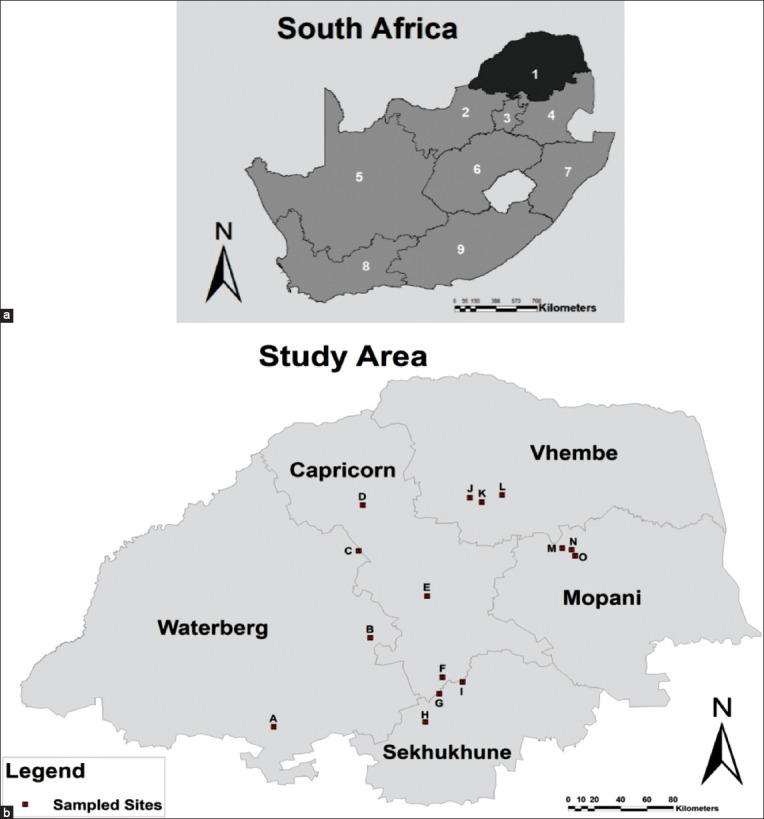
Previous studies recorded the prevalence of gastrointestinal nematodes (GIN) in Limpopo Province. However, the studies did not address the seasonal patterns of infection and did not cover all districts of Limpopo Province, namely; Capricorn, Sekhukhune, Waterberg, Mopani, and Vhembe. It is, therefore, important to provide up to date information on the prevalence and seasonal occurrence data of GIN in all districts of Limpopo province. The present study was conducted to determine the occurrence of anthelmintic resistance (AR) and document the prevalence of GIN infecting sheep in five districts of Limpopo Province, South Africa.
Forty animals in each district were used for fecal egg count reduction test (FECRT) to determine AR against ivermectin (0.2 mg/kg), levamisole (LEV) (5 mg/kg), and albendazole (7.5 mg/kg). Egg hatch test (EHT) was used to determine AR against thiabendazole (TBZ) and micro-agar larval development test (MALDT) was used for both TBZ and LEV. Naturally, infected sheep (n=780) were sampled for prevalence across five districts of Limpopo. FAMACHA eye-color score estimations were also performed for each study animal.
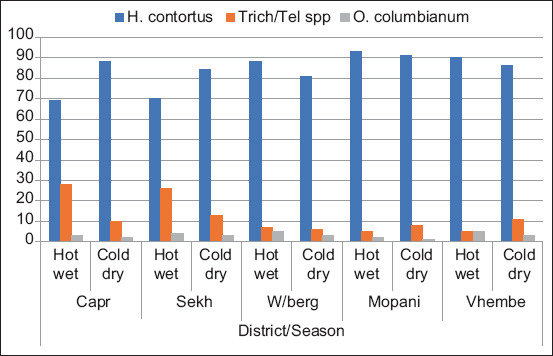
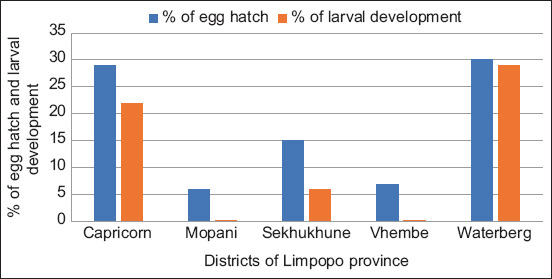
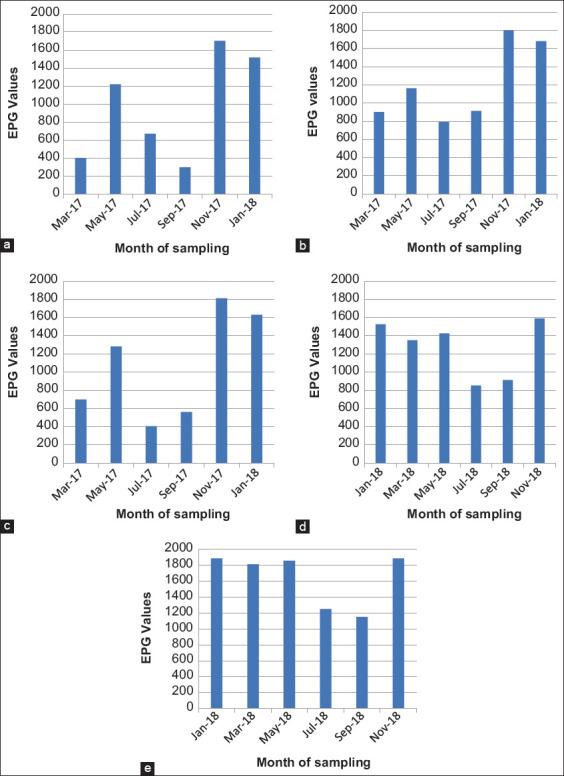
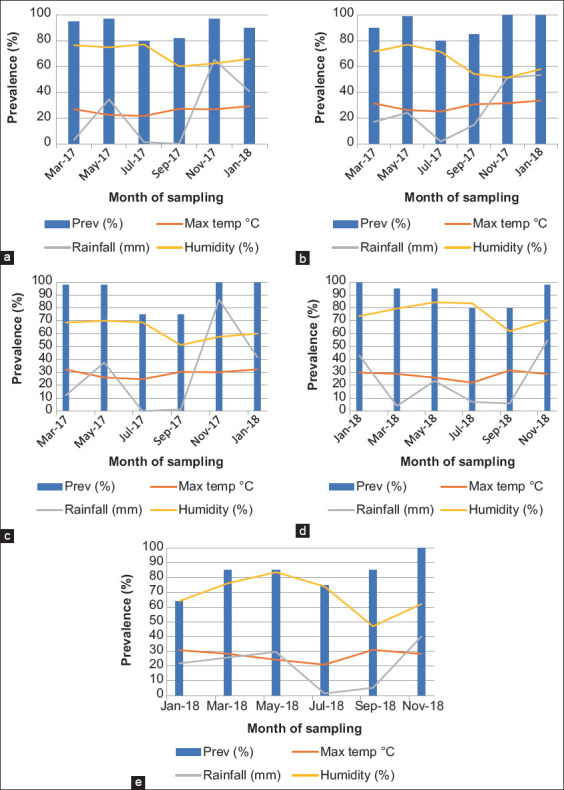
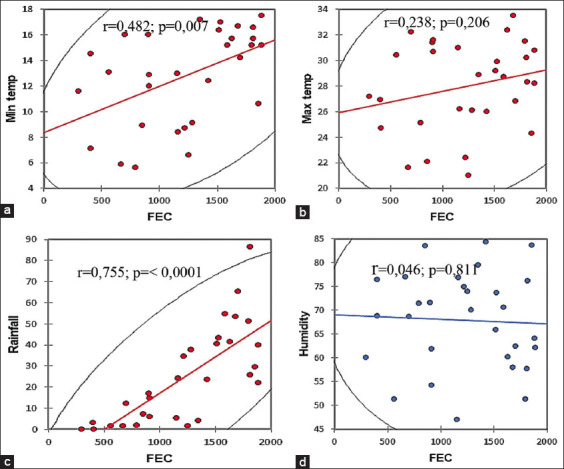
FECRT showed occurrence of AR in most of the districts and a few with suspected resistance. EHT results showed AR development against TBZ for all districts, while the MALDT showed no AR against LEV in all districts, but detected AR against TBZ in Sekhukhune, Capricorn, and Waterberg. was the most resistant species. A high nematode prevalence (88-100%) and 1210-1861 eggs per gram (EPG) was observed in all districts during the hot wet season, decreasing to 75-80% (453-1202 EPG) during the cold dry season. The sheep revealed a FAMACHA mean score of 3, indicating mild anemia during the hot wet season except for Vhembe district that revealed a FAMACHA mean score of 4 during the hot wet season, indicating anemia.
AR recorded in Limpopo Province may be due to under-dosing caused by lack of weighing equipment and high treatment frequencies due to lack of proper training on anthelmintic use. The detection of AR in Limpopo is an important finding because it will help in outlining effective management systems against GIN.
以往研究记录了林波波省胃肠线虫(GIN)的流行情况。然而,这些研究未涉及感染的季节性模式,且未涵盖林波波省的所有地区,即摩羯区、塞胡库内区、瓦特贝格区、莫帕尼区和韦姆贝区。因此,提供林波波省所有地区GIN流行率和季节性发生数据的最新信息很重要。本研究旨在确定南非林波波省五个地区绵羊体内抗蠕虫药耐药性(AR)的发生情况,并记录GIN的感染流行率。
每个地区选取40只动物用于粪便虫卵计数减少试验(FECRT),以确定对伊维菌素(0.2 mg/kg)、左旋咪唑(LEV)(5 mg/kg)和阿苯达唑(7.5 mg/kg)的耐药性。虫卵孵化试验(EHT)用于确定对噻苯达唑(TBZ)的耐药性,微量琼脂幼虫发育试验(MALDT)用于检测对TBZ和LEV的耐药性。对林波波省五个地区自然感染的绵羊(n = 780)进行采样以检测流行率。还对每只研究动物进行了FAMACHA眼结膜颜色评分评估。
FECRT显示大多数地区存在耐药情况,少数地区有疑似耐药。EHT结果显示所有地区对TBZ均出现耐药性发展,而MALDT显示所有地区对LEV均无耐药,但在塞胡库内区、摩羯区和瓦特贝格区检测到对TBZ的耐药。[未提及的某种线虫]是最具耐药性的种类。在炎热潮湿季节,所有地区均观察到较高的线虫流行率(88 - 100%)和每克1210 - 1861个虫卵(EPG),在寒冷干燥季节降至75 - 80%(453 - 1202 EPG)。绵羊的FAMACHA平均评分为3,表明在炎热潮湿季节除韦姆贝区外均为轻度贫血,韦姆贝区在炎热潮湿季节FAMACHA平均评分为4,表明存在贫血。
林波波省记录到的耐药情况可能是由于缺乏称重设备导致用药剂量不足,以及由于缺乏抗蠕虫药使用的适当培训而导致治疗频率过高。林波波省耐药性的检测是一项重要发现,因为它将有助于制定有效的GIN管理系统。