Libowitz Mark R, Nurmi Erika L
Department of Psychiatry and Biobehavioral Sciences, Semel Institute for Neuroscience and Human Behavior, University of California, Los Angeles, Los Angeles, CA, United States.
Front Psychiatry. 2021 Mar 12;12:623681. doi: 10.3389/fpsyt.2021.623681. eCollection 2021.
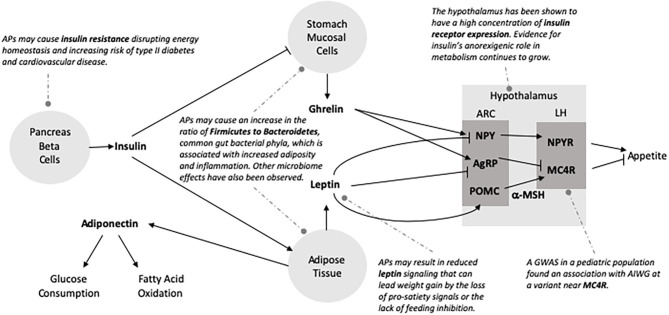
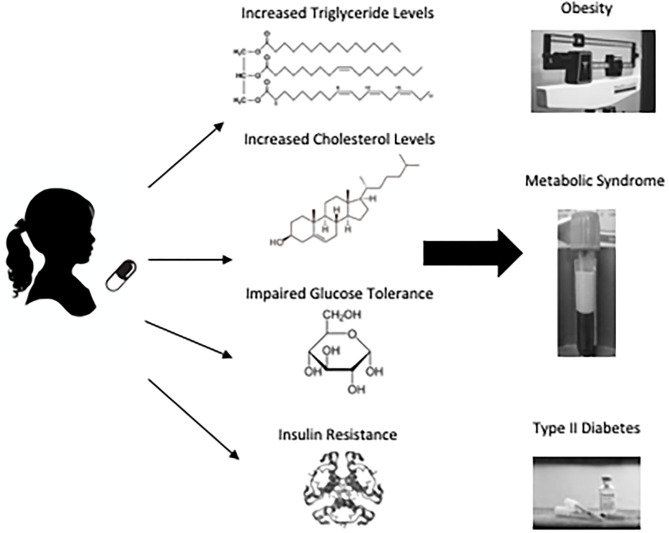
Antipsychotic medications are critical to child and adolescent psychiatry, from the stabilization of psychotic disorders like schizophrenia, bipolar disorder, and psychotic depression to behavioral treatment of autism spectrum disorder, tic disorders, and pediatric aggression. While effective, these medications carry serious risk of adverse events-most commonly, weight gain and cardiometabolic abnormalities. Negative metabolic consequences affect up to 60% of patients and present a major obstacle to long-term treatment. Since antipsychotics are often chronically prescribed beginning in childhood, cardiometabolic risk accumulates. An increased susceptibility to antipsychotic-induced weight gain (AIWG) has been repeatedly documented in children, particularly rapid weight gain. Associated cardiometabolic abnormalities include central obesity, insulin resistance, dyslipidemia, and systemic inflammation. Lifestyle interventions and medications such as metformin have been proposed to reduce risk but remain limited in efficacy. Furthermore, antipsychotic medications touted to be weight-neutral in adults can cause substantial weight gain in children. A better understanding of the biological underpinnings of AIWG could inform targeted and potentially more fruitful treatments; however, little is known about the underlying mechanism. As yet, modest genetic studies have nominated a few risk genes that explain only a small percentage of the risk. Recent investigations have begun to explore novel potential mechanisms of AIWG, including a role for gut microbiota and microbial metabolites. This article reviews the problem of AIWG and AP metabolic side effects in pediatric populations, proposed mechanisms underlying this serious side effect, and strategies to mitigate adverse impact. We suggest future directions for research efforts that may advance the field and lead to improved clinical interventions.
抗精神病药物对儿童和青少年精神病学至关重要,从稳定精神分裂症、双相情感障碍和精神病性抑郁症等精神障碍,到自闭症谱系障碍、抽动障碍和儿童攻击行为的行为治疗。虽然这些药物有效,但它们具有严重的不良事件风险——最常见的是体重增加和心脏代谢异常。负面的代谢后果影响高达60%的患者,并成为长期治疗的主要障碍。由于抗精神病药物通常从儿童时期就开始长期处方,心脏代谢风险会不断累积。儿童对抗精神病药物引起的体重增加(AIWG)的易感性增加已被反复证实,尤其是体重快速增加。相关的心脏代谢异常包括中心性肥胖、胰岛素抵抗、血脂异常和全身炎症。生活方式干预和二甲双胍等药物已被提议用于降低风险,但疗效仍然有限。此外,在成年人中被认为体重中性的抗精神病药物在儿童中可能会导致大量体重增加。更好地了解AIWG的生物学基础可以为有针对性的、可能更有成效的治疗提供信息;然而,对其潜在机制知之甚少。到目前为止,适度的基因研究已经确定了一些风险基因,但这些基因仅解释了一小部分风险。最近的研究已经开始探索AIWG的新潜在机制,包括肠道微生物群和微生物代谢产物的作用。本文综述了儿科人群中AIWG和抗精神病药物代谢副作用的问题、这种严重副作用的潜在机制以及减轻不良影响的策略。我们提出了未来研究努力的方向,这些方向可能会推动该领域的发展并带来更好的临床干预措施。