Elands Sophie, Casimir Pierre, Bonnet Thomas, Mine Benjamin, Lubicz Boris, Sjøgård Martin, Ligot Noémie, Naeije Gilles
Department of Neurology, Erasmus Hospital, Université Libre de Bruxelles, Brussels, Belgium.
Department of Interventional Neuroradiology, Erasmus Hospital, Université Libre de Bruxelles, Brussels, Belgium.
Front Neurol. 2021 Mar 10;12:649079. doi: 10.3389/fneur.2021.649079. eCollection 2021.
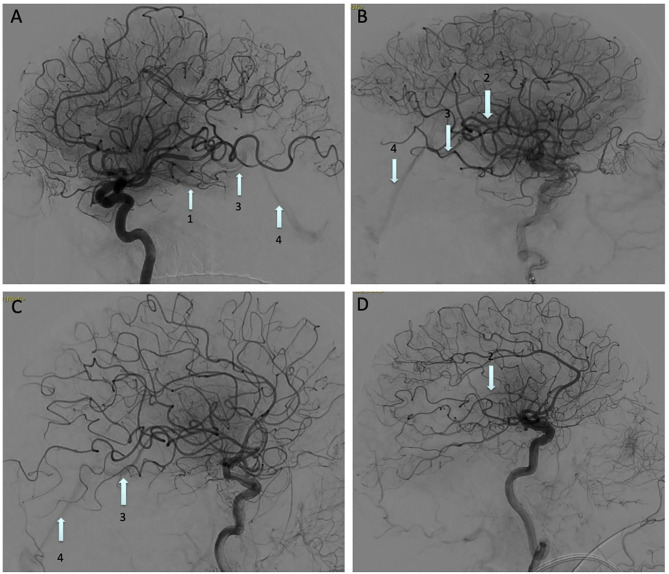
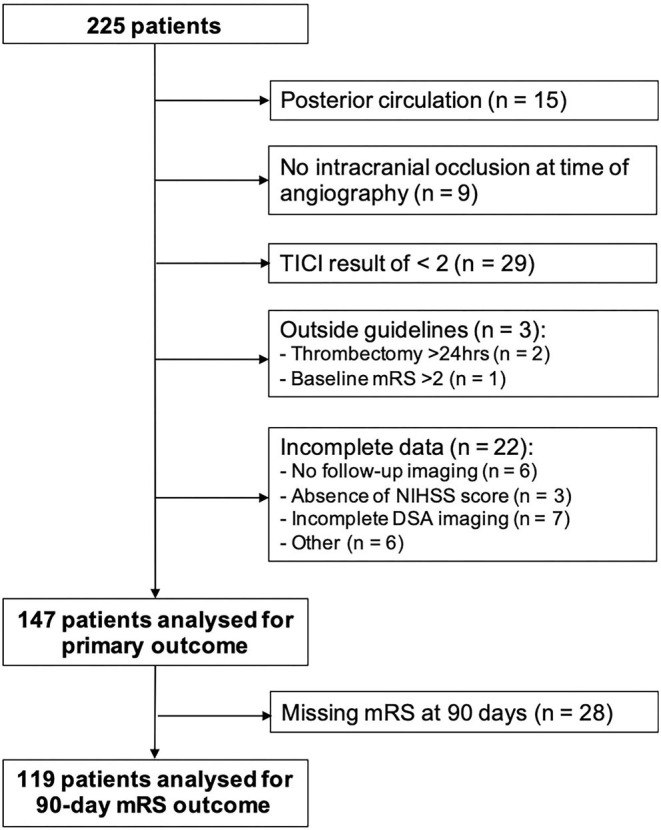
Previous studies have noted the angiographic appearance of early venous filling (EVF) following recanalisation in acute ischemic stroke. However, the prognostic implications of EVF as a novel imaging biomarker remain unclear. We aimed to evaluate the correlation between EVF with (i) the risk of subsequent reperfusion hemorrhage (RPH) and (ii) the association of EVF on both the NIHSS score at 24 h and functional outcome as assessed with the Modified Rankin Scale (mRS) score at 90 days. We conducted a retrospective cohort study of patients presenting with an acute ischemic stroke due to a proximal large-vessel occlusion of the anterior circulation treated by thrombectomy. Post-reperfusion digital subtraction angiography was reviewed to look for EVF as evidenced by the contrast opacification of any cerebral vein before the late arterial phase. EVF occurred in 22.4% of the 147 cases included. The presence of EVF significantly increased the risk of RPH ( = 0.0048), including the risk of symptomatic hemorrhage ( = 0.0052). The presence of EVF ( = 0.0016) and the absence of RPH ( = 0.0021) were independently associated with a better outcome as defined by the NIHSS difference at 24 h, most significantly in the EVFRPH group. No significant relationship was however found between either EVF or RPH and a mRS score ≤ 2 at 90 days. Early venous filling on angiographic imaging is a potential predictor of reperfusion hemorrhage. The absence of subsequent RPH in this sub-group is associated with better outcomes at 24 h post-thrombectomy than in those with RPH.
既往研究已注意到急性缺血性卒中再通后早期静脉充盈(EVF)的血管造影表现。然而,EVF作为一种新型影像生物标志物的预后意义仍不明确。我们旨在评估EVF与以下方面的相关性:(i)后续再灌注出血(RPH)的风险;(ii)EVF与24小时美国国立卫生研究院卒中量表(NIHSS)评分以及90天时改良Rankin量表(mRS)评分所评估的功能结局之间的关联。我们对因前循环近端大血管闭塞接受血栓切除术治疗的急性缺血性卒中患者进行了一项回顾性队列研究。回顾再灌注后的数字减影血管造影,以寻找在动脉晚期之前任何脑静脉出现造影剂充盈显影所证实的EVF。纳入的147例病例中,22.4%出现了EVF。EVF的存在显著增加了RPH的风险( = 0.0048),包括有症状出血的风险( = 0.0052)。EVF的存在( = 0.0016)和无RPH( = 0.0021)与24小时时NIHSS差异所定义的更好结局独立相关,在EVF-RPH组中最为显著。然而,在90天时,未发现EVF或RPH与mRS评分≤2之间存在显著关系。血管造影成像上的早期静脉充盈是再灌注出血的一个潜在预测指标。在该亚组中,后续无RPH与血栓切除术后24小时的结局优于有RPH者相关。