Zhang Yan, Wang Kaili, Yang Tao, Cao Yibo, Liang Wanling, Yang Xiangdong, Xiao Tianbao
The Second Clinical School, Guangzhou University of Traditional Chinese Medicine, Guangzhou, China.
China Academy of Chinese Medical Sciences, Beijing, China.
Front Oncol. 2021 Mar 10;11:628558. doi: 10.3389/fonc.2021.628558. eCollection 2021.
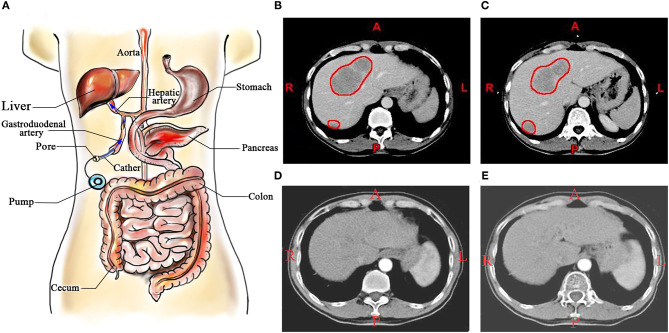
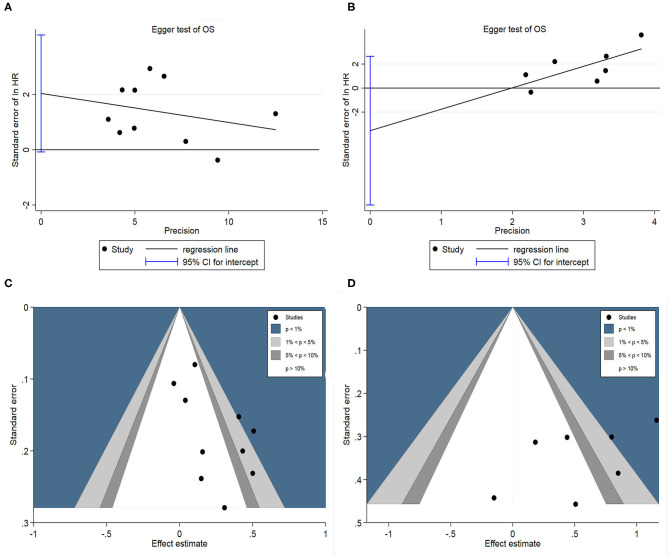
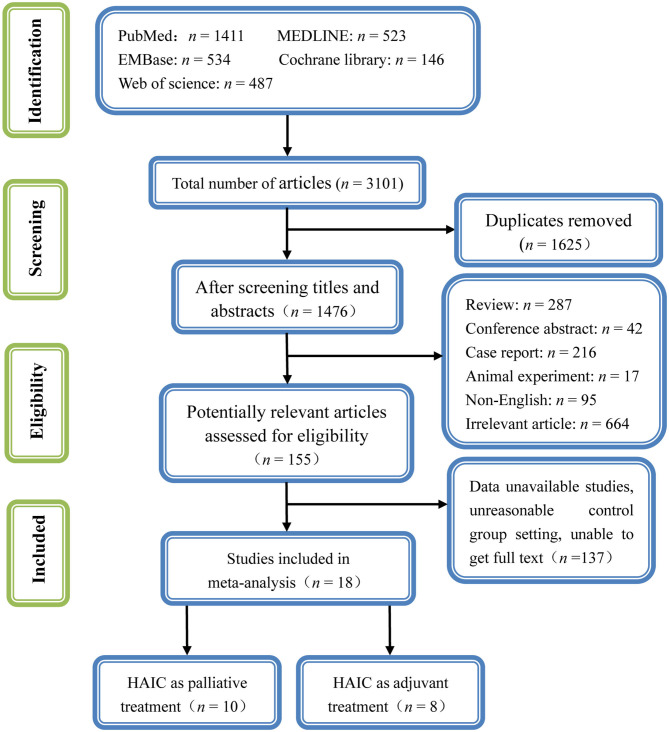
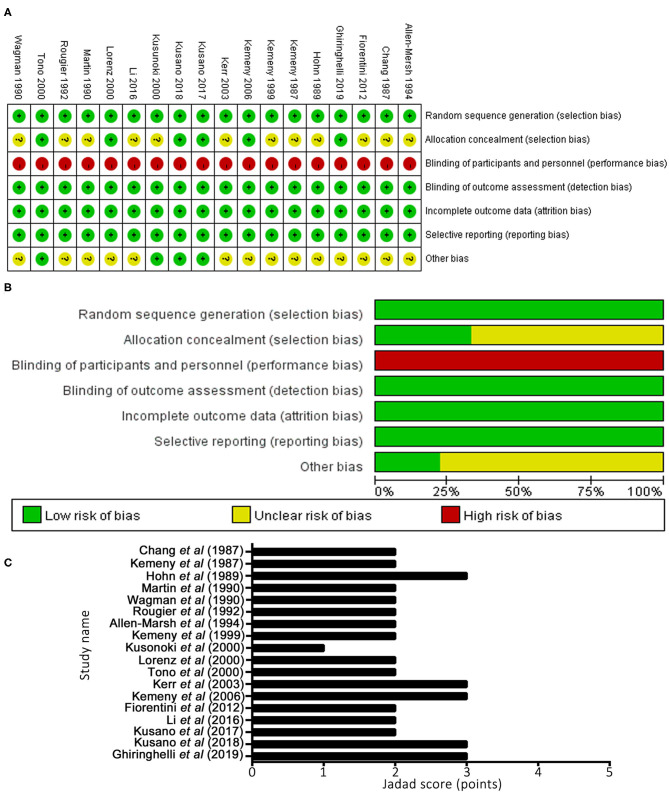
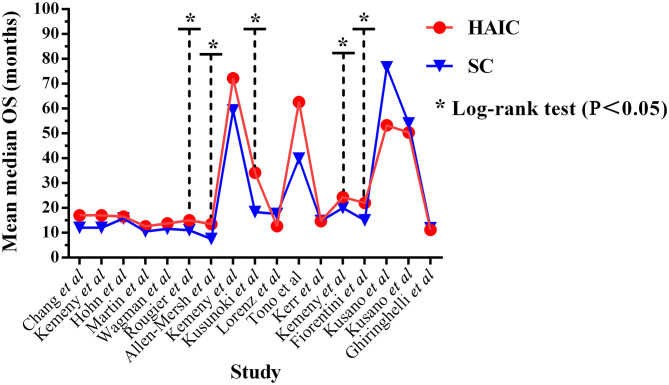
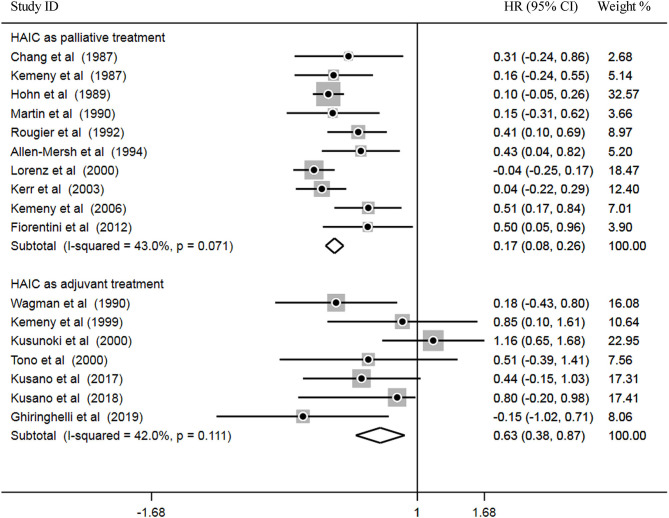
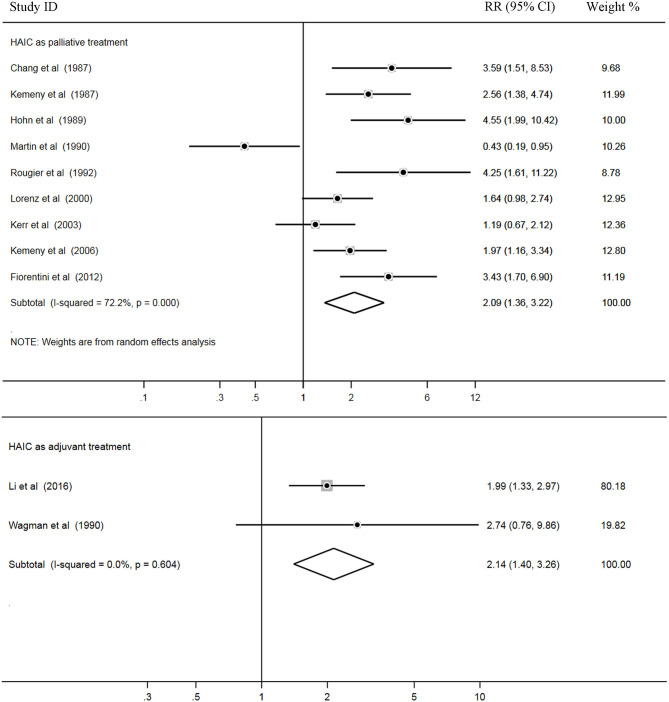
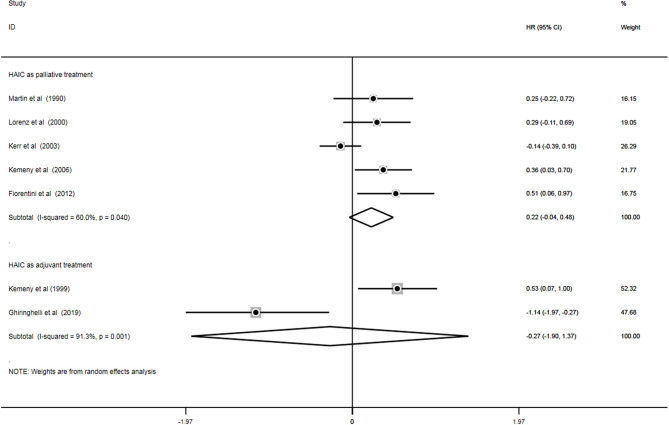
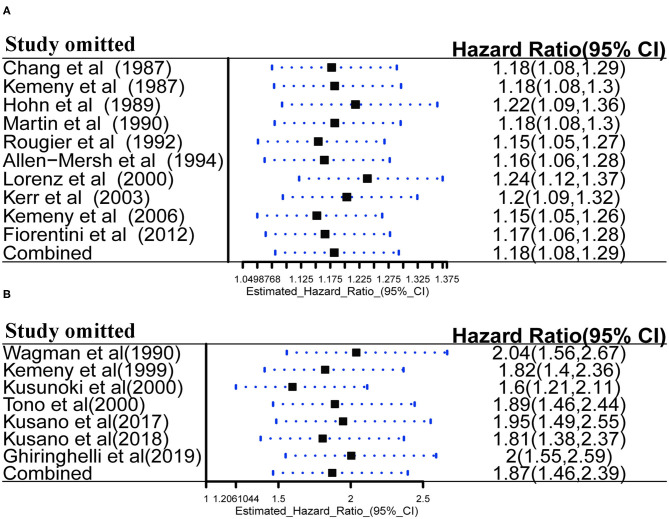
The aim of the present study was to evaluate the potential benefits of hepatic arterial infusion chemotherapy (HAIC) in the management of colorectal liver metastases (CRLM). Electronic databases, including PubMed, EMBASE, Medline, Web of Science, and Cochrane Library, were comprehensively searched from inception to November 2020. Prospective randomized trials with HAIC vs. systemic chemotherapy (SC) were selected. The overall survival (OS), tumor response rates (RRs), progression-free survival (PFS), and corresponding 95% confidence intervals (CIs) were assessed in the meta-analysis. Subsequently, the heterogeneity between studies, sensitivity, publication bias, and meta-regression analyses were performed. Finally, 18 studies, which contained 1,766 participants (922 in the HAIC group and 844 in the SC group) were included. There was a significantly higher OS rate in the HAIC as palliative treatment group (HR, 0.17; 95% CI, 0.08-0.26; = 0.000) and HAIC as adjuvant treatment group compared with SC group (HR, 0.63; 95% CI, 0.38-0.87; = 0.000). The complete and partial tumor RRs were also increased significantly in the HAIC as palliative treatment group (RR = 2.09; 95% CI, 1.36-3.22; = 0.001) and as adjuvant treatment group compared with SC group (RR = 2.14; 95% CI, 1.40-3.26; = 0.000). However, PFS did not differ significantly between the HAIC and SC groups ( > 0.05). Meta-regression analysis showed potential covariates did not influence on the association between HAIC and OS outcomes ( > 0.05). The results of the present study suggested that HAIC may be a potential therapeutic regimen that may improve the outcomes of patients with CRLM. The present meta-analysis has been registered in PROSPERO (no. CRD 42019145719).
本研究的目的是评估肝动脉灌注化疗(HAIC)在结直肠癌肝转移(CRLM)治疗中的潜在益处。全面检索了包括PubMed、EMBASE、Medline、Web of Science和Cochrane图书馆在内的电子数据库,检索时间从建库至2020年11月。选择了比较HAIC与全身化疗(SC)的前瞻性随机试验。在荟萃分析中评估总生存期(OS)、肿瘤缓解率(RRs)、无进展生存期(PFS)及相应的95%置信区间(CIs)。随后,进行了研究间的异质性、敏感性、发表偏倚和荟萃回归分析。最终,纳入了18项研究,共1766名参与者(HAIC组922名,SC组844名)。与SC组相比,HAIC作为姑息治疗组(HR,0.17;95%CI,0.08 - 0.26;P = 0.000)和HAIC作为辅助治疗组的OS率显著更高(HR,0.63;95%CI,0.38 - 0.87;P = 0.000)。与SC组相比,HAIC作为姑息治疗组(RR = 2.09;95%CI,1.36 - 3.22;P = 0.001)和作为辅助治疗组的完全和部分肿瘤RRs也显著增加(RR = 2.14;95%CI,1.40 - 3.26;P = 0.000)。然而,HAIC组和SC组之间的PFS没有显著差异(P > 0.05)。荟萃回归分析表明潜在协变量不影响HAIC与OS结果之间的关联(P > 0.05)。本研究结果表明,HAIC可能是一种潜在的治疗方案,可改善CRLM患者的预后。本荟萃分析已在PROSPERO注册(编号CRD 42019145719)。