Kamura Shoutaro, Tani Takumi, Matsuo Hideyuki, Onaka Yoshimitsu, Fujisawa Tomotsumi, Unno Masashi
Department of Chemistry and Applied Chemistry, Faculty of Science and Engineering, Saga University, Saga 840-8502, Japan.
Saga Ceramics Research Laboratory, 3037-7 Hei Kuromuta, Arita-cho, Nishimatsuura-gun, Saga 844-0022, Japan.
ACS Omega. 2021 Mar 12;6(11):7829-7833. doi: 10.1021/acsomega.1c00322. eCollection 2021 Mar 23.
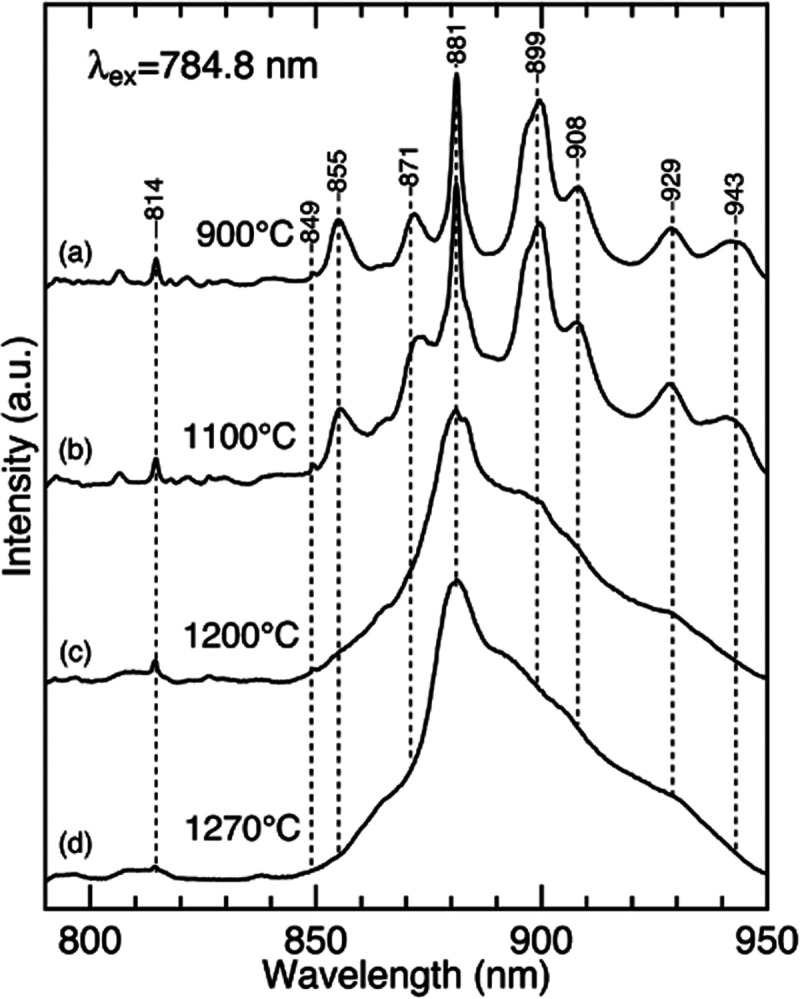
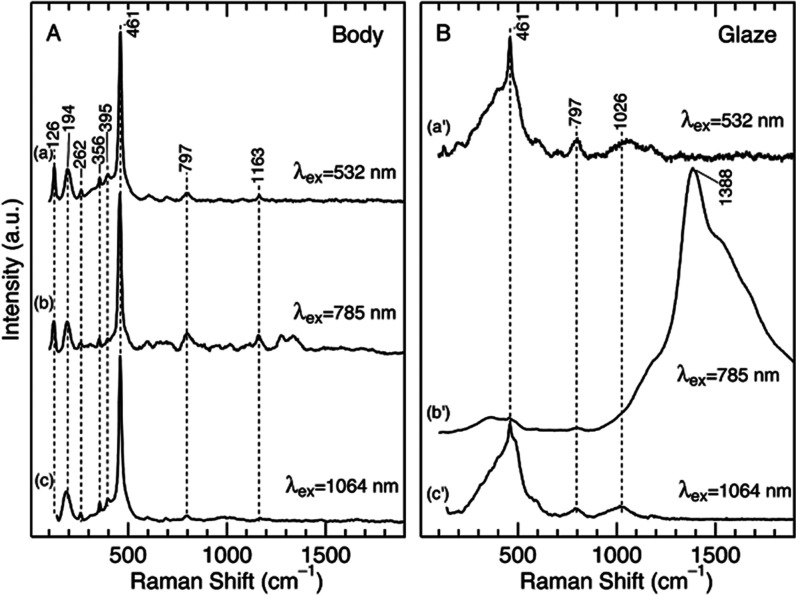
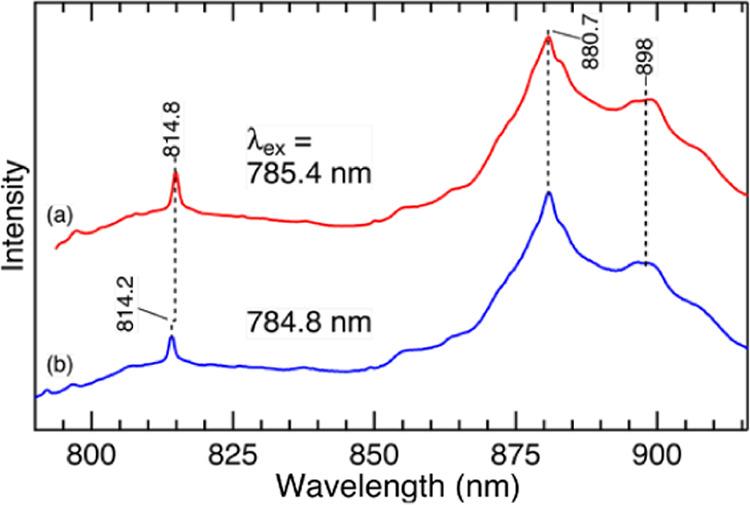
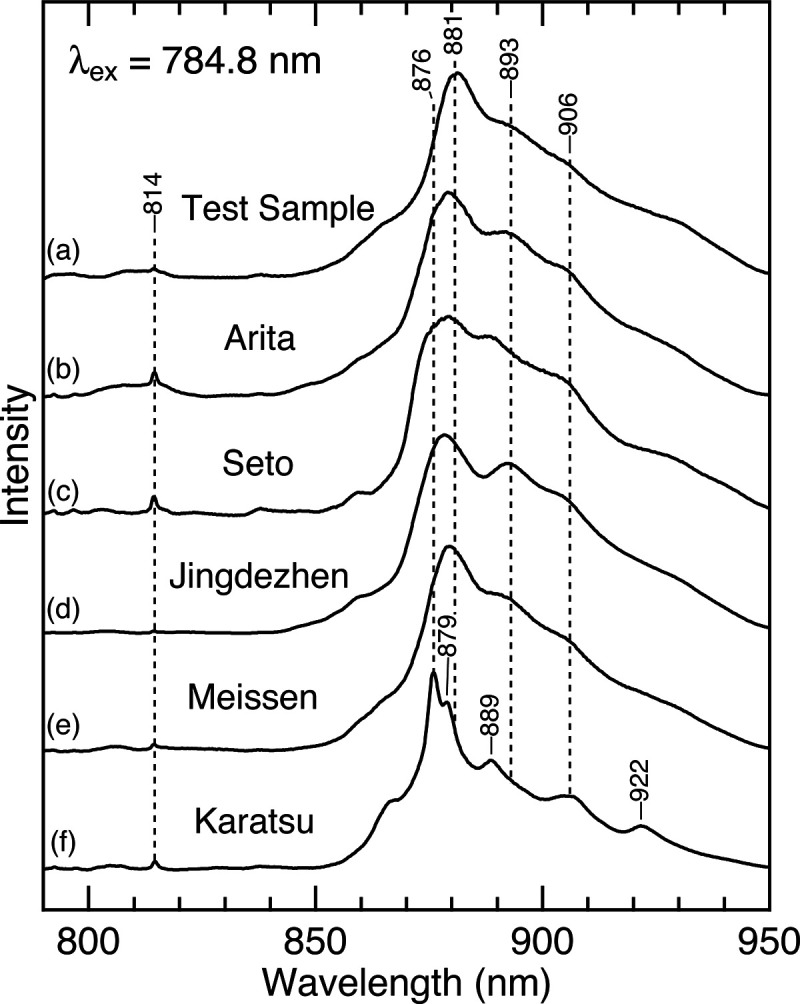
Raman spectroscopy is a powerful technique for a wide range of materials, including porcelain, and near-infrared excitation is often used to suppress a fluorescence background from a sample. When we measured the Raman spectra of porcelains at 785 nm excitation, we observed a strong broad band in a high-frequency region, and its origin was not clearly elucidated. In this study, we have measured the spectra of glazed porcelains at 532, 785, and 1064 nm excitation and demonstrated that the broad feature originates from luminescence around 880 nm and not from Raman scattering. We provide experimental evidence showing that the band originates from a thin layer of glaze. Since the band shape depends on the processing temperature, the luminescence spectra can be a nondestructive probe for studying the glass formation of a glaze.
拉曼光谱法是一种适用于包括瓷器在内的多种材料的强大技术,近红外激发通常用于抑制样品的荧光背景。当我们在785nm激发下测量瓷器的拉曼光谱时,在高频区域观察到一个强烈的宽带,其起源尚未明确阐明。在本研究中,我们在532、785和1064nm激发下测量了釉面瓷器的光谱,并证明该宽带特征源自880nm左右的发光,而非拉曼散射。我们提供了实验证据表明该谱带源自一层薄釉。由于谱带形状取决于加工温度,发光光谱可以成为研究釉料玻璃形成的无损探针。