Colomban Philippe, Gallet Xavier, Simsek Franci Gulsu, Fournery Nicolas, Quette Béatrice
Sorbonne Université, CNRS, MONARIS UMR 8233, Campus P. et M. Curie, 4 Place Jussieu, 75005 Paris, France.
Musée National d'Histoire Naturelle, CNRS, Université Perpignan Via Domitia, Musée de l'Homme, UMR 7194-Histoire Naturelle de l'Homme Préhistorique (HNHP), 17 Place du Trocadéro, 75116 Paris, France.
Materials (Basel). 2024 Jul 18;17(14):3566. doi: 10.3390/ma17143566.
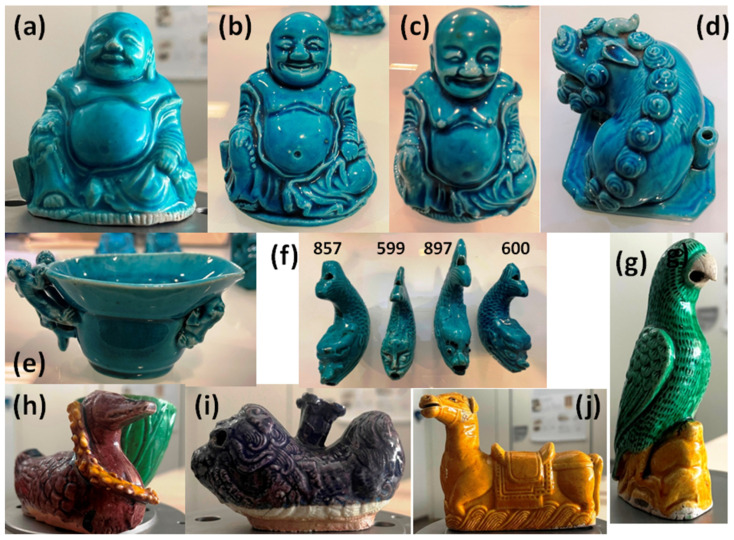
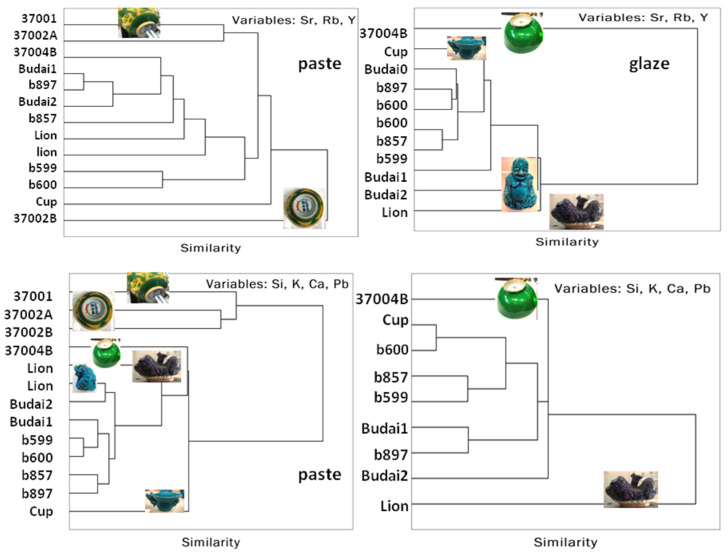
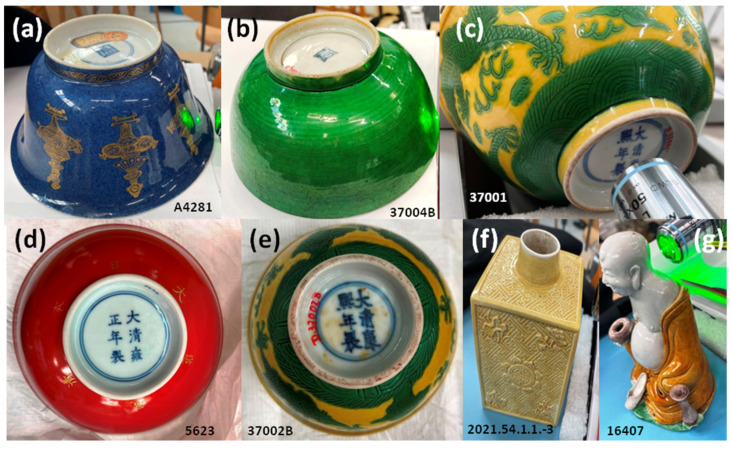
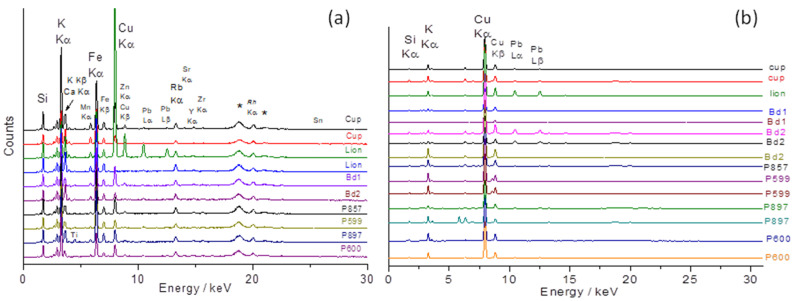
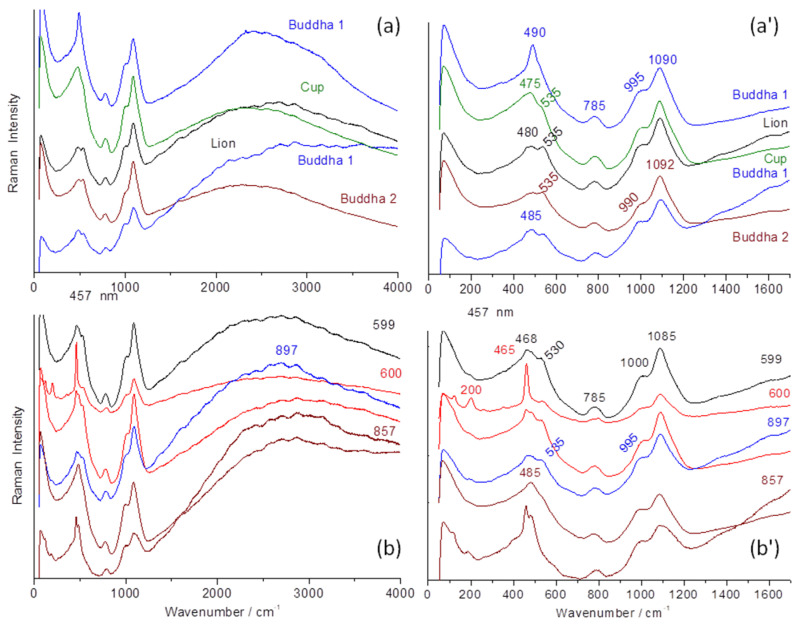
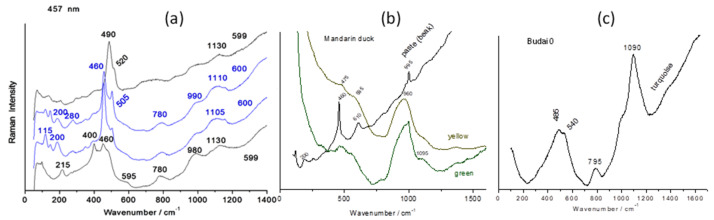
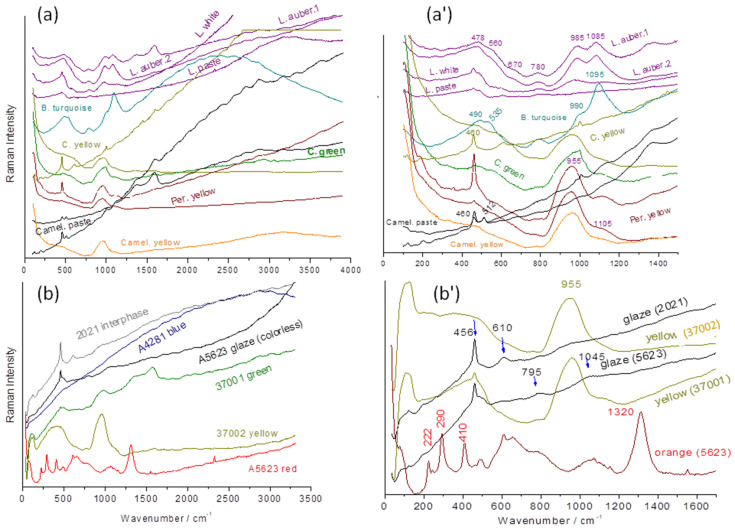
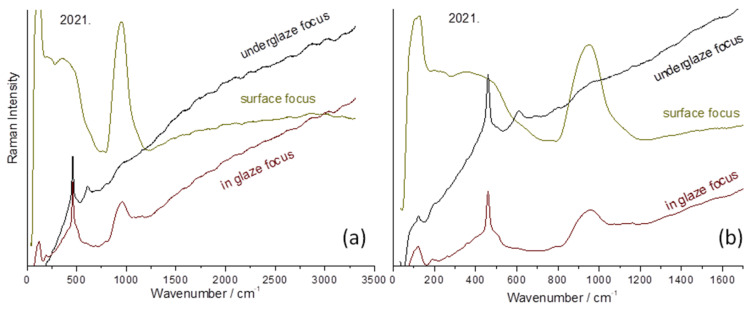
Chinese porcelain with an optically clear colored glaze, imported to Europe from the Kangxi period (1662-1722, Qing Dynasty) onwards was highly collected by the French Elite of the 18th century. The bright colors with a clear, shiny glaze were unlike anything produced in Europe at that time. The colors of enamelled artifacts (on biscuits or already glazed porcelain) can be fully monochrome or consist of associations of large monochromatic areas with or without application of gilding. Non-invasive portable XRF and mobile Raman analyses have previously shown their effectiveness in the characterization of (colored) glassy silicates. In this study, we compare the Raman signatures of twenty-one Chinese artifacts fully-or with major monochrome area ()-decorated with blue, turquoise (or celectian blue), honey-yellow, green, eggplant, and red color. Different types of glazes are identified and confirmed by pXRF: lead-rich, lead-poor-alkali, lead-doped alkali, and alkali-based compositions. However, an unexpected low level of lead is observed in the turquoise glazes, likely to optimize the gloss. Raman spectroscopy appears more reliable to compare the Pb content than pXRF. This work presents Raman spectral signatures of glazes that can potentially be used for non-invasive object classification and counterfeit detection.
从康熙时期(1662 - 1722年,清朝)起开始进口到欧洲的带有光学透明彩色釉的中国瓷器,在18世纪受到法国精英阶层的高度收藏。其明亮的色彩搭配清澈、有光泽的釉面,与当时欧洲生产的任何瓷器都不同。彩绘器物(在素坯或已上釉的瓷器上)的颜色可以完全是单色的,也可以由大面积单色区域组合而成,有无鎏金均可。先前的非侵入式便携式X射线荧光光谱仪(XRF)和便携式拉曼光谱仪分析已证明它们在表征(彩色)玻璃质硅酸盐方面的有效性。在本研究中,我们比较了21件完全或主要有单色区域()装饰的中国器物的拉曼特征峰,这些器物分别用蓝色、绿松石色(或矢车菊蓝)、蜜黄色、绿色、茄子色和红色装饰。通过能量分辨X射线荧光光谱仪(pXRF)识别并确认了不同类型的釉料:富铅、贫铅 - 碱、掺铅碱和碱基成分。然而,在绿松石釉中观察到意外的低铅含量,这可能是为了优化光泽度。与pXRF相比,拉曼光谱在比较铅含量方面似乎更可靠。这项工作展示了釉料的拉曼光谱特征峰,这些特征峰有可能用于非侵入式物品分类和赝品检测。