Turgeon Pierre Yves, Massot Montse, Beaupré Frédéric, Belzile David, Beaudoin Jonathan, Bernier Mathieu, Bourgault Christine, Germain Valérie, Laliberté Claudine, Morin Joëlle, Gervais Philippe, Trahan Sylvain, Charbonneau Éric, Dagenais François, Sénéchal Mario
Department of Cardiology, Institut Universitaire de Cardiologie et de Pneumologie de Québec, Québec, Québec, Canada.
Department of Infectious Disease, Institut Universitaire de Cardiologie et de Pneumologie de Québec, Québec, Québec, Canada.
CJC Open. 2020 Nov 11;3(3):292-302. doi: 10.1016/j.cjco.2020.10.017. eCollection 2021 Mar.
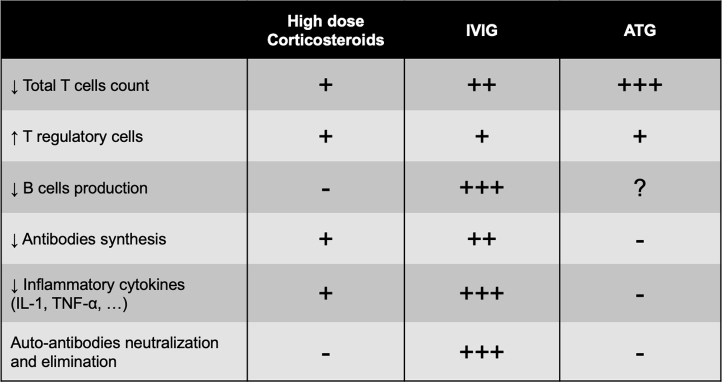
Fulminant viral myocarditis (FVM) is a rare cause of cardiogenic shock associated with high morbidity and mortality rates. An inappropriately activated immune system results in severe myocardial inflammation. Acute immunosuppressive therapy for FVM therefore gained in popularity and was described in numerous retrospective studies.
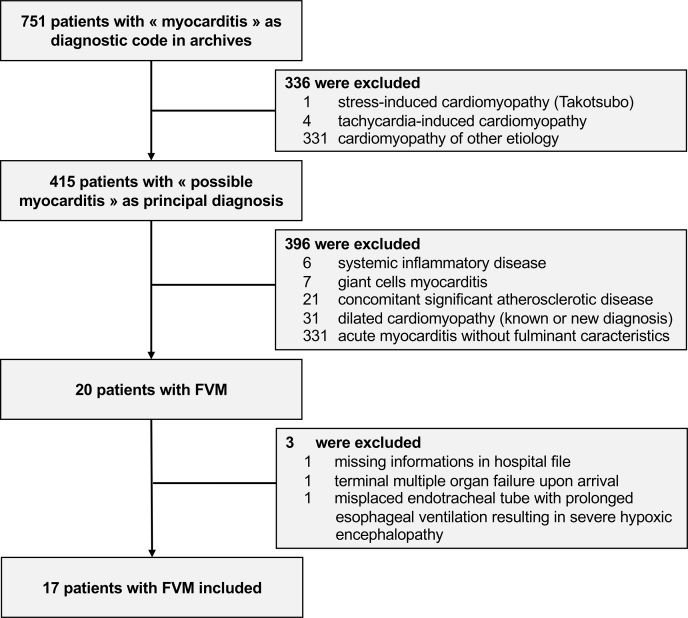
We conducted an extensive review of the literature and compared it with our single-centre retrospective review of all cases of FVM from 2009-2019 to evaluate the possible effect of acute immunosuppression with intravenous immunoglobulins and/or high dose corticosteroids in patients with FVM.
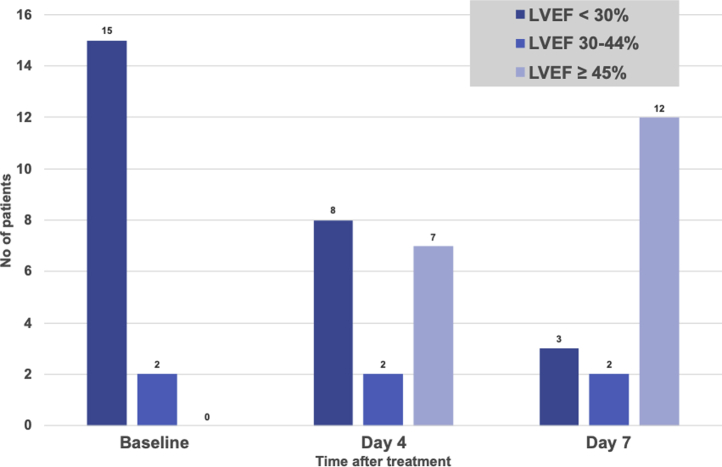
We report on 17 patients with a mean age of 46 ± 15 years with a mean left ventricular ejection fraction (LVEF) of 15 ± 9% at admission. Fourteen (82%) of our patients had acute LVEF recovery to ≥ 45% after a mean time from immunosuppression of 74 ± 49 hours (3.1 days). Extracorporeal membrane oxygenation (ECMO) was required in 35% (6/17) of our patients for an average support of 126 ± 37 hours. Overall mortality was 12% (2/17). No patient needed a long-term left ventricular assist device or heart transplant. All surviving patients achieved complete long-term LVEF recovery.
Our cohort of 17 severely ill patients received acute immunosuppressive therapy and showed a rapid LVEF recovery, short duration of ECMO support, and low mortality rate. Our suggested scheme of investigation and treatment is presented. These results bring more cases of successfully treated FVM with immunosuppression and ECMO to the literature, which might stimulate further prospective trials or a registry.
暴发性病毒性心肌炎(FVM)是心源性休克的罕见病因,发病率和死亡率高。免疫系统的不适当激活会导致严重的心肌炎症。因此,FVM的急性免疫抑制治疗越来越受欢迎,并在众多回顾性研究中有所描述。
我们对文献进行了广泛回顾,并将其与我们对2009年至2019年所有FVM病例的单中心回顾性研究进行比较,以评估静脉注射免疫球蛋白和/或高剂量皮质类固醇进行急性免疫抑制对FVM患者的可能影响。
我们报告了17例患者,平均年龄46±15岁,入院时平均左心室射血分数(LVEF)为15±9%。我们的14例(82%)患者在免疫抑制平均74±49小时(3.1天)后急性LVEF恢复至≥45%。35%(6/17)的患者需要体外膜肺氧合(ECMO),平均支持时间为126±37小时。总死亡率为12%(2/17)。没有患者需要长期左心室辅助装置或心脏移植。所有存活患者均实现了长期LVEF完全恢复。
我们的17例重症患者队列接受了急性免疫抑制治疗,显示出LVEF快速恢复、ECMO支持时间短和死亡率低。我们提出了建议的调查和治疗方案。这些结果为文献带来了更多成功通过免疫抑制和ECMO治疗的FVM病例,这可能会刺激进一步的前瞻性试验或登记研究。