Department of Neurology, Icahn School of Medicine at Mount Sinai, New York, New York, USA.
Drug Discovery Institute, Icahn School of Medicine at Mount Sinai, New York, New York, USA; Department of Pharmacological Sciences, Icahn School of Medicine at Mount Sinai, New York, New York, USA.
J Biol Chem. 2021 Jan-Jun;296:100597. doi: 10.1016/j.jbc.2021.100597. Epub 2021 Mar 26.
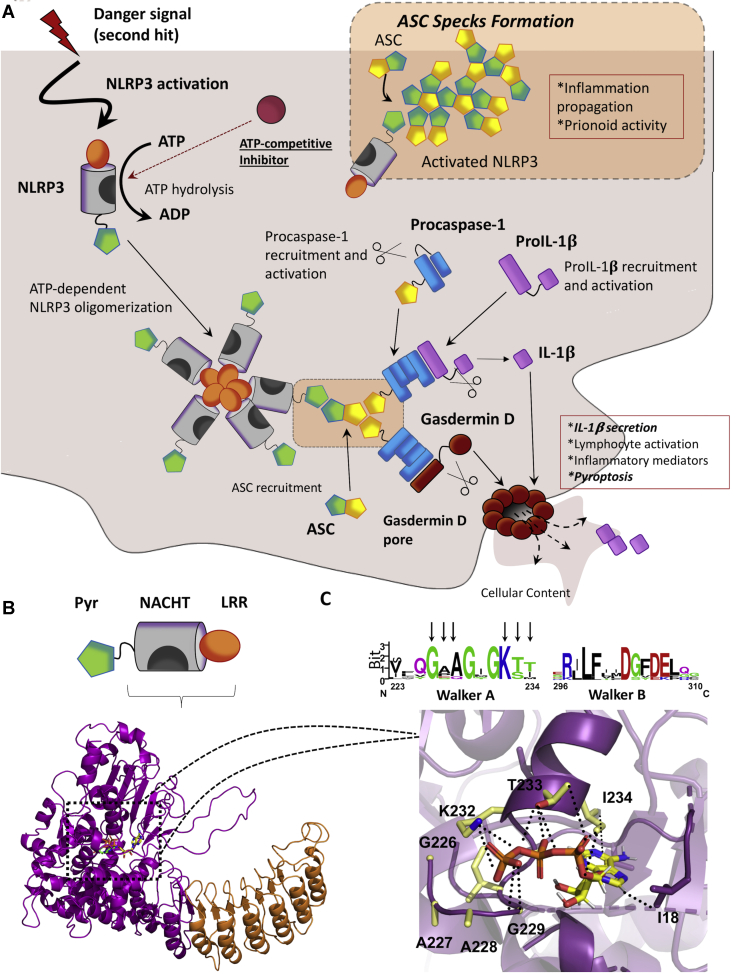
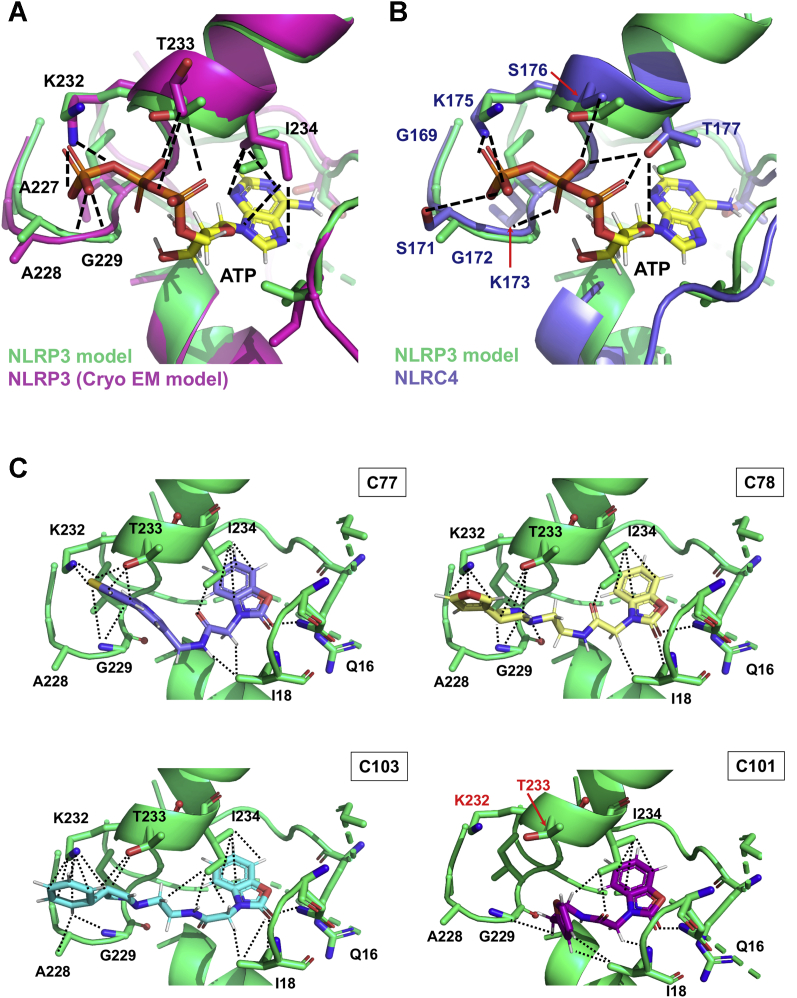
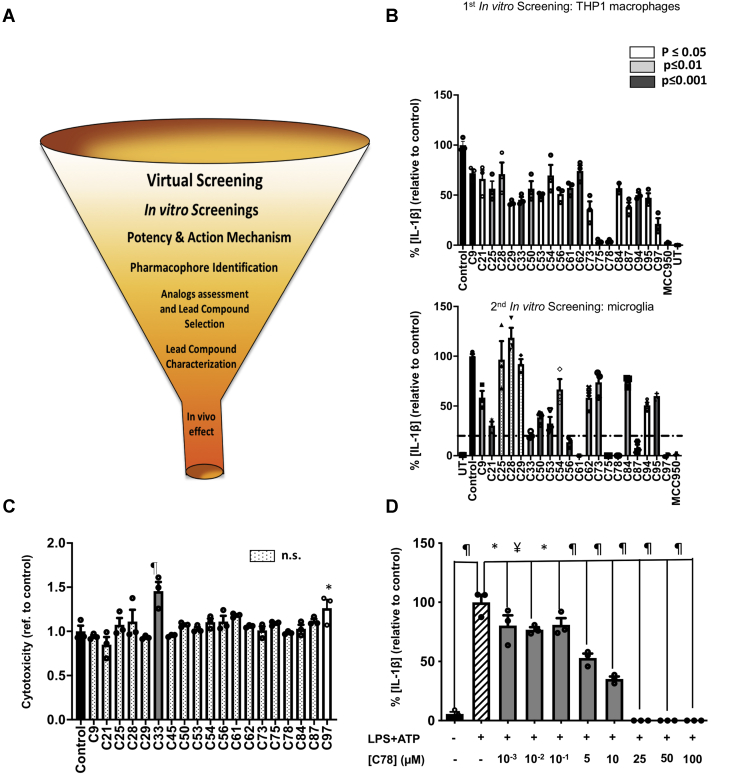
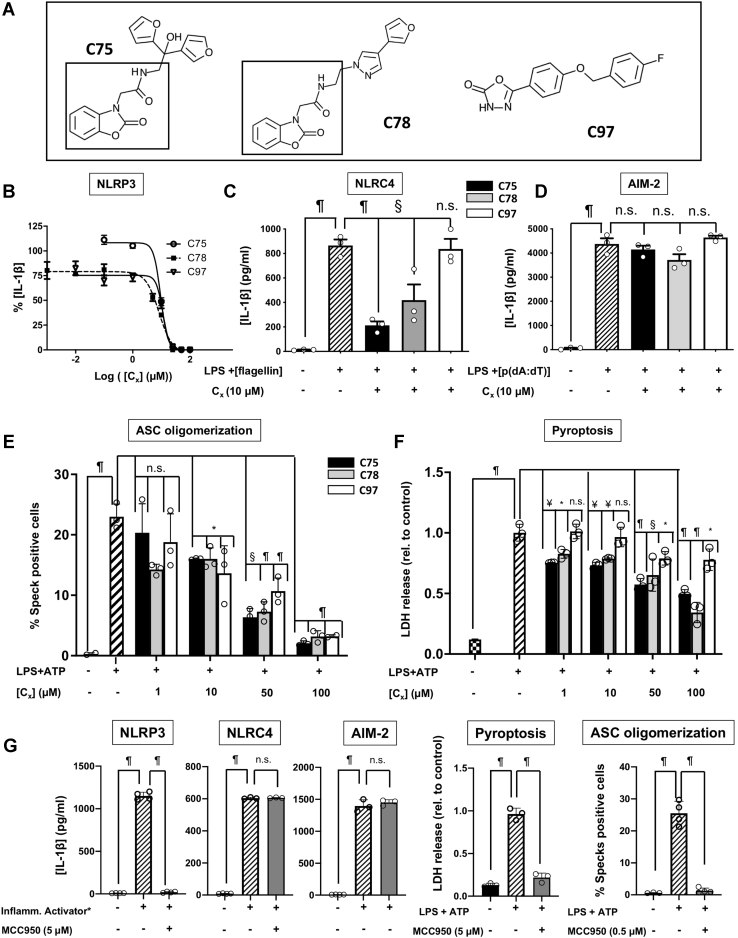
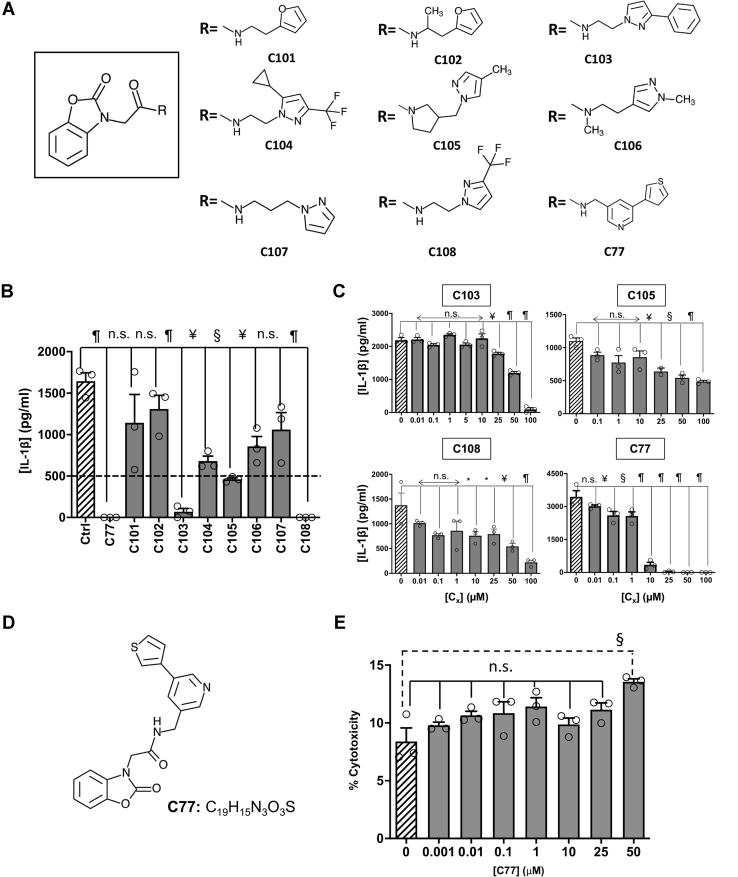
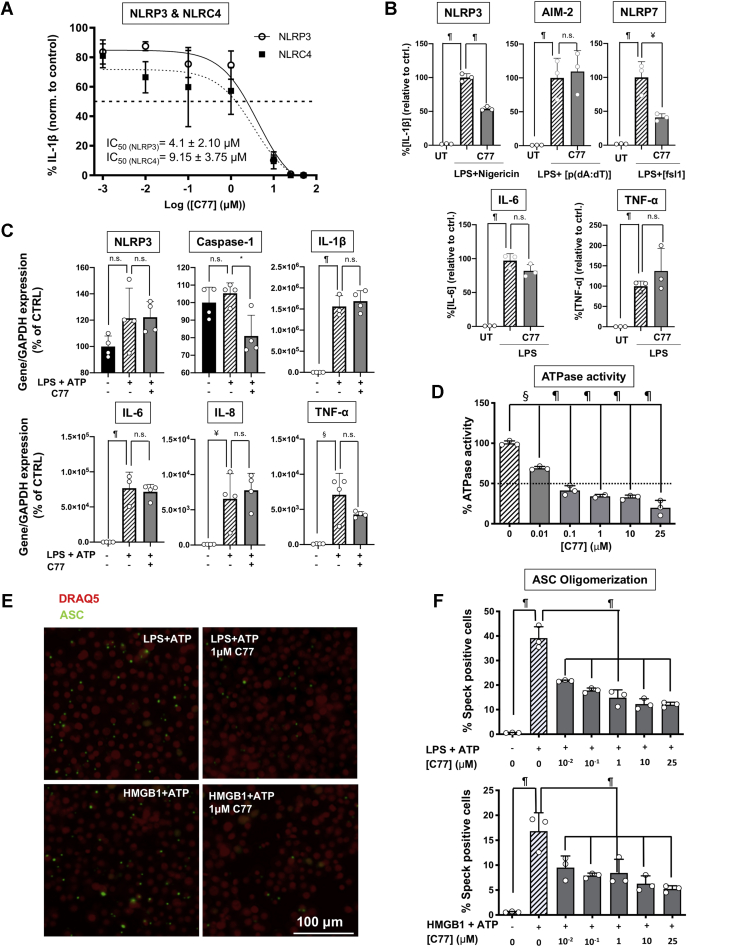
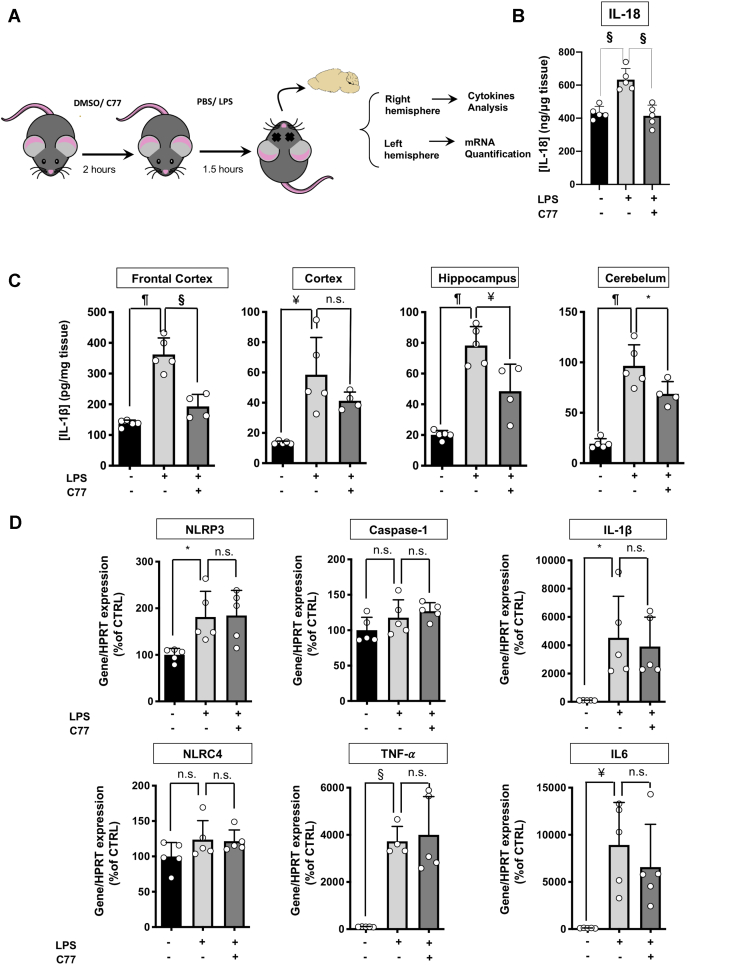
Inflammasomes are macromolecular complexes involved in the host response to external and endogenous danger signals. Inflammasome-mediated sterile inflammation plays a central role in several human conditions such as autoimmune diseases, type-2 diabetes, and neurodegenerative disorders, indicating inflammasomes could be appealing therapeutic targets. Previous work has demonstrated that inhibiting the ATPase activity of the nucleotide-binding oligomerization domain, leucine-rich repeat and pyrin domain-containing protein 3 (NLRP3), disrupts inflammasome assembly and function. However, there is a necessity to find new potent compounds with therapeutic potential. Here we combine computational modeling of the target and virtual screening to discover a group of novel compounds predicted to inhibit NLRP3. We characterized the best compounds and determined their potency, specificity, and ability to inhibit processes downstream from NLRP3 activation. Moreover, we analyzed in mice the competence of a lead candidate to reduce lipopolysaccharide-induced inflammation. We also validated the active pharmacophore shared among all the NLRP3 inhibitors, and through computational docking, we clarify key structural features for compound positioning within the inflammasome ATP-binding site. Our study sets the basis for rational design and optimization of inflammasome-targeting probes and drugs.
炎症小体是一种参与宿主对外源和内源性危险信号反应的大分子复合物。炎症小体介导的无菌性炎症在几种人类疾病中起着核心作用,如自身免疫性疾病、2 型糖尿病和神经退行性疾病,表明炎症小体可能是有吸引力的治疗靶点。以前的工作已经表明,抑制核苷酸结合寡聚结构域、富含亮氨酸重复和吡喃结构域蛋白 3(NLRP3)的 ATP 酶活性会破坏炎症小体的组装和功能。然而,有必要找到具有治疗潜力的新的有效化合物。在这里,我们结合靶标计算建模和虚拟筛选来发现一组预测能抑制 NLRP3 的新型化合物。我们对最佳化合物进行了表征,并确定了它们的效力、特异性以及抑制 NLRP3 激活下游过程的能力。此外,我们在小鼠中分析了一个候选药物降低脂多糖诱导的炎症的能力。我们还验证了所有 NLRP3 抑制剂共有的活性药效团,通过计算对接,我们阐明了化合物在炎症小体 ATP 结合位点中的定位的关键结构特征。我们的研究为炎症小体靶向探针和药物的合理设计和优化奠定了基础。