Division of Neurology, Department of Neurosciences, Faculty of Medicine, Jordan University of Science and Technology, P.O.Box 630001, Irbid, 22110, Jordan.
Graduate of The University of Jordan, Amman, Jordan.
BMC Neurol. 2021 Mar 30;21(1):138. doi: 10.1186/s12883-021-02161-4.
The spectrum of neurological involvement in COVID-19 is not thoroughly understood. To the best of our knowledge, no systematic review with meta-analysis and a sub-group comparison between severe and non-severe cases has been published. The aim of this study is to assess the frequency of neurological manifestations and complications, identify the neurodiagnostic findings, and compare these aspects between severe and non-severe COVID-19 cases.
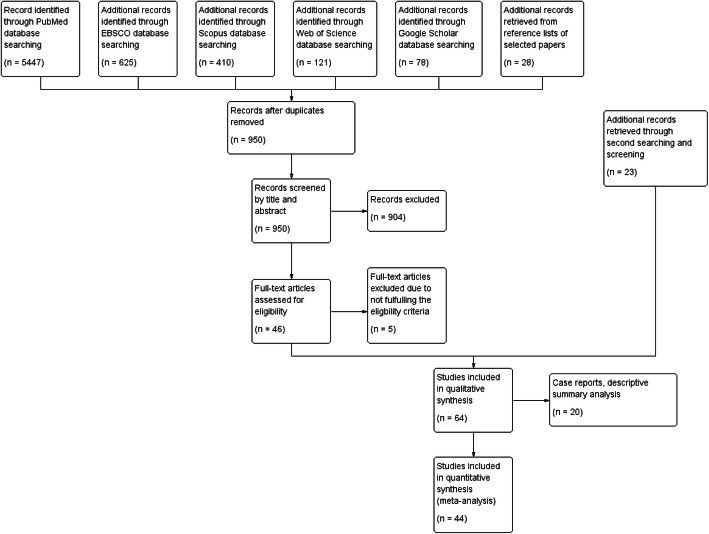
A systematic search of PubMed, Scopus, EBSCO, Web of Science, and Google Scholar databases was conducted for studies published between the 1st of January 2020 and 22nd of April 2020. In addition, we scanned the bibliography of included studies to identify other potentially eligible studies. The criteria for eligibility included studies published in English language (or translated to English), those involving patients with COVID-19 of all age groups, and reporting neurological findings. Data were extracted from eligible studies. Meta-analyses were conducted using comprehensive meta-analysis software. Random-effects model was used to calculate the pooled percentages and means with their 95% confidence intervals (CIs). Sensitivity analysis was performed to assess the effect of individual studies on the summary estimate. A subgroup analysis was conducted according to severity. The main outcomes of the study were to identify the frequency and nature of neurological manifestations and complications, and the neuro-diagnostic findings in COVID-19 patients.
44 articles were included with a pooled sample size of 13,480 patients. The mean age was 50.3 years and 53% were males. The most common neurological manifestations were: Myalgia (22.2, 95% CI, 17.2 to 28.1%), taste impairment (19.6, 95% CI, 3.8 to 60.1%), smell impairment (18.3, 95% CI, 15.4 to 76.2%), headache (12.1, 95% CI, 9.1 to 15.8%), dizziness (11.3, 95% CI, 8.5 to 15.0%), and encephalopathy (9.4, 95% CI, 2.8 to 26.6%). Nearly 2.5% (95% CI, 1 to 6.1%) of patients had acute cerebrovascular diseases (CVD). Myalgia, elevated CK and LDH, and acute CVD were significantly more common in severe cases. Moreover, 20 case reports were assessed qualitatively, and their data presented separately.
Neurological involvement is common in COVID-19 patients. Early recognition and vigilance of such involvement might impact their overall outcomes.
COVID-19 患者的神经受累范围尚不清楚。据我们所知,尚无针对严重和非严重病例的系统评价和荟萃分析及亚组比较。本研究旨在评估神经系统表现和并发症的频率,确定神经诊断结果,并比较严重和非严重 COVID-19 病例之间的这些方面。
对 2020 年 1 月 1 日至 2020 年 4 月 22 日期间发表的研究进行了PubMed、Scopus、EBSCO、Web of Science 和 Google Scholar 数据库的系统检索。此外,我们还对纳入研究的参考文献进行了扫描,以确定其他潜在的合格研究。纳入标准包括发表在英语语言(或翻译为英语)中的研究、纳入所有年龄段 COVID-19 患者的研究,以及报告神经学发现的研究。从合格研究中提取数据。使用综合荟萃分析软件进行荟萃分析。使用随机效应模型计算汇总百分比和平均值及其 95%置信区间(CI)。进行敏感性分析以评估个别研究对汇总估计值的影响。根据严重程度进行亚组分析。本研究的主要结果是确定 COVID-19 患者的神经系统表现和并发症的频率和性质以及神经诊断结果。
共纳入 44 篇文章,纳入患者总数为 13480 例。平均年龄为 50.3 岁,男性占 53%。最常见的神经系统表现为:肌痛(22.2%,95%CI,17.2%至 28.1%)、味觉障碍(19.6%,95%CI,3.8%至 60.1%)、嗅觉障碍(18.3%,95%CI,15.4%至 76.2%)、头痛(12.1%,95%CI,9.1%至 15.8%)、头晕(11.3%,95%CI,8.5%至 15.0%)和脑病(9.4%,95%CI,2.8%至 26.6%)。近 2.5%(95%CI,1%至 6.1%)的患者发生急性脑血管病(CVD)。肌痛、肌酸激酶和乳酸脱氢酶升高以及急性 CVD 在严重病例中更为常见。此外,对 20 份病例报告进行了定性评估,并分别呈现了其数据。
COVID-19 患者的神经受累很常见。早期识别和警惕这种受累可能会影响他们的整体预后。