Department of Animal Science and Biotechnology, ITRD, Kyungpook National University, Sangju, 37224, Republic of Korea.
Core Protein Resources Center, DGIST, Daegu, Republic of Korea.
J Exp Clin Cancer Res. 2021 Mar 30;40(1):114. doi: 10.1186/s13046-021-01895-w.
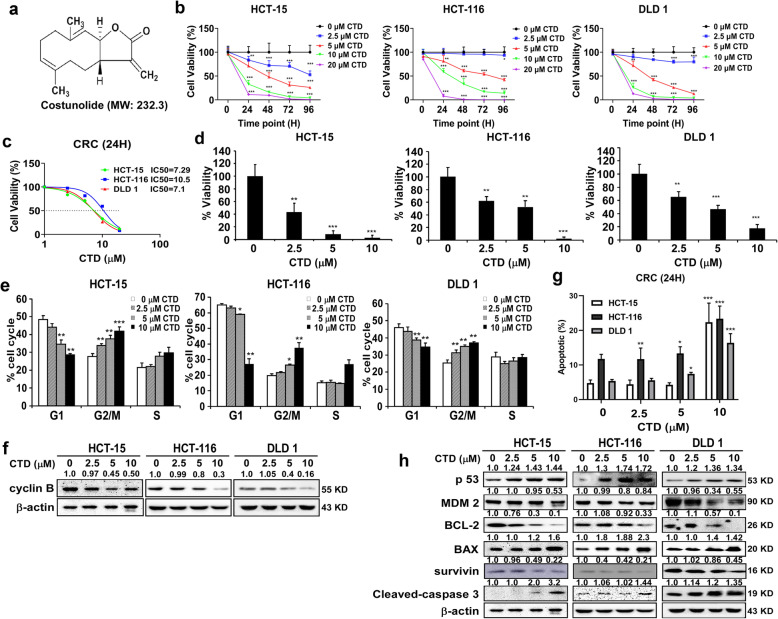
Colorectal cancer (CRC) is a clinically challenging malignant tumor worldwide. As a natural product and sesquiterpene lactone, Costunolide (CTD) has been reported to possess anticancer activities. However, the regulation mechanism and precise target of this substance remain undiscovered in CRC. In this study, we found that CTD inhibited CRC cell proliferation in vitro and in vivo by targeting AKT.
Effects of CTD on colon cancer cell growth in vitro were evaluated in cell proliferation assays, migration and invasion, propidium iodide, and annexin V-staining analyses. Targets of CTD were identified utilizing phosphoprotein-specific antibody array; Costunolide-sepharose conjugated bead pull-down analysis and knockdown techniques. We investigated the underlying mechanisms of CTD by ubiquitination, immunofluorescence staining, and western blot assays. Cell-derived tumour xenografts (CDX) in nude mice and immunohistochemistry were used to assess anti-tumour effects of CTD in vivo.
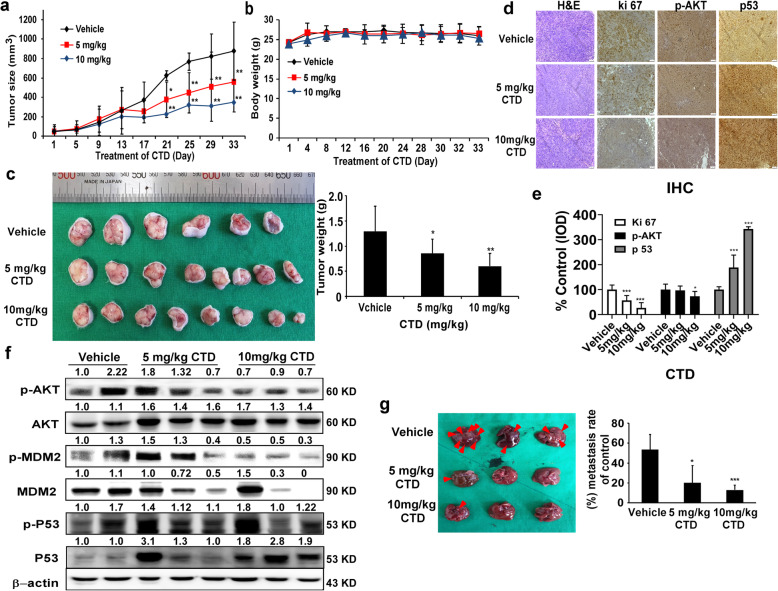
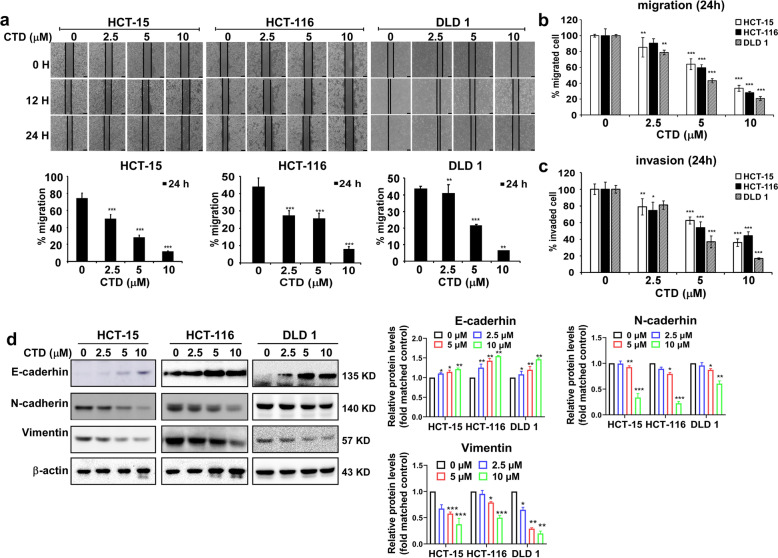
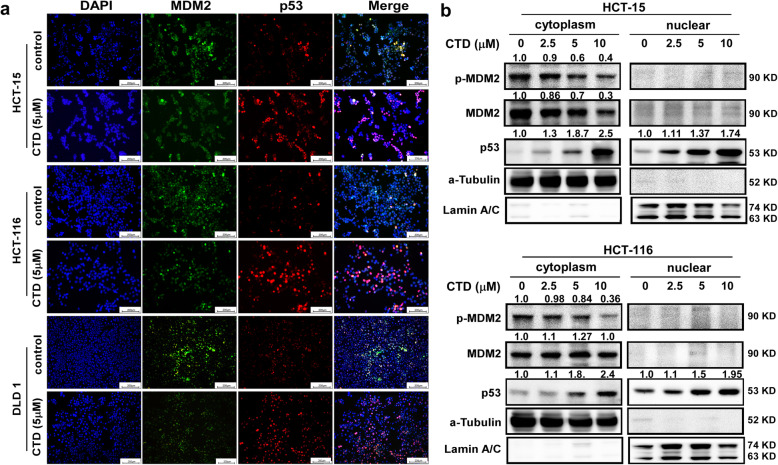
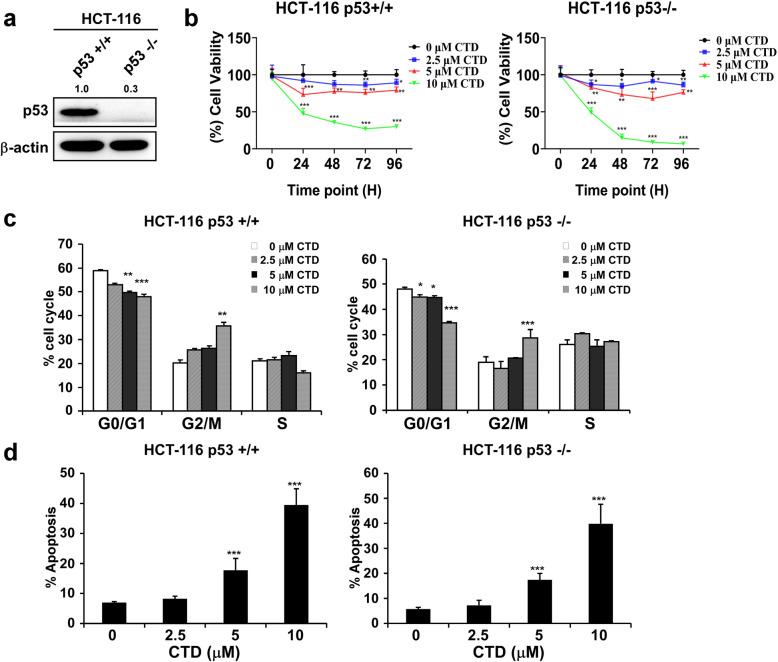
CTD suppressed the proliferation, anchorage-independent colony growth and epithelial-mesenchymal transformation (EMT) of CRC cells including HCT-15, HCT-116 and DLD1. Besides, the CTD also triggered cell apoptosis and cell cycle arrest at the G2/M phase. The CTD activates and induces p53 stability by inhibiting MDM2 ubiquitination via the suppression of AKT's phosphorylation in vitro. The CTD suppresses cell growth in a p53-independent fashion manner; p53 activation may contribute to the anticancer activity of CTD via target AKT. Finally, the CTD decreased the volume of CDX tumors without of the body weight loss and reduced the expression of AKT-MDM2-p53 signaling pathway in xenograft tumors.
Our project has uncovered the mechanism underlying the biological activity of CTD in colon cancer and confirmed the AKT is a directly target of CTD. All of which These results revealed that CTD might be a new AKT inhibitor in colon cancer treatment, and CTD is worthy of further exploration in preclinical and clinical trials.
结直肠癌(CRC)是一种具有挑战性的临床恶性肿瘤。作为一种天然产物和倍半萜内酯,木香烃内酯(CTD)已被报道具有抗癌活性。然而,这种物质在 CRC 中的调节机制和精确靶点仍未被发现。在这项研究中,我们发现 CTD 通过靶向 AKT 抑制 CRC 细胞在体外和体内的增殖。
通过细胞增殖试验、迁移和侵袭、碘化丙啶和 Annexin V 染色分析评估 CTD 对结肠癌细胞生长的影响。利用磷酸化蛋白特异性抗体阵列;Costunolide-sepharose 缀合珠下拉分析和敲低技术鉴定 CTD 的靶点。我们通过泛素化、免疫荧光染色和 Western blot 分析研究了 CTD 的潜在机制。裸鼠肿瘤细胞衍生肿瘤异种移植(CDX)和免疫组织化学用于评估 CTD 体内的抗肿瘤作用。
CTD 抑制了包括 HCT-15、HCT-116 和 DLD1 在内的 CRC 细胞的增殖、锚定非依赖性集落生长和上皮间质转化(EMT)。此外,CTD 还触发细胞凋亡和细胞周期停滞在 G2/M 期。CTD 通过抑制 AKT 的磷酸化在体外激活并诱导 p53 稳定性,从而抑制 MDM2 的泛素化。CTD 以一种不依赖 p53 的方式抑制细胞生长;p53 的激活可能通过靶向 AKT 促进 CTD 的抗癌活性。最后,CTD 减少了 CDX 肿瘤的体积,而体重没有减轻,并降低了异种移植肿瘤中 AKT-MDM2-p53 信号通路的表达。
我们的项目揭示了 CTD 在结肠癌中的生物学活性的作用机制,并证实 AKT 是 CTD 的直接靶点。所有这些结果表明 CTD 可能是结肠癌治疗中一种新的 AKT 抑制剂,CTD 值得进一步在临床前和临床试验中探索。