Deutsches Rheuma-Forschungszentrum (DRFZ), an Institute of the Leibniz Association, Berlin, Germany.
Belozersky Institute of Physico-Chemical Biology and Biological Faculty, M.V. Lomonosov Moscow State University, Moscow, Russia.
Nat Commun. 2021 Mar 30;12(1):1961. doi: 10.1038/s41467-021-22210-3.
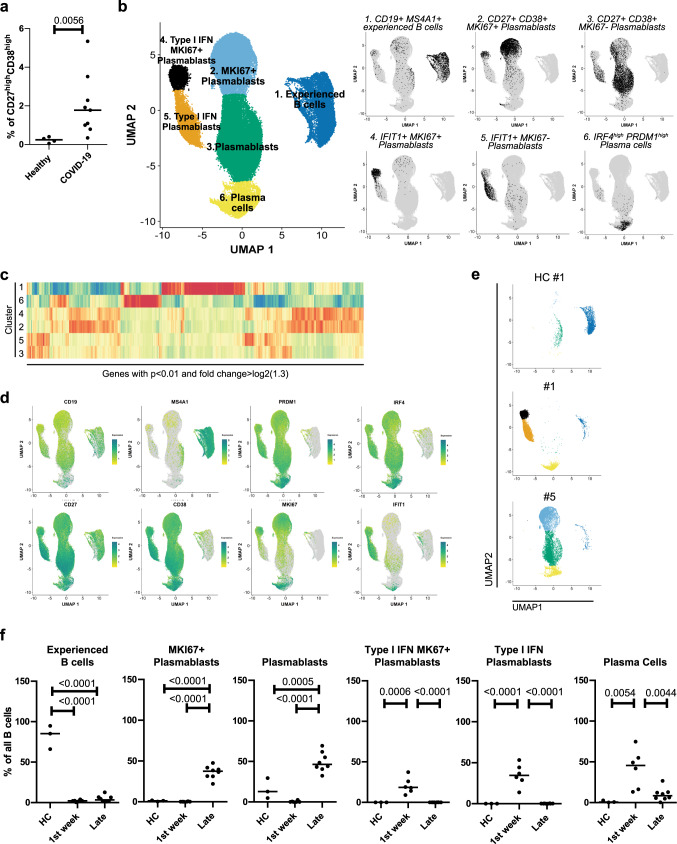
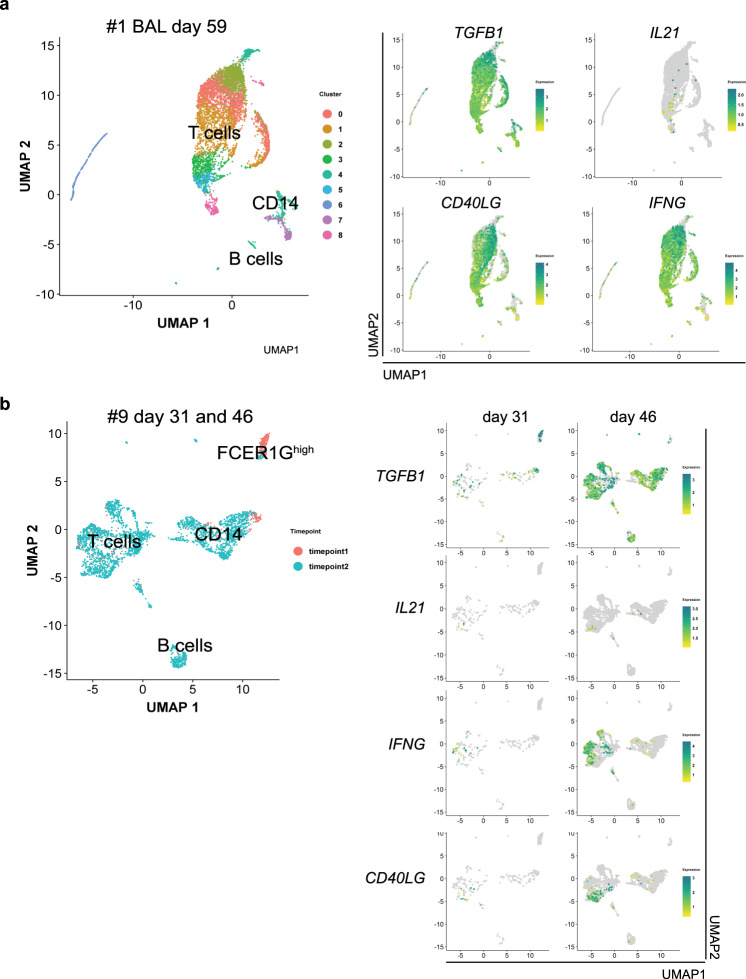
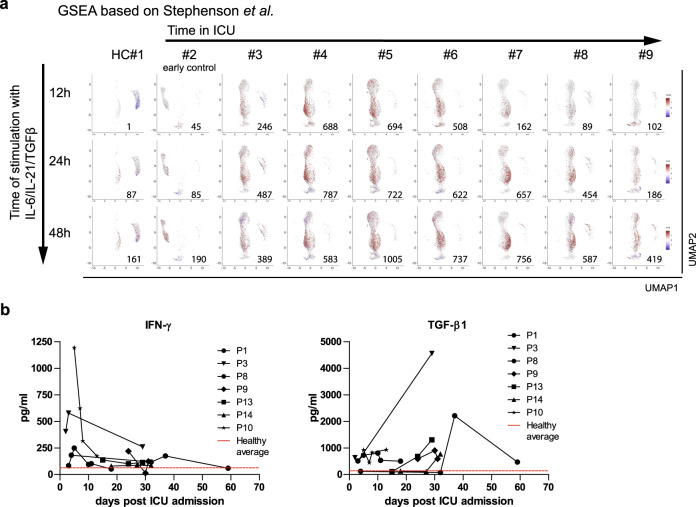
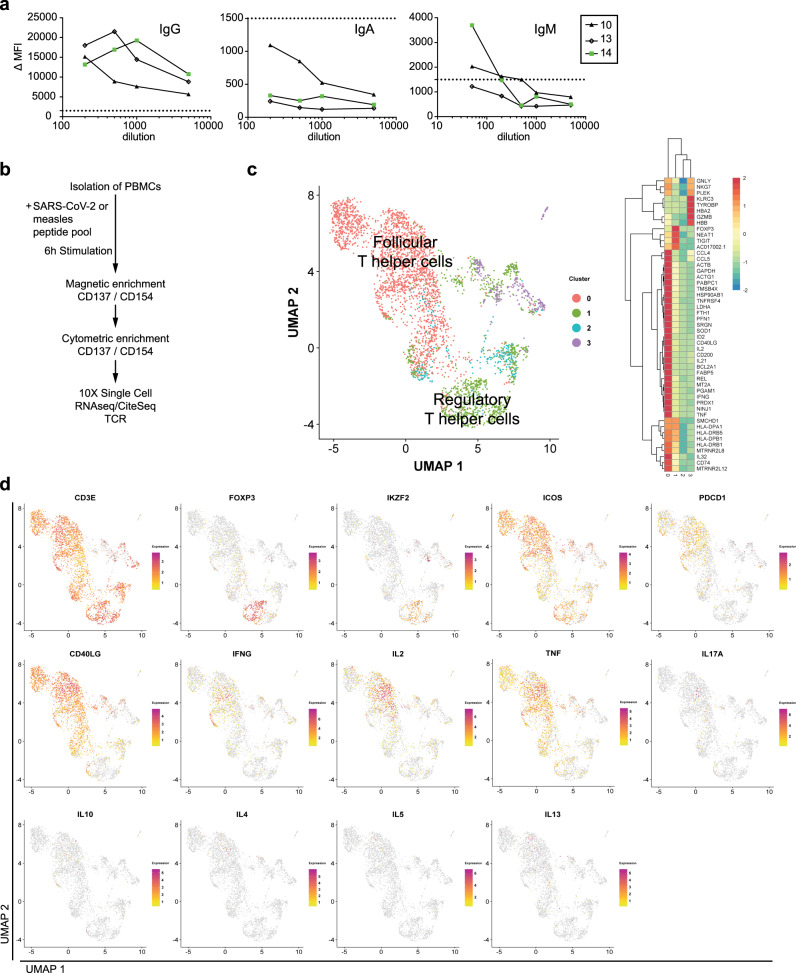
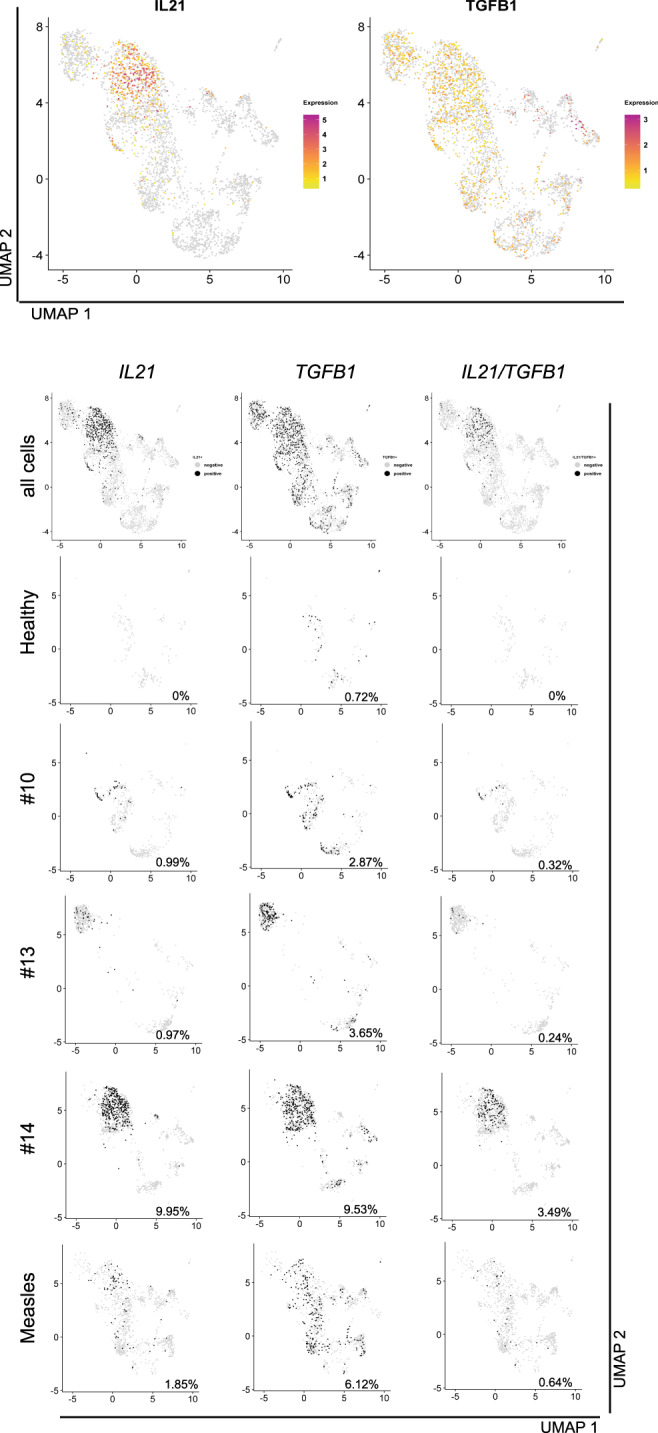
The pathogenesis of severe COVID-19 reflects an inefficient immune reaction to SARS-CoV-2. Here we analyze, at the single cell level, plasmablasts egressed into the blood to study the dynamics of adaptive immune response in COVID-19 patients requiring intensive care. Before seroconversion in response to SARS-CoV-2 spike protein, peripheral plasmablasts display a type 1 interferon-induced gene expression signature; however, following seroconversion, plasmablasts lose this signature, express instead gene signatures induced by IL-21 and TGF-β, and produce mostly IgG1 and IgA1. In the sustained immune reaction from COVID-19 patients, plasmablasts shift to the expression of IgA2, thereby reflecting an instruction by TGF-β. Despite their continued presence in the blood, plasmablasts are not found in the lungs of deceased COVID-19 patients, nor does patient IgA2 binds to the dominant antigens of SARS-CoV-2. Our results thus suggest that, in severe COVID-19, SARS-CoV-2 triggers a chronic immune reaction that is instructed by TGF-β, and is distracted from itself.
严重 COVID-19 的发病机制反映了对 SARS-CoV-2 的低效免疫反应。在这里,我们在单细胞水平上分析了流出到血液中的浆母细胞,以研究需要重症监护的 COVID-19 患者适应性免疫反应的动力学。在针对 SARS-CoV-2 刺突蛋白产生血清转化之前,外周浆母细胞表现出 I 型干扰素诱导的基因表达特征;然而,在血清转化之后,浆母细胞失去了这种特征,表达由 IL-21 和 TGF-β诱导的基因特征,并主要产生 IgG1 和 IgA1。在来自 COVID-19 患者的持续免疫反应中,浆母细胞转向 IgA2 的表达,从而反映了 TGF-β 的指令。尽管浆母细胞继续存在于血液中,但在已故 COVID-19 患者的肺部中未发现浆母细胞,并且患者的 IgA2 也不与 SARS-CoV-2 的主要抗原结合。因此,我们的结果表明,在严重的 COVID-19 中,SARS-CoV-2 引发了由 TGF-β指导的慢性免疫反应,并且摆脱了自身。