Besler Christian, Rommel Karl-Philipp, Kresoja Karl-Patrik, Mörbitz Justus, Kirsten Holger, Scholz Markus, Klingel Karin, Thiery Joachim, Burkhardt Ralph, Büttner Petra, Adams Volker, Thiele Holger, Lurz Philipp
Department of Internal Medicine/Cardiology, Heart Center Leipzig at University of Leipzig, Strümpellstraße 39, Leipzig, 04289, Germany.
Institute for Medical Informatics, Statistics and Epidemiology, University of Leipzig, Leipzig, Germany.
ESC Heart Fail. 2021 Jun;8(3):1861-1872. doi: 10.1002/ehf2.13327. Epub 2021 Mar 30.
Murine models implicate phosphodiesterase 9A (PDE9A) as a nitric oxide-independent regulator of cyclic guanosine monophosphate and promising novel therapeutic target in heart failure (HF) with preserved ejection fraction (HFpEF). This study describes PDE9A expression in endomyocardial biopsies (EMBs) and peripheral blood mononuclear cells (PBMNCs) from patients with different HF phenotypes.
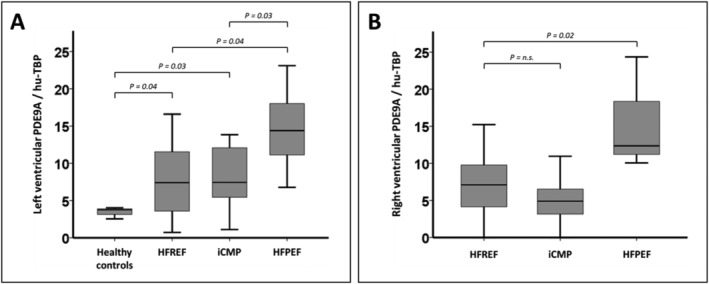
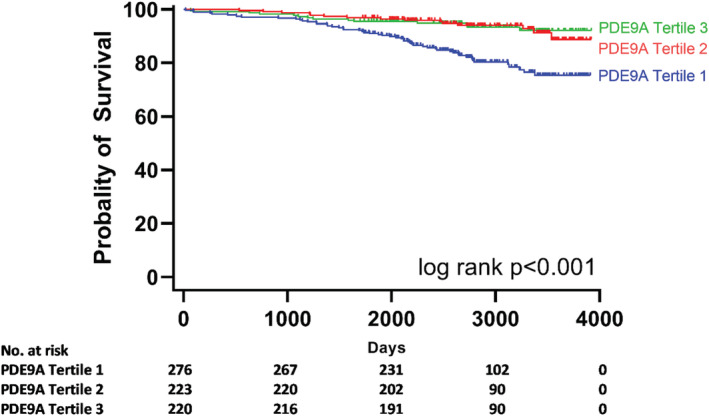
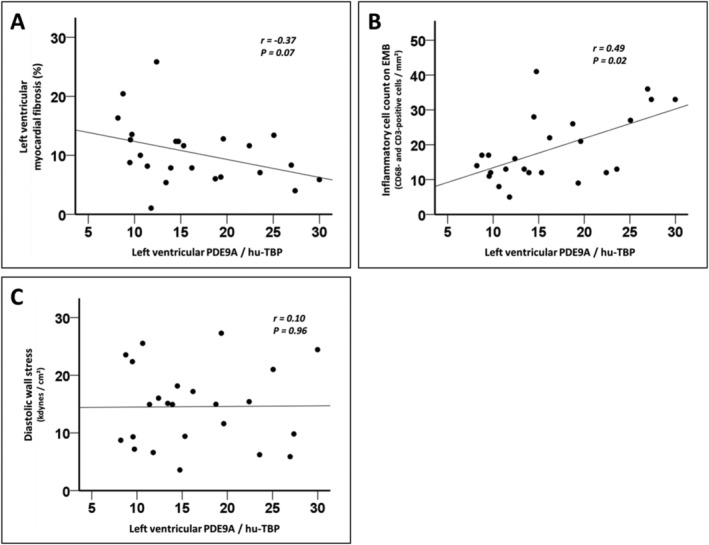
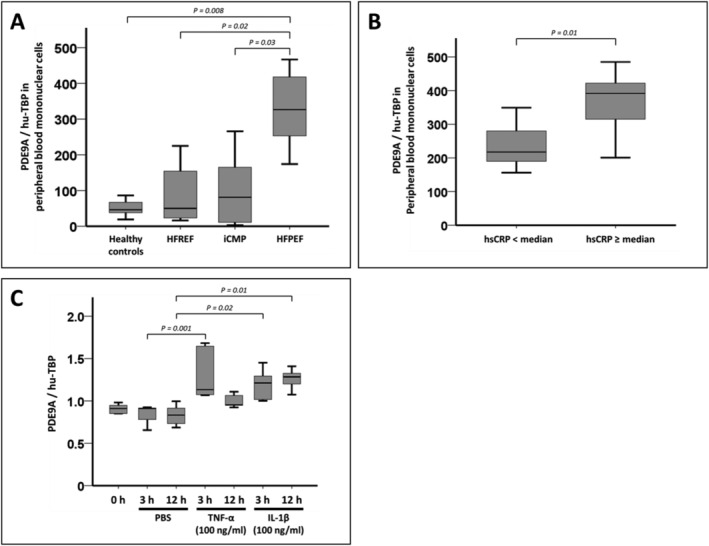
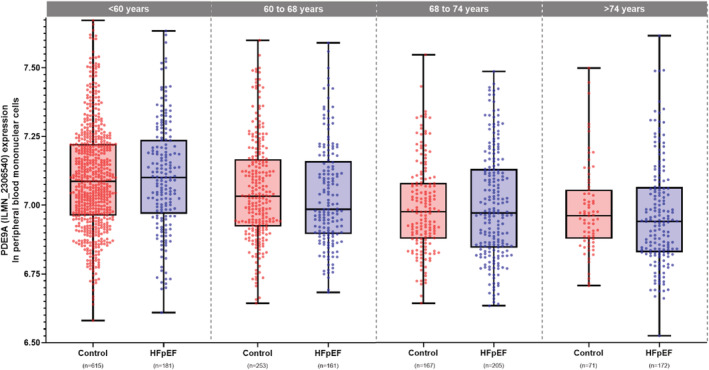
Endomyocardial biopsies and PBMNCs were obtained from patients with HFpEF (n = 24), HF with reduced ejection fraction (n = 22), and inflammatory cardiomyopathy (n = 24) and patients without HF (n = 7). PDE9A expression was increased in EMBs and PBMNCs from patients with HFpEF as compared with other HF phenotypes or subjects without HF. Endomyocardial PDE9A expression in HFpEF correlated with the inflammatory cell count in EMBs, but not with cardiac fibrosis or left ventricular diastolic wall stress. PDE9A expression in PBMNCs was increased in HFpEF patients with higher high-sensitivity C-reactive protein levels and in response to pro-inflammatory stimulation. As a validation cohort, 719 patients with HFpEF and 1106 subjects without HF were identified from the LIFE-Heart study. PDE9A expression in PBMNCs was obtained from array data and displayed an age-dependent distribution. PDE9A levels were elevated and conferred increased risk for HFpEF in middle-aged subjects, but not in elderly HFpEF patients. Following age adjustment, lower PDE9A expression in PBMNCs was associated with worse survival in patients with HFpEF (log-rank test P-value <0.001).
Expression profiling indicates an up-regulation of endomyocardial PDE9A in different HF phenotypes with the most robust increase in EMBs and PBMNCs from patients with HFpEF. An exclusive risk effect of PDE9A expression on HFpEF in middle-aged patients and an unexpected association with survival calls for further studies to better characterize the role of PDE9A as a treatment target.
小鼠模型表明磷酸二酯酶9A(PDE9A)是环磷酸鸟苷的一种不依赖一氧化氮的调节因子,是射血分数保留的心力衰竭(HFpEF)中有前景的新型治疗靶点。本研究描述了不同HF表型患者的心内膜心肌活检(EMB)和外周血单核细胞(PBMNC)中PDE9A的表达情况。
从HFpEF患者(n = 24)、射血分数降低的HF患者(n = 22)、炎症性心肌病患者(n = 24)和无HF患者(n = 7)获取心内膜心肌活检组织和PBMNC。与其他HF表型或无HF受试者相比,HFpEF患者的EMB和PBMNC中PDE9A表达增加。HFpEF患者的心内膜PDE9A表达与EMB中的炎症细胞计数相关,但与心脏纤维化或左心室舒张壁应力无关。PBMNC中PDE9A表达在高敏C反应蛋白水平较高的HFpEF患者中增加,且对促炎刺激有反应。作为验证队列,从LIFE-Heart研究中确定了719例HFpEF患者和1106例无HF受试者。从阵列数据中获取PBMNC中PDE9A的表达,并显示出年龄依赖性分布。PDE9A水平升高,在中年受试者中增加了HFpEF的风险,但在老年HFpEF患者中未增加。年龄调整后,PBMNC中较低的PDE9A表达与HFpEF患者较差的生存率相关(对数秩检验P值<0.001)。
表达谱分析表明,在不同HF表型中的心内膜PDE9A上调,其中HFpEF患者的EMB和PBMNC中增加最为显著。PDE9A表达对中年患者HFpEF的独特风险影响以及与生存率的意外关联,需要进一步研究以更好地阐明PDE9A作为治疗靶点的作用。