Department of Physical Therapy, City University of New York - College of Staten Island.
New York Centre for Biomedical Engineering, City University of New York - City College of New York.
Medicine (Baltimore). 2021 Apr 2;100(13):e25382. doi: 10.1097/MD.0000000000025382.
A recent trend in the field of primary knee osteoarthritis suggests that elastic tape (e.g., K-tape) relieves pressure on the joint by increasing tension on fascia. Elastic tape (ET) is expected to decrease pain and help patients to recover faster.
This systematic review aims to analyze the efficacy of this method on pain in patients with knee osteoarthritis by using The Western Ontario and McMaster Universities Osteoarthritis Index (WOMAC) score.
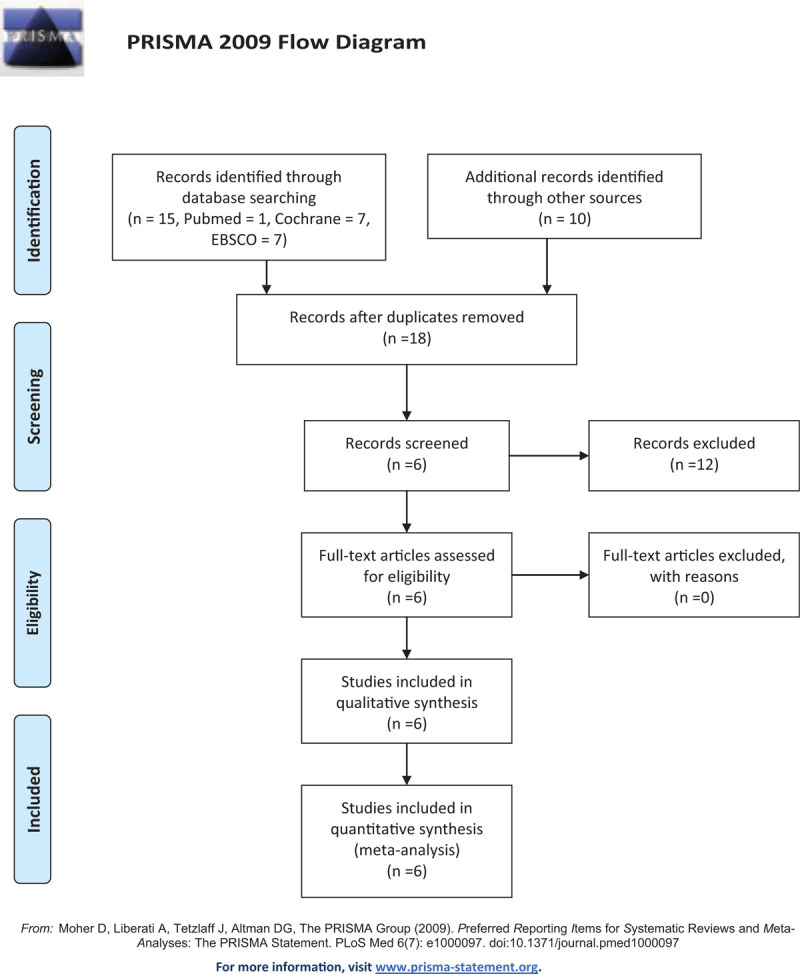
Following the Preferred Reporting Items for Systematic Reviews and Meta-Analyses (PRISMA) standard for reporting systematic reviews of qualitative and quantitative evidence, we used 3 electronic databases, PubMed, Cochrane, and EBSCO, and grey literature was included.
Articles were screened for duplicates, screened for inclusion and exclusion criteria, and critically appraised.
People older than 45 years old with primary osteoarthritis (OA) and application of ET.
2005 Oxford standard.
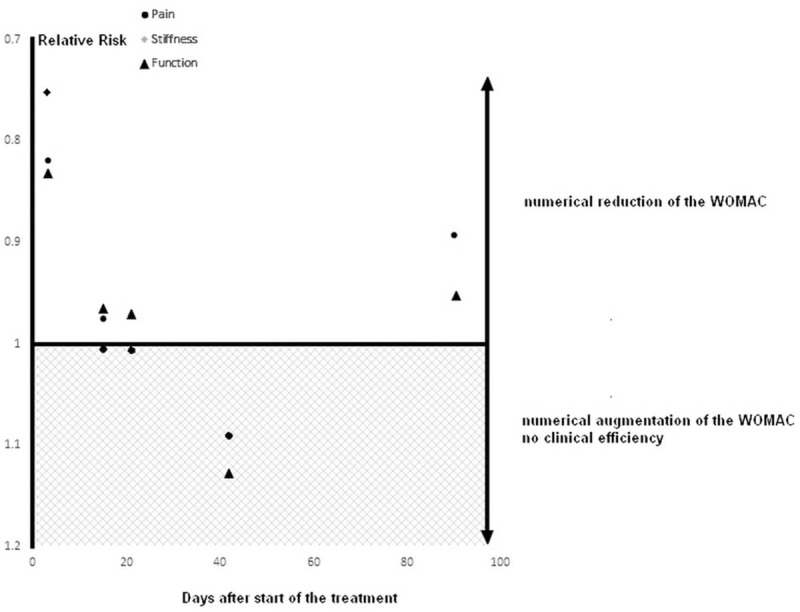
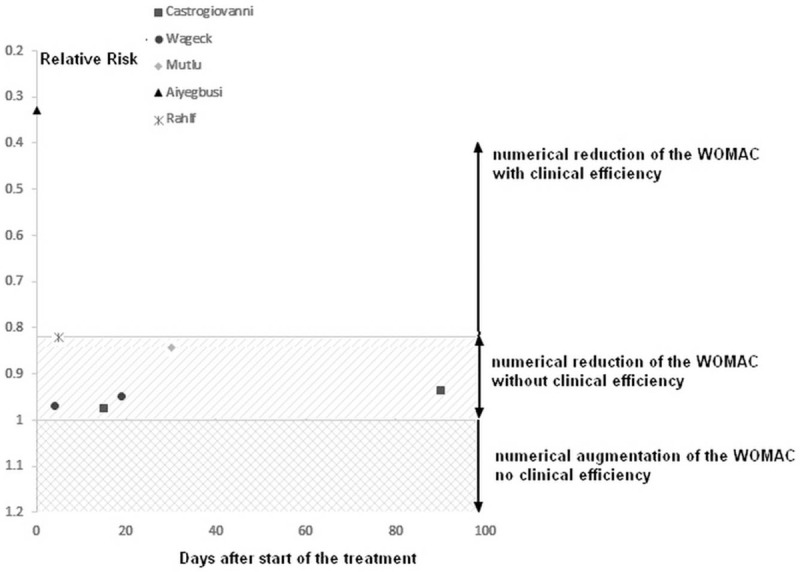
Amongst all the papers found, 6 Randomized Control Trials (RCT) for a total of 392 participants met the criteria and were included in our review. Three papers out of the 6 RCT had low risks of bias. When the ET was compared to sham taping, the results show no to moderate decreases of WOMAC scores in patients with primary knee osteoarthritis.
We focused on a single index test (WOMAC) and could not perform meta-analyses.
Although ET does not provide strong adverse outcomes, our data do not support the use of ET as a treatment alone because of too slight reductions of the WOMAC score for reaching clinical efficiency. Thus, our systematic review shows no strong evidence regarding the use of elastic taping for pain improvement in patients with primary knee osteoarthritis.
最近在原发性膝骨关节炎领域出现了一种趋势,即弹性胶带(如 K 胶带)通过增加筋膜张力来减轻关节压力。弹性胶带(ET)有望减轻疼痛并帮助患者更快康复。
本系统评价旨在通过使用西安大略和麦克马斯特大学骨关节炎指数(WOMAC)评分分析这种方法对膝骨关节炎患者疼痛的疗效。
根据系统评价和荟萃分析的首选报告项目(PRISMA)标准,我们使用了 3 个电子数据库(PubMed、Cochrane 和 EBSCO)和灰色文献进行了研究。
对重复文章进行筛选,筛选纳入和排除标准,并进行严格评估。
年龄大于 45 岁的原发性骨关节炎(OA)患者和 ET 应用。
2005 年牛津标准。
在所发现的所有论文中,有 6 项随机对照试验(RCT)共 392 名参与者符合标准并纳入了我们的综述。6 项 RCT 中有 3 项的偏倚风险较低。与假贴扎相比,ET 结果显示原发性膝骨关节炎患者的 WOMAC 评分没有适度降低。
我们只关注单一的指标测试(WOMAC),无法进行荟萃分析。
尽管 ET 不会产生强烈的不良后果,但由于 WOMAC 评分的降低幅度太小,无法达到临床疗效,因此我们的数据不支持将 ET 单独用作治疗方法。因此,我们的系统评价没有强有力的证据表明弹性胶带在改善原发性膝骨关节炎患者疼痛方面的有效性。