Faculty of Medicine and Health Sciences, University of Zimbabwe, Avondale, Harare, Zimbabwe of Zimbabwe.
Asthma Allergy and Immunology Clinic, Twin Palms Medical Centre, Harare, Zimbabwe.
PLoS Negl Trop Dis. 2021 Mar 31;15(3):e0009254. doi: 10.1371/journal.pntd.0009254. eCollection 2021 Mar.
In order to protect health workers from SARS-CoV-2, there is need to characterise the different types of patient facing health workers. Our first aim was to determine both the infection status and seroprevalence of SARS-CoV-2 in health workers. Our second aim was to evaluate the occupational and demographic predictors of seropositivity to inform the country's infection prevention and control (IPC) strategy.
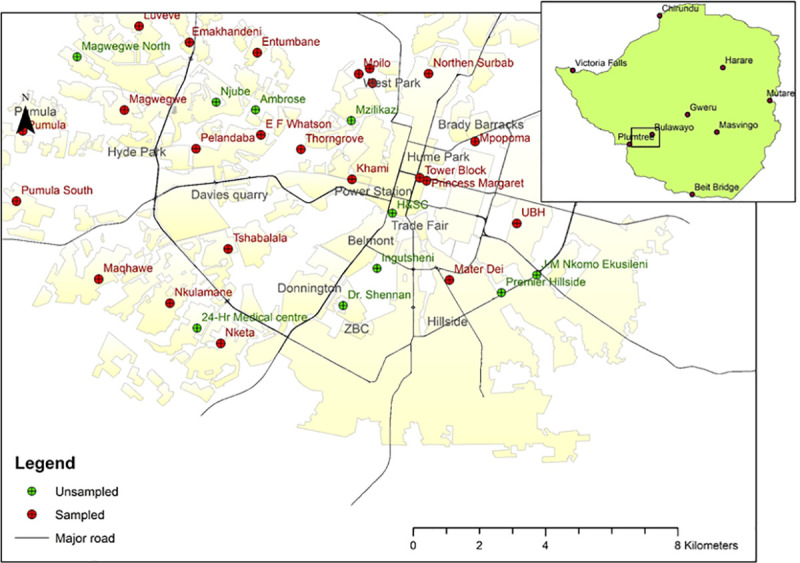
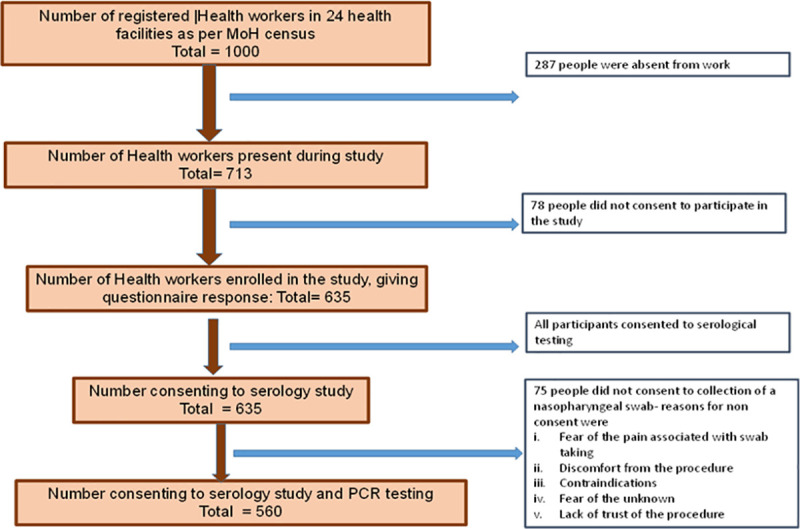
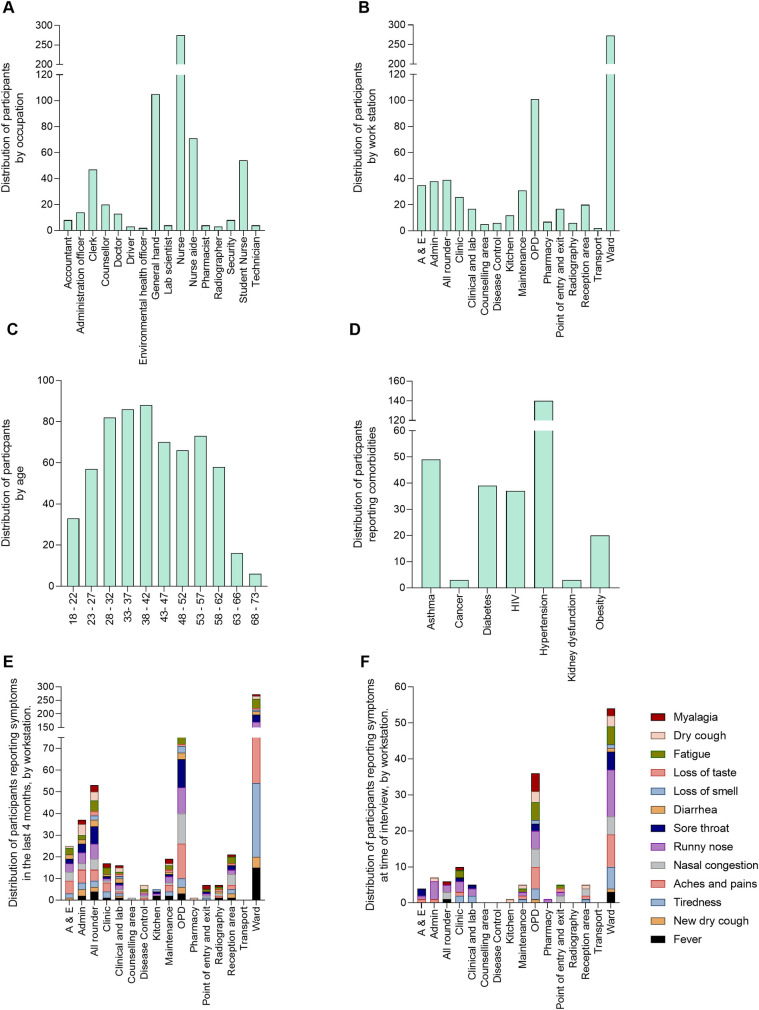
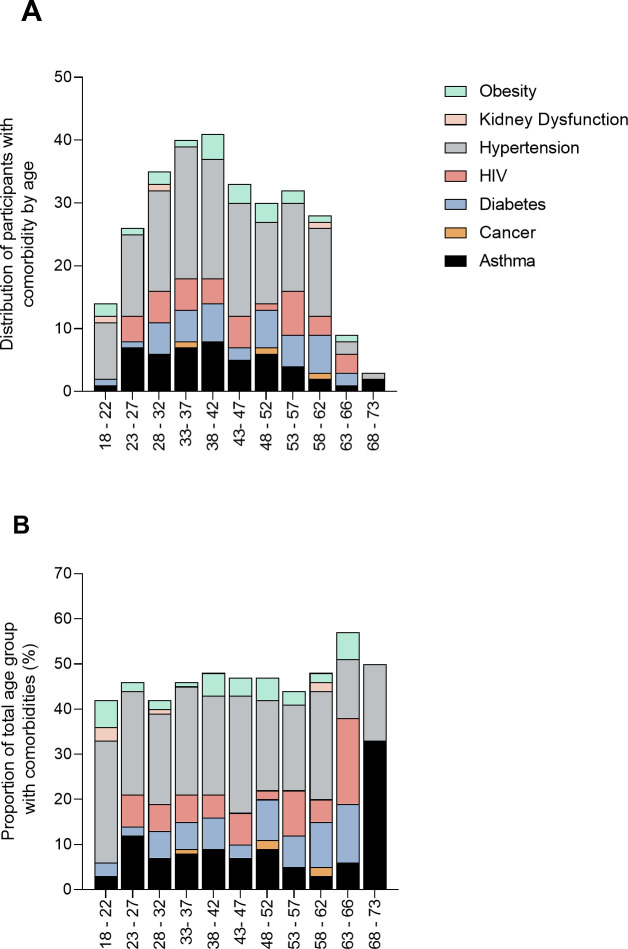
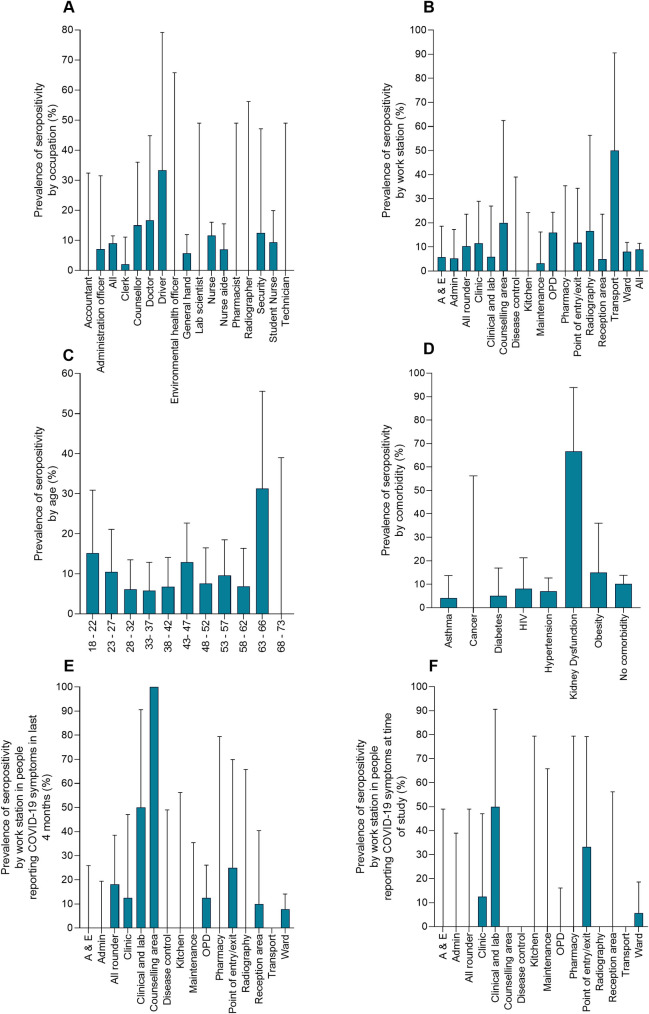
We invited 713 staff members at 24 out of 35 health facilities in the City of Bulawayo in Zimbabwe. Compliance to testing was defined as the willingness to uptake COVID-19 testing by answering a questionnaire and providing samples for both antibody testing and PCR testing. SARS-COV-2 antibodies were detected using a rapid diagnostic test kit and SAR-COV-2 infection was determined by real-time (RT)-PCR. Of the 713 participants, 635(89%) consented to answering the questionnaire and providing blood sample for antibody testing while 560 (78.5%) agreed to provide nasopharyngeal swabs for the PCR SARS-CoV-2 testing. Of the 635 people (aged 18-73) providing a blood sample 39.1% reported a history of past COVID-19 symptoms while 14.2% reported having current symptoms of COVID-19. The most-prevalent co-morbidity among this group was hypertension (22.0%) followed by asthma (7.0%) and diabetes (6.0%). The SARS-CoV-2 sero-prevalence was 8.9%. Of the 560 participants tested for SARS-CoV-2 infection, 2 participants (0.36%) were positive for SAR-CoV-2 infection by PCR testing. None of the SARS-CoV-2 antibody positive people were positive for SAR-CoV-2 infection by PCR testing.
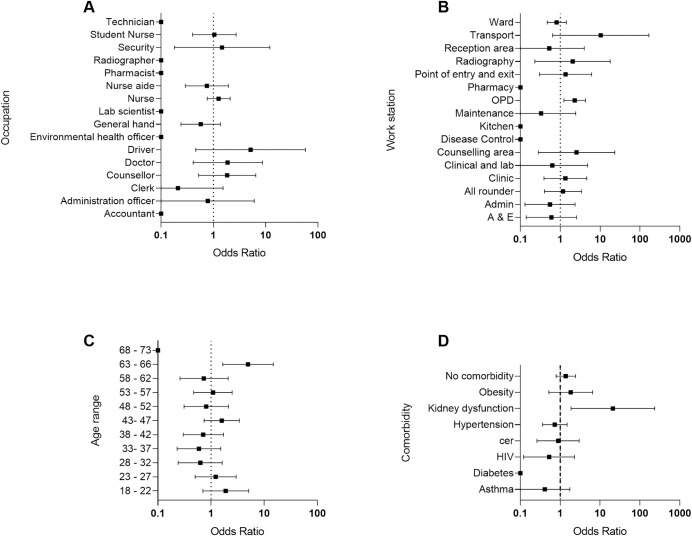
In addition to clinical staff, several patient-facing health workers were characterised within Zimbabwe's health system and the seroprevalence data indicated that previous exposure to SAR-CoV-2 had occurred across the full spectrum of patient-facing staff with nurses and nurse aides having the highest seroprevalence. Our results highlight the need for including the various health workers in IPC strategies in health centres to ensure effective biosecurity and biosafety.
为了保护卫生工作者免受 SARS-CoV-2 的侵害,需要对面临患者的卫生工作者进行分类。我们的首要目标是确定卫生工作者的 SARS-CoV-2 感染状况和血清流行率。我们的第二个目标是评估职业和人口统计学因素与血清阳性的相关性,为国家感染预防和控制(IPC)策略提供信息。
我们邀请了津巴布韦布拉瓦约市 35 家卫生机构中的 24 家的 713 名工作人员。检测的依从性定义为通过回答问卷并提供抗体检测和 PCR 检测的样本,愿意接受 COVID-19 检测。使用快速诊断试剂盒检测 SARS-CoV-2 抗体,通过实时(RT)-PCR 确定 SARS-CoV-2 感染。在 713 名参与者中,635 名(89%)同意回答问卷并提供用于抗体检测的血液样本,而 560 名(78.5%)同意提供鼻咽拭子进行 SARS-CoV-2 的 PCR 检测。在提供血液样本的 635 人中(年龄 18-73 岁),39.1%报告有过去 COVID-19 症状史,14.2%报告有 COVID-19 症状。该组最常见的合并症是高血压(22.0%),其次是哮喘(7.0%)和糖尿病(6.0%)。SARS-CoV-2 血清流行率为 8.9%。在 560 名接受 SARS-CoV-2 感染检测的参与者中,2 名(0.36%)PCR 检测 SARS-CoV-2 感染呈阳性。PCR 检测未发现 SARS-CoV-2 抗体阳性者 SARS-CoV-2 感染呈阳性。
除临床工作人员外,津巴布韦卫生系统还对若干面临患者的卫生工作者进行了特征描述,血清流行率数据表明,以前 SARS-CoV-2 暴露发生在所有面临患者的工作人员中,护士和护士助理的血清阳性率最高。我们的结果强调需要将各类卫生工作者纳入卫生中心的 IPC 策略中,以确保有效的生物安全和生物安保。