• 文献检索
  • 文档翻译
  • 深度研究
  • 学术资讯
  • Suppr Zotero 插件Zotero 插件
  • 邀请有礼
  • 套餐&价格
  • 历史记录
应用&插件
Suppr Zotero 插件Zotero 插件浏览器插件Mac 客户端Windows 客户端微信小程序
定价
高级版会员购买积分包购买API积分包
服务
文献检索文档翻译深度研究API 文档MCP 服务
关于我们
关于 Suppr公司介绍联系我们用户协议隐私条款
关注我们

Suppr 超能文献

核心技术专利:CN118964589B侵权必究
粤ICP备2023148730 号-1Suppr @ 2026

文献检索

告别复杂PubMed语法,用中文像聊天一样搜索,搜遍4000万医学文献。AI智能推荐,让科研检索更轻松。

立即免费搜索

文件翻译

保留排版,准确专业,支持PDF/Word/PPT等文件格式,支持 12+语言互译。

免费翻译文档

深度研究

AI帮你快速写综述,25分钟生成高质量综述,智能提取关键信息,辅助科研写作。

立即免费体验

公平的全球卫生研究和实施看起来是什么样的?以“抗击感染造福非洲”伙伴关系为例。

What does equitable global health research and delivery look like? Tackling Infections to Benefit Africa (TIBA) partnership as a case study.

机构信息

School of Biological Sciences. Institute for Immunology and Infection Research, Ashworth Laboratories, Edinburgh, UK

Tackling Infections to Benefit Africa (TIBA) Partnership, University of Edinburgh, Edinburgh, UK.

出版信息

BMJ Glob Health. 2023 Mar;8(3). doi: 10.1136/bmjgh-2022-011028.

DOI:10.1136/bmjgh-2022-011028
PMID:36963785
原文链接:https://pmc.ncbi.nlm.nih.gov/articles/PMC10040064/
Abstract

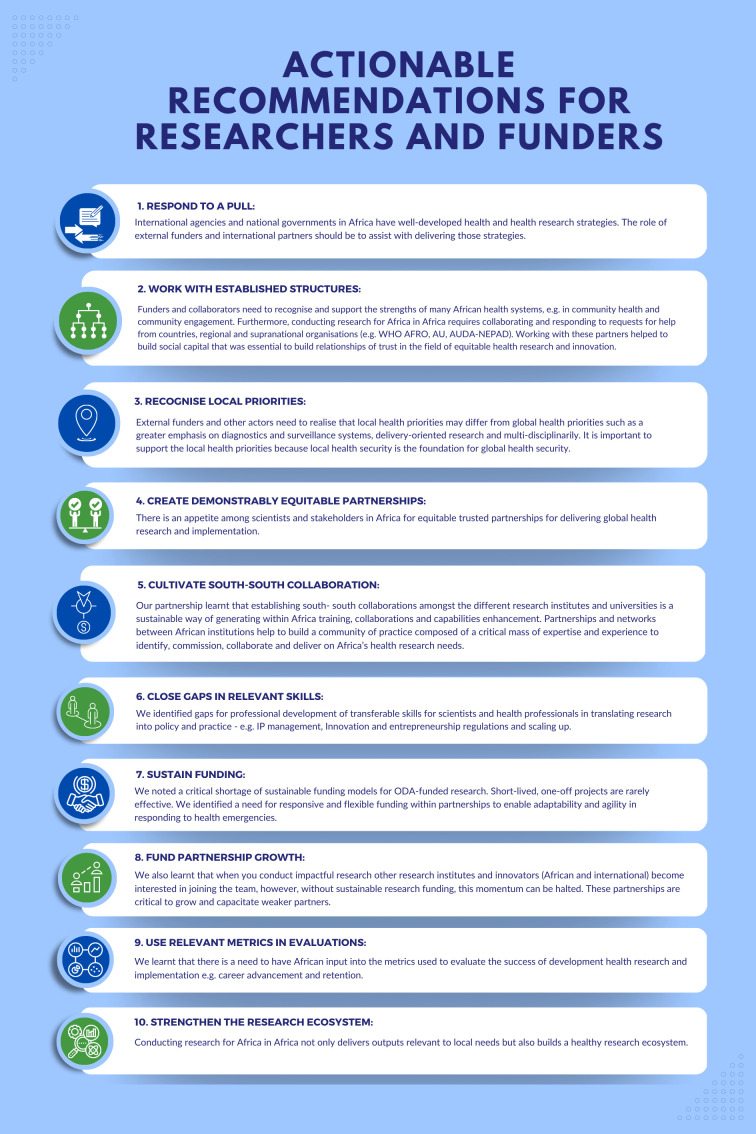
There is a current global push to identify and implement best practice for delivering maximum impact from development research in low-income and middle-income countries. Here, we describe a model of research and capacity building that challenges traditional approaches taken by western funders in Africa. Tackling Infections to Benefit Africa (TIBA) is a global health research and delivery partnership with a focus on strengthening health systems to combat neglected tropical diseases, malaria and emerging pathogens in Africa. Partners are academic and research institutions based in Ghana, Sudan, Rwanda, Uganda, Kenya, Tanzania, Zimbabwe, Botswana, South Africa and the UK. Fifteen other African countries have participated in TIBA activities. With a starting budget of under £7 million, and in just 4 years, TIBA has had a verified impact on knowledge, policy practice and capacity building, and on national and international COVID-19 responses in multiple African countries. TIBA's impact is shown in context-specific metrics including: strengthening the evidence base underpinning international policy on neglected tropical diseases; 77% of research publications having Africa-based first and/or last authors; postgraduate, postdoctoral and professional training; career progression for African researchers and health professionals with no net brain drain from participating countries; and supporting African institutions. Training in real-time SARS-CoV-2 viral genome sequencing provided new national capabilities and capacities that contributed to both national responses and global health security through variant detection and tracking. TIBA's experience confirms that health research for Africa thrives when the agenda and priorities are set in Africa, by Africans, and the work is done in Africa. Here, we share 10 actionable recommendations for researchers and funders from our lessons learnt.

摘要

当前,全球范围内正在努力确定并实施最佳实践,以确保在低收入和中等收入国家开展的发展研究产生最大影响。在这里,我们描述了一种研究和能力建设模式,该模式挑战了西方资助者在非洲采取的传统方法。“非洲有益于防治传染病”(Tackling Infections to Benefit Africa,简称 TIBA)是一个全球卫生研究和实施伙伴关系,其重点是加强卫生系统,以抗击非洲的被忽视热带病、疟疾和新出现的病原体。合作伙伴是加纳、苏丹、卢旺达、乌干达、肯尼亚、坦桑尼亚、津巴布韦、博茨瓦纳、南非和英国的学术和研究机构。还有另外 15 个非洲国家参与了 TIBA 的活动。TIBA 的起始预算不到 700 万英镑,仅在 4 年内,就在多个非洲国家的知识、政策实践和能力建设方面,以及在国家和国际层面的 COVID-19 应对方面产生了可核实的影响。TIBA 的影响体现在具体国情的指标中,包括:加强关于被忽视热带病的国际政策的证据基础;77%的研究出版物拥有非洲籍的第一作者和/或最后作者;研究生、博士后和专业培训;非洲研究人员和卫生专业人员的职业发展,没有参与国出现人才流失;以及支持非洲机构。实时 SARS-CoV-2 病毒基因组测序培训提供了新的国家能力,通过检测和跟踪变异,为国家应对和全球卫生安全做出了贡献。TIBA 的经验证实,当议程和优先事项由非洲人在非洲确定、由非洲人制定、并在非洲开展工作时,非洲健康研究就会蓬勃发展。在这里,我们根据经验教训分享了 10 条对研究人员和资助者的可操作建议。
https://cdn.ncbi.nlm.nih.gov/pmc/blobs/8cd1/10040064/862040c46d57/bmjgh-2022-011028f04.jpg
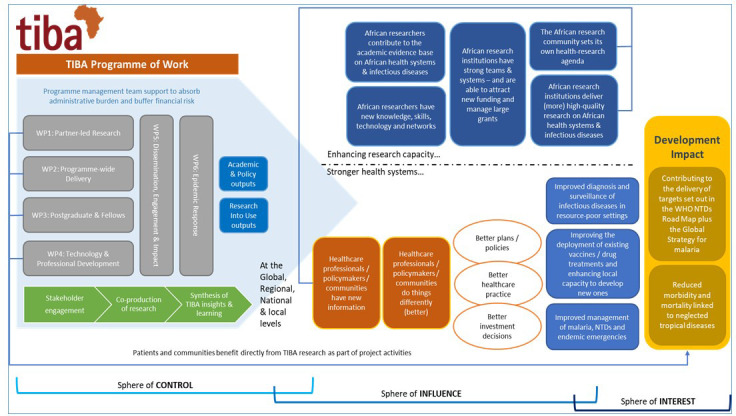
https://cdn.ncbi.nlm.nih.gov/pmc/blobs/8cd1/10040064/bb1fd468ba17/bmjgh-2022-011028f01.jpg
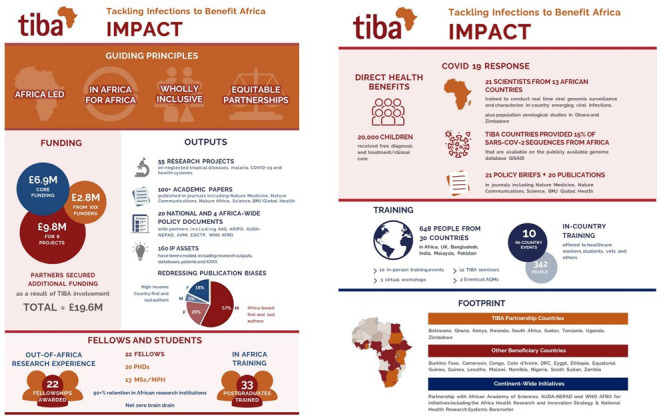
https://cdn.ncbi.nlm.nih.gov/pmc/blobs/8cd1/10040064/7aa83ad172bc/bmjgh-2022-011028f02.jpg
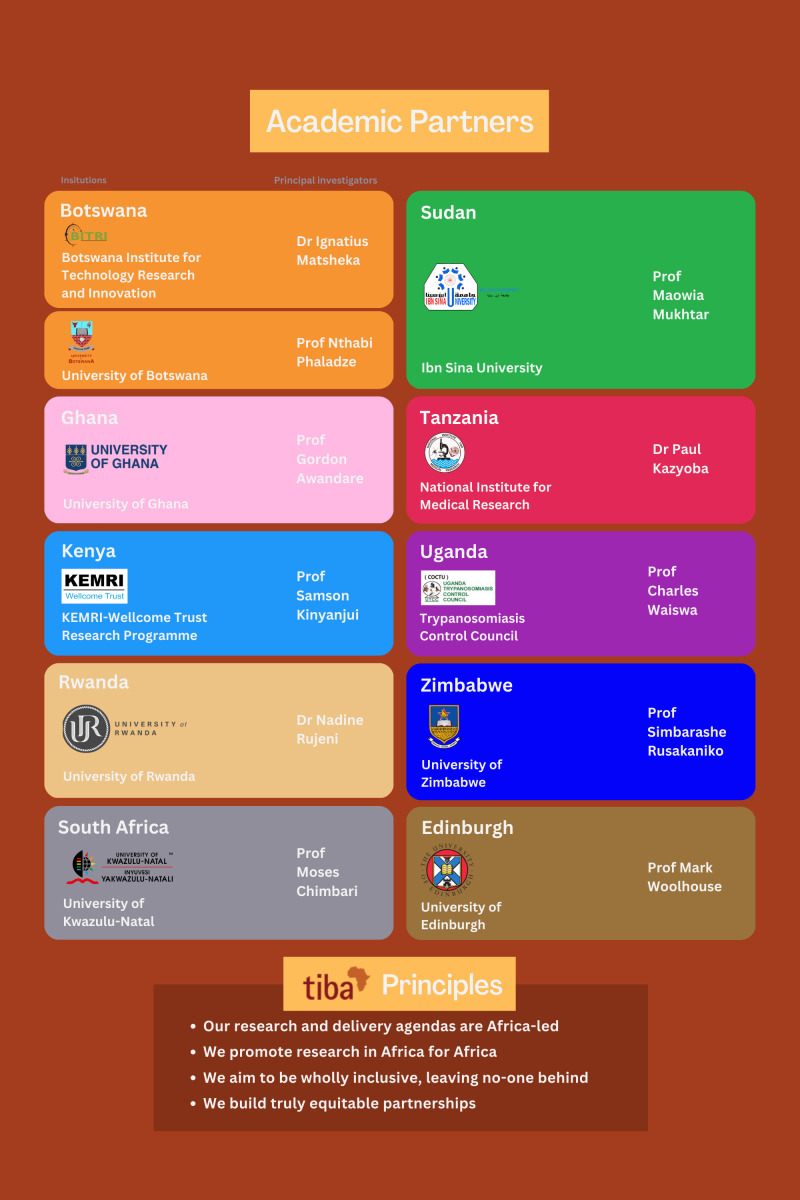
https://cdn.ncbi.nlm.nih.gov/pmc/blobs/8cd1/10040064/e88317aec18a/bmjgh-2022-011028f03.jpg
https://cdn.ncbi.nlm.nih.gov/pmc/blobs/8cd1/10040064/862040c46d57/bmjgh-2022-011028f04.jpg
https://cdn.ncbi.nlm.nih.gov/pmc/blobs/8cd1/10040064/bb1fd468ba17/bmjgh-2022-011028f01.jpg
https://cdn.ncbi.nlm.nih.gov/pmc/blobs/8cd1/10040064/7aa83ad172bc/bmjgh-2022-011028f02.jpg
https://cdn.ncbi.nlm.nih.gov/pmc/blobs/8cd1/10040064/e88317aec18a/bmjgh-2022-011028f03.jpg
https://cdn.ncbi.nlm.nih.gov/pmc/blobs/8cd1/10040064/862040c46d57/bmjgh-2022-011028f04.jpg

相似文献

1
What does equitable global health research and delivery look like? Tackling Infections to Benefit Africa (TIBA) partnership as a case study.公平的全球卫生研究和实施看起来是什么样的?以“抗击感染造福非洲”伙伴关系为例。
BMJ Glob Health. 2023 Mar;8(3). doi: 10.1136/bmjgh-2022-011028.
2
A SARS-CoV-2 Surveillance System in Sub-Saharan Africa: Modeling Study for Persistence and Transmission to Inform Policy.撒哈拉以南非洲的新冠病毒监测系统:关于持续存在和传播以指导政策的建模研究
J Med Internet Res. 2020 Nov 19;22(11):e24248. doi: 10.2196/24248.
3
Research capacity building integrated into PHIT projects: leveraging research and research funding to build national capacity.纳入PHIT项目的研究能力建设:利用研究和研究资金建设国家能力。
BMC Health Serv Res. 2017 Dec 21;17(Suppl 3):825. doi: 10.1186/s12913-017-2657-6.
4
The East African Community (EAC) mobile laboratory networks in Kenya, Burundi, Tanzania, Rwanda, Uganda, and South Sudan-from project implementation to outbreak response against Dengue, Ebola, COVID-19, and epidemic-prone diseases.东非共同体(EAC)在肯尼亚、布隆迪、坦桑尼亚、卢旺达、乌干达和南苏丹的流动实验室网络——从项目实施到针对登革热、埃博拉、COVID-19 和易发病的疾病的暴发应对。
BMC Med. 2021 Jul 9;19(1):160. doi: 10.1186/s12916-021-02028-y.
5
Building Sustainable Local Capacity for Global Health Research in West Africa.在西非建立可持续的全球健康研究地方能力。
Ann Glob Health. 2016 Nov-Dec;82(6):1010-1025. doi: 10.1016/j.aogh.2016.10.011.
6
"We should be at the table together from the beginning": perspectives on partnership from stakeholders at four research institutions in sub-Saharan Africa.“我们应该从一开始就坐在一起讨论”:来自撒哈拉以南非洲四个研究机构利益攸关方对伙伴关系的看法。
Int J Equity Health. 2022 Aug 17;21(1):111. doi: 10.1186/s12939-022-01707-3.
7
Developing health systems research capacities through north-south partnership: an evaluation of collaboration with South Africa and Thailand.通过南北伙伴关系发展卫生系统研究能力:对与南非和泰国合作的评估
Health Res Policy Syst. 2008 Aug 1;6:8. doi: 10.1186/1478-4505-6-8.
8
Interest Groups and COVID-19 in Africa (2019-2022).利益集团与非洲的 COVID-19(2019-2022 年)
Adv Exp Med Biol. 2024;1457:323-342. doi: 10.1007/978-3-031-61939-7_18.
9
Experiences of capacity strengthening in sanitation and hygiene research in Africa and Asia: the SHARE Research Consortium.在非洲和亚洲加强环境卫生研究能力的经验:SHARE 研究联盟。
Health Res Policy Syst. 2019 Aug 5;17(1):77. doi: 10.1186/s12961-019-0478-2.
10
Tuberculosis结核病

引用本文的文献

1
From words to action: the development of the Neglected Tropical Disease Inclusion Score Card (NISC).从文字到行动:被忽视热带病纳入记分卡(NISC)的制定。
Infect Dis Poverty. 2025 Aug 5;14(1):80. doi: 10.1186/s40249-025-01340-6.
2
Beyond high-level recommendations and rule books: doing the 'hard work' of global health research - lessons and recommendations from an interdisciplinary global partnership.超越高层建议和规则手册:开展全球卫生研究的“艰苦工作”——来自一个跨学科全球伙伴关系的经验教训与建议
BMJ Glob Health. 2024 Oct 1;9(10):e015169. doi: 10.1136/bmjgh-2024-015169.

本文引用的文献

1
"We should be at the table together from the beginning": perspectives on partnership from stakeholders at four research institutions in sub-Saharan Africa.“我们应该从一开始就坐在一起讨论”:来自撒哈拉以南非洲四个研究机构利益攸关方对伙伴关系的看法。
Int J Equity Health. 2022 Aug 17;21(1):111. doi: 10.1186/s12939-022-01707-3.
2
Local manufacturing, local supply chains and health security in Africa: lessons from COVID-19.非洲的本地制造业、本地供应链与卫生安全:来自新冠疫情的教训
BMJ Glob Health. 2021 Jun;6(6). doi: 10.1136/bmjgh-2021-006362.
3
SARS-CoV-2 Serological testing in frontline health workers in Zimbabwe.
津巴布韦前线卫生工作者的 SARS-CoV-2 血清学检测。
PLoS Negl Trop Dis. 2021 Mar 31;15(3):e0009254. doi: 10.1371/journal.pntd.0009254. eCollection 2021 Mar.
4
Endemic chikungunya fever in Kenyan children: a prospective cohort study.肯尼亚儿童的地方性基孔肯雅热:一项前瞻性队列研究。
BMC Infect Dis. 2021 Feb 18;21(1):186. doi: 10.1186/s12879-021-05875-5.
5
Oxygen provision to fight COVID-19 in sub-Saharan Africa.在撒哈拉以南非洲地区提供氧气以抗击新冠疫情。
BMJ Glob Health. 2020 Jun;5(6). doi: 10.1136/bmjgh-2020-002786.
6
Africa should set its own health-research agenda.非洲应该制定自己的卫生研究议程。
Nature. 2019 Nov;575(7784):567. doi: 10.1038/d41586-019-03627-9.
7
Who is telling the story? A systematic review of authorship for infectious disease research conducted in Africa, 1980-2016.谁在讲述这个故事?对1980年至2016年在非洲开展的传染病研究的作者身份进行的系统综述。
BMJ Glob Health. 2019 Oct 18;4(5):e001855. doi: 10.1136/bmjgh-2019-001855. eCollection 2019.
8
Stuck in the middle: a systematic review of authorship in collaborative health research in Africa, 2014-2016.处于中间状态:2014 - 2016年非洲合作卫生研究中作者身份的系统评价
BMJ Glob Health. 2019 Oct 18;4(5):e001853. doi: 10.1136/bmjgh-2019-001853. eCollection 2019.
9
"It takes more than a fellowship program": reflections on capacity strengthening for health systems research in sub-Saharan Africa.“这不仅仅是一个研究金项目”:关于撒哈拉以南非洲卫生系统研究能力建设的思考
BMC Health Serv Res. 2017 Dec 4;17(Suppl 2):696. doi: 10.1186/s12913-017-2638-9.
10
Equity in international health research collaborations in Africa: Perceptions and expectations of African researchers.非洲国际卫生研究合作中的公平性:非洲研究人员的看法与期望
PLoS One. 2017 Oct 16;12(10):e0186237. doi: 10.1371/journal.pone.0186237. eCollection 2017.