Arumugam Vanitha, MacDermid Joy C, Walton Dave, Grewal Ruby
Physiotherapist, St. Joseph's Health Centre, London, Ontario, Canada.
Hand and Upper Limb Centre Clinical Research Laboratory, St. Joseph's Health Centre, London, Ontario, Canada.
Arch Physiother. 2021 Apr 1;11(1):9. doi: 10.1186/s40945-021-00100-7.
PAIN and PubMed are two electronic databases with two different mechanisms of evidence retrieval. PubMed is used to "Pull" evidence where clinicians can enter search terms to find answers while PAIN is a newly developed evidence repository where along with "Pull" service there is a "Push" service that alerts users about new research and the associated quality ratings, based on the individual preferences for content and altering criteria.
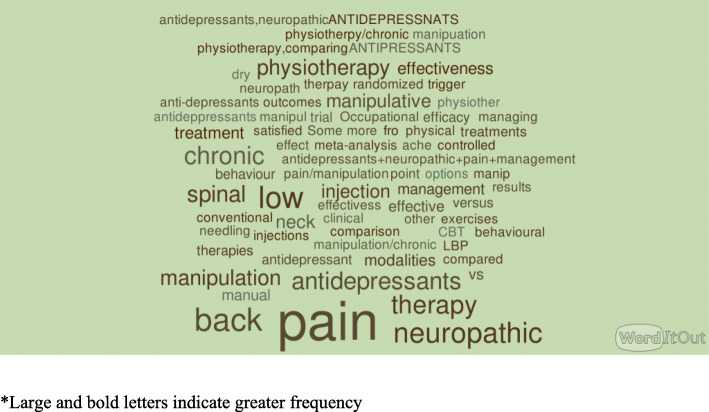
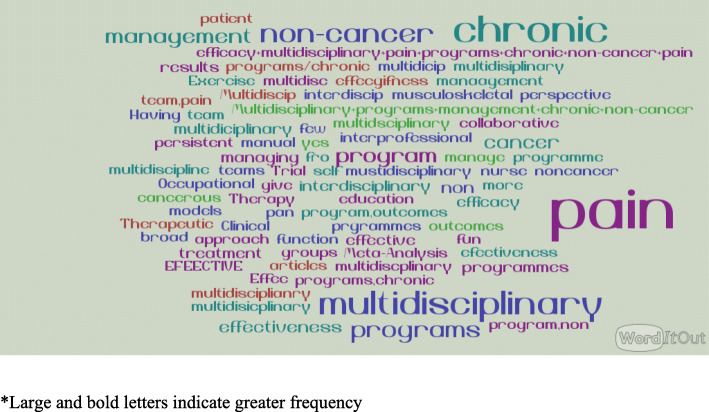
The primary purpose of the study was to compare yield and usefulness of PubMed and PAIN in retrieving evidence to address clinical research questions on pain management. The secondary purpose of the study was to identify what search terms and methods were used by clinicians to target pain research.
Two-phase double blinded randomized crossover trial.
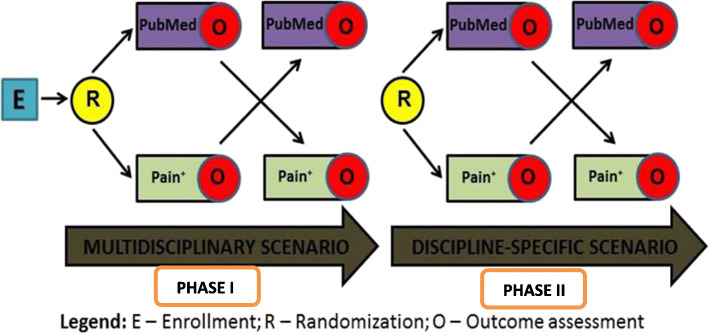
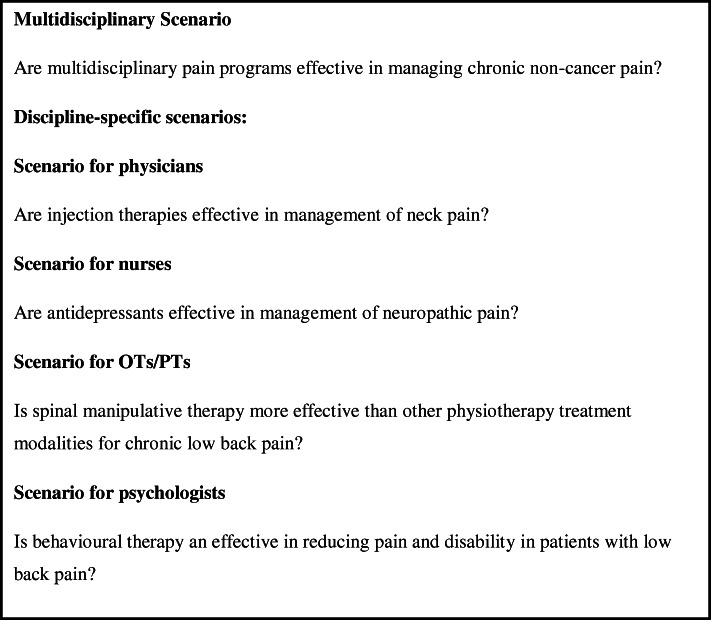
Clinicians (n = 76) who were exposed to PAIN for at least 1 year took part in this study. Participants were required to search for evidence 2 clinical question scenarios independently. The first clinical question was provided to all participants and thus, was multi-disciplinary. Participants were randomly assigned to search for evidence on their clinical question using either PAIN or PubMed through the electronic interface. Upon completion of the search with one search engine, they were crossed over to the other search engine. A similar process was done for a second scenario that was discipline-specific. The yield was calculated using number of retrieved articles presented to participants and usefulness was evaluated using a series of Likert scale questions embedded in the testing.
Multidisciplinary scenario: Overall, the participants had an overall one-page yield of 715 articles for PAIN and 1135 articles for PubMed. The topmost article retrieved by PAIN was rated as more useful (p = 0.001). While, the topmost article retrieved by PubMed was rated as consistent with current clinical practice (p = 0.02). PubMed (48%) was preferred over PAIN (39%) to perform multidisciplinary search (p = 0.02). Discipline specific scenario: The participants had an overall one-page yield of 1046 articles for PAIN and 1398 articles for PubMed. The topmost article retrieved by PAIN was rated as more useful (p = 0.001) and consistent with current clinical practice (p = 0.02) than the articles retrieved by PubMed. PAIN (52%) was preferred over PubMed (29%) to perform discipline specific search.
Clinicians from different disciplines find both PAIN and PubMed useful for retrieving research studies to address clinical questions about pain management. Greater preferences and perceived usefulness of the top 3 retrieved papers was observed for PAIN, but other dimensions of usefulness did not consistently favor either search engine.
Registered with ClinicalTrials.gov Identifier: NCT01348802 , Date: May 5, 2011.
PAIN和PubMed是两个具有不同证据检索机制的电子数据库。PubMed用于“拉取”证据,临床医生可以输入搜索词来查找答案,而PAIN是一个新开发的证据库,除了“拉取”服务外,还有“推送”服务,可根据用户对内容的个人偏好和筛选标准,提醒用户有关新研究及相关质量评级。
本研究的主要目的是比较PubMed和PAIN在检索证据以解决疼痛管理临床研究问题方面的产出和实用性。本研究的次要目的是确定临床医生使用哪些搜索词和方法来针对疼痛研究。
两阶段双盲随机交叉试验。
至少接触PAIN一年的临床医生(n = 76)参与了本研究。参与者被要求独立搜索2个临床问题场景的证据。第一个临床问题提供给所有参与者,因此是多学科的。参与者通过电子界面被随机分配使用PAIN或PubMed搜索其临床问题的证据。使用一个搜索引擎完成搜索后,他们转换到另一个搜索引擎。对第二个特定学科场景也进行了类似的过程。使用呈现给参与者的检索文章数量计算产出,并使用测试中嵌入的一系列李克特量表问题评估实用性。
多学科场景:总体而言,参与者使用PAIN检索到的文章单页总量为715篇,使用PubMed检索到的为1135篇。PAIN检索到的最靠前的文章被评为更有用(p = 0.001)。而PubMed检索到的最靠前的文章被评为与当前临床实践一致(p = 0.02)。在进行多学科搜索时,临床医生更喜欢使用PubMed(48%)而非PAIN(39%)(p = 0.02)。特定学科场景:参与者使用PAIN检索到的文章单页总量为1046篇,使用PubMed检索到的为1398篇。PAIN检索到的最靠前的文章被评为比PubMed检索到的文章更有用(p = 0.001)且与当前临床实践一致(p = 0.02)。在进行特定学科搜索时,临床医生更喜欢使用PAIN(52%)而非PubMed(29%)。
来自不同学科的临床医生发现PAIN和PubMed在检索研究以解决疼痛管理临床问题方面都很有用。观察到PAIN在检索到的前3篇论文方面更受青睐且实用性更高,但在其他实用性维度上,两个搜索引擎并不总是一方更具优势。
在ClinicalTrials.gov注册,标识符:NCT01348802,日期:2011年5月5日。