Nephrology and Transplantation, Internal Medicine, Erasmus Medical Center Transplantation Institute, Erasmus Medical Center, Rotterdam, Netherlands.
Takeda Madrid, Cell Therapy Technology Center, Madrid, Spain.
Front Immunol. 2021 Mar 15;12:651109. doi: 10.3389/fimmu.2021.651109. eCollection 2021.
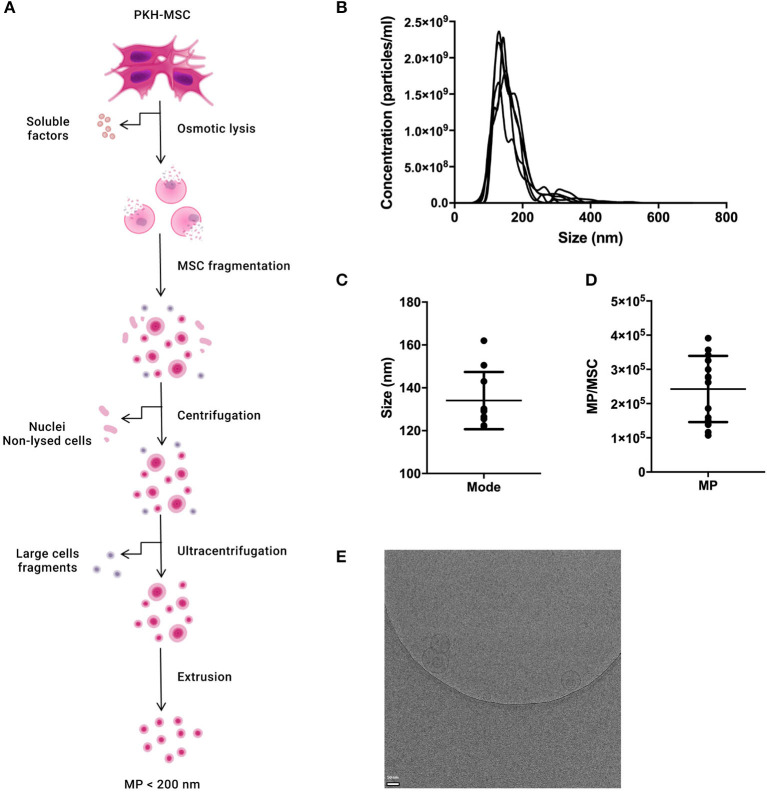
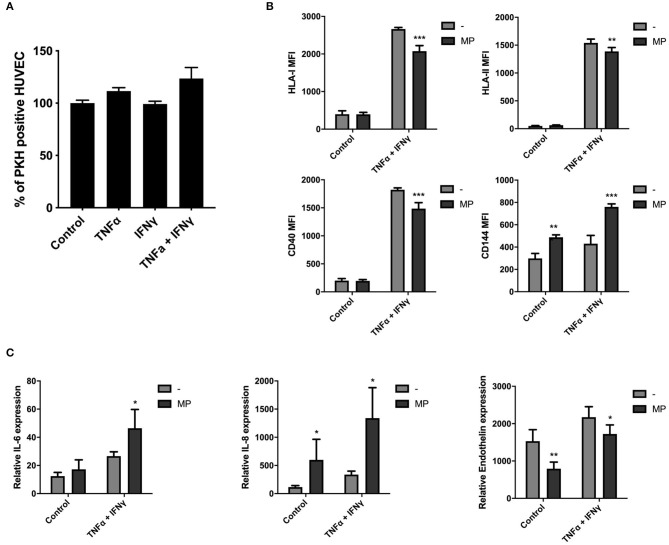
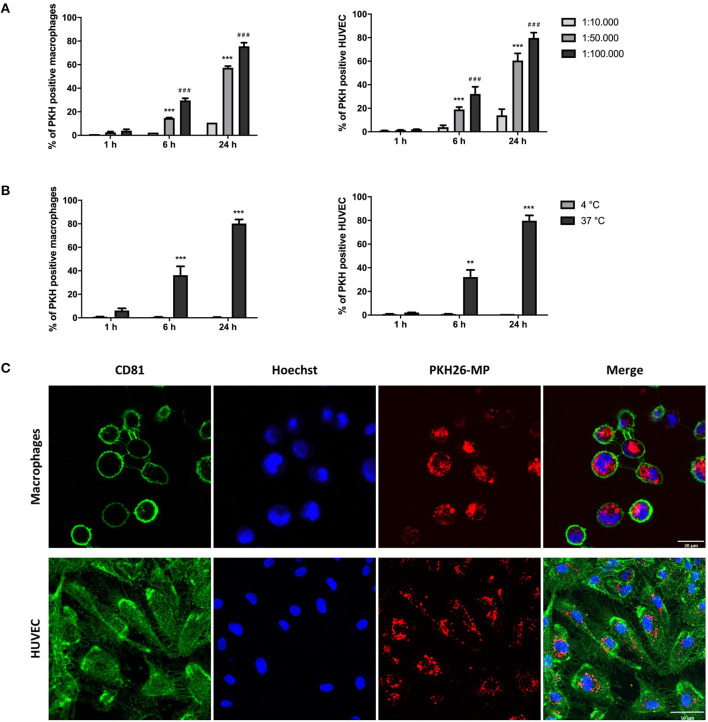
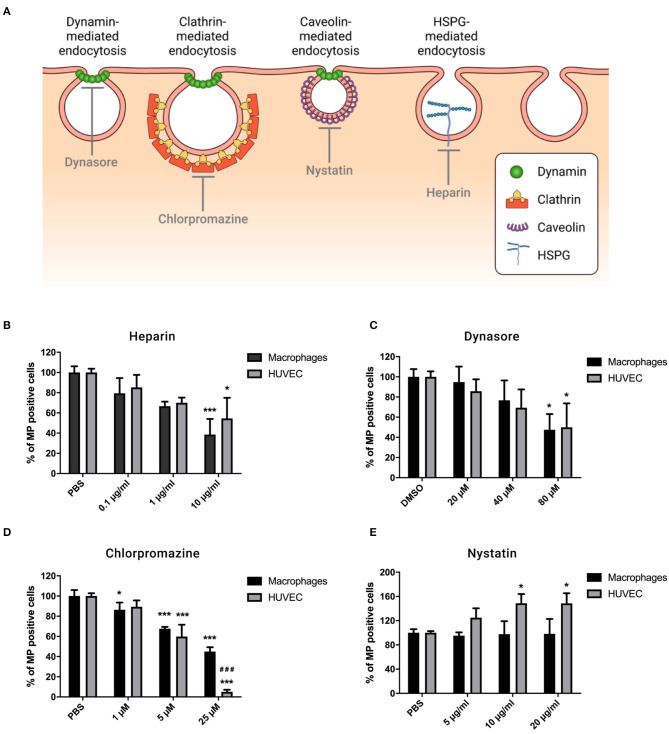
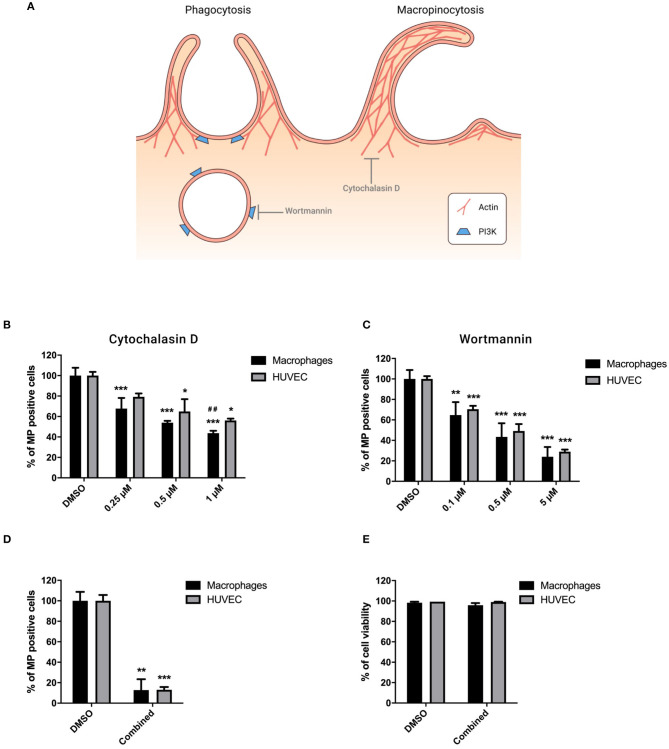
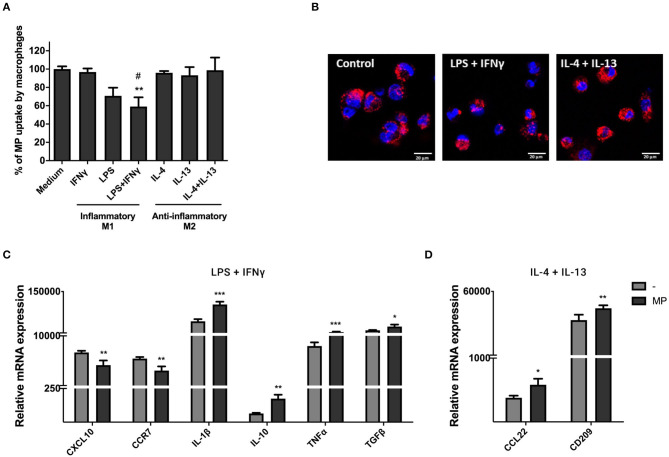
Mesenchymal stromal cells (MSC) are a promising therapy for inflammatory diseases. However, MSC are large and become trapped in the lungs after intravenous infusion, where they have a short survival time. To steer MSC immunoregulatory therapy beyond the lungs, we generated nm-sized particles from MSC membranes (membrane particles, MP), which have immunomodulatory properties, and investigated their internalization and mode of interaction in macrophages subtypes and human umbilical vein endothelial cells (HUVEC) under control and inflammatory conditions. We found that macrophages and HUVEC take up MP in a dose, time, and temperature-dependent manner. Specific inhibitors for endocytotic pathways revealed that MP internalization depends on heparan sulfate proteoglycan-, dynamin-, and clathrin-mediated endocytosis but does not involve caveolin-mediated endocytosis. MP uptake also involved the actin cytoskeleton and phosphoinositide 3-kinase, which are implicated in macropinocytosis and phagocytosis. Anti-inflammatory M2 macrophages take up more MP than pro-inflammatory M1 macrophages. In contrast, inflammatory conditions did not affect the MP uptake by HUVEC. Moreover, MP induced both anti- and pro-inflammatory responses in macrophages and HUVEC by affecting gene expression and cell surface proteins. Our findings on the mechanisms of uptake of MP under different conditions help the development of target-cell specific MP therapy to modulate immune responses.
间充质基质细胞(MSC)是治疗炎症性疾病的有前途的方法。然而,MSC 体积较大,静脉输注后会被困在肺部,在肺部的存活时间很短。为了将 MSC 免疫调节治疗引导到肺部以外的部位,我们从 MSC 膜(膜颗粒,MP)中生成了纳米大小的颗粒,这些颗粒具有免疫调节特性,并研究了它们在巨噬细胞亚型和人脐静脉内皮细胞(HUVEC)中的内化方式及其在对照和炎症条件下的相互作用方式。我们发现巨噬细胞和 HUVEC 以剂量,时间和温度依赖的方式摄取 MP。针对细胞内吞途径的特异性抑制剂表明,MP 的内化取决于硫酸乙酰肝素蛋白聚糖,网格蛋白和动力蛋白介导的内吞作用,但不涉及小窝蛋白介导的内吞作用。MP 摄取还涉及肌动蛋白细胞骨架和磷酯酰肌醇 3-激酶,这与巨胞饮作用和吞噬作用有关。抗炎性 M2 巨噬细胞比促炎性 M1 巨噬细胞摄取更多的 MP。相反,炎症条件不会影响 HUVEC 对 MP 的摄取。此外,MP 通过影响基因表达和细胞表面蛋白,在巨噬细胞和 HUVEC 中诱导抗和促炎反应。我们对不同条件下 MP 摄取机制的研究结果有助于开发针对靶细胞的特异性 MP 治疗方法,以调节免疫反应。