Yang Xiaoying, Ding Weimin, Qian Xinyu, Jiang Pengfei, Chen Qingqing, Zhang Xin, Lu Yang, Wu Jiacheng, Sun Fenfen, Pan Zhihua, Li Xiangyang, Pan Wei
Jiangsu Key Laboratory of Immunity and Metabolism, Department of Pathogen Biology and Immunology, Xuzhou Medical University, Xuzhou, China.
National Experimental Teaching Demonstration Center of Basic Medicine, Xuzhou Medical University, Xuzhou, China.
Front Vet Sci. 2021 Mar 10;8:645807. doi: 10.3389/fvets.2021.645807. eCollection 2021.
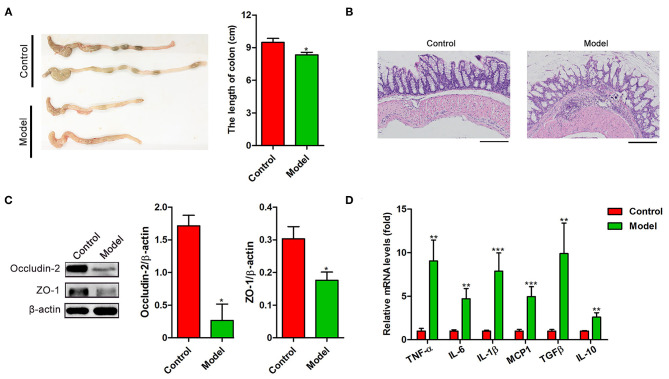
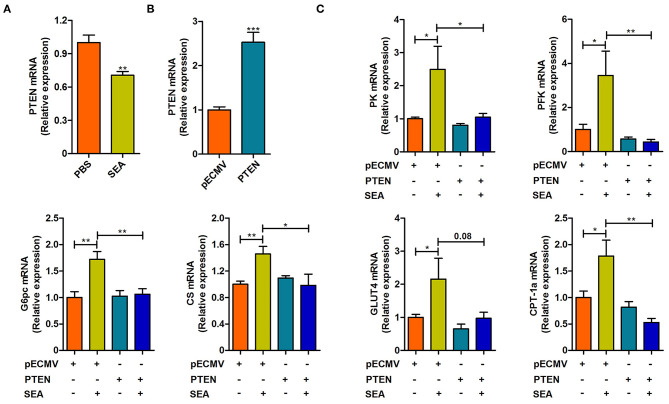
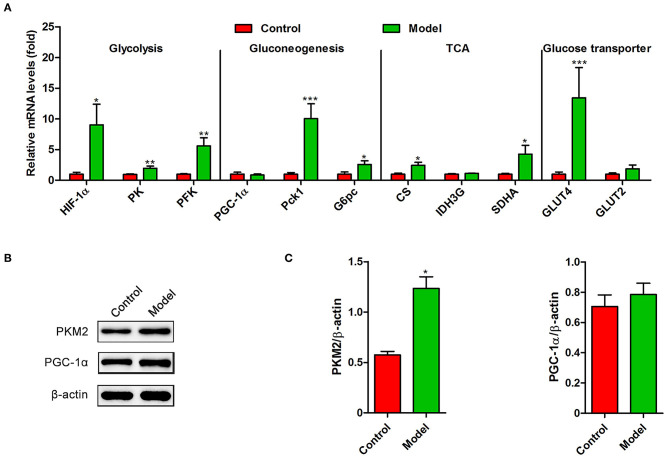
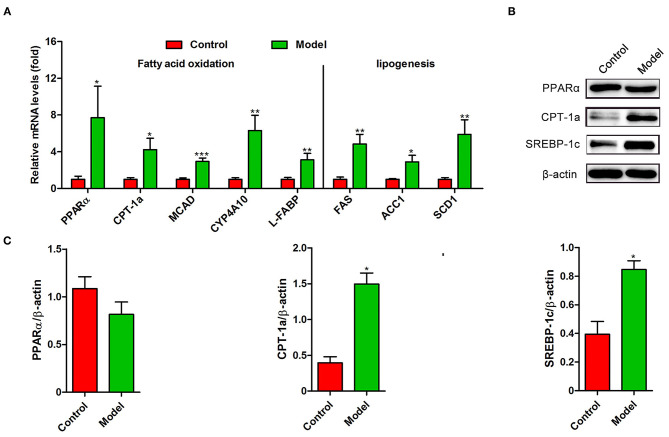
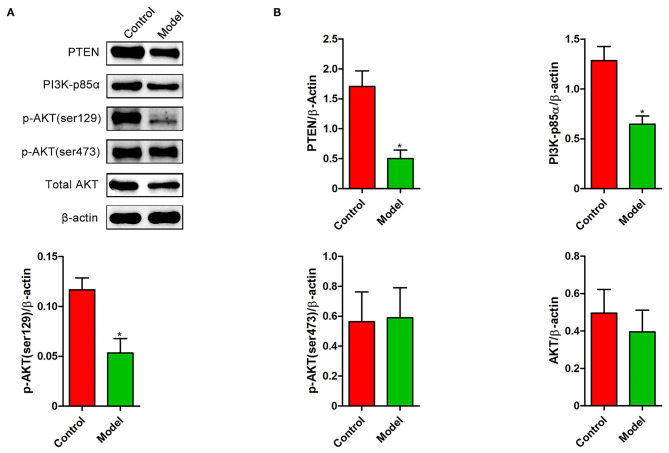
The deposition of () eggs commonly induces inflammation, fibrosis, hyperplasia, ulceration, and polyposis in the colon, which poses a serious threat to human health. However, the underlying mechanism is largely neglected. Recently, the disorder of glucose and lipid metabolism was reported to participate in the liver fibrosis induced by the parasite, which provides a novel clue for studying the underlying mechanism of the intestinal pathology of the disease. This study focused on the metabolic reprogramming profiles of glucose and lipid in the colon of mice infected by . We found that infection shortened the colonic length, impaired intestinal integrity, induced egg-granuloma formation, and increased colonic inflammation. The expression of key enzymes involved in the pathways regulating glucose and lipid metabolism was upregulated in the colon of infected mice. Conversely, phosphatase and tensin homolog deleted on chromosome ten (PTEN) and its downstream signaling targets were significantly inhibited after infection. In line with these results, stimulation with soluble egg antigens (SEA) downregulated the expression of PTEN in CT-26 cells and induced metabolic alterations similar to that observed under results. Moreover, PTEN over-expression prevented the reprogramming of glucose and lipid metabolism induced by SEA in CT-26 cells. Overall, the present study showed that infection induces the reprogramming of glucose and lipid metabolism in the colon of mice, and PTEN may play a vital role in mediating this metabolic reprogramming. These findings provide a novel insight into the pathogenicity of in hosts.
()虫卵的沉积通常会诱发结肠炎症、纤维化、增生、溃疡和息肉形成,这对人类健康构成严重威胁。然而,其潜在机制在很大程度上被忽视了。最近,有报道称糖脂代谢紊乱参与了寄生虫诱导的肝纤维化,这为研究该疾病肠道病理的潜在机制提供了新线索。本研究聚焦于感染()的小鼠结肠中葡萄糖和脂质的代谢重编程谱。我们发现感染()会缩短结肠长度、损害肠道完整性、诱导虫卵肉芽肿形成并加重结肠炎症。感染小鼠结肠中参与调节葡萄糖和脂质代谢途径的关键酶表达上调。相反,感染后10号染色体缺失的磷酸酶和张力蛋白同源物(PTEN)及其下游信号靶点受到显著抑制。与这些结果一致,用可溶性虫卵抗原(SEA)刺激会下调CT - 26细胞中PTEN的表达,并诱导出与感染()后观察到的类似代谢改变。此外,PTEN过表达可防止SEA诱导CT - 26细胞中葡萄糖和脂质代谢的重编程。总体而言,本研究表明感染()会诱导小鼠结肠中葡萄糖和脂质代谢的重编程,而PTEN可能在介导这种代谢重编程中起关键作用。这些发现为()在宿主体内的致病性提供了新见解。