Stanchak K E, French C, Perkel D J, Brunton B W
Department of Biology, University of Washington, Seattle, WA 98195, USA.
Integr Org Biol. 2020 Aug 12;2(1):obaa024. doi: 10.1093/iob/obaa024. eCollection 2020.
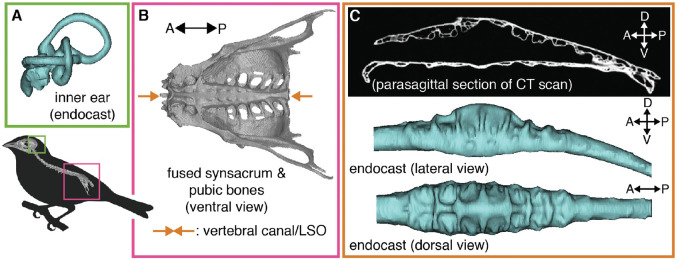
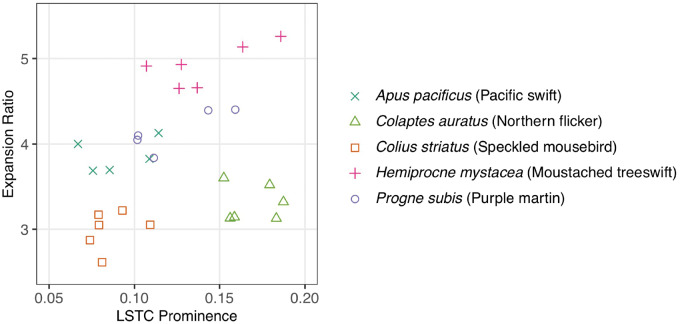
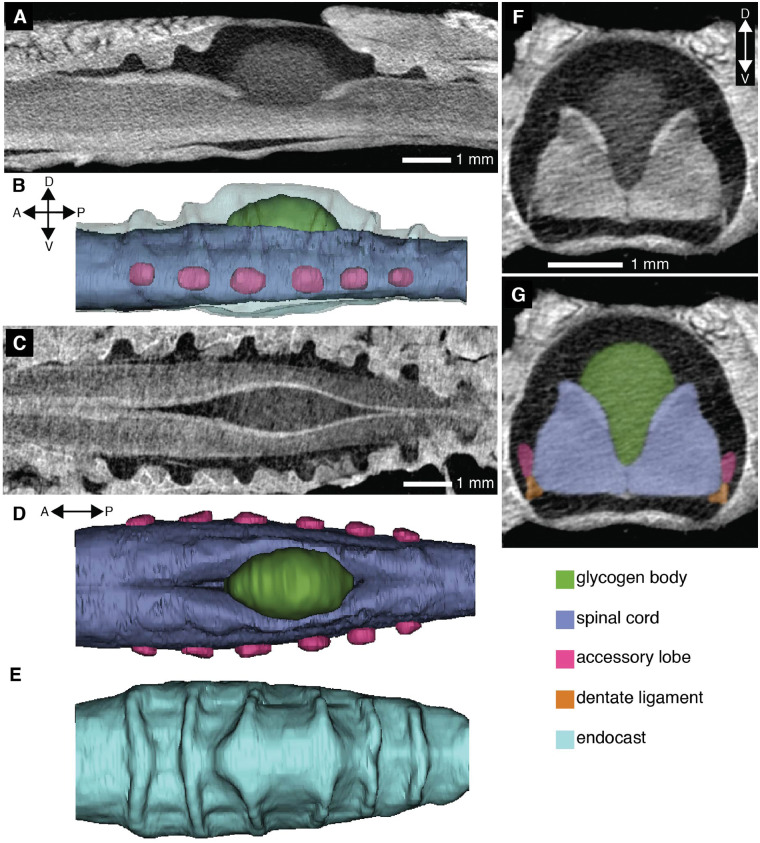
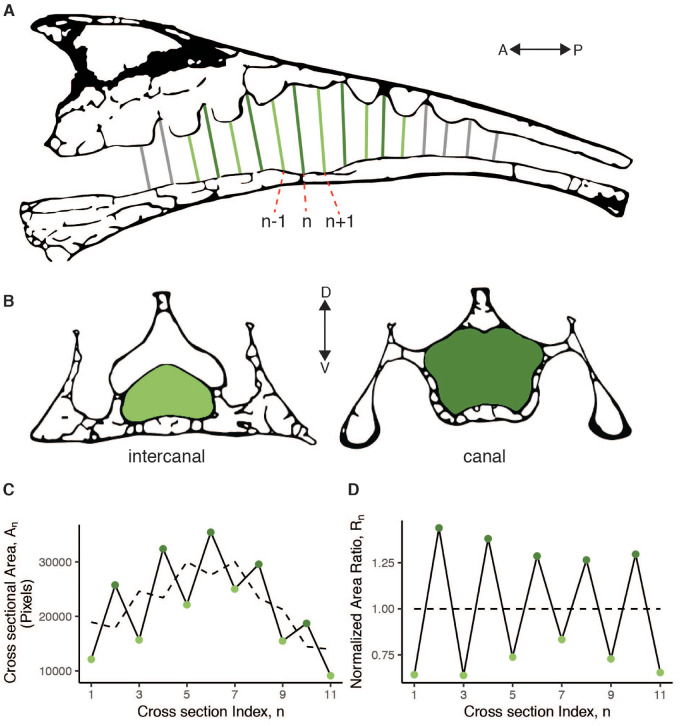
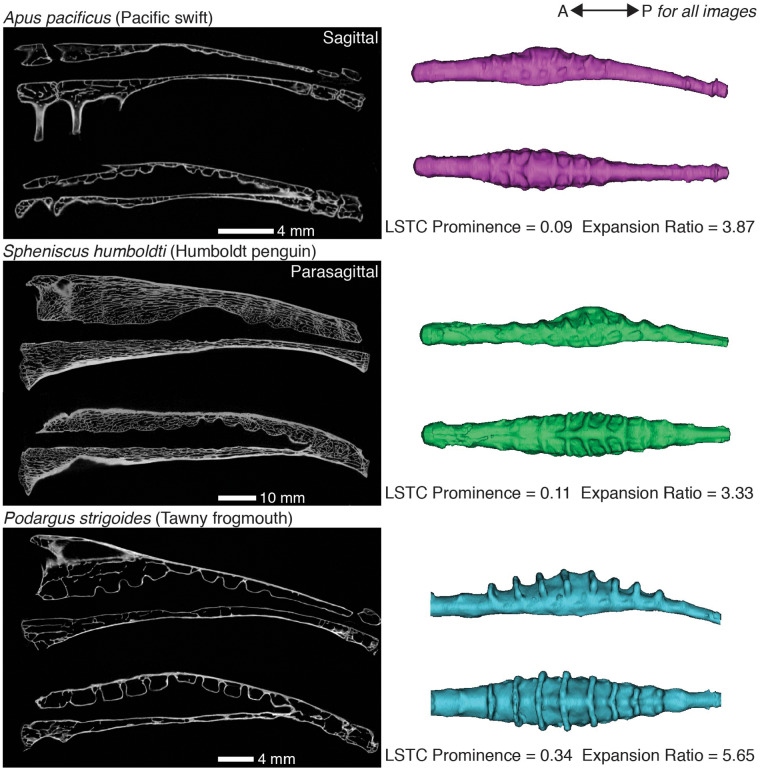
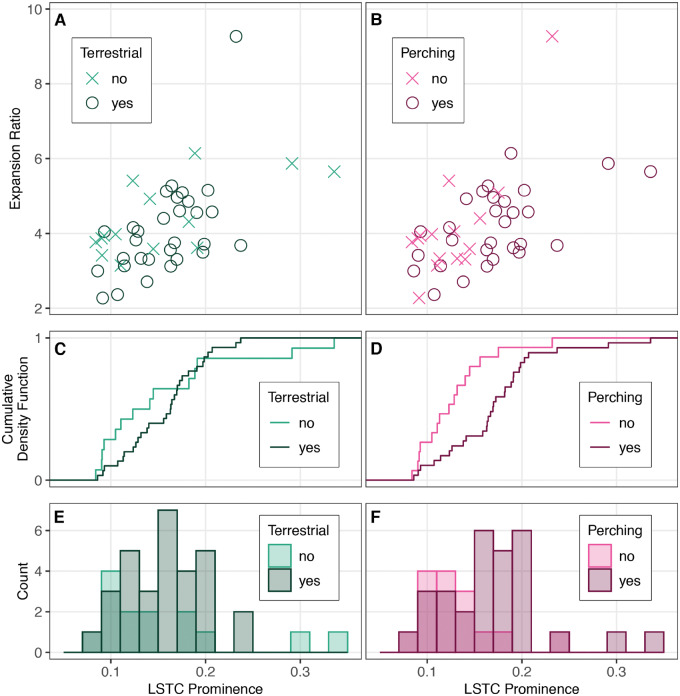
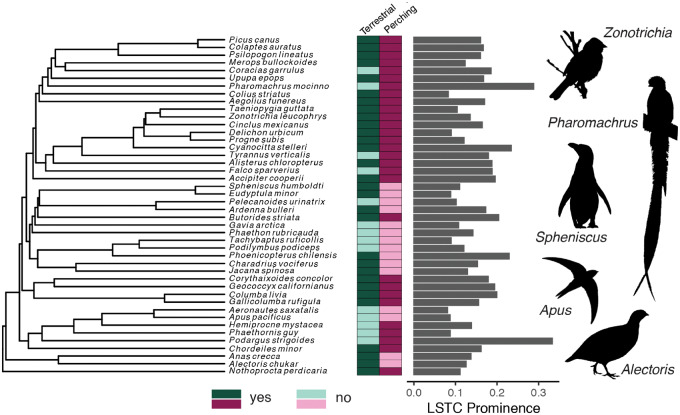
Birds (Aves) exhibit exceptional and diverse locomotor behaviors, including the exquisite ability to balance on two feet. How birds so precisely control their movements may be partly explained by a set of intriguing modifications in their lower spine. These modifications are collectively known as the lumbosacral organ (LSO) and are found in the fused lumbosacral vertebrae called the synsacrum. They include a set of transverse canal-like recesses in the synsacrum that align with lateral lobes of the spinal cord, as well as a dorsal groove in the spinal cord that houses an egg-shaped glycogen body. Based on compelling but primarily observational data, the most recent functional hypotheses for the LSO consider it to be a secondary balance organ, in which the transverse canals are analogous to the semicircular canals of the inner ear. If correct, this hypothesis would reshape our understanding of avian locomotion, yet the LSO has been largely overlooked in the recent literature. Here, we review the current evidence for this hypothesis and then explore a possible relationship between the LSO and balance-intensive locomotor ecologies. Our comparative morphological dataset consists of micro-computed tomography (μ-CT) scans of synsacra from ecologically diverse species. We find that birds that perch tend to have more prominent transverse canals, suggesting that the LSO is useful for balance-intensive behaviors. We then identify the crucial outstanding questions about LSO structure and function. The LSO may be a key innovation that allows independent but coordinated motion of the head and the body, and a full understanding of its function and evolution will require multiple interdisciplinary research efforts.
鸟类(鸟纲)展现出异常多样的运动行为,包括在双脚上保持平衡的精湛能力。鸟类如此精确地控制其动作的方式,可能部分要归因于其下脊柱的一系列引人关注的结构改变。这些改变统称为腰骶器官(LSO),见于融合的腰骶椎骨,即综荐骨。它们包括综荐骨中一组与脊髓外侧叶对齐的横向管状凹陷,以及脊髓中容纳一个卵形糖原体的背侧沟。基于令人信服但主要是观察性的数据,关于LSO的最新功能假说认为它是一个二级平衡器官,其中横向管类似于内耳的半规管。如果这一假说正确,将重塑我们对鸟类运动的理解,但LSO在最近的文献中很大程度上被忽视了。在这里,我们回顾了支持这一假说的现有证据,然后探讨了LSO与依赖平衡的运动生态之间可能存在的关系。我们的比较形态学数据集由来自生态多样物种的综荐骨的微计算机断层扫描(μ-CT)组成。我们发现,善于栖息的鸟类往往有更明显的横向管,这表明LSO对依赖平衡的行为有用。然后,我们确定了关于LSO结构和功能的关键悬而未决的问题。LSO可能是一项关键创新,它允许头部和身体独立但协调地运动,而要全面了解其功能和进化需要多学科的研究努力。