Section of Pediatric Cardiology, Department of Pediatrics, Baylor College of Medicine, Texas Children's Hospital, 6651 Main St Legacy Tower 20th Floor, Houston, TX, 77030, USA.
Instituto Nacional de Cardiología Ignacio Chavez, Ciudad de México, México.
Eur J Pediatr. 2021 Sep;180(9):2879-2888. doi: 10.1007/s00431-021-04052-9. Epub 2021 Apr 1.
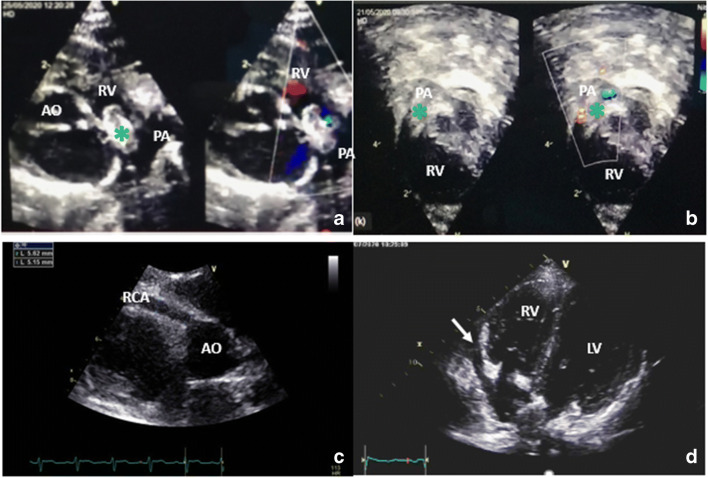
Latin America (LATAM) children offer special insight into Severe Acute Respiratory Syndrome Coronavirus 2 (SARS COV2) due to high-risk race/ethnicity, variability in medical resources, diverse socioeconomic background, and numerous involved organ systems. This multinational study of LATAM youth examined the distinguishing features of acute or late multisystem SARS COV2 with versus without cardiac involvement. A consecutive sample of youth 0-18 years old (N = 98;50% male) presenting with multisystem SARS COV2 to 32 centers in 10 Latin American countries participating in a pediatric cardiac multi-imaging society were grouped as with versus without cardiac involvement, defined as abnormal echocardiographic findings or arrhythmia. Collected clinical data were analyzed by Student's t-test or Fisher's exact test. Cardiac (N = 48, 50% male) versus no cardiac (N = 50, 50% male) were similar in age; weight; nonrespiratory symptoms; and medical history. The cardiac group had 1 death and symptoms including coronary artery dilation, ejection fraction <50%, pericardial effusion, peripheral edema, arrhythmia, and pulmonary artery thrombus. The cardiac group had higher risk of ICU admission (77% vs 54%, p = 0.02); invasive ventilation (23% vs 4%,p = 0.007); vasoactive infusions (27% vs 4%, p = 0.002); prominent respiratory symptoms (60% vs 36%, p < 0.03); abnormal chest imaging (69% vs 34%, p = 0.001); troponin (33% vs 12%, p = 0.01); alanine aminotransferase (33% vs 12%, p = 0.02); and thrombocytopenia (46% vs 22%, p = 0.02). Receiver operating curve analysis showed that abnormal laboratories had 94% sensitivity and 98% negative predictive value on the need for ICU interventions.Conclusion: In LATAM children with multisystem SARS COV2, cardiac involvement was prevalent. Cardiac involvement was more likely to require ICU interventions, certain abnormal labs, and respiratory involvement. What is Known: • SARS COV2 can be asymptomatic in children but in some cases can have serious multisystemic involvement. • Hispanic ethnicity is purportedly at high risk of SARS COV2 in nations where they are often disadvantaged minority populations. What is New: • Latin American children presenting with multisystem SARS COV2 frequently have cardiac involvement which was associated with ICU interventions; prominent respiratory symptoms; abnormal chest X-ray; elevated troponin, ALT, and thrombocytopenia. • Elevated troponin, ALT or thrombocytopenia had high sensitivity and negative predictive value on the need for intensive care interventions.
拉丁美洲(LATAM)儿童由于高危种族/民族、医疗资源的可变性、不同的社会经济背景和众多涉及的器官系统,为严重急性呼吸系统综合征冠状病毒 2 (SARS-CoV2)提供了特殊的见解。这项针对 LATAM 青少年的多国研究检查了伴有和不伴有心脏受累的急性或晚期多系统 SARS-CoV2 的区别特征。来自 10 个拉丁美洲国家的 32 个中心参与儿科心脏多成像协会的 98 名年龄在 0-18 岁(50%为男性)的多系统 SARS-CoV2 就诊的青少年连续样本被分为伴有和不伴有心脏受累的两组,定义为异常超声心动图发现或心律失常。通过学生 t 检验或 Fisher 精确检验分析收集的临床数据。心脏组(N=48,50%为男性)与无心脏组(N=50,50%为男性)的年龄、体重、非呼吸道症状和病史相似。心脏组有 1 例死亡,症状包括冠状动脉扩张、射血分数<50%、心包积液、外周水肿、心律失常和肺动脉血栓形成。心脏组的 ICU 入院率更高(77%比 54%,p=0.02);有创通气(23%比 4%,p=0.007);血管活性输注(27%比 4%,p=0.002);呼吸症状明显(60%比 36%,p<0.03);异常胸部影像学(69%比 34%,p=0.001);肌钙蛋白(33%比 12%,p=0.01);丙氨酸氨基转移酶(33%比 12%,p=0.02);血小板减少症(46%比 22%,p=0.02)。受试者工作特征曲线分析显示,异常实验室检查对 ICU 干预的需求具有 94%的敏感性和 98%的阴性预测值。结论:在患有多系统 SARS-CoV2 的 LATAM 儿童中,心脏受累很常见。心脏受累更有可能需要 ICU 干预、某些异常实验室检查和呼吸受累。已知的:• SARS-CoV2 可在儿童中无症状,但在某些情况下可导致严重的多系统受累。• 在西班牙裔是据称在他们经常处于劣势的少数族裔的国家中,SARS-CoV2 的风险较高。新的:• 出现多系统 SARS-CoV2 的拉丁美洲儿童经常出现心脏受累,这与 ICU 干预、呼吸症状明显、胸部 X 线异常、肌钙蛋白、ALT 和血小板减少症升高有关。• 肌钙蛋白、ALT 或血小板减少症对 ICU 干预的需求具有高敏感性和阴性预测值。