• 文献检索
  • 文档翻译
  • 深度研究
  • 学术资讯
  • Suppr Zotero 插件Zotero 插件
  • 邀请有礼
  • 套餐&价格
  • 历史记录
应用&插件
Suppr Zotero 插件Zotero 插件浏览器插件Mac 客户端Windows 客户端微信小程序
定价
高级版会员购买积分包购买API积分包
服务
文献检索文档翻译深度研究API 文档MCP 服务
关于我们
关于 Suppr公司介绍联系我们用户协议隐私条款
关注我们

Suppr 超能文献

核心技术专利:CN118964589B侵权必究
粤ICP备2023148730 号-1Suppr @ 2026

文献检索

告别复杂PubMed语法,用中文像聊天一样搜索,搜遍4000万医学文献。AI智能推荐,让科研检索更轻松。

立即免费搜索

文件翻译

保留排版,准确专业,支持PDF/Word/PPT等文件格式,支持 12+语言互译。

免费翻译文档

深度研究

AI帮你快速写综述,25分钟生成高质量综述,智能提取关键信息,辅助科研写作。

立即免费体验

动态目标适应任务导向对话代理。

A dynamic goal adapted task oriented dialogue agent.

机构信息

Dept. of Computer Science and Engineering, Indian Institute of Technology Patna, Patna, Bihar, India.

Accenture Labs, Banglore, Karnataka, India.

出版信息

PLoS One. 2021 Apr 1;16(4):e0249030. doi: 10.1371/journal.pone.0249030. eCollection 2021.

DOI:10.1371/journal.pone.0249030
PMID:33793633
原文链接:https://pmc.ncbi.nlm.nih.gov/articles/PMC8016253/
Abstract

PURPOSE

Existing virtual agents (VAs) present in dialogue systems are either information retrieval based or static goal-driven. However, in real-world situations, end-users might not have a known and fixed goal beforehand for the task, i.e., they may upgrade/downgrade/update their goal components in real-time to maximize their utility values. Existing VAs are unable to handle such dynamic goal-oriented situations.

METHODOLOGY

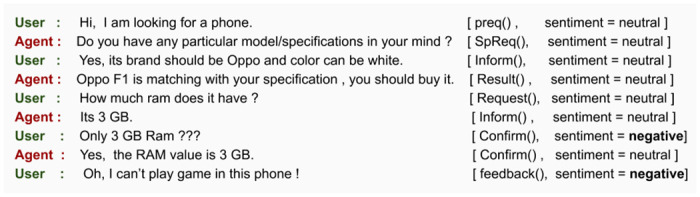
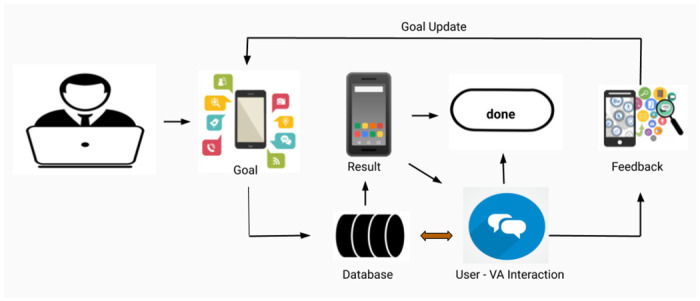
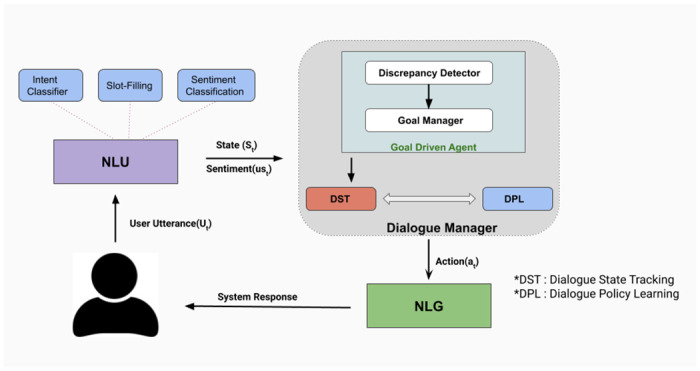
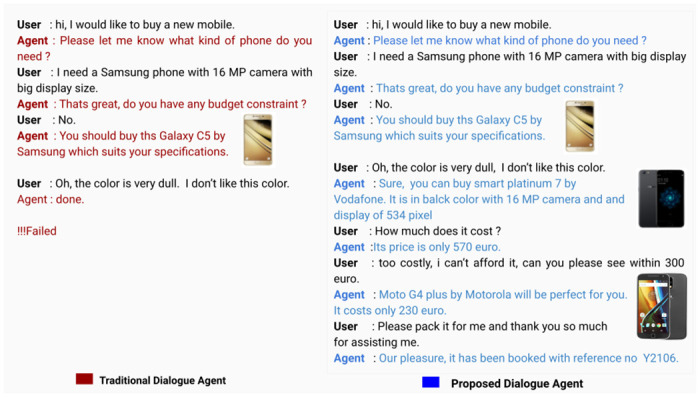
Due to the absence of any related dialogue dataset where such choice deviations are present, we have created a conversational dataset called Deviation adapted Virtual Agent(DevVA), with the manual annotation of its corresponding intents, slots, and sentiment labels. A Dynamic Goal Driven Dialogue Agent (DGDVA) has been developed by incorporating a Dynamic Goal Driven Module (GDM) on top of a deep reinforcement learning based dialogue manager. In the course of a conversation, the user sentiment provides grounded feedback about agent behavior, including goal serving action. User sentiment appears to be an appropriate indicator for goal discrepancy that guides the agent to complete the user's desired task with gratification. The negative sentiment expressed by the user about an aspect of the provided choice is treated as a discrepancy that is being resolved by the GDM depending upon the observed discrepancy and current dialogue state. The goal update capability and the VA's interactiveness trait enable end-users to accomplish their desired task satisfactorily.

FINDINGS

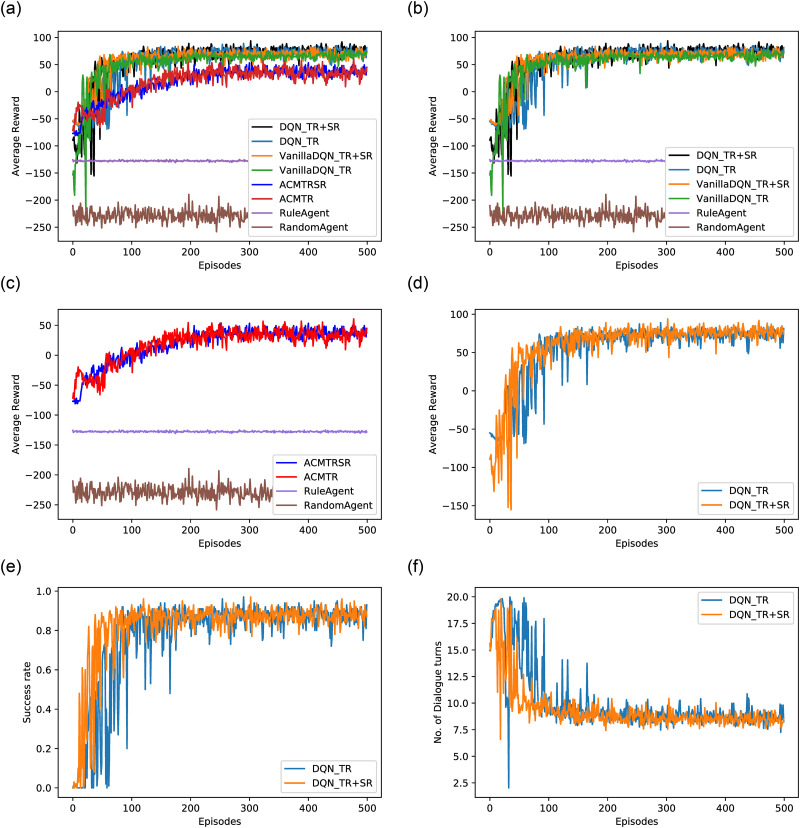
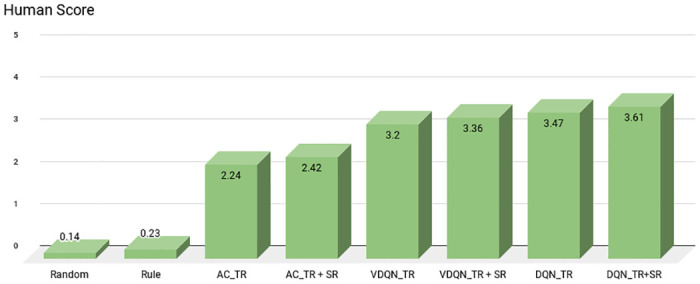
The obtained experimental results illustrate that DGDVA can handle dynamic goals with maximum user satisfaction and a significantly higher success rate. The interaction drives the user to decide its final goal through the latent specification of possible choices and information retrieved and provided by the dialogue agent. Through the experimental results (qualitative and quantitative), we firmly conclude that the proposed sentiment-aware VA adapts users' dynamic behavior for its goal setting with substantial efficacy in terms of primary objective i.e., task success rate (0.88).

PRACTICAL IMPLICATIONS

In real world, it can be argued that many people do not have a predefined and fixed goal for tasks such as online shopping, movie booking & restaurant booking, etc. They tend to explore the available options first which are aligned with their minimum requirements and then decide one amongst them. The DGDVA provides maximum user satisfaction as it enables them to accomplish a dynamic goal that leads to additional utilities along with the essential ones.

ORIGINALITY

To the best of our knowledge, this is the first effort towards the development of A Dynamic Goal Adapted Task-Oriented Dialogue Agent that can serve user goals dynamically until the user is satisfied.

摘要

目的

现有的对话系统中的虚拟代理(VA)要么是基于信息检索的,要么是静态目标驱动的。然而,在现实世界的情况下,终端用户可能事先没有一个已知的、固定的任务目标,也就是说,他们可能会实时升级/降级/更新他们的目标组件,以最大化他们的效用值。现有的 VA 无法处理这种动态目标导向的情况。

方法

由于没有任何包含这种选择偏差的相关对话数据集,我们创建了一个名为 Deviation adapted Virtual Agent(DevVA)的对话数据集,其中包含了其对应意图、插槽和情感标签的手动注释。通过在基于深度强化学习的对话管理器之上集成一个动态目标驱动模块(GDM),开发了一个动态目标驱动的对话代理(DGDVA)。在对话过程中,用户情感为代理行为提供了基于情境的反馈,包括目标服务行为。用户情感似乎是目标差异的一个合适指标,它指导代理以满意的方式完成用户的期望任务。用户对提供的选择的某个方面表达的负面情绪被视为一种差异,GDM 将根据观察到的差异和当前对话状态来解决这种差异。目标更新能力和 VA 的交互性特征使最终用户能够满意地完成他们期望的任务。

发现

实验结果表明,DGDVA 可以在最大用户满意度和显著更高的成功率的情况下处理动态目标。交互通过潜在的可能选择规范以及对话代理检索和提供的信息来驱动用户决定其最终目标。通过实验结果(定性和定量),我们坚定地得出结论,所提出的情感感知 VA 通过其在主要目标(即任务成功率(0.88)方面的目标设置中适应用户的动态行为,具有显著的功效。

实际意义

在现实世界中,可以说许多人对在线购物、电影预订和餐厅预订等任务没有预先设定和固定的目标。他们倾向于首先探索可用的选项,这些选项与他们的最低要求相匹配,然后从中选择一个。DGDVA 提供了最大的用户满意度,因为它允许他们完成一个动态目标,从而带来额外的效用,以及基本的效用。

创新点

据我们所知,这是第一个开发动态目标适应任务导向的对话代理的努力,它可以在用户满意之前动态地为用户服务目标。
https://cdn.ncbi.nlm.nih.gov/pmc/blobs/d183/8016253/c85ba8832f8b/pone.0249030.g013.jpg
https://cdn.ncbi.nlm.nih.gov/pmc/blobs/d183/8016253/7fba8b3b3fbf/pone.0249030.g001.jpg
https://cdn.ncbi.nlm.nih.gov/pmc/blobs/d183/8016253/5b0d93782fac/pone.0249030.g002.jpg
https://cdn.ncbi.nlm.nih.gov/pmc/blobs/d183/8016253/09a2ed86efcc/pone.0249030.g003.jpg
https://cdn.ncbi.nlm.nih.gov/pmc/blobs/d183/8016253/4987672736bc/pone.0249030.g004.jpg
https://cdn.ncbi.nlm.nih.gov/pmc/blobs/d183/8016253/a69b3dcb145b/pone.0249030.g005.jpg
https://cdn.ncbi.nlm.nih.gov/pmc/blobs/d183/8016253/82ec8c21ed38/pone.0249030.g006.jpg
https://cdn.ncbi.nlm.nih.gov/pmc/blobs/d183/8016253/0dac4ad75b44/pone.0249030.g007.jpg
https://cdn.ncbi.nlm.nih.gov/pmc/blobs/d183/8016253/23c1c51443f4/pone.0249030.g008.jpg
https://cdn.ncbi.nlm.nih.gov/pmc/blobs/d183/8016253/a529ece6587e/pone.0249030.g009.jpg
https://cdn.ncbi.nlm.nih.gov/pmc/blobs/d183/8016253/54f7683e0fca/pone.0249030.g010.jpg
https://cdn.ncbi.nlm.nih.gov/pmc/blobs/d183/8016253/cbcf5f640193/pone.0249030.g011.jpg
https://cdn.ncbi.nlm.nih.gov/pmc/blobs/d183/8016253/037a801c6859/pone.0249030.g012.jpg
https://cdn.ncbi.nlm.nih.gov/pmc/blobs/d183/8016253/c85ba8832f8b/pone.0249030.g013.jpg
https://cdn.ncbi.nlm.nih.gov/pmc/blobs/d183/8016253/7fba8b3b3fbf/pone.0249030.g001.jpg
https://cdn.ncbi.nlm.nih.gov/pmc/blobs/d183/8016253/5b0d93782fac/pone.0249030.g002.jpg
https://cdn.ncbi.nlm.nih.gov/pmc/blobs/d183/8016253/09a2ed86efcc/pone.0249030.g003.jpg
https://cdn.ncbi.nlm.nih.gov/pmc/blobs/d183/8016253/4987672736bc/pone.0249030.g004.jpg
https://cdn.ncbi.nlm.nih.gov/pmc/blobs/d183/8016253/a69b3dcb145b/pone.0249030.g005.jpg
https://cdn.ncbi.nlm.nih.gov/pmc/blobs/d183/8016253/82ec8c21ed38/pone.0249030.g006.jpg
https://cdn.ncbi.nlm.nih.gov/pmc/blobs/d183/8016253/0dac4ad75b44/pone.0249030.g007.jpg
https://cdn.ncbi.nlm.nih.gov/pmc/blobs/d183/8016253/23c1c51443f4/pone.0249030.g008.jpg
https://cdn.ncbi.nlm.nih.gov/pmc/blobs/d183/8016253/a529ece6587e/pone.0249030.g009.jpg
https://cdn.ncbi.nlm.nih.gov/pmc/blobs/d183/8016253/54f7683e0fca/pone.0249030.g010.jpg
https://cdn.ncbi.nlm.nih.gov/pmc/blobs/d183/8016253/cbcf5f640193/pone.0249030.g011.jpg
https://cdn.ncbi.nlm.nih.gov/pmc/blobs/d183/8016253/037a801c6859/pone.0249030.g012.jpg
https://cdn.ncbi.nlm.nih.gov/pmc/blobs/d183/8016253/c85ba8832f8b/pone.0249030.g013.jpg

相似文献

1
A dynamic goal adapted task oriented dialogue agent.动态目标适应任务导向对话代理。
PLoS One. 2021 Apr 1;16(4):e0249030. doi: 10.1371/journal.pone.0249030. eCollection 2021.
2
Towards sentiment aided dialogue policy learning for multi-intent conversations using hierarchical reinforcement learning.基于分层强化学习的多意图对话中基于情感的对话策略学习。
PLoS One. 2020 Jul 2;15(7):e0235367. doi: 10.1371/journal.pone.0235367. eCollection 2020.
3
Reinforcing personalized persuasion in task-oriented virtual sales assistant.强化面向任务的虚拟销售助手的个性化说服。
PLoS One. 2023 Jan 5;18(1):e0275750. doi: 10.1371/journal.pone.0275750. eCollection 2023.
4
Assistive Conversational Agent for Health Coaching: A Validation Study.用于健康指导的辅助对话代理:一项验证研究。
Methods Inf Med. 2019 Jun;58(1):9-23. doi: 10.1055/s-0039-1688757. Epub 2019 May 22.
5
GenPADS: Reinforcing politeness in an end-to-end dialogue system.GenPADS:在端到端对话系统中增强礼貌。
PLoS One. 2023 Jan 6;18(1):e0278323. doi: 10.1371/journal.pone.0278323. eCollection 2023.
6
Coffee With a Hint of Data: Towards Using Data-Driven Approaches in Personalised Long-Term Interactions.带有一丝数据的咖啡:迈向在个性化长期互动中使用数据驱动方法
Front Robot AI. 2021 Sep 28;8:676814. doi: 10.3389/frobt.2021.676814. eCollection 2021.
7
Goal-recognition-based adaptive brain-computer interface for navigating immersive robotic systems.用于沉浸式机器人系统导航的基于目标识别的自适应脑机接口。
J Neural Eng. 2017 Jun;14(3):036024. doi: 10.1088/1741-2552/aa66e0. Epub 2017 Mar 15.
8
A Neural Network Approach to Intention Modeling for User-Adapted Conversational Agents.一种用于用户自适应对话代理的意图建模的神经网络方法。
Comput Intell Neurosci. 2016;2016:8402127. doi: 10.1155/2016/8402127. Epub 2015 Dec 27.
9
IvCDS: An End-to-End Driver Simulator for Personal In-Vehicle Conversational Assistant.IvCDS:面向车载个人会话助理的端到端驾驶员模拟器。
Int J Environ Res Public Health. 2022 Nov 22;19(23):15493. doi: 10.3390/ijerph192315493.
10
A Knowledge-Grounded Task-Oriented Dialogue System with Hierarchical Structure for Enhancing Knowledge Selection.基于知识的具有层次结构的面向任务的对话系统,用于增强知识选择。
Sensors (Basel). 2023 Jan 6;23(2):685. doi: 10.3390/s23020685.

引用本文的文献

1
Recommendations for designing conversational companion robots with older adults through foundation models.通过基础模型与老年人设计对话式陪伴机器人的建议。
Front Robot AI. 2024 May 27;11:1363713. doi: 10.3389/frobt.2024.1363713. eCollection 2024.
2
Reinforcing personalized persuasion in task-oriented virtual sales assistant.强化面向任务的虚拟销售助手的个性化说服。
PLoS One. 2023 Jan 5;18(1):e0275750. doi: 10.1371/journal.pone.0275750. eCollection 2023.
3
Symptoms are known by their companies: towards association guided disease diagnosis assistant.

本文引用的文献

1
Survey on evaluation methods for dialogue systems.对话系统评估方法调查
Artif Intell Rev. 2021;54(1):755-810. doi: 10.1007/s10462-020-09866-x. Epub 2020 Jun 25.
2
Towards sentiment aided dialogue policy learning for multi-intent conversations using hierarchical reinforcement learning.基于分层强化学习的多意图对话中基于情感的对话策略学习。
PLoS One. 2020 Jul 2;15(7):e0235367. doi: 10.1371/journal.pone.0235367. eCollection 2020.
3
Human-level control through deep reinforcement learning.通过深度强化学习实现人类水平的控制。
症状以其伴随的病症为特征:走向以关联为导向的疾病诊断辅助。
BMC Bioinformatics. 2022 Dec 22;23(1):556. doi: 10.1186/s12859-022-05032-y.
Nature. 2015 Feb 26;518(7540):529-33. doi: 10.1038/nature14236.
4
The generalisation of student's problems when several different population variances are involved.当涉及几个不同总体方差时学生问题的推广。
Biometrika. 1947;34(1-2):28-35. doi: 10.1093/biomet/34.1-2.28.