Center of Experimental & Molecular Medicine, Amsterdam University Medical Centers, location Academic Medical Center, University of Amsterdam, Amsterdam, the Netherlands.
Université de Lille, CNRS, Inserm, CHU Lille, Institut Pasteur de Lille, Lille, France.
PLoS Pathog. 2021 Apr 1;17(4):e1009491. doi: 10.1371/journal.ppat.1009491. eCollection 2021 Apr.
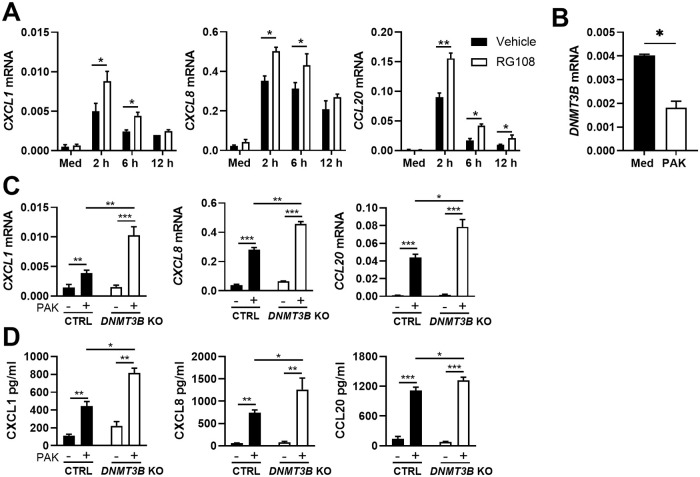
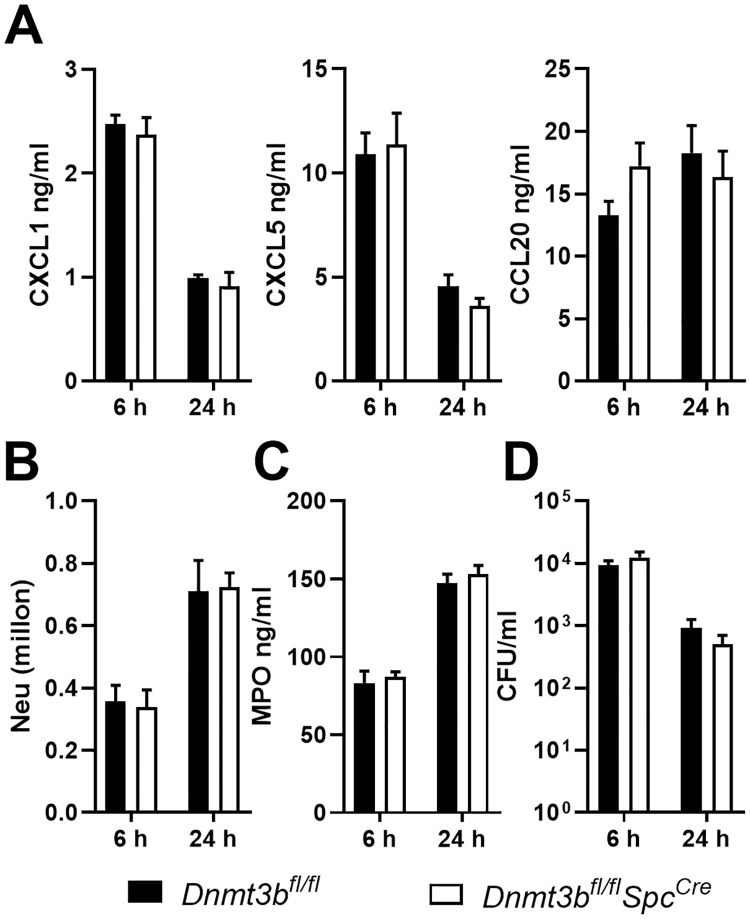
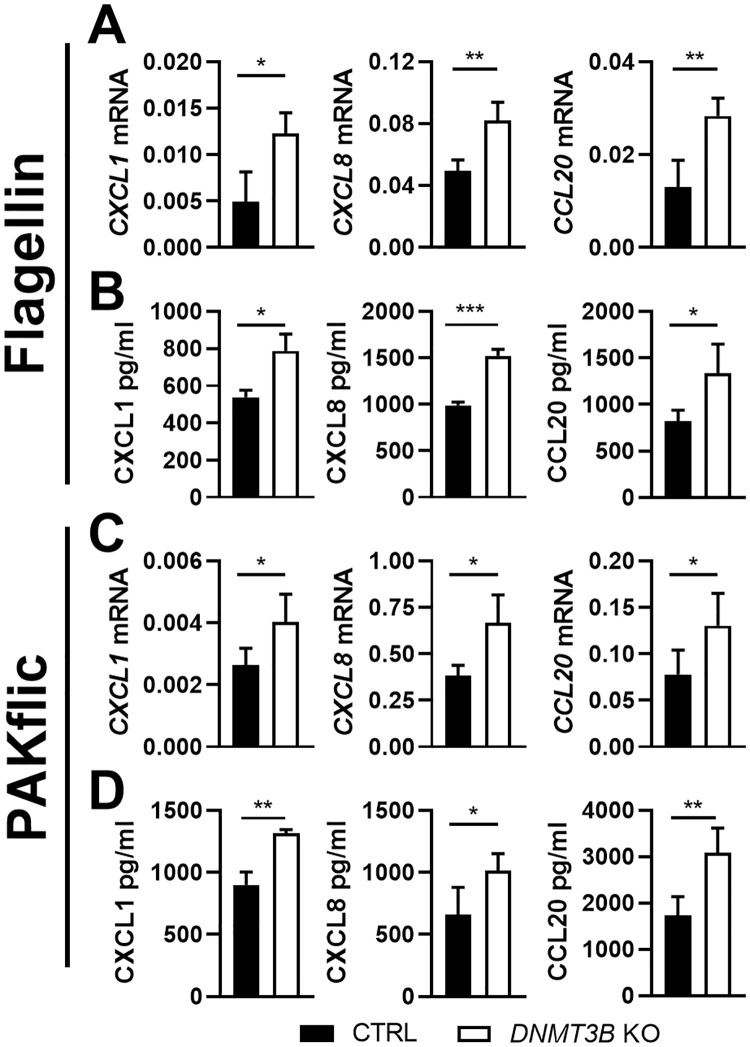
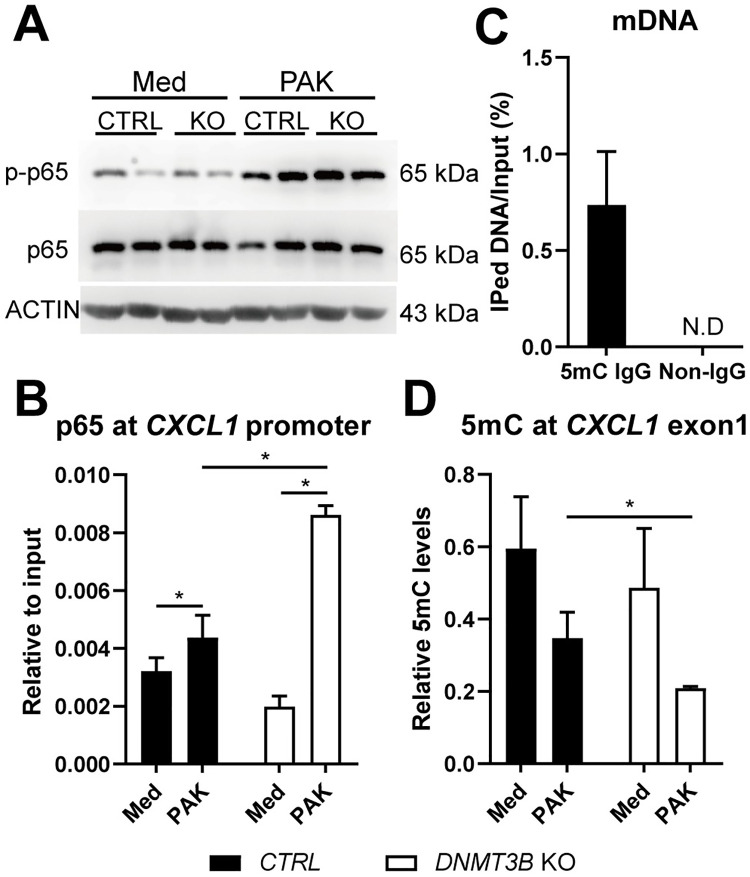
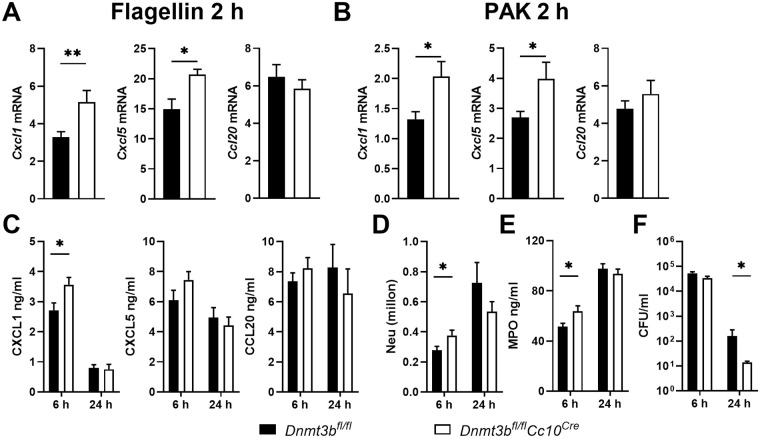
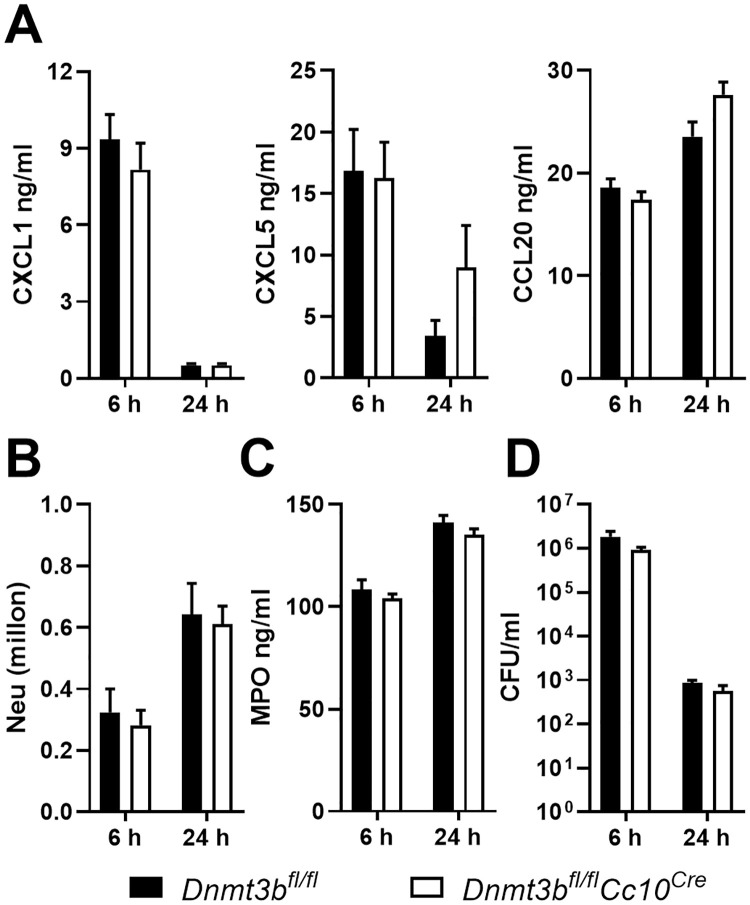
DNA methyltransferase (Dnmt)3b mediates de novo DNA methylation and modulation of Dnmt3b in respiratory epithelial cells has been shown to affect the expression of multiple genes. Respiratory epithelial cells provide a first line of defense against pulmonary pathogens and play a crucial role in the immune response during pneumonia caused by Pseudomonas (P.) aeruginosa, a gram-negative bacterium that expresses flagellin as an important virulence factor. We here sought to determine the role of Dntm3b in respiratory epithelial cells in immune responses elicited by P. aeruginosa. DNMT3B expression was reduced in human bronchial epithelial (BEAS-2B) cells as well as in primary human and mouse bronchial epithelial cells grown in air liquid interface upon exposure to P. aeruginosa (PAK). Dnmt3b deficient human bronchial epithelial (BEAS-2B) cells produced more CXCL1, CXCL8 and CCL20 than control cells when stimulated with PAK, flagellin-deficient PAK (PAKflic) or flagellin. Dnmt3b deficiency reduced DNA methylation at exon 1 of CXCL1 and enhanced NF-ĸB p65 binding to the CXCL1 promoter. Mice with bronchial epithelial Dntm3b deficiency showed increased Cxcl1 mRNA expression in bronchial epithelium and CXCL1 protein release in the airways during pneumonia caused by PAK, which was associated with enhanced neutrophil recruitment and accelerated bacterial clearance; bronchial epithelial Dnmt3b deficiency did not modify responses during pneumonia caused by PAKflic or Klebsiella pneumoniae (an un-flagellated gram-negative bacterium). Dnmt3b deficiency in type II alveolar epithelial cells did not affect mouse pulmonary defense against PAK infection. These results suggest that bronchial epithelial Dnmt3b impairs host defense during Pseudomonas induced pneumonia, at least in part, by dampening mucosal responses to flagellin.
DNA 甲基转移酶 (Dnmt)3b 介导从头 DNA 甲基化,并且已经证明呼吸上皮细胞中 Dnmt3b 的调节会影响多个基因的表达。呼吸上皮细胞为肺部病原体提供第一道防线,并在铜绿假单胞菌 (P.) 引起的肺炎的免疫反应中发挥关键作用,铜绿假单胞菌是一种革兰氏阴性菌,其鞭毛蛋白作为重要的毒力因子表达。我们在这里试图确定 Dnmt3b 在呼吸道上皮细胞中在铜绿假单胞菌引起的免疫反应中的作用。在暴露于铜绿假单胞菌 (PAK) 后,人支气管上皮 (BEAS-2B) 细胞以及在气液界面中生长的原代人源和鼠源支气管上皮细胞中的 DNMT3B 表达降低。当用 PAK、鞭毛蛋白缺陷的 PAK (PAKflic) 或鞭毛蛋白刺激时,缺乏 Dnmt3b 的人支气管上皮 (BEAS-2B) 细胞比对照细胞产生更多的 CXCL1、CXCL8 和 CCL20。Dnmt3b 缺乏减少了 CXCL1 外显子 1 的 DNA 甲基化,并增强了 NF-ĸB p65 结合到 CXCL1 启动子上。在铜绿假单胞菌引起的肺炎中,具有支气管上皮细胞 Dnmt3b 缺乏的小鼠支气管上皮细胞中的 Cxcl1mRNA 表达增加,气道中的 CXCL1 蛋白释放增加,这与中性粒细胞募集增加和细菌清除加速有关;但支气管上皮细胞 Dnmt3b 缺乏不会改变由 PAKflic 或肺炎克雷伯菌 (一种无鞭毛的革兰氏阴性菌) 引起的肺炎期间的反应。II 型肺泡上皮细胞中的 Dnmt3b 缺乏不会影响小鼠对 PAK 感染的肺部防御。这些结果表明,支气管上皮细胞 Dnmt3b 通过抑制对鞭毛蛋白的粘膜反应,至少部分削弱了宿主对铜绿假单胞菌诱导性肺炎的防御。