Department of Medical Biotechnology and Nanotechnology, School of Medicine, Mashhad University of Medical Sciences, Mashhad, Iran.
Department of Biological Sciences, University of Limerick, Limerick, Ireland.
Curr Neuropharmacol. 2021;19(11):1896-1911. doi: 10.2174/1570159X19666210402104054.
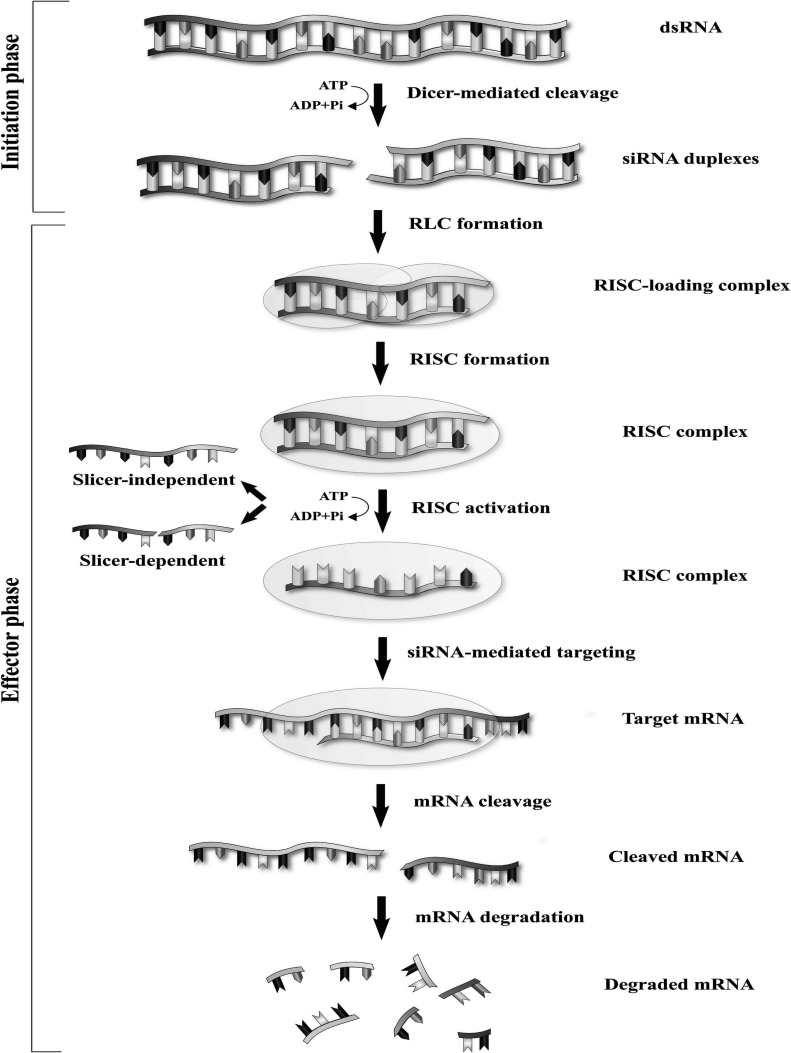
Neurodegenerative diseases (ND), as a group of central nervous system (CNS) disorders, are among the most prominent medical problems of the 21st century. They are often associated with considerable disability, motor dysfunction and dementia and are more common in the aged population. ND imposes a psychologic, economic and social burden on the patients and their families. Currently, there is no effective treatment for ND. Since many ND result from the gain of function of a mutant allele, small interference RNA (siRNA) can be a potential therapeutic agent for ND management. Based on the RNA interference (RNAi) approach, siRNA is a powerful tool for modulating gene expression through gene silencing. However, there are some obstacles in the clinical application of siRNA, including unfavorable immune response, off-target effects, instability of naked siRNA, nuclease susceptibility and a need to develop a suitable delivery system. Since there are some issues related to siRNA delivery routes, in this review, we focus on the application of siRNA in the management of ND treatment from 2000 to 2020.
神经退行性疾病(ND)作为一组中枢神经系统(CNS)疾病,是 21 世纪最突出的医学问题之一。它们通常与相当大的残疾、运动功能障碍和痴呆有关,并且在老年人群中更为常见。ND 给患者及其家属带来心理、经济和社会负担。目前,ND 尚无有效治疗方法。由于许多 ND 是由于突变等位基因获得功能引起的,因此小干扰 RNA(siRNA)可能是 ND 管理的潜在治疗剂。基于 RNA 干扰(RNAi)方法,siRNA 是通过基因沉默调节基因表达的有力工具。然而,siRNA 的临床应用存在一些障碍,包括不利的免疫反应、脱靶效应、裸露 siRNA 的不稳定性、核酸酶易感性以及需要开发合适的递送系统。由于与 siRNA 递送途径有关的一些问题,在本综述中,我们重点关注 siRNA 在 2000 年至 2020 年期间 ND 治疗管理中的应用。