Basa Bálint, Jakab Géza, Kállai-Szabó Nikolett, Borbás Bence, Fülöp Viktor, Balogh Emese, Antal István
Department of Pharmaceutics, Semmelweis University, Hőgyes E. Street 7-9, 1092 Budapest, Hungary.
Materials (Basel). 2021 Mar 11;14(6):1350. doi: 10.3390/ma14061350.
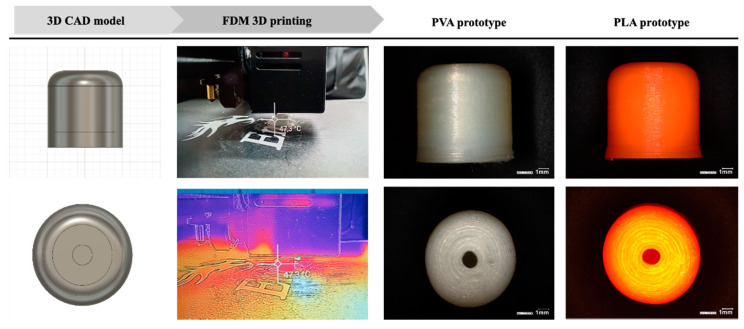
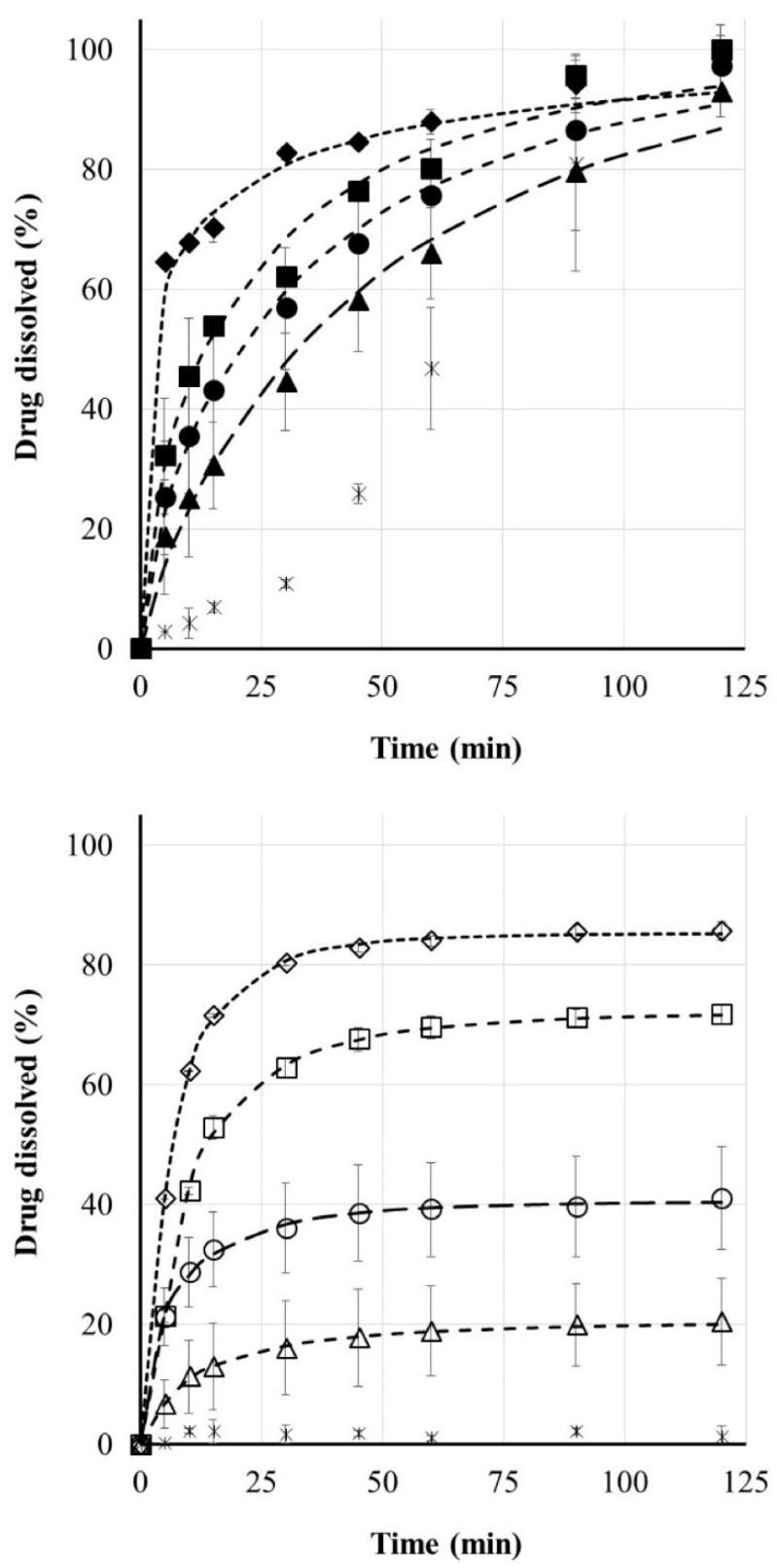
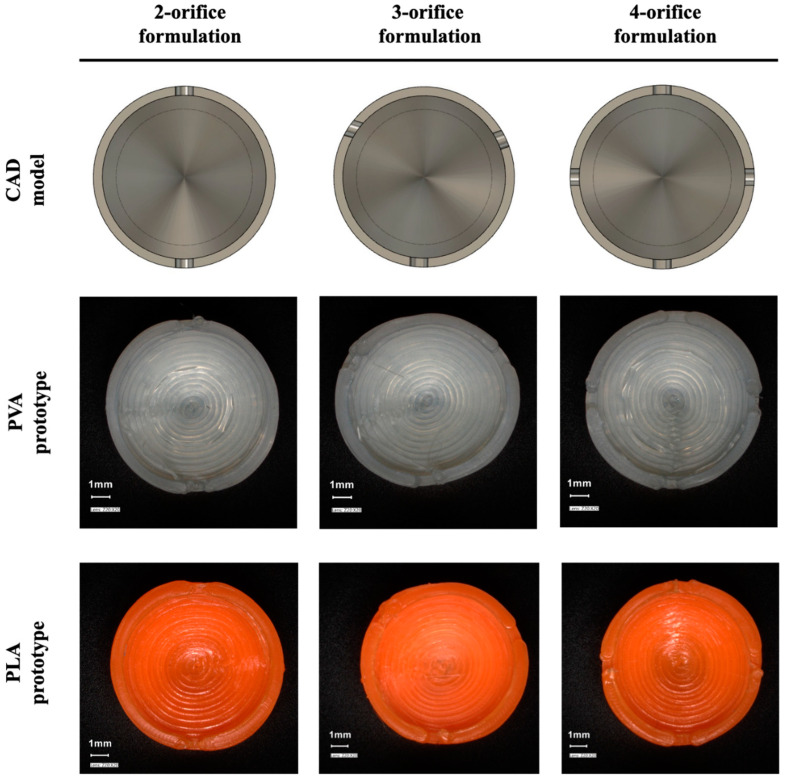
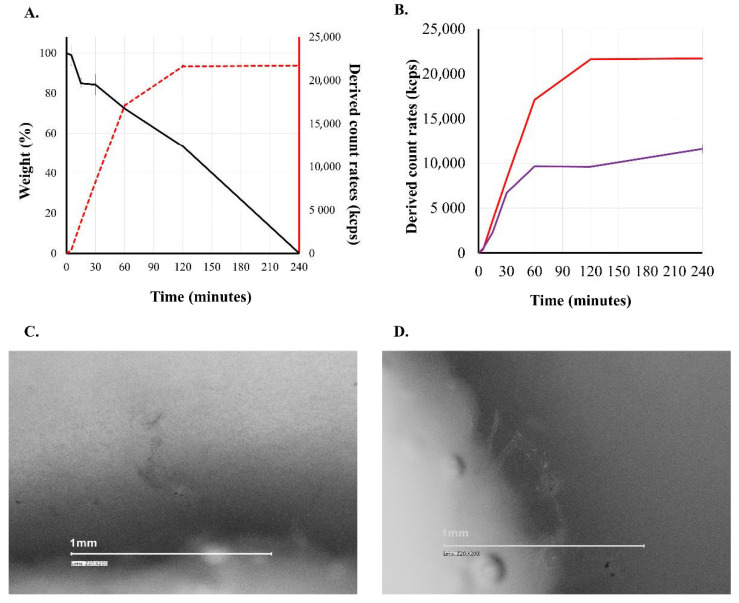
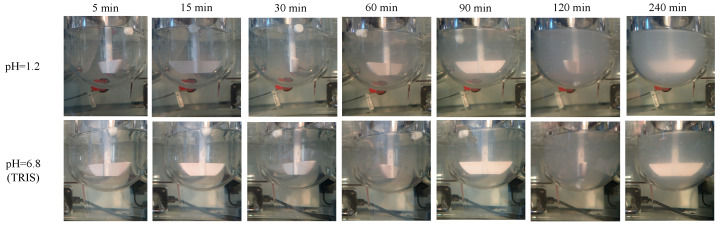
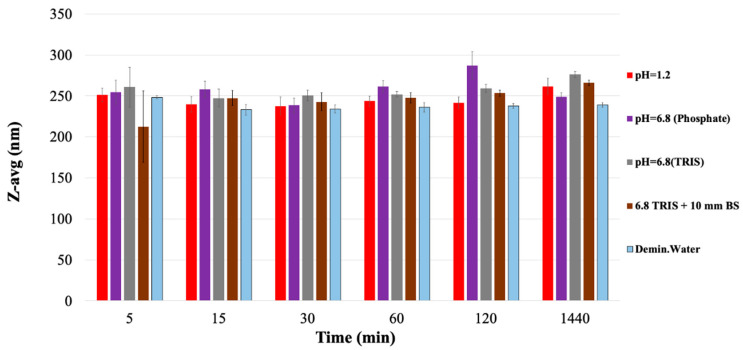
The presence of additive manufacturing, especially 3D printing, has the potential to revolutionize pharmaceutical manufacturing owing to the distinctive capabilities of personalized pharmaceutical manufacturing. This study's aim was to examine the behavior of commonly used polyvinyl alcohol (PVA) under in vitro dissolution conditions. Polylactic acid (PLA) was also used as a comparator. The carriers were designed and fabricated using computer-aided design (CAD). After printing the containers, the behavior of PVA under in vitro simulated biorelevant conditions was monitored by gravimetry and dynamic light scattering (DLS) methods. The results show that in all the dissolution media PVA carriers were dissolved; the particle size was under 300 nm. However, the dissolution rate was different in various dissolution media. In addition to studying the PVA, as drug delivery carriers, the kinetics of drug release were investigated. These dissolution test results accompanied with UV spectrophotometry tracking indirectly determine the possibilities for modifying the output of quality by computer design.
增材制造,尤其是3D打印的出现,由于其在个性化药物制造方面的独特能力,有可能彻底改变药物制造行业。本研究的目的是考察常用的聚乙烯醇(PVA)在体外溶解条件下的行为。聚乳酸(PLA)也用作对照物。载体采用计算机辅助设计(CAD)进行设计和制造。打印容器后,通过重量法和动态光散射(DLS)方法监测PVA在体外模拟生物相关条件下的行为。结果表明,在所有溶解介质中,PVA载体均被溶解;粒径在300nm以下。然而,在不同的溶解介质中,溶解速率有所不同。除了研究作为药物递送载体的PVA外,还研究了药物释放动力学。这些溶解试验结果与紫外分光光度法跟踪相结合,间接确定了通过计算机设计来改进质量输出的可能性。