Sex and Evolution Research Group, Natural History Museum, University of Oslo, 0318 Oslo, Norway.
Cells. 2021 Mar 11;10(3):620. doi: 10.3390/cells10030620.
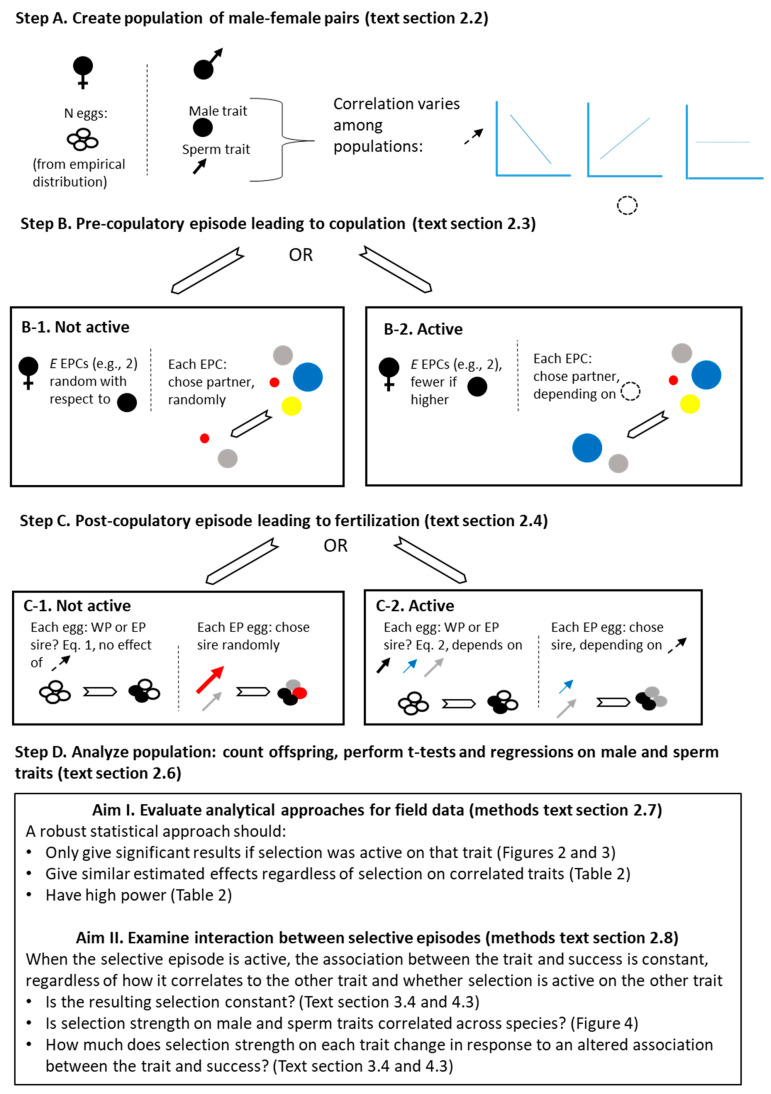
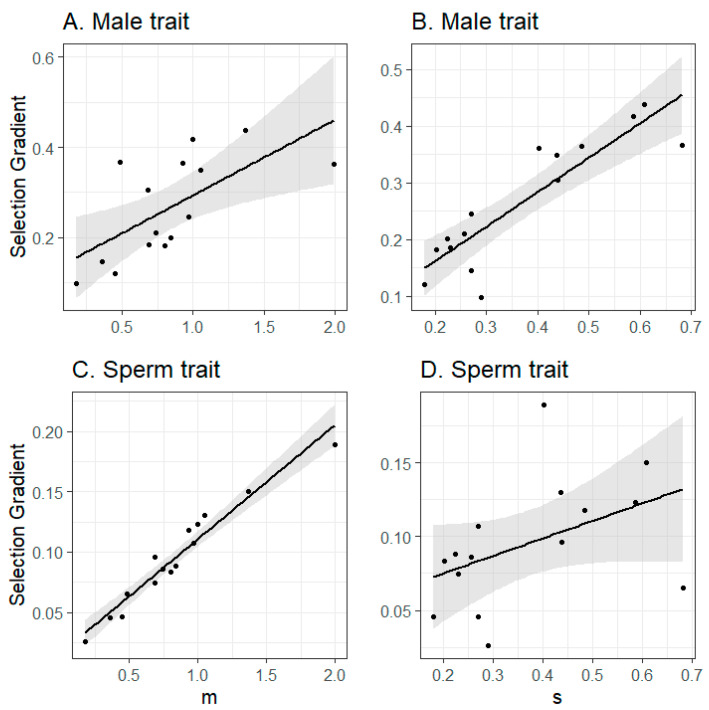
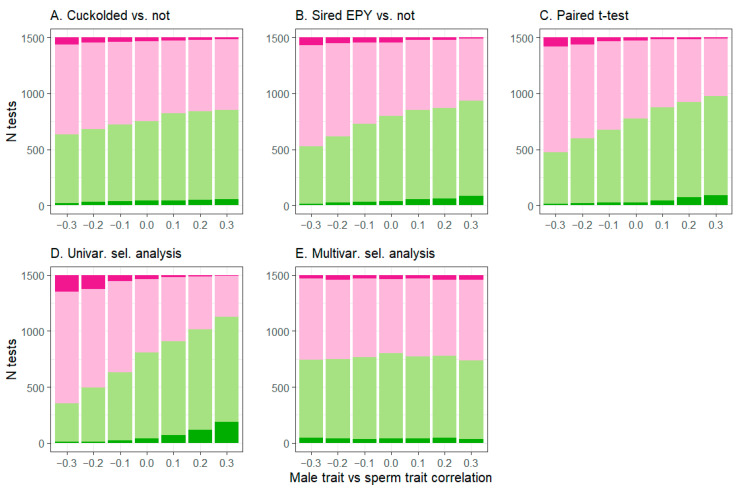
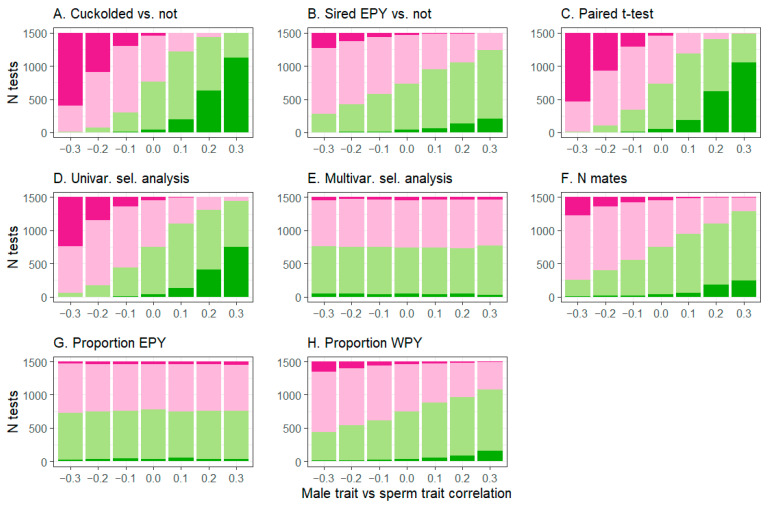
When females copulate with multiple males, pre- and post-copulatory sexual selection may interact synergistically or in opposition. Studying this interaction in wild populations is complex and potentially biased, because copulation and fertilization success are often inferred from offspring parentage rather than being directly measured. Here, I simulated 15 species of socially monogamous birds with varying levels of extra-pair paternity, where I could independently cause a male secondary sexual trait to improve copulation success, and a sperm trait to improve fertilization success. By varying the degree of correlation between the male and sperm traits, I show that several common statistical approaches, including univariate selection gradients and paired t-tests comparing extra-pair males to the within-pair males they cuckolded, can give highly biased results for sperm traits. These tests should therefore be avoided for sperm traits in socially monogamous species with extra-pair paternity, unless the sperm trait is known to be uncorrelated with male trait(s) impacting copulation success. In contrast, multivariate selection analysis and a regression of the proportion of extra-pair brood(s) sired on the sperm trait of the extra-pair male (including only broods where the male sired ≥1 extra-pair offspring) were unbiased, and appear likely to be unbiased under a broad range of conditions for this mating system. In addition, I investigated whether the occurrence of pre-copulatory selection impacted the strength of post-copulatory selection, and vice versa. I found no evidence of an interaction under the conditions simulated, where the male trait impacted only copulation success and the sperm trait impacted only fertilization success. Instead, direct selection on each trait was independent of whether the other trait was under selection. Although pre- and post-copulatory selection strength was independent, selection on the two traits was positively correlated across species because selection on both traits increased with the frequency of extra-pair copulations in these socially monogamous species.
当雌性与多个雄性交配时,交配前和交配后的性选择可能会协同作用或相互对立。在野外种群中研究这种相互作用是复杂的,并且可能存在偏差,因为交配和受精成功率通常是从后代的亲代关系推断出来的,而不是直接测量的。在这里,我模拟了 15 种具有不同程度的婚外交配的社会性一夫一妻制鸟类,在这些鸟类中,我可以独立地使雄性的次要性特征提高交配成功率,并使精子特征提高受精成功率。通过改变雄性和精子特征之间的相关性程度,我表明,几种常见的统计方法,包括单变量选择梯度和比较与他们通奸的配对雄性的婚外雄性的配对 t 检验,对于精子特征可能会产生高度有偏差的结果。因此,除非精子特征与影响交配成功率的雄性特征无关,否则这些测试不应用于具有婚外交配的社会性一夫一妻制物种的精子特征。相比之下,多元选择分析和婚外雄性精子特征与婚外后代比例的回归(包括雄性仅产生≥1 个婚外后代的后代)是无偏的,并且在这种交配系统的广泛条件下似乎也不太可能有偏差。此外,我还研究了交配前选择是否会影响交配后选择的强度,反之亦然。我在所模拟的条件下没有发现证据表明存在相互作用,即雄性特征仅影响交配成功率,而精子特征仅影响受精成功率。相反,直接对每个特征的选择独立于另一个特征是否受到选择。尽管交配前和交配后的选择强度是独立的,但在物种之间,对这两个特征的选择是正相关的,因为在这些社会性一夫一妻制物种中,对两个特征的选择都随着婚外交配的频率而增加。