Padilla-Montaño Nayely, de León Guerra Leandro, Moujir Laila
Departamento de Bioquímica, Microbiología, Biología Celular y Genética, Facultad de Farmacia, Universidad de La Laguna, Avenida Astrofísico Fco Sánchez s/n, 382016 Tenerife, Spain.
Foods. 2021 Mar 11;10(3):591. doi: 10.3390/foods10030591.
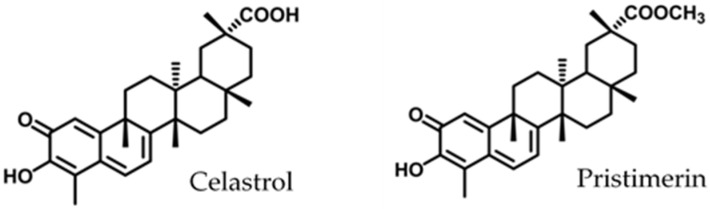
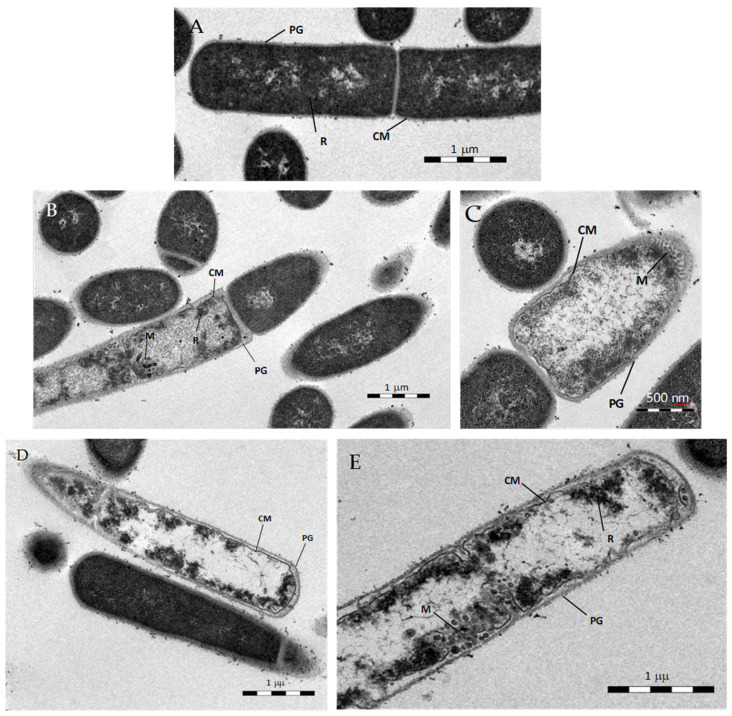
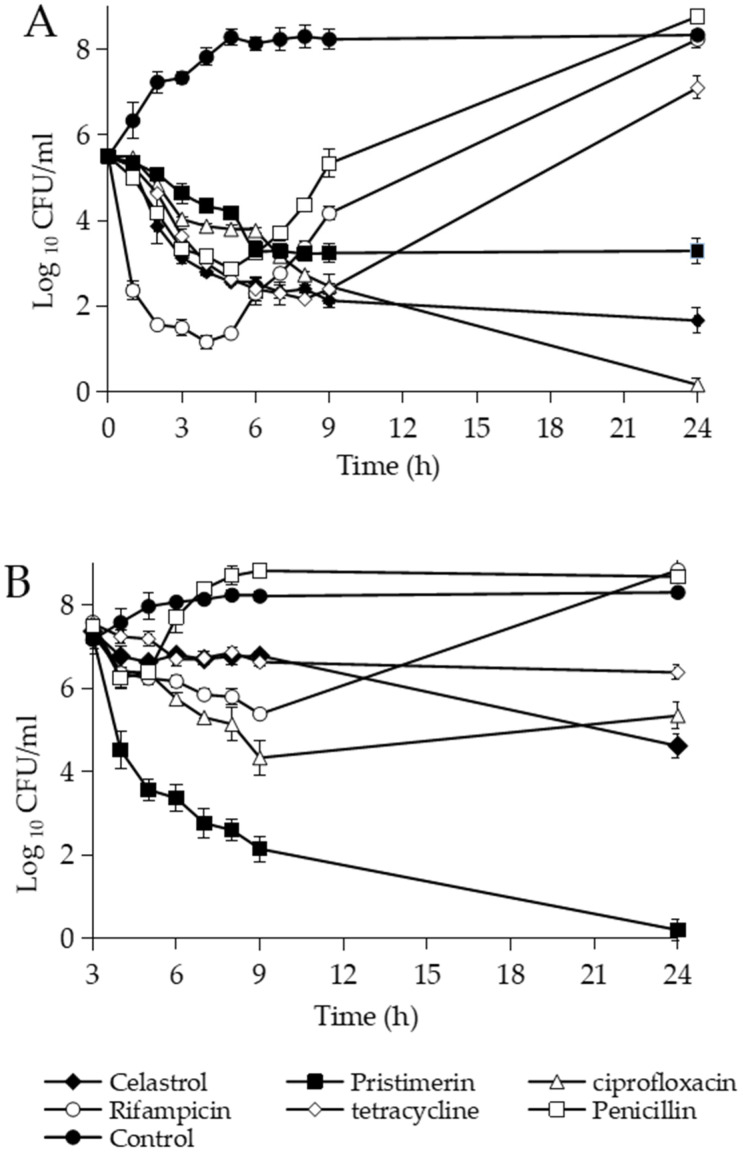
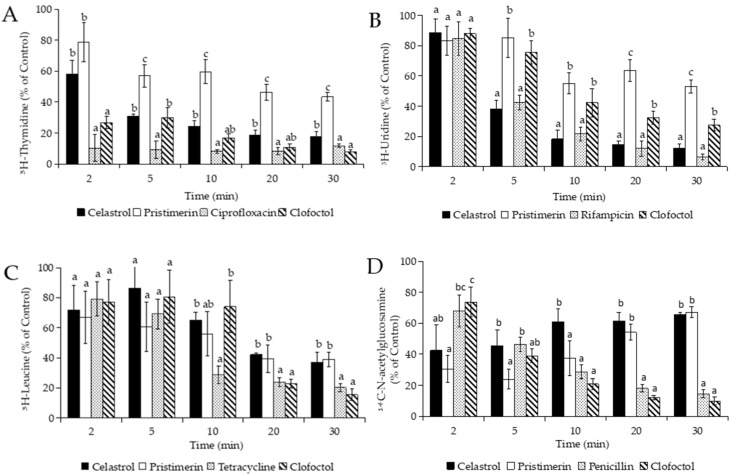
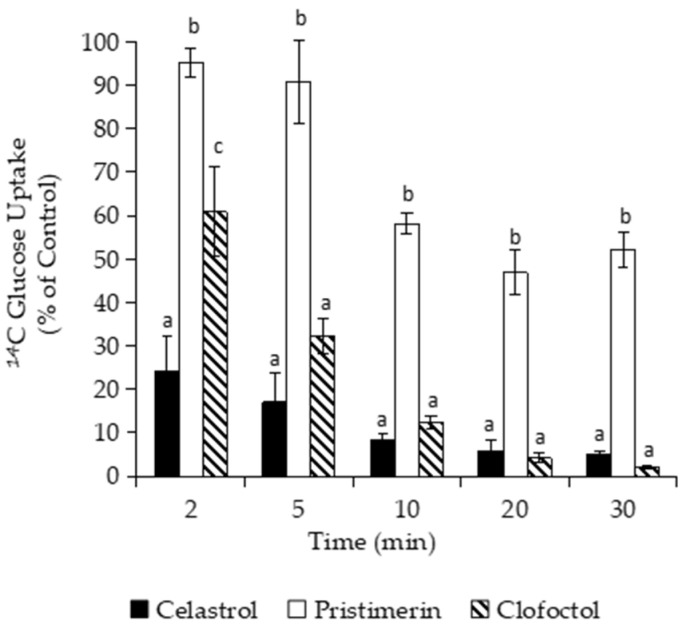
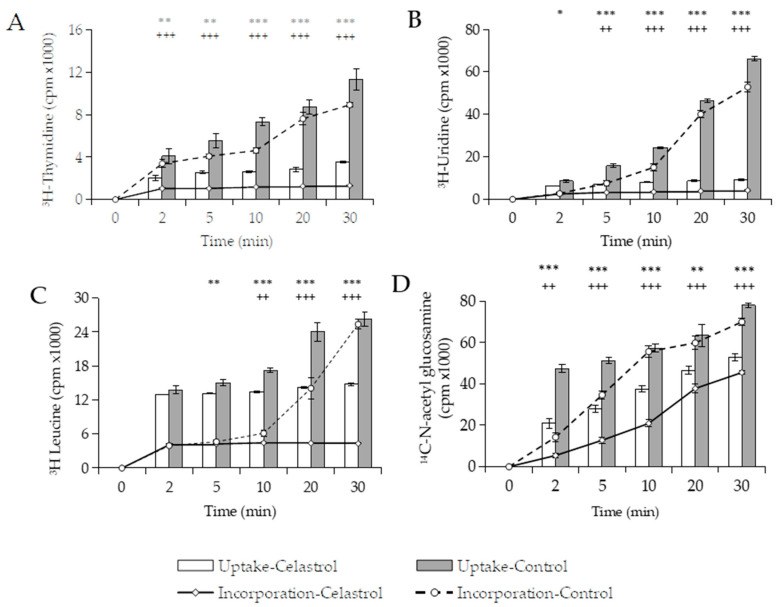
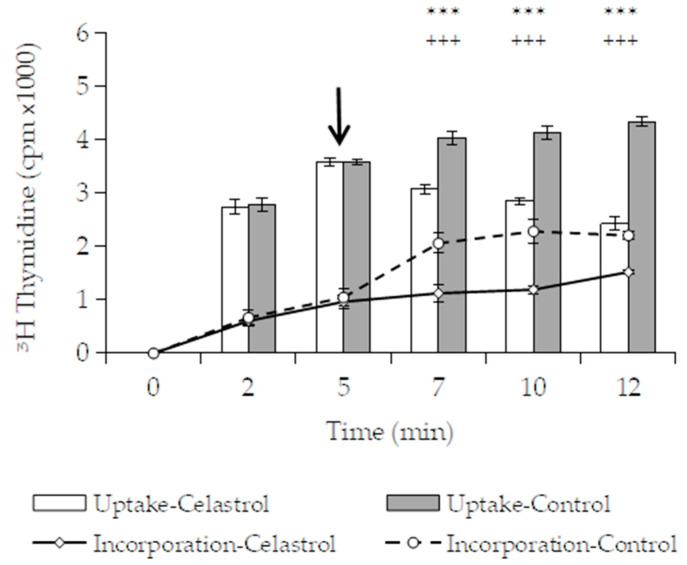
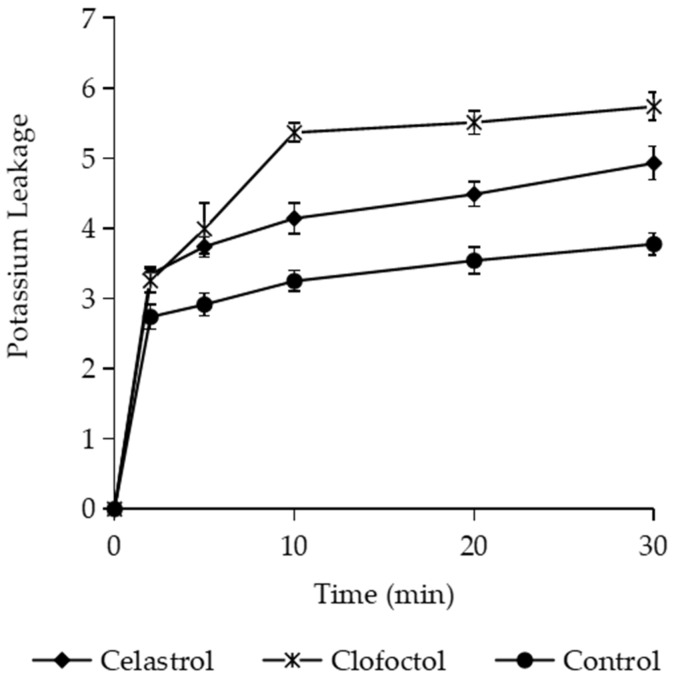
Species of the Celastraceae family are traditionally consumed in different world regions for their stimulating properties. Celastrol, a triterpene methylene quinone isolated from plants of celastraceas, specifically activates satiety centers in the brain that play an important role in controlling body weight. In this work, the antimicrobial activity and mechanism of action of celastrol and a natural derivative, pristimerin, were investigated in . Celastrol showed a higher antimicrobial activity compared with pristimerin, being active against Gram-positive bacteria with minimum inhibitory concentrations (MICs) that ranged between 0.16 and 2.5 µg/mL. Killing curves displayed a bactericidal effect that was dependent on the inoculum size. Monitoring of macromolecular synthesis in bacterial populations treated with these compounds revealed inhibition in the incorporation of all radiolabeled precursors, but not simultaneously. Celastrol at 3 µg/mL and pristimerin at 10 µg/mL affected DNA and RNA synthesis first, followed by protein synthesis, although the inhibitory action on the uptake of radiolabeled precursors was more dramatic with celastrol. This compound also caused cytoplasmic membrane disruption observed by potassium leakage and formation of mesosome-like structures. The inhibition of oxygen consumption of whole and disrupted cells after treatments with both quinones indicates damage in the cellular structure, suggesting the cytoplasmic membrane as a potential target. These findings indicate that celastrol could be considered as an interesting alternative to control outbreaks caused by spore-forming bacteria.
卫矛科植物传统上在世界不同地区因其刺激特性而被食用。从卫矛科植物中分离出的三萜亚甲基醌——雷公藤红素,能特异性激活大脑中的饱腹感中枢,这在控制体重方面起着重要作用。在这项研究中,对雷公藤红素及其天然衍生物原百部素的抗菌活性和作用机制进行了研究。与原百部素相比,雷公藤红素显示出更高的抗菌活性,对革兰氏阳性菌有活性,其最低抑菌浓度(MIC)在0.16至2.5μg/mL之间。杀菌曲线显示出杀菌效果取决于接种量。对用这些化合物处理的细菌群体中的大分子合成进行监测发现,所有放射性标记前体的掺入均受到抑制,但并非同时发生。3μg/mL的雷公藤红素和10μg/mL的原百部素首先影响DNA和RNA合成,随后影响蛋白质合成,不过雷公藤红素对放射性标记前体摄取的抑制作用更为显著。该化合物还导致通过钾泄漏和类中间体结构形成观察到的细胞质膜破坏。用这两种醌处理后,完整细胞和破碎细胞的氧气消耗受到抑制,表明细胞结构受损,提示细胞质膜是一个潜在靶点。这些发现表明,雷公藤红素可被视为控制由产芽孢细菌引起的疫情爆发的一种有趣替代品。