Ang Abel D, Vissers Margreet C M, Burgess Eleanor R, Currie Margaret J, Dachs Gabi U
Mackenzie Cancer Research Group, Department of Pathology & Biomedical Science, University of Otago Christchurch, Christchurch 8140, New Zealand.
Centre for Free Radical Research, Department of Pathology & Biomedical Science, University of Otago Christchurch, Christchurch 8140, New Zealand.
Antioxidants (Basel). 2021 Mar 11;10(3):430. doi: 10.3390/antiox10030430.
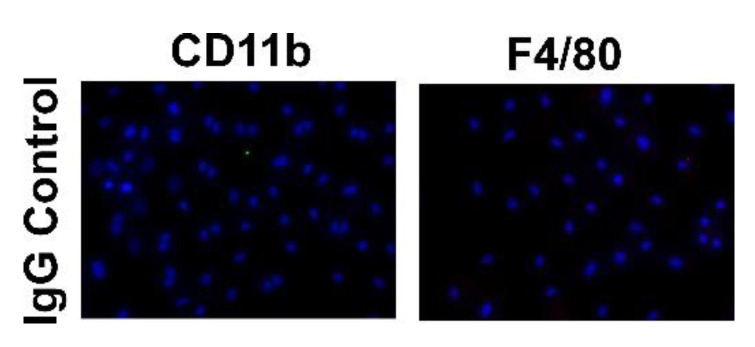
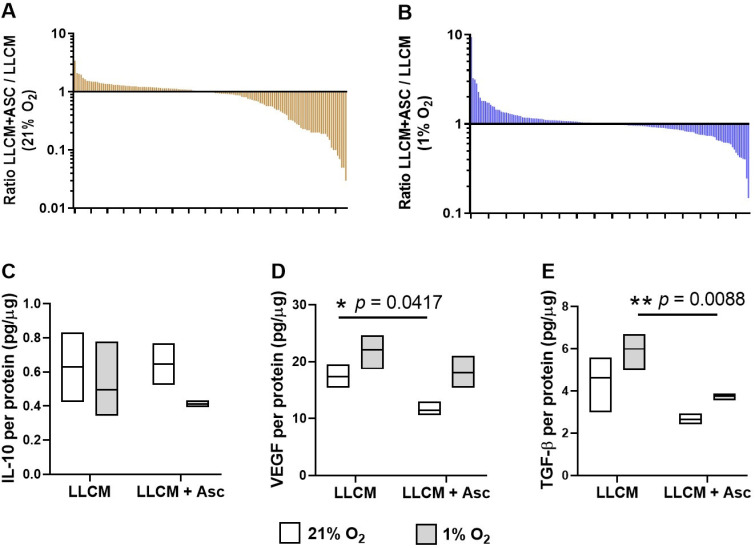
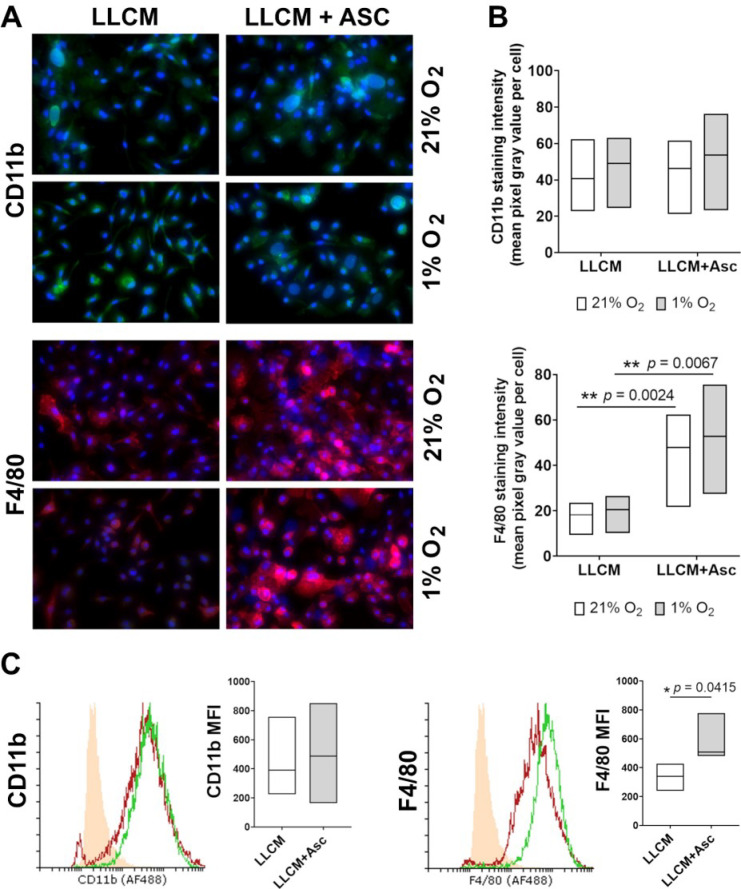
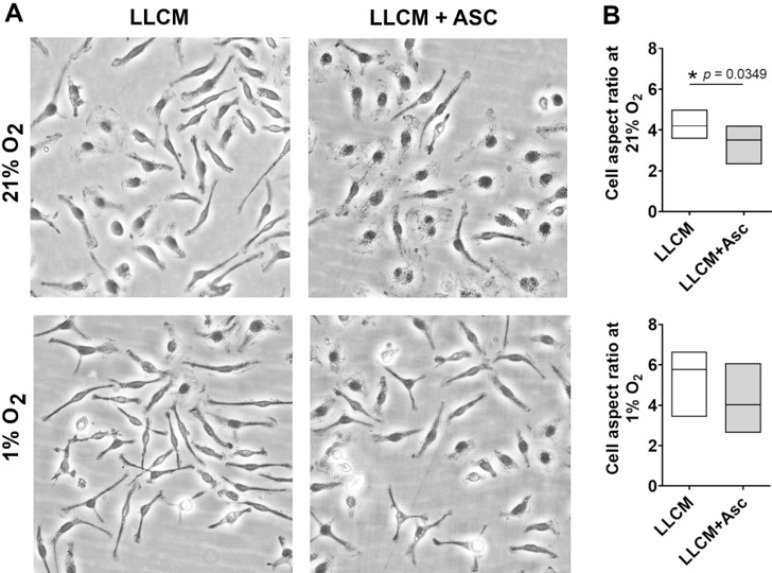
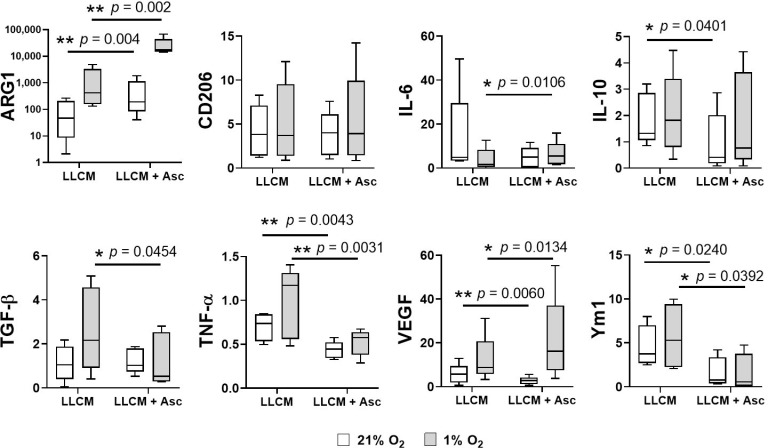
Tumour-associated macrophages (TAMs) are ubiquitously present in tumours and commonly associated with poor prognosis. In immune cells, ascorbate affects epigenetic regulation, differentiation and phenotype via its co-factor activity for the 2-oxoglutarate dependent dioxygenase enzymes. Here, we determined the effect of ascorbate on TAM development in response to tumour microenvironmental cues. Naïve murine bone marrow monocytes were cultured with Lewis Lung Carcinoma conditioned media (LLCM) or macrophage colony-stimulating factor (MCSF) to encourage the development into tumour-associated macrophages. Cells were stimulated with hypoxia (1% O), with or without ascorbate (500 µM) supplementation. Cells and media were harvested for gene, cell surface marker and protein analyses. LLCM supported bone marrow monocyte growth with >90% of cells staining CD11bF4/80, indicative of monocytes/macrophages. LLCM-grown cells showed increased expression of M2-like and TAM genes compared to MCSF-grown cells, which further increased with hypoxia. In LLCM-grown cells, ascorbate supplementation was associated with increased F4/80 cell surface expression, and altered gene expression and protein secretion. Our study shows that ascorbate modifies monocyte phenotype when grown under tumour microenvironmental conditions, but this was not clearly associated with either a pro- or anti-tumour phenotype, and reflects a complex and nuanced response of macrophages to ascorbate. Overall, ascorbate supplementation clearly has molecular consequences for TAMs, but functional and clinical consequences remain unknown.
肿瘤相关巨噬细胞(TAM)普遍存在于肿瘤中,通常与预后不良相关。在免疫细胞中,抗坏血酸通过其对2-氧戊二酸依赖性双加氧酶的辅助因子活性影响表观遗传调控、分化和表型。在此,我们确定了抗坏血酸对TAM发育的影响,以响应肿瘤微环境信号。将未成熟的小鼠骨髓单核细胞与Lewis肺癌条件培养基(LLCM)或巨噬细胞集落刺激因子(MCSF)一起培养,以促进其发育为肿瘤相关巨噬细胞。细胞在缺氧(1% O)条件下进行刺激,添加或不添加抗坏血酸(500 µM)。收集细胞和培养基用于基因、细胞表面标志物和蛋白质分析。LLCM支持骨髓单核细胞生长,超过90%的细胞CD11bF4/80染色阳性,表明为单核细胞/巨噬细胞。与MCSF培养的细胞相比,LLCM培养的细胞显示出M2样和TAM基因表达增加,缺氧时进一步增加。在LLCM培养的细胞中,添加抗坏血酸与F4/80细胞表面表达增加、基因表达改变和蛋白质分泌改变有关。我们的研究表明,抗坏血酸在肿瘤微环境条件下培养时会改变单核细胞表型,但这与促肿瘤或抗肿瘤表型均无明显关联,反映了巨噬细胞对抗坏血酸的复杂而细微的反应。总体而言,补充抗坏血酸对TAM具有明确的分子影响,但功能和临床影响仍不清楚。