IMDEA Networks Institute, Avda. del Mar Mediterráneo, 22, 28918 Madrid, Spain.
Department of Telematic Engineering, Universidad Carlos III de Madrid, 28911 Leganes, Spain.
Sensors (Basel). 2021 Mar 8;21(5):1897. doi: 10.3390/s21051897.
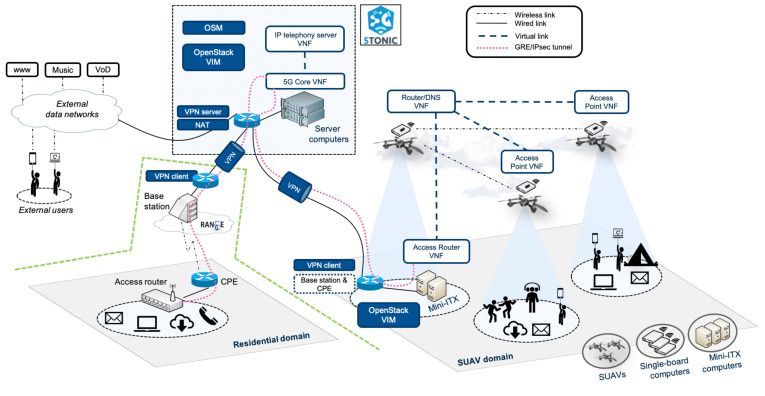
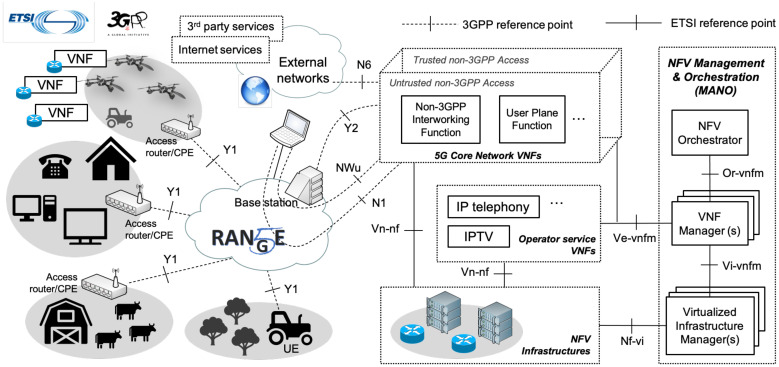
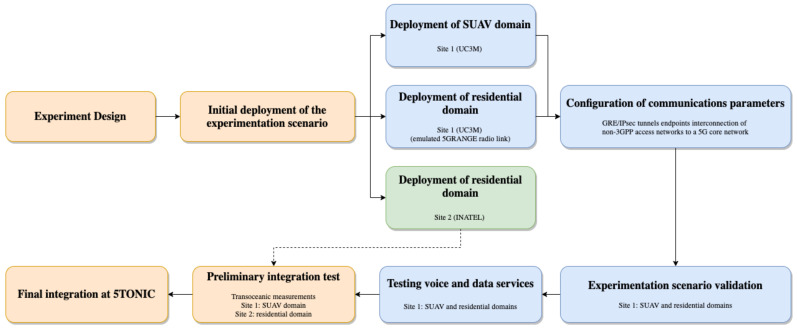
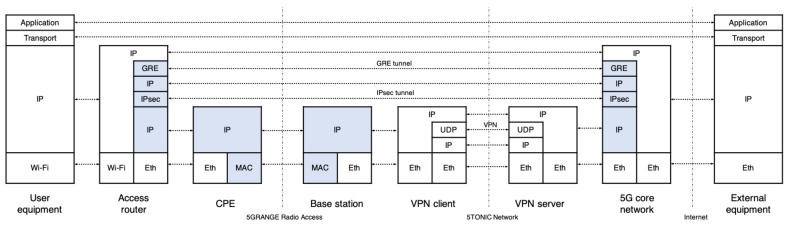
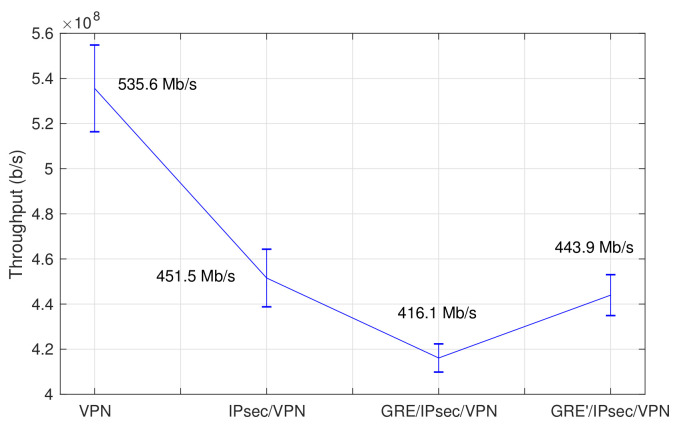
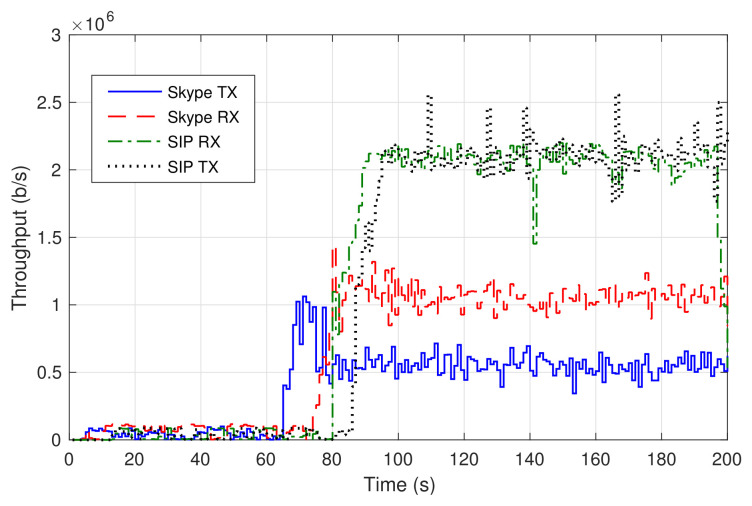
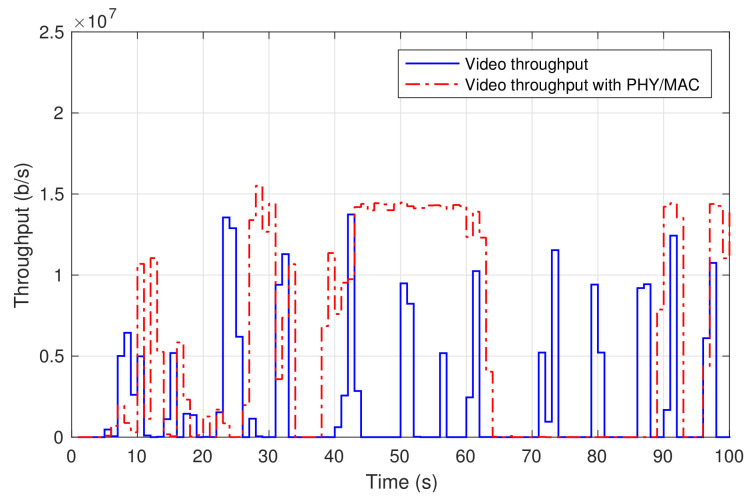
Presently, a significant part of the world population does not have Internet access. The fifth-generation cellular network technology evolution (5G) is focused on reducing latency, increasing the available bandwidth, and enhancing network performance. However, researchers and companies have not invested enough effort into the deployment of the Internet in remote/rural/undeveloped areas for different techno-economic reasons. This article presents the result of a collaboration between Brazil and the European Union, introducing the steps designed to create a fully operational experimentation scenario with the main purpose of integrating the different achievements of the H2020 5G-RANGE project so that they can be trialed together into a 5G networking use case. The scenario encompasses (i) a novel radio access network that targets a bandwidth of 100 Mb/s in a cell radius of 50 km, and (ii) a network of Small Unmanned Aerial Vehicles (SUAV). This set of SUAVs is NFV-enabled, on top of which Virtual Network Functions (VNF) can be automatically deployed to support occasional network communications beyond the boundaries of the 5G-RANGE radio cells. The whole deployment implies the use of a virtual private overlay network enabling the preliminary validation of the scenario components from their respective remote locations, and simplifying their subsequent integration into a single local demonstrator, the configuration of the required GRE/IPSec tunnels, the integration of the new 5G-RANGE physical, MAC and network layer components and the overall validation with voice and data services.
目前,世界上很大一部分人口无法访问互联网。第五代蜂窝网络技术演进(5G)的重点是降低延迟、增加可用带宽和提高网络性能。然而,由于不同的技术经济原因,研究人员和公司并没有在偏远/农村/欠发达地区投入足够的精力来部署互联网。本文介绍了巴西与欧盟合作的成果,介绍了设计的步骤,旨在创建一个完全可操作的实验场景,主要目的是整合 H2020 5G-RANGE 项目的不同成果,以便可以一起试用到 5G 网络用例中。该场景包括 (i) 一种新型的无线电接入网络,其目标是在 50 公里半径的小区中实现 100 Mb/s 的带宽,和 (ii) 小型无人机 (SUAV) 网络。这组 SUAV 是 NFV 启用的,可以在其上自动部署虚拟网络功能 (VNF),以支持超出 5G-RANGE 无线电小区边界的偶尔网络通信。整个部署意味着使用虚拟专用覆盖网络,从而可以从各自的远程位置初步验证场景组件,并简化它们随后集成到单个本地演示器中,配置所需的 GRE/IPSec 隧道,集成新的 5G-RANGE 物理、MAC 和网络层组件,并使用语音和数据服务进行整体验证。