Vachálek Ján, Šišmišová Dana, Vašek Pavol, Fiťka Ivan, Slovák Juraj, Šimovec Matej
Faculty of Mechanical Engineering, Slovak University of Technology in Bratislava, Námestie slobody 17, 812 31 Bratislava, Slovakia.
SOVA Digital a.s., Bojnická 3, 831 04 Bratislava, Slovakia.
Sensors (Basel). 2021 Mar 6;21(5):1842. doi: 10.3390/s21051842.
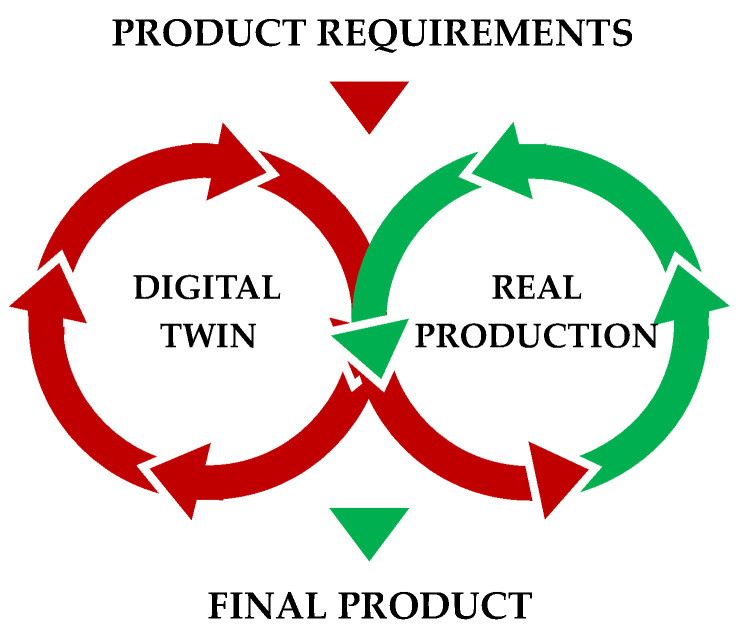
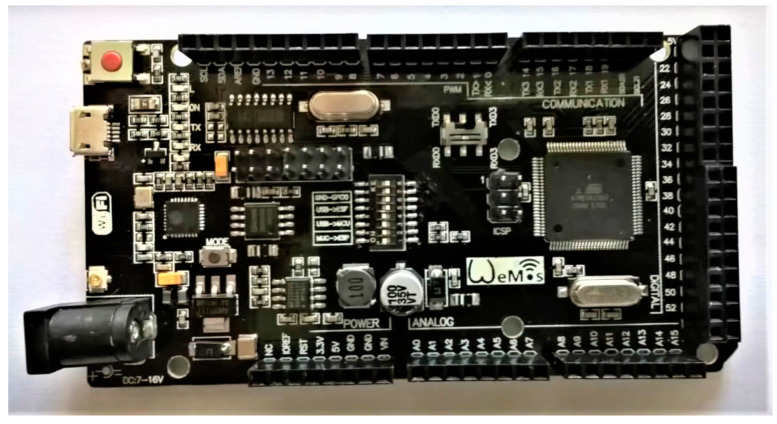
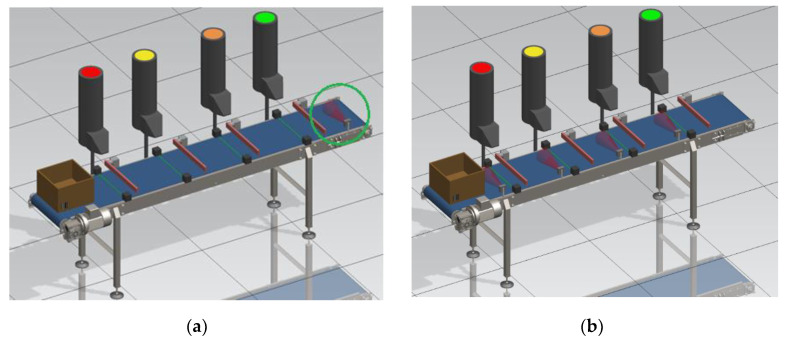
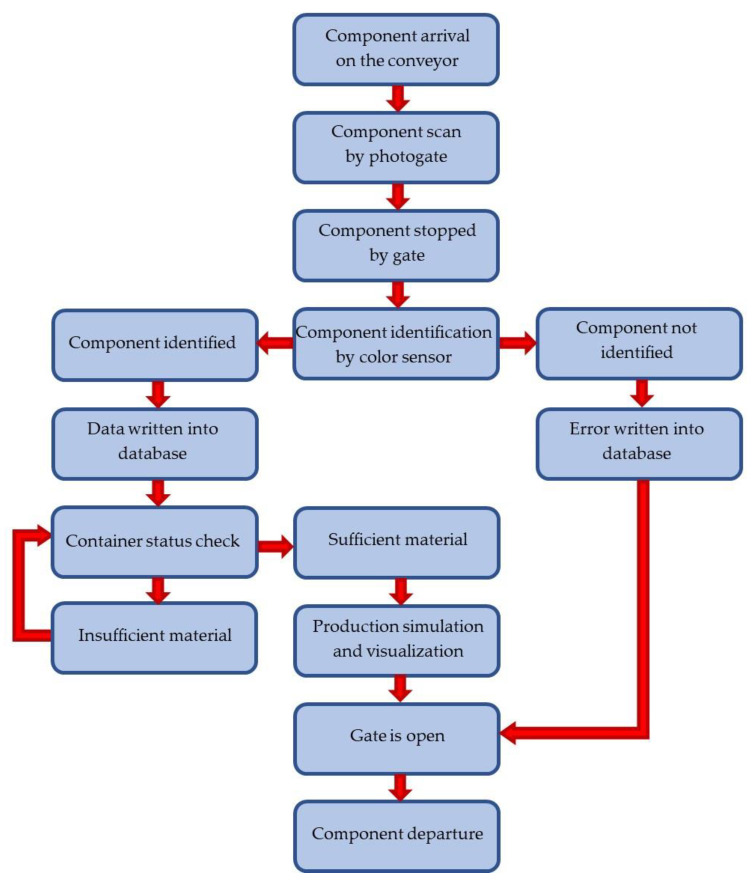
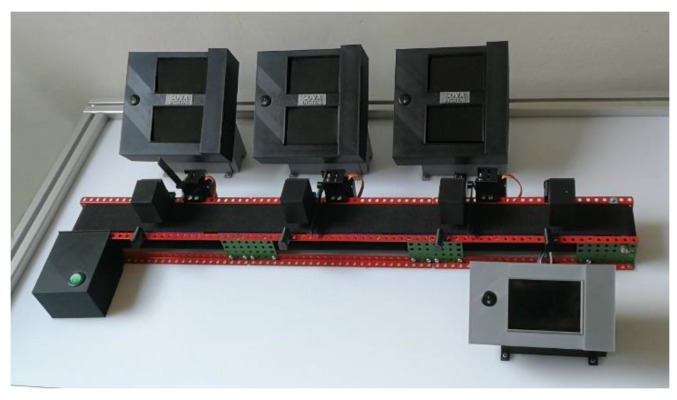
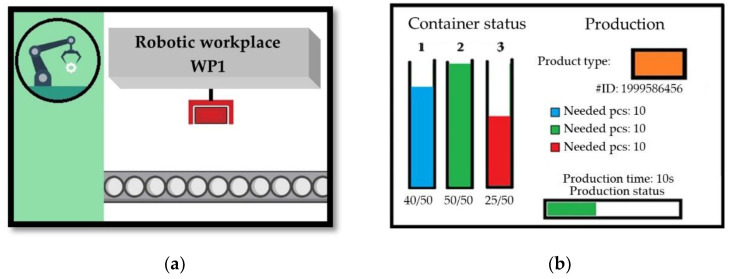
This paper deals with the design and implementation of a universal cyber-physical model capable of simulating any production process in order to optimize its logistics systems. The basic idea is the direct possibility of testing and debugging advanced logistics algorithms using a digital twin outside the production line. Since the digital twin requires a physical connection to a real line for its operation, this connection is substituted by a modular cyber-physical system (CPS), which replicates the same physical inputs and outputs as a real production line. Especially in fully functional production facilities, there is a trend towards optimizing logistics systems in order to increase efficiency and reduce idle time. Virtualization techniques in the form of a digital twin are standardly used for this purpose. The possibility of an initial test of the physical implementation of proposed optimization changes before they are fully implemented into operation is a pragmatic question that still resonates on the production side. Such concerns are justified because the proposed changes in the optimization of production logistics based on simulations from a digital twin tend to be initially costly and affect the existing functional production infrastructure. Therefore, we created a universal CPS based on requirements from our cooperating manufacturing companies. The model fully physically reproduces the real conditions of simulated production and verifies in advance the quality of proposed optimization changes virtually by the digital twin. Optimization costs are also significantly reduced, as it is not necessary to verify the optimization impact directly in production, but only in the physical model. To demonstrate the versatility of deployment, we chose a configuration simulating a robotic assembly workplace and its logistics.
本文探讨了一种通用的信息物理模型的设计与实现,该模型能够模拟任何生产过程,以优化其物流系统。基本思路是利用生产线外的数字孪生直接测试和调试先进的物流算法。由于数字孪生运行需要与实际生产线进行物理连接,因此该连接由模块化信息物理系统(CPS)替代,该系统复制了与实际生产线相同的物理输入和输出。特别是在功能齐全的生产设施中,存在着优化物流系统以提高效率和减少闲置时间的趋势。为此,通常采用数字孪生形式的虚拟化技术。在将提议的优化变更全面投入运营之前,对其物理实施进行初步测试的可能性是一个务实的问题,在生产方面仍然引起共鸣。这种担忧是合理的,因为基于数字孪生模拟对生产物流进行优化时,提议的变更最初往往成本高昂,并会影响现有的功能性生产基础设施。因此,我们根据合作制造公司的要求创建了一个通用的CPS。该模型完全物理再现了模拟生产的实际情况,并通过数字孪生预先虚拟验证提议的优化变更的质量。由于无需直接在生产中验证优化影响,只需在物理模型中进行验证,因此优化成本也显著降低。为了展示部署的通用性,我们选择了一种模拟机器人装配工作场所及其物流的配置。