Mohammadi Mojtaba, Heuzey Marie-Claude, Carreau Pierre J, Taguet Aurélie
Center for High Performance Polymer and Composite Systems (CREPEC), Department of Chemical Engineering, École Polytechnique de Montréal, Montreal, QC H3T 1J4, Canada.
Polymers Composites and Hybrids (PCH), IMT Mines Ales, 30319 Ales, France.
Nanomaterials (Basel). 2021 Mar 27;11(4):857. doi: 10.3390/nano11040857.
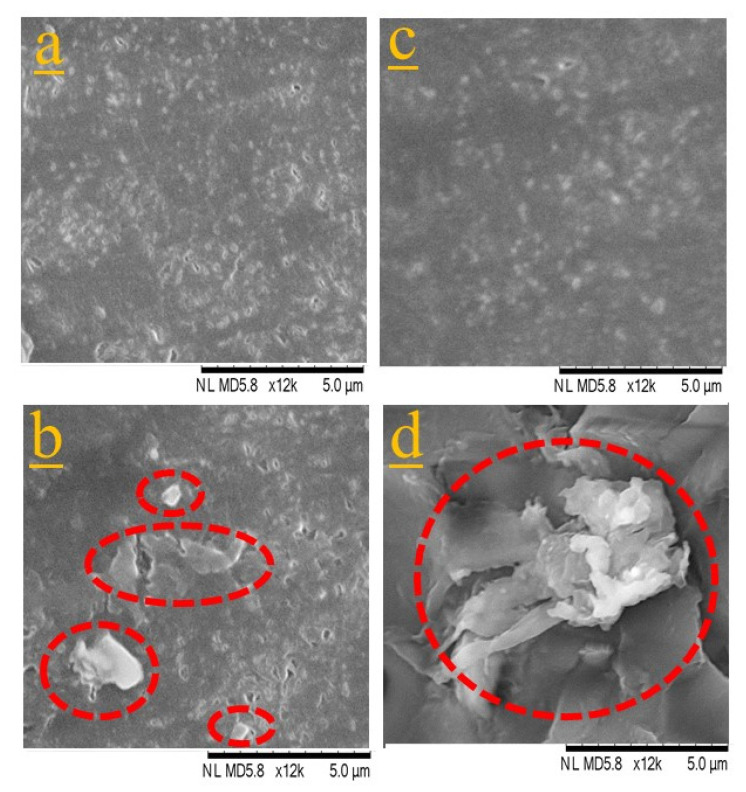
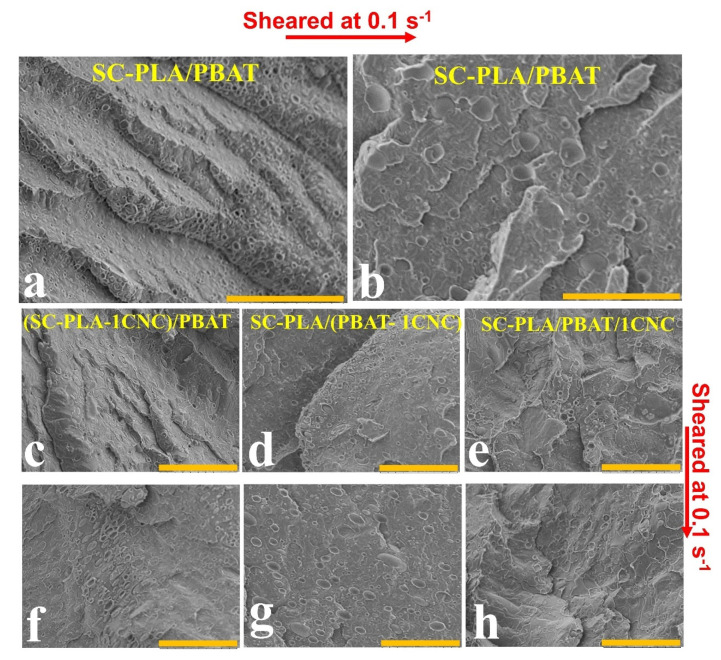
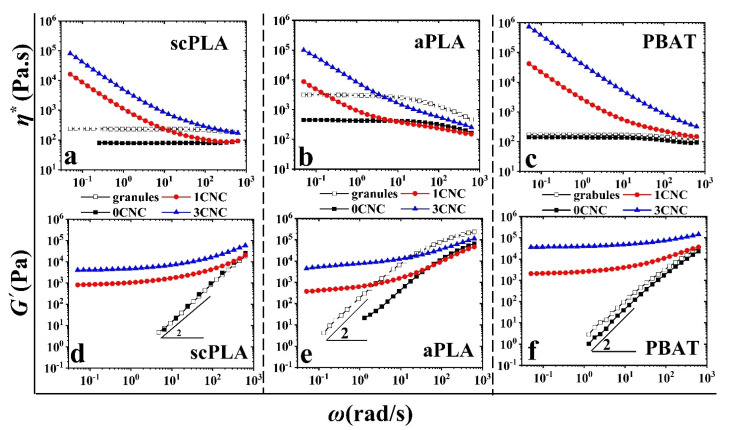
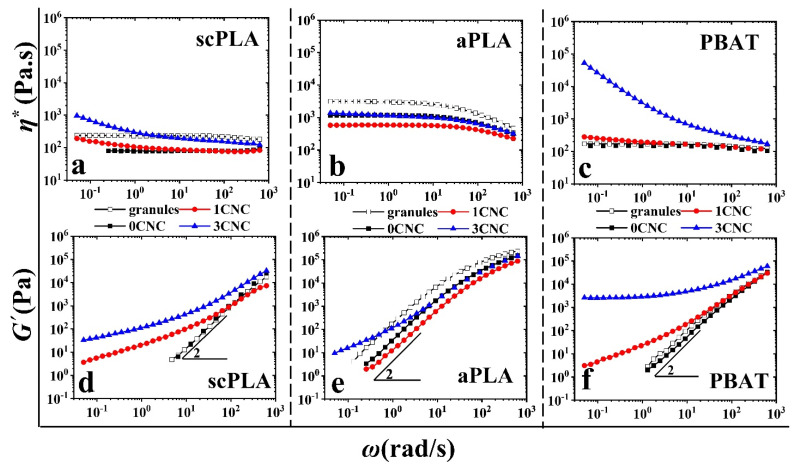
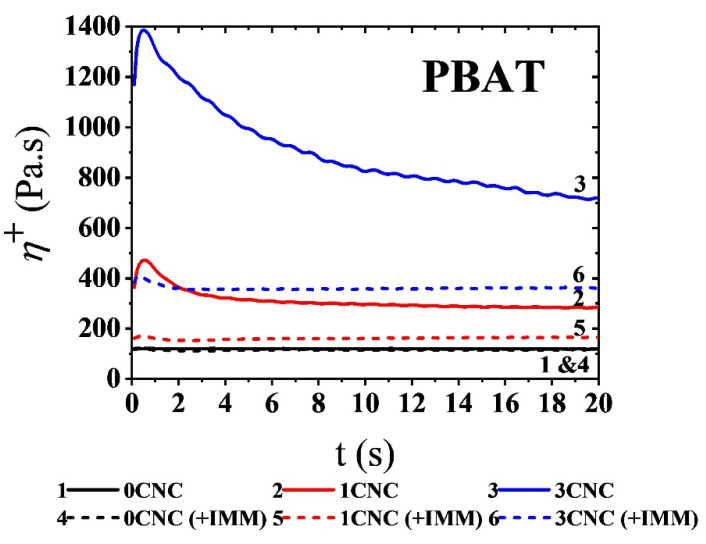
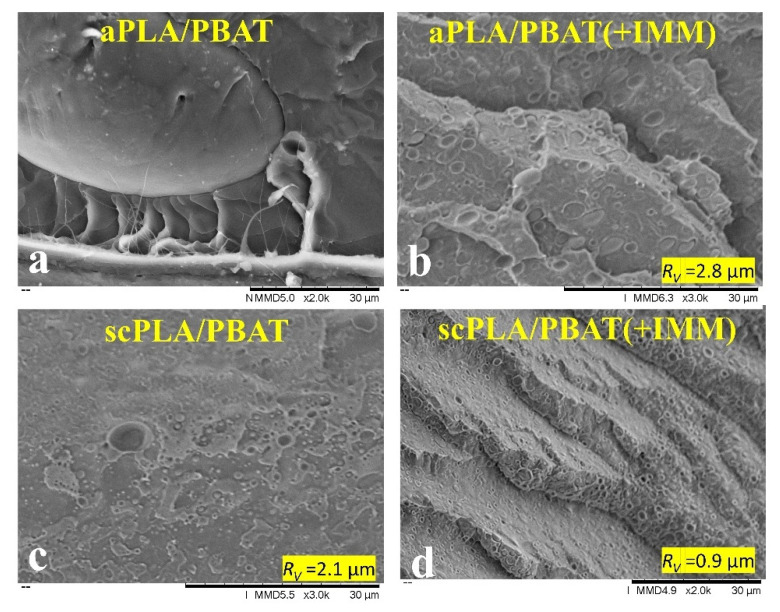
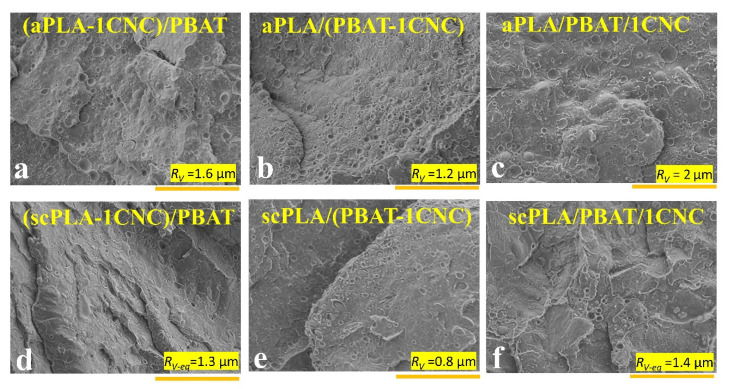
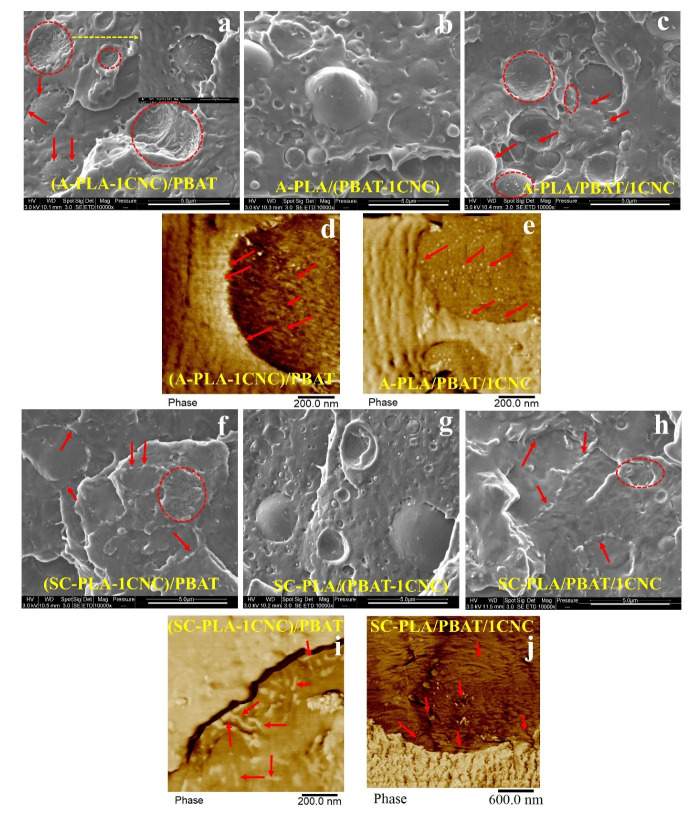
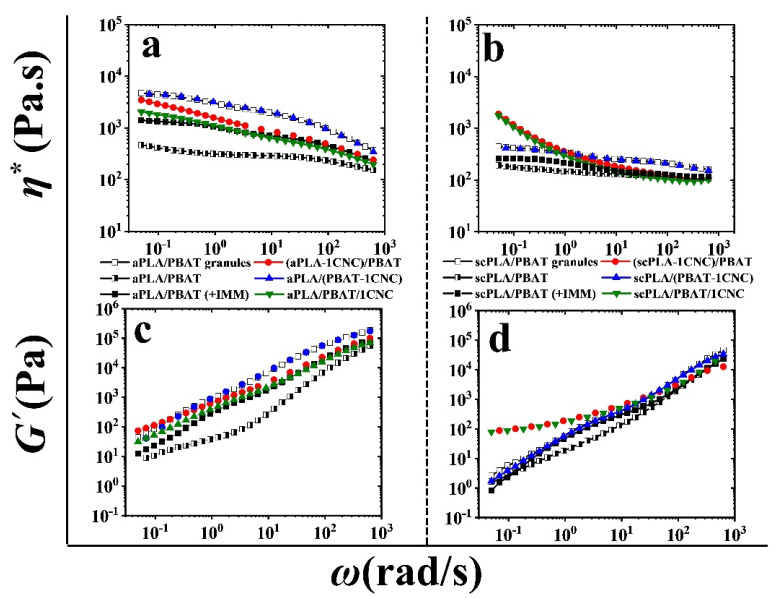
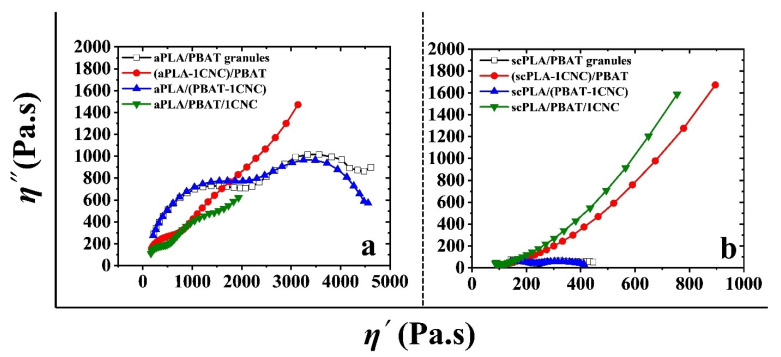
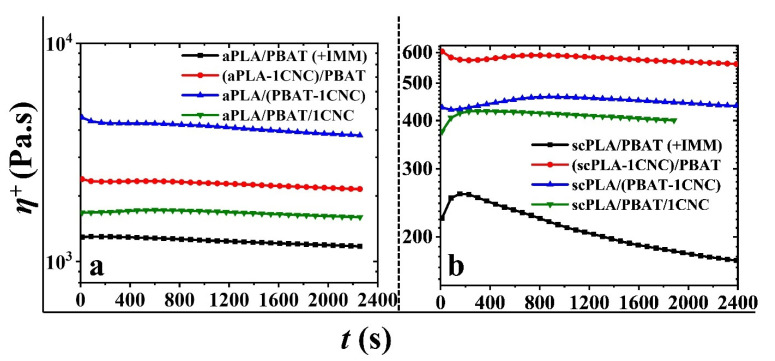
Morphological and rheological properties of poly(lactic acid), PLA (semicrystalline and amorphous), and poly(butylene adipate-co-terephthalate), PBAT, and their blends (75 wt%/25 wt%; PLA/PBAT) were investigated in the presence of cellulose nanocrystals (CNCs) prepared from solution casting followed by melt mixing. For the solution casting step, the CNCs were either incorporated into the matrix, the dispersed phase, or both. The dispersion and distribution of the CNCs in the neat polymers and localization in their blends were analyzed via scanning electron microscopy (SEM) and atomic force microscopy (AFM). The highly dispersed CNCs in the solution cast nanocomposites were agglomerated after melt mixing. In the blends with 1 wt% CNCs, the nanoparticles were mostly localized on the surface of the PBAT droplets irrespective of their initial localization. The rheological behavior of the single polymer matrix nanocomposites and their blends was determined in dynamic and transient shear flow in the molten state. Upon melt mixing the complex viscosity and storage modulus of the solution cast nanocomposites decreased markedly due to re-agglomeration of the CNCs. Under shearing at 0.1 s, a significant droplet coalescence was observed in the neat blends, but was prevented by the presence of the CNCs at the interface in the blend nanocomposites.
研究了聚乳酸(PLA,半结晶和无定形)、聚己二酸丁二醇酯-对苯二甲酸丁二醇酯(PBAT)及其共混物(75 wt%/25 wt%;PLA/PBAT)在由溶液浇铸后熔融共混制备的纤维素纳米晶体(CNC)存在下的形态学和流变学性能。对于溶液浇铸步骤,CNC被掺入基质、分散相或两者中。通过扫描电子显微镜(SEM)和原子力显微镜(AFM)分析了CNC在纯聚合物中的分散和分布以及在其共混物中的定位。溶液浇铸纳米复合材料中高度分散的CNC在熔融共混后发生团聚。在含有1 wt% CNC的共混物中,纳米颗粒大多定位于PBAT液滴表面,而与它们的初始定位无关。在动态和瞬态剪切流动下测定了单一聚合物基体纳米复合材料及其共混物在熔融状态下的流变行为。熔融共混时,由于CNC的重新团聚,溶液浇铸纳米复合材料的复数粘度和储能模量显著降低。在0.1 s的剪切作用下,在纯共混物中观察到明显的液滴聚并,但在共混纳米复合材料中,界面处存在的CNC阻止了液滴聚并。