Department of Orthopedics, Kaohsiung Municipal Siaogang Hospital, Kaohsiung Medical University, Kaohsiung 812, Taiwan.
Department of Orthopedics, College of Medicine, Kaohsiung Medical University, Kaohsiung 807, Taiwan.
Int J Mol Sci. 2021 Mar 10;22(6):2791. doi: 10.3390/ijms22062791.
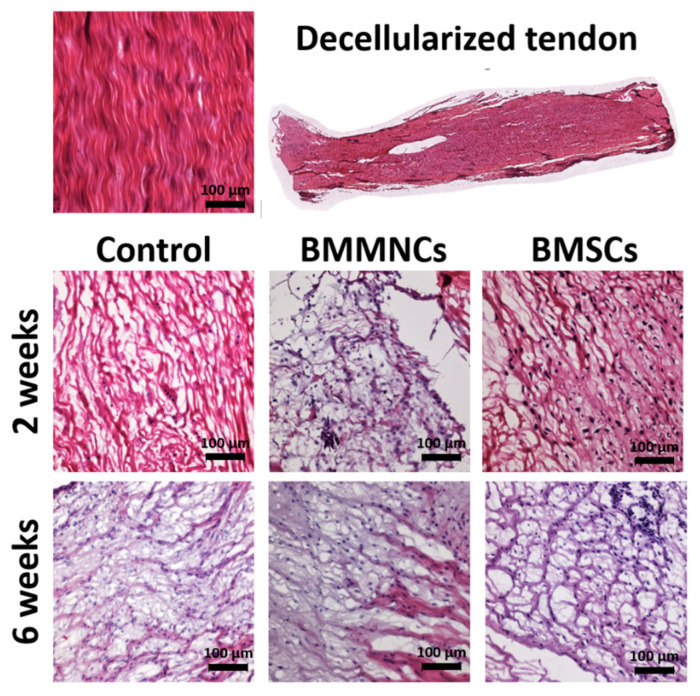
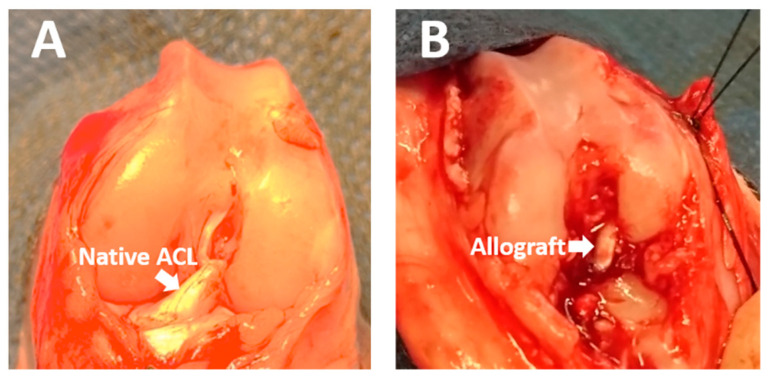
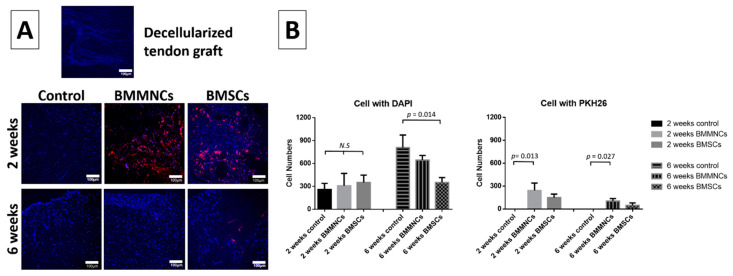
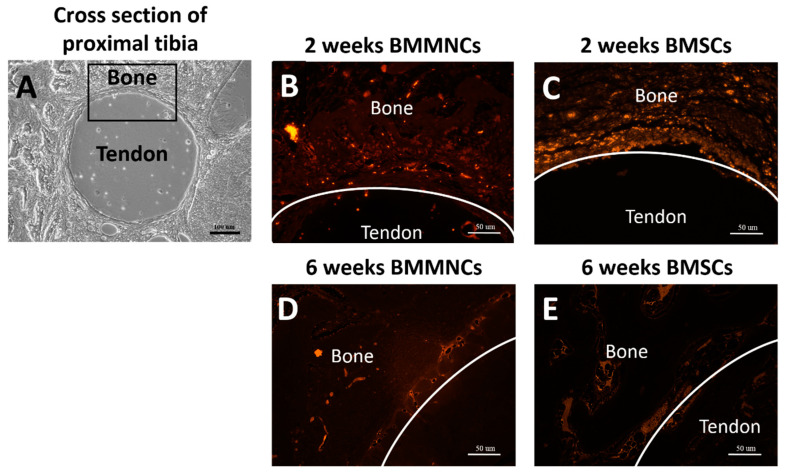
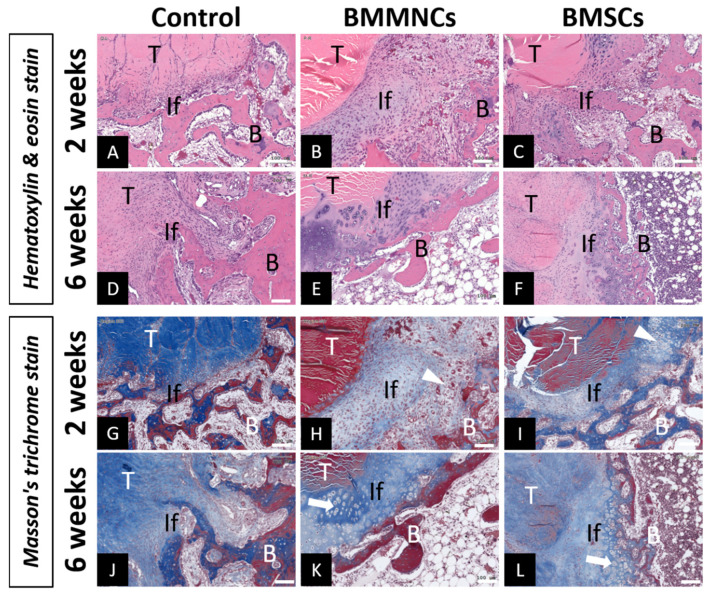
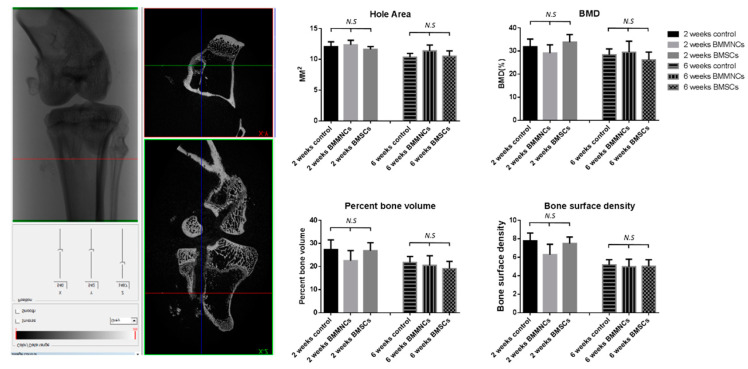
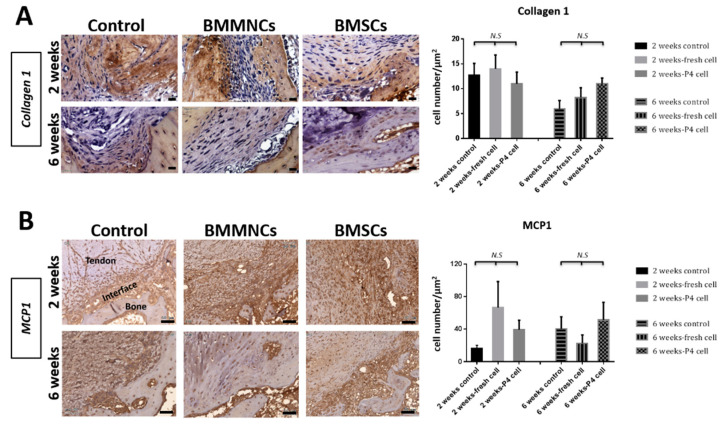
Graft cell repopulation and tendon-bone tunnel healing are important after allograft anterior cruciate ligament reconstruction (ACLR). Freshly isolated bone marrow mononuclear cells (BMMNCs) have the advantage of short isolation time during surgery and may enhance tissue regeneration. Thus, we hypothesized that the effect of intra-articular BMMNCs in post-allograft ACLR treatment is comparable to that of cultured bone marrow stromal cells (BMSCs). A rabbit model of hamstring allograft ACLR was used in this study. Animals were randomly assigned to the BMMNC, BMSC, and control groups. Fresh BMMNCs isolated from the iliac crest during surgery and cultured BMSCs at passage four were used in this study. A total of 1 × 10 BMMNCs or BMSCs in 100 µL phosphate-buffered saline were injected into the knee joint immediately after ACLR. The control group was not injected with cells. At two and six weeks post operation, we assessed graft cell repopulation with histological and cell tracking staining (PKH26), and tendon-bone healing with histological micro-computed tomography and immunohistochemical analyses for collagen I and monocyte chemoattractant protein-1 (MCP1). At two weeks post operation, there was no significant difference in the total cell population within the allograft among the three groups. However, the control group showed significantly higher cell population within the allograft than that of BM cell groups at six weeks. Histological examination of proximal tibia revealed that the intra-articular delivered cells infiltrated into the tendon-bone interface. Compared to the control group, the BM cell groups showed broader gaps with interfacial fibrocartilage healing, similar collagen I level, and higher MCP1 expression in the early stage. Micro-CT did not reveal any significant difference among the three groups. BMMNCs and BMSCs had comparable effects on cell repopulation and interfacial allograft-bone healing. Intra-articular BM cells delivery had limited benefits on graft cell repopulation and caused higher inflammation than that in the control group in the early stage, with fibrocartilage formation in the tendon-bone interface after allograft ACLR.
同种异体前交叉韧带重建(ACLR)后移植物细胞再植入和腱骨隧道愈合是重要的。新鲜分离的骨髓单核细胞(BMMNCs)在手术期间具有较短的分离时间的优势,并且可能增强组织再生。因此,我们假设关节内 BMMNC 对同种异体 ACLR 后治疗的效果与培养的骨髓基质细胞(BMSCs)相当。本研究使用兔肌腱同种异体 ACLR 模型。动物随机分配到 BMMNC、BMSC 和对照组。术中从髂嵴分离新鲜 BMMNC 并在第四代培养 BMSCs 用于本研究。将 1×10 个 BMMNC 或 BMSC 在 100μL 磷酸盐缓冲液中在 ACLR 后立即注入膝关节。对照组未注射细胞。术后 2 周和 6 周时,我们通过组织学和细胞示踪染色(PKH26)评估移植物细胞再植入,通过组织学微计算机断层扫描和胶原 I 和单核细胞趋化蛋白 1(MCP1)的免疫组织化学分析评估腱骨愈合。术后 2 周,三组同种异体移植物内的总细胞群体无明显差异。然而,对照组在 6 周时同种异体移植物内的细胞群体明显高于 BM 细胞组。胫骨近端的组织学检查显示关节内输送的细胞浸润到腱骨界面。与对照组相比,BM 细胞组在早期显示更宽的间隙,界面纤维软骨愈合,类似的胶原 I 水平和更高的 MCP1 表达。三组间微 CT 无明显差异。BMMNC 和 BMSC 对细胞再植入和界面同种异体-骨愈合具有相似的作用。关节内 BM 细胞输送对移植物细胞再植入的益处有限,并且在早期引起比对照组更高的炎症,在同种异体 ACLR 后腱骨界面形成纤维软骨。