Oncode Institute, Division of Cell Biology, The Netherlands Cancer Institute, Plesmanlaan 121, 1066 CX Amsterdam, The Netherlands.
Oncode Institute, Division of Molecular Pathology, The Netherlands Cancer Institute, Plesmanlaan 121, 1066 CX Amsterdam, The Netherlands.
Cells. 2021 Mar 10;10(3):610. doi: 10.3390/cells10030610.
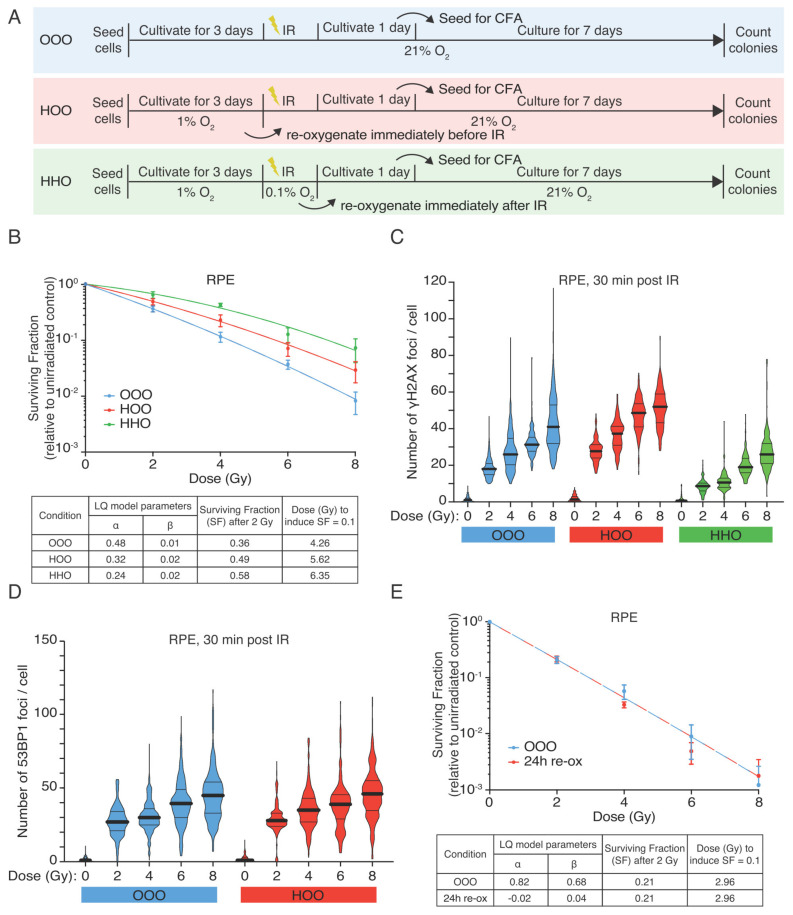
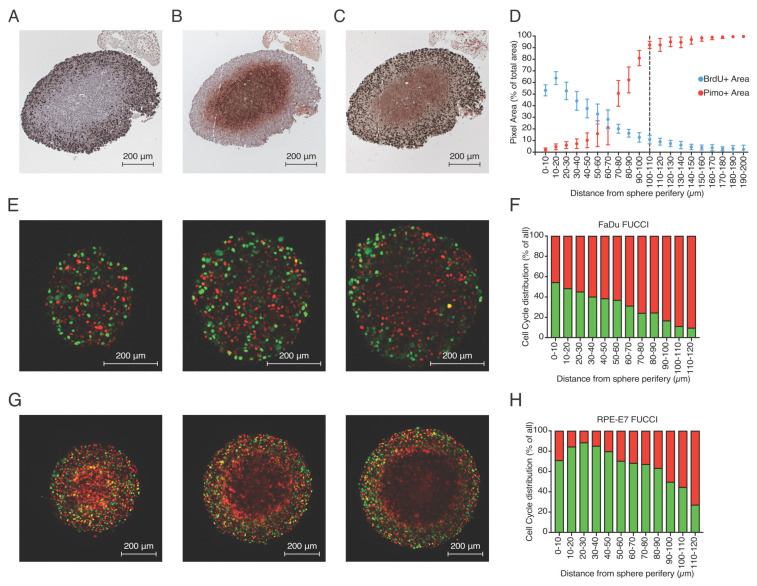
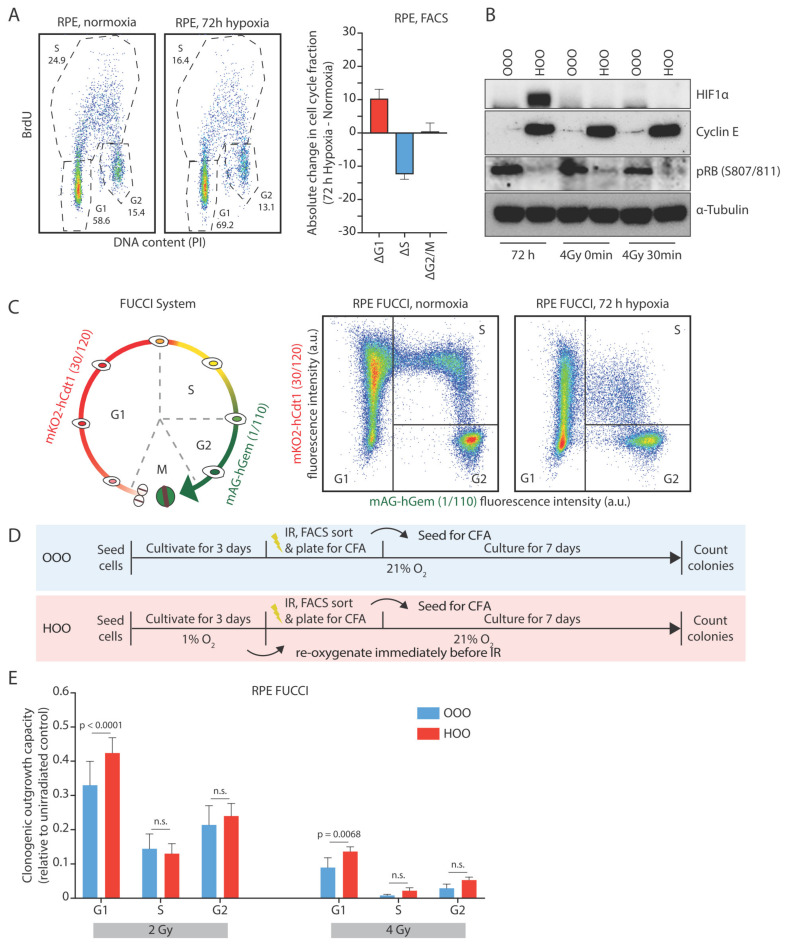
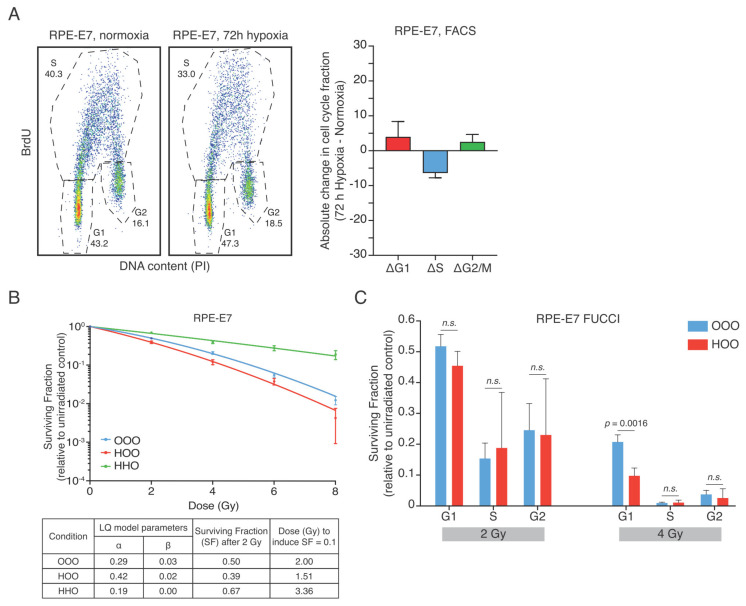
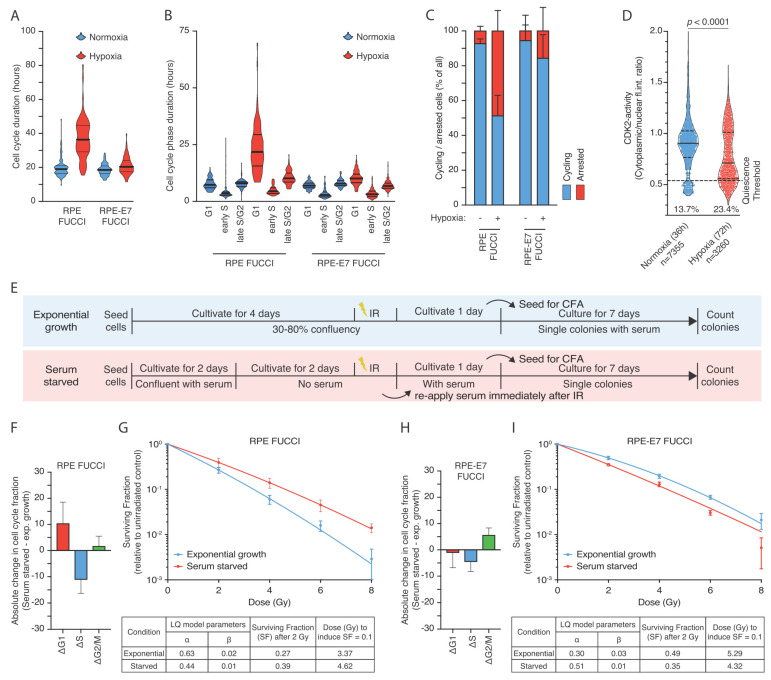
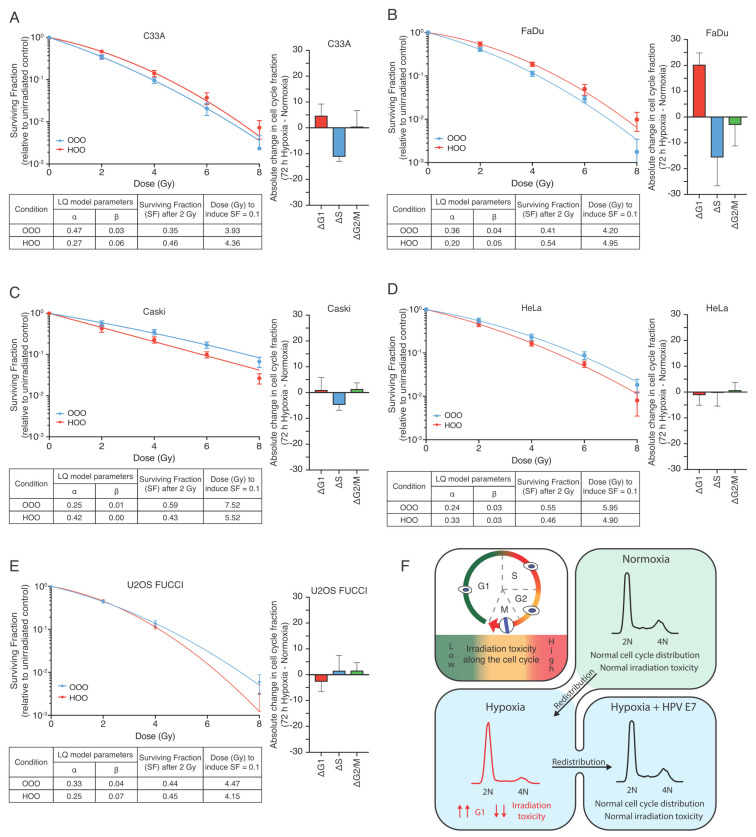
Double strand breaks (DSBs) are highly toxic to a cell, a property that is exploited in radiation therapy. A critical component for the damage induction is cellular oxygen, making hypoxic tumor areas refractory to the efficacy of radiation treatment. During a fractionated radiation regimen, these hypoxic areas can be re-oxygenated. Nonetheless, hypoxia still constitutes a negative prognostic factor for the patient's outcome. We hypothesized that this might be attributed to specific hypoxia-induced cellular traits that are maintained upon reoxygenation. Here, we show that reoxygenation of hypoxic non-transformed RPE-1 cells fully restored induction of DSBs but the cells remain radioresistant as a consequence of hypoxia-induced quiescence. With the use of the cell cycle indicators (FUCCI), cell cycle-specific radiation sensitivity, the cell cycle phase duration with live cell imaging, and single cell tracing were assessed. We observed that RPE-1 cells experience a longer G1 phase under hypoxia and retain a large fraction of cells that are non-cycling. Expression of HPV oncoprotein E7 prevents hypoxia-induced quiescence and abolishes the radioprotective effect. In line with this, HPV-negative cancer cell lines retain radioresistance, while HPV-positive cancer cell lines are radiosensitized upon reoxygenation. Quiescence induction in hypoxia and its HPV-driven prevention was observed in 3D multicellular spheroids. Collectively, we identify a new hypoxia-dependent radioprotective phenotype due to hypoxia-induced quiescence that accounts for a global decrease in radiosensitivity that can be retained upon reoxygenation and is absent in cells expressing oncoprotein E7.
双链断裂(DSBs)对细胞有很高的毒性,这一特性在放射治疗中得到了利用。细胞氧是诱导损伤的关键组成部分,这使得缺氧的肿瘤区域对放射治疗的效果产生抵抗。在分次放射治疗中,这些缺氧区域可以重新氧合。然而,缺氧仍然是患者预后的一个负面预测因素。我们假设这可能归因于特定的缺氧诱导的细胞特征,这些特征在再氧合后仍然存在。在这里,我们表明,缺氧的非转化 RPE-1 细胞在再氧合时完全恢复了 DSB 的诱导,但由于缺氧诱导的静止,细胞仍然具有辐射抗性。我们使用细胞周期指示剂(FUCCI)、细胞周期特异性辐射敏感性、活细胞成像的细胞周期阶段持续时间和单细胞追踪来评估。我们观察到,RPE-1 细胞在缺氧条件下经历更长的 G1 期,并保持大量非循环细胞。HPV 癌蛋白 E7 的表达可防止缺氧诱导的静止,并消除其放射保护作用。与此一致的是,HPV 阴性的癌细胞系保留了辐射抗性,而 HPV 阳性的癌细胞系在再氧合时被放射增敏。在 3D 多细胞球体中观察到了缺氧诱导的静止及其 HPV 驱动的预防。总的来说,我们确定了一种新的缺氧依赖性放射保护表型,这是由于缺氧诱导的静止导致的,这种表型导致整体放射敏感性下降,在再氧合后仍然存在,而在表达癌蛋白 E7 的细胞中则不存在。