Bigos Kamilla Ja, Quiles Conrado G, Lunj Sapna, Smith Danielle J, Krause Mechthild, Troost Esther Gc, West Catharine M, Hoskin Peter, Choudhury Ananya
Division of Cancer Sciences, University of Manchester, Manchester, United Kingdom.
German Cancer Consortium (DKTK), partner site Dresden and German Cancer Research Center (DKFZ), Heidelberg, Germany.
Front Oncol. 2024 Jan 30;14:1331355. doi: 10.3389/fonc.2024.1331355. eCollection 2024.
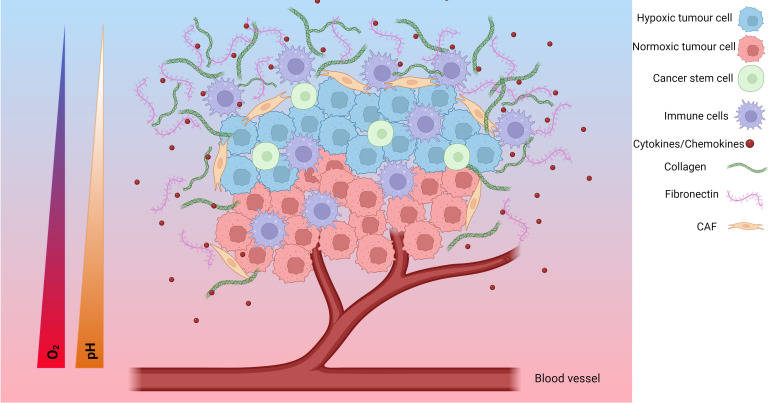
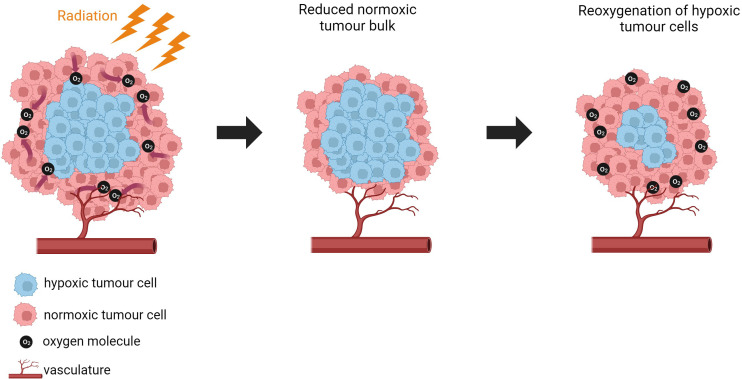
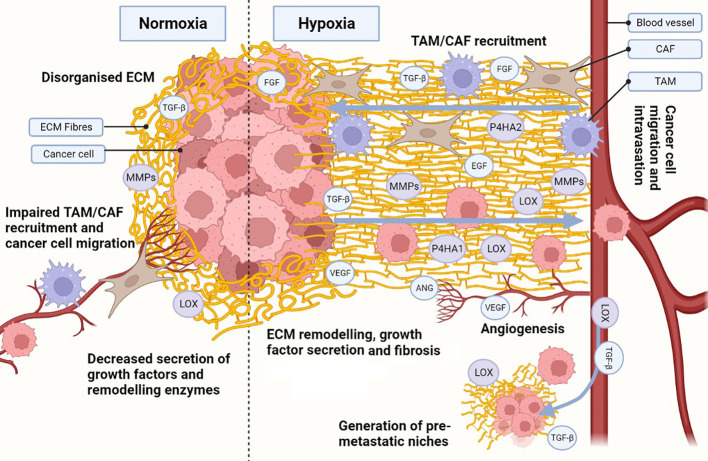
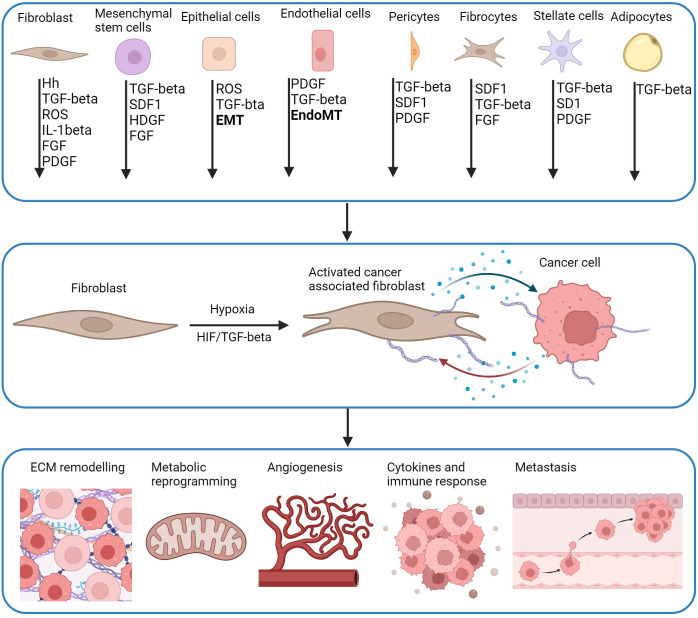
Hypoxia is a common feature of solid tumours affecting their biology and response to therapy. One of the main transcription factors activated by hypoxia is hypoxia-inducible factor (HIF), which regulates the expression of genes involved in various aspects of tumourigenesis including proliferative capacity, angiogenesis, immune evasion, metabolic reprogramming, extracellular matrix (ECM) remodelling, and cell migration. This can negatively impact patient outcomes by inducing therapeutic resistance. The importance of hypoxia is clearly demonstrated by continued research into finding clinically relevant hypoxia biomarkers, and hypoxia-targeting therapies. One of the problems is the lack of clinically applicable methods of hypoxia detection, and lack of standardisation. Additionally, a lot of the methods of detecting hypoxia do not take into consideration the complexity of the hypoxic tumour microenvironment (TME). Therefore, this needs further elucidation as approximately 50% of solid tumours are hypoxic. The ECM is important component of the hypoxic TME, and is developed by both cancer associated fibroblasts (CAFs) and tumour cells. However, it is important to distinguish the different roles to develop both biomarkers and novel compounds. Fibronectin (FN), collagen (COL) and hyaluronic acid (HA) are important components of the ECM that create ECM fibres. These fibres are crosslinked by specific enzymes including lysyl oxidase (LOX) which regulates the stiffness of tumours and induces fibrosis. This is partially regulated by HIFs. The review highlights the importance of understanding the role of matrix stiffness in different solid tumours as current data shows contradictory results on the impact on therapeutic resistance. The review also indicates that further research is needed into identifying different CAF subtypes and their exact roles; with some showing pro-tumorigenic capacity and others having anti-tumorigenic roles. This has made it difficult to fully elucidate the role of CAFs within the TME. However, it is clear that this is an important area of research that requires unravelling as current strategies to target CAFs have resulted in worsened prognosis. The role of immune cells within the tumour microenvironment is also discussed as hypoxia has been associated with modulating immune cells to create an anti-tumorigenic environment. Which has led to the development of immunotherapies including PD-L1. These hypoxia-induced changes can confer resistance to conventional therapies, such as chemotherapy, radiotherapy, and immunotherapy. This review summarizes the current knowledge on the impact of hypoxia on the TME and its implications for therapy resistance. It also discusses the potential of hypoxia biomarkers as prognostic and predictive indictors of treatment response, as well as the challenges and opportunities of targeting hypoxia in clinical trials.
缺氧是实体瘤的一个常见特征,影响其生物学特性和对治疗的反应。缺氧激活的主要转录因子之一是缺氧诱导因子(HIF),它调节参与肿瘤发生各个方面的基因表达,包括增殖能力、血管生成、免疫逃逸、代谢重编程、细胞外基质(ECM)重塑和细胞迁移。这可通过诱导治疗抗性对患者预后产生负面影响。对寻找临床相关缺氧生物标志物和缺氧靶向治疗的持续研究清楚地证明了缺氧的重要性。问题之一是缺乏临床适用的缺氧检测方法以及缺乏标准化。此外,许多检测缺氧的方法没有考虑缺氧肿瘤微环境(TME)的复杂性。因此,由于约50%的实体瘤是缺氧的,这需要进一步阐明。ECM是缺氧TME的重要组成部分,由癌症相关成纤维细胞(CAF)和肿瘤细胞共同形成。然而,区分不同作用对于开发生物标志物和新型化合物很重要。纤连蛋白(FN)、胶原蛋白(COL)和透明质酸(HA)是形成ECM纤维的ECM的重要组成部分。这些纤维由包括赖氨酰氧化酶(LOX)在内的特定酶交联,LOX调节肿瘤的硬度并诱导纤维化。这部分受HIF调节。该综述强调了了解基质硬度在不同实体瘤中的作用的重要性,因为目前的数据在其对治疗抗性的影响方面显示出相互矛盾的结果。该综述还表明,需要进一步研究以确定不同的CAF亚型及其确切作用;一些显示促肿瘤发生能力,而另一些具有抗肿瘤发生作用。这使得难以完全阐明CAF在TME中的作用。然而,很明显这是一个需要深入研究的重要领域,因为目前针对CAF的策略已导致预后恶化。还讨论了肿瘤微环境中免疫细胞的作用,因为缺氧与调节免疫细胞以形成抗肿瘤发生环境有关。这导致了包括PD-L1在内的免疫疗法的发展。这些缺氧诱导的变化可赋予对传统疗法如化疗、放疗和免疫疗法的抗性。本综述总结了关于缺氧对TME的影响及其对治疗抗性的影响的当前知识。它还讨论了缺氧生物标志物作为治疗反应的预后和预测指标的潜力,以及在临床试验中靶向缺氧的挑战和机遇。